
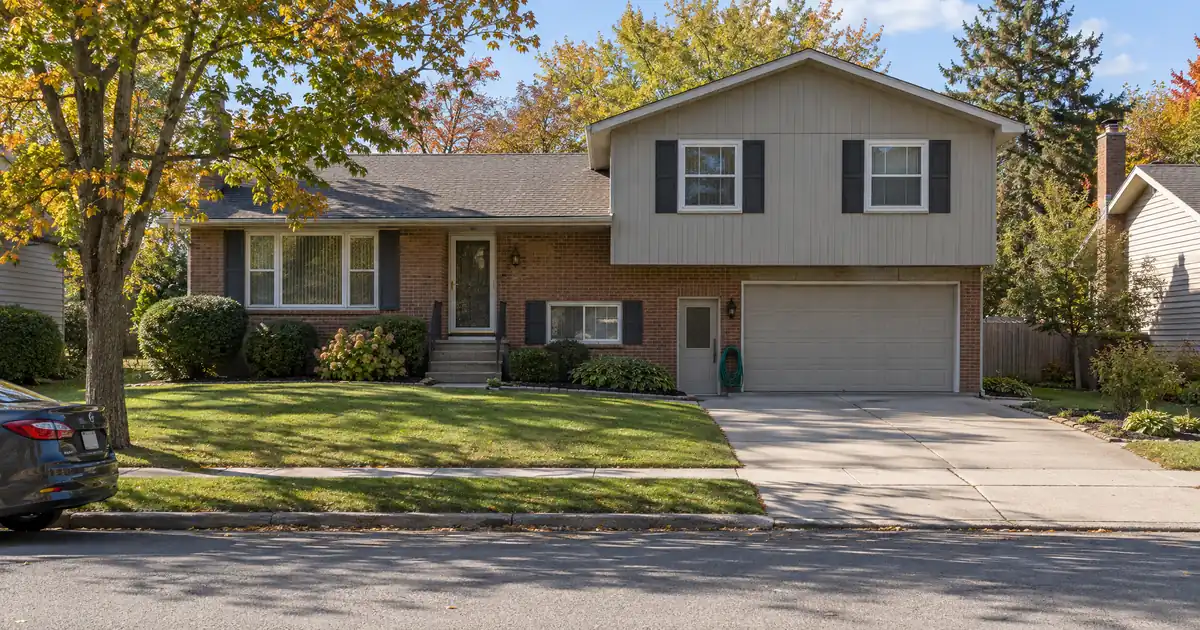
The Quick Read: A DSCR HELOC on an inherited home works when the siblings first hold clear, recorded title, every owner agrees to the lien, the house is leased to a tenant rather than lived in, and the rent covers a stress-tested payment on the full credit limit at 1.10x or better, subject to lender guidelines and credit approval. Title and consent come first. The rent math comes second.
- Recorded title in the heirs’ names, or in an LLC they control, is the entry ticket.
- Every title holder signs, even a sibling who is not borrowing.
- A lease must be in place, and a sibling living in the house breaks the rent-based path.
- Through select programs, a second lien tops out at 70% combined loan-to-value (CLTV) with a 720 credit score or better. The exact numbers vary by lender and program and follow a full review of property, leverage, and credit.
What Is a DSCR HELOC, and Why Is the Label So Confusing?
“DSCR HELOC” is a market nickname, not a standardized product. Some lenders use it for a closed-end second mortgage. Others use it for a cash-out refinance that is reviewed on rent. Those are different loans with different structures.
Across Lendmire’s wholesale network, the true version is a revolving line of credit on a non-owner-occupied one-to-four-unit rental. It is written in one of two ways:
- A standalone second lien behind the first mortgage the owner keeps.
- A standalone first lien on a rental with no mortgage.
The line qualifies primarily on property-level rental income covering the payment, subject to lender guidelines. Personal tax returns, W-2s, pay stubs and debt-to-income ratios are not part of the calculation. The rent, the lease, the credit report and the valuation are all documented. The LLC can stay on title, and the members sign as guarantors.
The structure suits heirs who want to reach equity without refinancing a low first mortgage. It is offered in 16 states under Lendmire’s consumer licensing, including Alabama, California, Colorado, Florida, Georgia, Indiana, Michigan, Montana, New Mexico, North Carolina, Ohio, Pennsylvania, Texas, Virginia and Washington. For the broader landscape of rent-qualified financing, Lendmire’s complete DSCR loans guide covers the loan family.
Gate One: Who Legally Owns the House?
A lender can only take a lien on what the borrower legally owns. Inheritance adds a step that an ordinary rental does not have. Title must move from the decedent to the heirs, and the paper trail must show it.
| Title status | Who signs | What happens next |
|---|---|---|
| Probate still open | Personal representative | Lender wants proof of authority |
| Deed recorded to siblings | All siblings | Move to consent and underwriting |
| Held in a trust | Trustee | Lender reviews trust documents |
| Held in decedent’s LLC | Person with authority | Resolve control first |
Expect to need a recorded deed, or letters or a court order that show who may pledge the property. A quitclaim deed moves title only. It does not change who owes an existing mortgage.
State law drives the timing. In some states title vests in the heirs at death, subject to estate administration. In others, the distribution order decides it. A probate attorney in the property’s state is the right person for that question.
Seasoning matters too. A rental bought or refinanced inside the last 6 months is not eligible on this program. How a transfer by inheritance counts against that clock is a lender-review question, so ask early.
Do All the Siblings Have to Sign?
Generally, yes. Every person on title signs the security instrument. The borrowers on the line need not be the borrowers on the first mortgage. A title holder who is not borrowing signs a non-borrowing owner acknowledgment and the security instrument.
That gives siblings room to arrange the file. One or two can borrow while the others consent. Consenting to a lien is not the same as owing the debt.
Siblings who inherit without a will, or under a will that leaves the house to them jointly, typically hold as tenants in common. The Land Trust Alliance notes that any one of them can force a partition. Some states have adopted the Uniform Partition of Heirs Property Act, which adds notice, appraisal and a right of first refusal. The American Bar Association explains that the Act covers tenancy-in-common property, not property under an express partition agreement. It is adopted state by state.
When one sibling will not sign, the options narrow:
1. Negotiate a buyout. The reluctant sibling is paid and deeds out.
2. Restructure the ask. A smaller line, or a plan that keeps the sibling’s share untouched, sometimes brings agreement.
3. Use another asset. Borrow against a different property instead.
4. Sell. Siblings who cannot align on a plan often end up here.
A lender will not lien a share the borrower does not own. There is no workaround.
How Underwriting Treats the Rent, Step by Step
DSCR loans are designed for non-owner-occupied investment properties. Because they are business-purpose investor loans, they are reviewed differently from a standard owner-occupied mortgage. The CFPB’s rule page and its compliance guide describe where the ability-to-repay rule stops. They also note that a loan may not be structured as open-end credit just to evade it.
Here is how a typical file moves:
1. Title package. The recorded deed or authority documents, plus a title report or policy. A full policy applies on first liens and on second liens above $400,000. Smaller second liens use an owner-and-encumbrance report.
2. Lease. A lease in place is required. A tenant alone does not create qualifying income. The lease is tested against market rent.
3. Valuation. Lines up to $400,000 use an automated valuation (confidence score of 85 or better) with a property inspection report, or a full interior appraisal. Larger lines need a full interior appraisal. Appraisal waivers are not accepted.
4. Rent figure. Rent is the lesser of the appraiser’s Form 1007 market rent or the lease. A lease above market counts only with three months of receipts.
5. Coverage test. Gross monthly rent is divided by a qualifying payment. That payment is fully amortizing on the entire credit limit and is stress-tested above the start rate. The minimum is 1.10x. On a second lien, the lender’s own coverage calculation governs how the first mortgage payment is treated.
6. Credit and borrower checks. The minimum score is 720 on a second lien and 700 on a first lien. The program requires no 30-day mortgage late in the last 12 months. It requires 48 months since a bankruptcy, foreclosure, short sale or deed-in-lieu.
No reserves and no cash to close are required. A borrower may have at most 5 loans or $2,500,000 in exposure with the program. Citizens, permanent residents and non-permanent residents with a Social Security number are eligible. Foreign nationals and ITIN borrowers are not.
Line Terms: Second Lien Versus First Lien
The lien position changes the leverage. This comparison reflects select-program ceilings, subject to underwriting.
| Feature | Second lien | First lien |
|---|---|---|
| Used when | Heirs keep the first mortgage | Home is paid off |
| Mid tiers | None below 720 | 70% LTV at 700–739 |
| Line size | $50,000–$500,000 | Up to $1,000,000 |
| Above $500,000 | Not offered | 65% LTV at 720+ |
Both versions share the same draw structure. At least 80% of the line is drawn at closing, and later draws are at least $5,000. The draw period is 5 years, interest-only on the drawn balance. A 25-year fully amortizing repayment period follows, within a 30-year maturity. The rate is variable.
Second-lien leverage is combined: the first mortgage balance plus the new line, divided by value. A home with a large inherited mortgage leaves less room than one with a small balance. A declining-market flag can lower the ceiling by 5 points.
A Three-Sibling Example
Picture three siblings who inherit a leased duplex through a recorded deed. A low first mortgage balance stays in place, sitting at roughly 40% of the appraised value. They hold title in an LLC after confirming the transfer will not disturb the existing loan.
Two siblings want equity. One wants out. Under a 70% CLTV ceiling, the new line could add up to about 30 points of value on top of the first mortgage. The line size would also have to clear the $50,000 minimum.
Now the coverage test. If the duplex’s rent, lesser of lease or market, covers the stress payment on the full limit at roughly 1.2x, the file clears the 1.10x minimum with some cushion. If it lands at 1.05x, the siblings can shrink the limit, because coverage is tested on the whole line.
The departing sibling’s share is the harder part. Record that sibling’s deed out before the line closes. The two borrowers sign, the third signs as a non-borrowing owner if still on title, and the lender decides how the share transfer interacts with seasoning. For a large buyout, the DSCR cash-out refinance often fits better than a line, because it replaces the first mortgage. Lendmire’s piece How Much a HELOC Lender Lends on a Home Siblings Inherited walks through the sizing side.
DSCR vs. conventional financing
There are two common ways to finance an investment property, and they qualify you differently — here’s how investors weigh them.
Why investors choose it
- Qualifies on the property’s rental income — no personal tax returns, W-2s, or pay stubs needed to document income.
- No personal debt-to-income ceiling to clear, so existing mortgages and obligations don’t cap your borrowing the same way.
- Can be closed in an LLC, keeping the property inside a business entity.
- Built for scaling — not held to the limit on number of financed properties that conventional financing applies.
- Underwriting centers on the deal: generally qualifies when the rent covers the payment, a 1.00x coverage ratio being a common baseline (confirmed in underwriting).
- Designed specifically for investment property, including long-term and, where the program allows, short-term rentals.
Where it’s strong
- Often the lowest ongoing financing cost for a buyer who fully qualifies on personal income — a fit for a first property or a cost-first purchase.
Trade-offs for investors
- Requires full personal income documentation and must fit within a debt-to-income limit — salary, existing debts, and other mortgages all count.
- Typically held in your personal name rather than a business entity.
- Caps how many financed properties you can carry, which can become a ceiling as a portfolio grows.
- Evaluates you as a borrower as much as the property, which usually means more paperwork.
How investors usually choose: a first or single property often optimizes for the lowest financing cost; portfolio builders often optimize for leverage, vesting in an LLC, and scaling past conventional caps. The right answer depends on your goals, the property, and current guidelines — both paths run through select lenders in Lendmire’s wholesale network, with eligibility and terms confirmed in underwriting.
Where the General Rule Breaks
The gate rules above hold in most files. These cases bend them.
- A sibling lives in the house. DSCR programs are for non-owner-occupied property. Occupancy by an heir generally takes the file off the rent-based path.
- The house is vacant. A lease in place is required. A rehab-first house has to be repaired and leased before it is eligible.
- The house was recently listed for sale. A property listed in the prior 2 months is not eligible. Siblings who tested the market and pulled the listing should plan around that window.
- The decedent held the home in an LLC. Heirs may hold only economic rights. They have no signing authority until the operating agreement or a court resolves control.
- Moving a mortgaged home into an LLC. That can trigger the existing loan’s due-on-sale clause. A transfer to an LLC is not among the protected transfers that apply to relatives at death.
- Joint tenancy with survivorship. Title passes to the surviving owners, not through the estate, and partition rules differ.
- Ineligible property types. Rural-designated property, row homes, condotels, leaseholds, land trusts, hobby farms and mixed-use properties are outside this lane.
- A probate or estate loan. These are asset-based loans aimed at paying out heirs. They are a separate product and should not be confused with a DSCR line.
Being confirmed as an heir on a servicer’s account gives servicing rights. It does not give the right to pledge the house. Title still decides that.
Hold, Buy Out or Sell?
The rent-qualified line only makes sense if the siblings want to hold. Here is how the three paths compare:
| Path | Best when | Main catch |
|---|---|---|
| Hold with a line | All agree, first mortgage is low | Everyone signs |
| Buy out siblings | One sibling wants to keep it | Needs clean deed-out |
| Sell | Siblings cannot align | Ends the rental |
Investors who are the only borrower on an otherwise shared house should think about the end state. A line on a rental the siblings co-own keeps everyone tied to one debt. A buyout simplifies ownership but usually needs a refinance. Selling is the cleanest, though it forfeits the rental income that qualified the file.
Tax treatment can depend on how the funds are used and how the property is held; borrowers should keep clear records and speak with a qualified tax professional before relying on any deduction.
If cash flow is thin, Lendmire’s article How to Open a HELOC on a Home Inherited by Siblings covers the broader home equity route and when it fits.
Key Terms Defined
DSCR: The debt-service coverage ratio, which is gross monthly rent divided by the qualifying payment.
CLTV: Combined loan-to-value, meaning the first mortgage balance plus the new line, divided by property value.
Tenants in common: A form of co-ownership where each heir holds a separate share and any one can seek partition.
Non-borrowing owner: A title holder who signs the security instrument but does not owe the debt.
Seasoning: The required period of ownership before a rental becomes eligible for a new line.
Form 1007: The appraiser’s single-family rent schedule, which sets market rent for the file.
Frequently Asked Questions
Can one sibling take out the line without the others?
Only if that sibling owns the whole property or the other owners consent. Everyone on title signs the lien. The others can sign as non-borrowing owners and stay off the debt, subject to lender review.
Does the house have to be rented before we apply?
Yes. A lease in place is required, and the rent is the lesser of the lease or the appraiser’s market rent. A vacant or owner-occupied inherited house does not fit this program until it is leased to a tenant.
Can the line pay out a sibling who wants to leave?
It can fund a buyout if the leverage limits leave room and the deed out is recorded. The draw rules apply, including at least 80% drawn at closing. For larger buyouts, a cash-out refinance on a rental often fits better, and a lender reviews how the transfer affects seasoning.
What credit score do heirs need?
A 720 minimum applies on a second lien and 700 on a first lien, using the lender’s own report. A score at 740 or better is needed for the top first-lien tier. All figures are subject to underwriting.
What if the house sits in a probate estate?
The lender wants title vested in the borrowers, or proof of the representative’s authority, before it can lien the property. Timing depends on state law and the probate file.
Next Step
If you are considering a home equity line on a rental property and want to see how the numbers work, Lendmire can help you compare DSCR HELOC options based on the property, the rent, the equity available, credit profile, combined leverage, and your goals. Lendmire is a broker and arranges these lines through select lenders in its wholesale network, and nothing here is a commitment to lend.
About Lendmire
Lendmire (NMLS# 2371349) is a mortgage brokerage serving homeowners and real estate investors in its 16 full-service states. Home equity lines of credit are arranged through wholesale lending channels; Lendmire brokers the line and the lender underwrites each application under its occupancy-based guidelines. Scotsman Guide named Lendmire a Top Mortgage Workplace in both 2025 and 2026.
Get Started
Ready to find the right loan for you?
See your offer in seconds. No credit pull, no obligation.
Informational only. Not a Loan Estimate, approval, or commitment to lend. Program availability and eligibility are subject to lender guidelines, credit approval, property review, and underwriting.
References
1. Land Trust Alliance, Partition of Heirs Property Act
2. American Bar Association, Uniform Partition of Heirs Property Act
3. CFPB Regulation Z, 12 CFR 1026.43
4. CFPB Ability-to-Repay and Qualified Mortgage Small Entity Compliance Guide
This article is part of Lendmire’s DSCR HELOC program — full qualification details, guidelines, and scenarios live on the program page.
Related reading: DSCR HELOC for 1099 Contractors and How Much You Can Borrow · How to Qualify for a DSCR HELOC Without Income Verification · DSCR HELOC for Landlords Weighing a Rental Home Equity Loan
Brandon Miller
Founder & CEO, Mortgage Loan Originator, Lendmire LLC
- Mortgage Loan Originator · NMLS# 1129696 · Verify on NMLS Consumer Access
- North Carolina Real Estate Broker · License# 343312 · Verify on NCREC
- North Carolina Insurance Producer · License# 19053198 · Property, Casualty, Life, Health · Verify on NAIC SBS
- Lendmire LLC · Firm NMLS# 2371349 · Verify firm licensure
Required disclosures. Lendmire (NMLS# 2371349) operates as a licensed mortgage broker, not a direct lender or depository. The discussion in this article is general in nature and should not be relied upon as financial, legal, or tax advice — every investment scenario is unique and should be reviewed by a qualified professional. Any loan inquiry is subject to lender underwriting, and this article is not a commitment to lend or a guarantee of approval. Mortgage rates, loan terms, and program guidelines vary by borrower, property, and state, and may change without notice. Equal Housing Opportunity. Verify licensure at NMLS Consumer Access.