
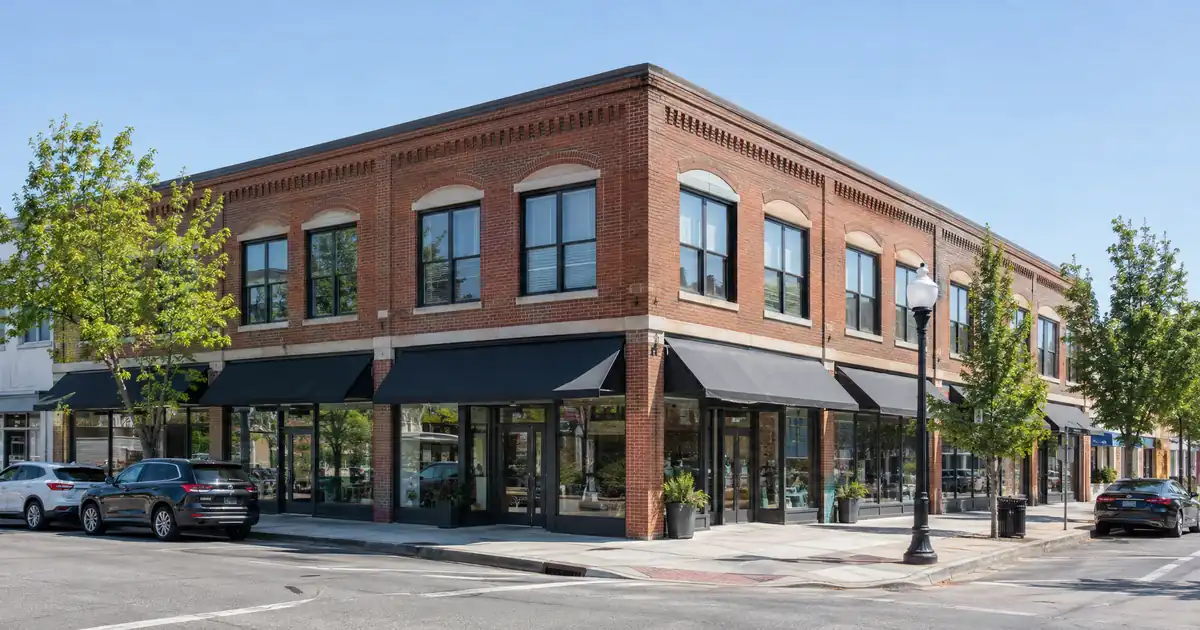
The Quick Read: Unit count, not price, usually decides this choice. A high price tag does not turn a luxury duplex, triplex, or fourplex into a commercial deal. At five or more units, commercial underwriting becomes the normal lane.
- A DSCR loan is reviewed primarily on property-level rental income covering the payment, subject to lender guidelines.
- A commercial loan underwrites the building’s net operating income and usually the sponsor behind it.
- The two products calculate “coverage” differently, so one building can show two different ratios.
- At 1-4 units, a luxury buyer can often choose either path. At 5+ units, the pool narrows to commercial products and a smaller set of select DSCR programs.
- Recourse, maturity structure, and ongoing reporting differ more than most buyers expect.
The Honest Answer: Who Each Option Is Really For
A DSCR loan fits the luxury buyer who wants the building’s rent to carry the file. That buyer is often self-employed, holds title in an LLC, or is scaling a portfolio and does not want personal income to cap the number of deals. A commercial loan fits the buyer whose strength is the balance sheet or a bank relationship, who is buying five or more units, or who wants negotiated terms and accepts covenants and reporting in return.
DSCR Calculator
Run the numbers in your market
Rate source: Freddie Mac 30-yr average via FRED® — Federal Reserve Bank of St. Louis · effective Oct 29, 2026
Prefilled with starting assumptions — enter your own rent or nightly figures, taxes, insurance, and HOA for a more accurate picture.
Program parameters update from Lendmire’s centralized guideline source. Taxes and insurance are editable estimates.
As of Oct 29, 2026 · General Freddie Mac market benchmark, not a Lendmire loan offer. Rent, nightly rate, occupancy, taxes, and insurance are editable estimates. Short-term rental figures are estimates only and vary significantly by season, property type, management approach, and local short-term-rental rules — confirm local regulations before relying on them. Qualifying income for short-term rentals varies by program — some use appraisal market rent, others use documented STR history or projections — and is confirmed in underwriting. Not a Loan Estimate, approval, or commitment to lend. Program availability and eligibility are subject to lender guidelines, credit approval, property review, and underwriting.
Price does not settle it. The building’s size, how stable its income is, and how you want to hold it do. The sections below referee both sides.
Side-by-Side
The DSCR column reflects Lendmire-side network parameters. The commercial column shows published industry norms, which vary by lender.
| Factor | DSCR Loan | Commercial Loan |
|---|---|---|
| Review basis | Property rent vs. PITIA | NOI vs. debt service, plus sponsor |
| Typical property size | 1-4 units; 5+ only in select programs | 5+ units is the usual lane |
| Documentation | Lease or market-rent survey, credit, entity papers | Rent roll, leases, operating statements |
| Personal income review | Not the primary basis | Sponsor financials commonly reviewed |
| Entity vesting | LLC common, subject to program terms | SPE or LLC common |
| Appraisal | Rent schedule or small-income report | Income-approach appraisal |
| Reserves | Commonly around 6 months of PITIA; about 9 months above $1,500,000 | Often set by liquidity covenants |
| Recourse | Often recourse to principals | Often non-recourse with carve-outs |
| Ongoing tests | Generally none on coverage | Covenants and reporting are common |
| Term structure | 30-year fixed spine; extended terms via select lenders | Shorter terms with a maturity event are common |
Two Meanings of “DSCR”
This is where buyers get tripped up. The residential-style DSCR loan divides monthly rent by PITIA: principal, interest, taxes, insurance, and any HOA dues. Rent comes from the lease or the appraiser’s market-rent survey.
Commercial lenders divide net operating income by debt service. NOI subtracts operating expenses such as vacancy, management, and repairs before the ratio is calculated. Industry norms for commercial multifamily coverage generally sit above 1.00. LoopNet’s multifamily explainer notes that at five or more units lenders focus on property income, coverage ratios, debt yield, and rent-roll quality.
The practical effect: the same luxury building can look stronger under the rent-over-PITIA method than under NOI. A luxury asset carries heavier expense loads, such as amenities, staffing, and insurance. Those loads show up in NOI but not in a rent-over-PITIA test.
One more caution. Clearing 1.00 on a DSCR file is not the same as positive cash flow. Repairs, vacancy, management, utilities, and capex sit outside the calculation.
Where Does Luxury Multifamily Land?
Classification follows unit count. A very expensive fourplex is still a 1-4 unit asset.
The appraisal path follows the same line. The Fannie Mae Selling Guide lists Form 1025, the small residential income property report, for 2-4 unit properties. A building above four units generally gets a commercial, income-approach appraisal. These forms are named here for appraisal context only. They do not set DSCR program terms.
A mixed-use building adds a wrinkle. A meaningful commercial component can push the property toward commercial underwriting even at a small unit count.
When a DSCR Loan Is the Better Fit
Across the wholesale network Lendmire places files with, DSCR tends to pencil best in these situations:
- A luxury duplex to fourplex. The property sits in the residential class, and rent coverage is the cleanest way to read it. Lendmire’s piece Super Jumbo DSCR vs Commercial Loan on a Luxury Duplex covers why a commercial loan on that size is a structural choice, not a default.
- A self-employed or entity-held buyer. Personal tax returns may not show the full picture. The file qualifies primarily on the property’s rental income, subject to lender guidelines. It is not a no-documentation loan.
- A portfolio scaler. Each property is cash-flowed on its own, so personal debt-to-income does not cap the number of deals. You still need credit, equity, and reserves for each one.
- A buyer who wants a long fixed structure. The spine is a 30-year fixed. Extended terms, interest-only periods, and ARM structures are available through select lenders in the network.
On leverage, most purchase files land at 75%-80% LTV, with select high-leverage programs reaching 85% on purchases around a 700+ score. Cash-out refinances top out near 75% LTV on standard rentals. Credit floors start at 620 in parts of the network, most programs want around 660, and 700+ unlocks the strongest tiers. Loan sizes run up to $3,000,000 on standard programs, and above $2,500,000 the network generally holds to 30-year fixed structures. All of this is subject to lender guidelines and individual underwriting.
Where the numbers fall short, 1.00 is where many select programs start. A separate path takes coverage below 1.00 through select lenders in the network, with leverage and terms adjusted. A larger down payment can lift coverage, but it never erases credit floors, reserve rules, or property eligibility.
For buyers who want a deeper walk-through, Lendmire’s complete DSCR loans guide covers qualification step by step.
When a Commercial Loan Is the Better Fit
Commercial financing earns its place in these situations:
- Five or more units. Commercial multifamily is the normal lane. Some DSCR programs take 5+ units, but unit caps differ by program, and not every lender in the network accepts them.
- A balance-sheet-driven buyer. If your liquidity, net worth, and portfolio-wide cash flow are strong, a commercial lender may weigh those in your favor. Commercial lenders may look at coverage across the whole portfolio, while a DSCR loan reviews only the subject property.
- A buyer who values negotiated terms. Commercial deals can include negotiated covenants and bank-relationship underwriting. That flexibility comes with reporting and testing.
- A stabilized building with a strong rent roll. Commercial underwriting leans on stabilization. A building still in lease-up is a harder fit for permanent financing.
- A larger-than-network loan. If the loan outgrows the $3,000,000 standard program range, commercial products are the natural next stop.
Lendmire’s wholesale network places both kinds of loans, so this is a fit question, not a product pitch.
Recourse: The Part Buyers Misread
“Commercial means non-recourse” is only half true. Commercial real estate loans are generally structured as non-recourse with “bad boy” carve-outs. SEC filings describe carve-outs for fraud, misrepresentation, waste, and misappropriation, with full recourse for events such as prohibited transfers or voluntary bankruptcy.
The details matter. A law-firm analysis of carve-out guaranties separates “above the line” loss-based events from “below the line” full-recourse events. It warns that broad triggers can turn a non-recourse guaranty into something closer to a payment guarantee.
DSCR loans are often recourse to the entity’s principals. So the comparison is not “recourse vs. none.” It is a carve-out list versus an entity-level guarantee. Read both before you sign.
Exit and Maturity Planning
A long-amortizing DSCR structure leaves you with no forced maturity event on a 30-year fixed. Commercial multifamily loans commonly carry shorter terms with a balloon at maturity, so a refinance or sale becomes part of the plan.
If you plan to hold a luxury building for many years, ask what happens at maturity and what prepayment terms apply. Commercial loans can carry structured prepayment costs. Cash-out on standard rentals tops out around 75% LTV, with about 6 months of seasoning as a common expectation. For short-term-rental collateral, the cash-out ceiling is 70%. Terms vary by lender guidelines, property type, leverage, credit profile, and full file review.
Common Misconceptions
- “DSCR is one formula.” It is rent over PITIA in one product and NOI over debt service in the other.
- “DSCR means no documentation.” Credit, reserves, and the appraisal are still reviewed.
- “Expensive means commercial.” Classification follows unit count, not price.
- “Commercial means no personal risk.” Carve-outs can create full recourse.
- “Five units is a hard stop for DSCR.” It is a program-by-program question.
Key Terms Defined
- PITIA: the monthly principal, interest, taxes, insurance, and any HOA dues on the loan.
- NOI: net operating income, meaning rent minus operating expenses before debt service.
- Debt yield: NOI divided by the loan amount, a measure commercial lenders use alongside coverage.
- Recourse: the lender’s ability to pursue assets beyond the property if the loan defaults.
- Carve-out guaranty: a promise that turns a non-recourse loan into a recourse one when specific bad acts occur.
- Balloon maturity: a final payment due at the end of a shorter term.
Borrower Profiles: Which One Are You?
The self-employed buyer. Tax returns understate cash flow, and the building is a luxury fourplex. DSCR typically fits, with the file reading property income.
The balance-sheet-rich buyer. You have deep liquidity and a bank relationship and want negotiated terms on a larger building. Commercial may fit better, provided you accept reporting.
The portfolio scaler. You own several rentals through an LLC. DSCR keeps each deal separate, subject to program eligibility, so personal debt-to-income does not stall the next purchase.
The five-plus-unit buyer. Start with commercial products, then ask whether a select DSCR program accepts the unit count.
A Balanced Verdict
For a luxury buyer at one to four units, DSCR is usually the simpler, property-centered path. For five or more units, or for a buyer whose strength is the balance sheet, commercial financing is usually the better fit. The flip points are unit count, how much personal documentation you want to provide, your tolerance for recourse and covenants, and whether a maturity event fits your plan.
If you are buying or refinancing a rental property and want to see how the numbers work, Lendmire can help you compare DSCR loan options based on the property income, credit profile, leverage, and investor goals. Qualification is subject to lender guidelines and is not a commitment to lend.
Frequently Asked Questions
Can a luxury multifamily building qualify for a DSCR loan?
Yes, when it sits in the 1-4 unit class, and sometimes at five or more through select programs. Price alone does not disqualify a building. Unit caps differ by program, so confirm eligibility early.
Is a DSCR loan a commercial loan?
Not in the usual sense. DSCR loans are business-purpose investor loans, but they are underwritten like rental loans on rent versus PITIA. Commercial loans use NOI and often review the sponsor too.
Why would a commercial loan show a lower coverage ratio on the same building?
Commercial coverage uses NOI, which deducts vacancy, management, and repairs. The rent-over-PITIA method does not. Luxury buildings with heavy operating costs can show a noticeably thinner commercial ratio.
Do DSCR loans require reserves?
Yes. Reserves commonly run around 6 months of PITIA, with about 9 months above $1,500,000. Conservative rate-term files at modest leverage under $1,500,000 can see reserves waived. It varies by lender, leverage, and loan size.
Can I hold a DSCR loan in an LLC?
Often, subject to lender program eligibility. Entity papers are part of the file, and many DSCR loans are recourse to the entity’s principals.
About Lendmire
A non-QM mortgage broker (NMLS# 2371349), Lendmire arranges DSCR financing for real estate investors in 41 markets — 40 states plus Washington, D.C. Because deals are underwritten primarily on property cash flow rather than personal income documentation, the structure suits self-employed buyers and entity-owned portfolios. Lendmire places loans through wholesale investor lenders; it is not a direct lender. Scotsman Guide named Lendmire a Top Mortgage Workplace in both 2025 and 2026.
Get Started
Ready to find the right loan for you?
See your offer in seconds. No credit pull, no obligation.
Informational only. Not a Loan Estimate, approval, or commitment to lend. Program availability and eligibility are subject to lender guidelines, credit approval, property review, and underwriting.
References
1. loopnet.com: What Is a Multifamily Home
2. Fannie Mae Selling Guide B4-1.2-01
3. SEC filing: Invesco Real Estate Income Trust
4. LP Legal: Negotiating the Non-Recourse Carveout Guaranty
This article is part of Lendmire’s DSCR loan program — full qualification details, guidelines, and scenarios live on the program page.
Related reading: Does a DSCR Loan Need a 1007 Rent Schedule? · Can You Get a DSCR Loan on a Surfside Beach Rental? · DSCR Loan vs Conventional Loan for a Buyer With Several Rentals
Brandon Miller
Founder & CEO, Mortgage Loan Originator, Lendmire LLC
- Mortgage Loan Originator · NMLS# 1129696 · Verify on NMLS Consumer Access
- North Carolina Real Estate Broker · License# 343312 · Verify on NCREC
- North Carolina Insurance Producer · License# 19053198 · Property, Casualty, Life, Health · Verify on NAIC SBS
- Lendmire LLC · Firm NMLS# 2371349 · Verify firm licensure
Legal disclosures. Lendmire (NMLS# 2371349) is a state-licensed mortgage brokerage that arranges financing through wholesale lender relationships. Lendmire is not a direct lender, depository institution, or registered financial advisor. The discussion above is general informational content about real estate financing — it is not financial, legal, or tax advice, and readers should consult licensed professionals for guidance on their individual circumstances. Loan inquiries are subject to lender underwriting; this article does not represent a commitment to lend. Loan terms, rates, and qualification standards vary by borrower, property, and state, and are subject to change at any time. Equal Housing Opportunity. NMLS Consumer Access: nmlsconsumeraccess.org.