
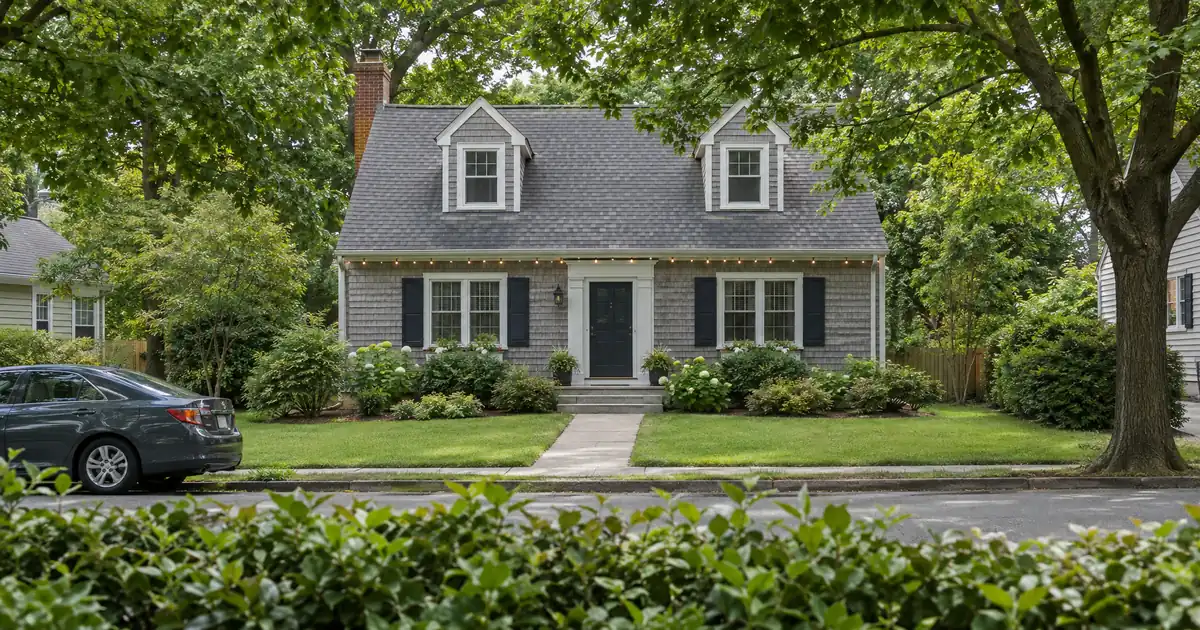
The Quick Read: A second home loan fits a vacation home you mainly use yourself, while a DSCR loan fits one you run as a rental business. A second home loan is reviewed around personal income, and rent generally cannot help. A DSCR loan is reviewed primarily on property-level rental income covering the payment, subject to lender guidelines.
- Mostly personal use, occasional rental: the second home lane is usually the honest fit.
- Mostly rented, managed, or bought to earn income: the DSCR lane is usually the honest fit.
- Most DSCR purchase files land at 75%-80% LTV on an investment property, with credit typically 660 or higher.
- A DSCR loan can be vested in an LLC, subject to lender program eligibility. Second home loans are usually personal-name loans.
- Mislabeling how you use the property is the costliest mistake in this decision.
The Honest Answer: Who Each Loan Is For
The deciding variable is how you will use the house, not which loan sounds easier.
DSCR Calculator
Run the numbers in your market
Rate source: Freddie Mac 30-yr average via FRED® — Federal Reserve Bank of St. Louis · effective Oct 29, 2026
Prefilled with starting assumptions — enter your own rent or nightly figures, taxes, insurance, and HOA for a more accurate picture.
Program parameters update from Lendmire’s centralized guideline source. Taxes and insurance are editable estimates.
As of Oct 29, 2026 · General Freddie Mac market benchmark, not a Lendmire loan offer. Rent, nightly rate, occupancy, taxes, and insurance are editable estimates. Short-term rental figures are estimates only and vary significantly by season, property type, management approach, and local short-term-rental rules — confirm local regulations before relying on them. Qualifying income for short-term rentals varies by program — some use appraisal market rent, others use documented STR history or projections — and is confirmed in underwriting. Not a Loan Estimate, approval, or commitment to lend. Program availability and eligibility are subject to lender guidelines, credit approval, property review, and underwriting.
A second home loan is built for a buyer who wants a getaway. The owner stays there, keeps exclusive control, and perhaps rents it a little. The lender approves the borrower: Traditional personal-income documentation, assets, credit, and debt-to-income ratio. The vacation home’s rent is not the point.
A DSCR loan is built for a buyer running the property as an income asset. The lender looks at the rent the property can produce against its full housing payment. Your personal income matters far less.
The gray zone is the owner who says, “We’ll use it a few weeks and rent the rest.” That owner has to decide which story is true, because the loan certifies it. Our complete DSCR loans guide covers the full DSCR picture. This piece is only about the choice between the two lanes.
Side-by-Side
The second home column reflects published industry norms. The DSCR column reflects guidelines across Lendmire’s wholesale network of lenders. Both vary by lender, borrower, and property.
| Factor | Second Home Loan | DSCR Loan |
|---|---|---|
| Review basis | Personal income, credit, DTI | Property rent vs. PITIA |
| Rental income role | Generally can’t qualify you | Core of the qualification |
| Documentation | Traditional personal-income documentation, assets | Lease or rent schedule, assets |
| Occupancy | Personal use, exclusive control | Non-owner-occupied investment |
| Property types | Typically 1-unit, year-round suitable | Often 1-4 units |
| Entity vesting | Usually personal name | LLC often possible, subject to lender program eligibility |
| Rental limits | Overlays often cap renting and managers | Rental use is the purpose |
| Reserves | Varies by lender | Commonly about 6 months PITIA |
| Timeline | Standard conventional process | Varies by file and lender |
Pricing is not in this table on purpose. It moves with each file, and the calculator is the place to see it.
How Does Each Loan Actually Qualify You?
A second home loan asks whether you can carry the property personally. Industry guidance for conventional second homes says the property must be a one-unit home suitable for year-round occupancy, with some personal use. It also says rental income generally cannot count toward qualifying, and the payment goes into your total DTI, per this summary of Freddie Mac’s second-home rules. That is agency material, used here only for contrast. DSCR loans are not agency products.
A DSCR loan asks whether the property carries itself. The ratio is monthly rent divided by the full monthly obligation: principal, interest, taxes, insurance, and any association dues. Across our network, 1.00 is where many select programs start. A separate select-lender path takes coverage below 1.00, with leverage and terms adjusted. Stronger coverage opens better leverage and pricing.
One caution. Clearing 1.00 is not the same as positive cash flow. Repairs, vacancy, management, utilities, and capex all sit outside the calculation.
When the Second Home Loan Is the Better Fit
Choose the second home lane when these describe you:
- You will genuinely use the home. It is a getaway, and rental is occasional and incidental.
- Your personal income is strong and easy to document. A W-2 earner with clean returns often has no reason to leave the conventional lane.
- You want to hold it in your own name. Second home loans are typically personal-name loans.
- The property is a simple one-unit home. A two-unit home used as a second home generally gets treated as an investment property.
- You need the rental to be irrelevant to approval. If the numbers work without rent, you are not asking the property to prove anything.
Occasional renting is not automatically disqualifying. Industry occupancy guidance says a second home can still be delivered when the lender identifies rental income, as long as that income is not used to qualify and the occupancy requirement is met, per this Fannie Mae occupancy summary.
The flip point is intent. A home booked year-round through a manager, or bought mainly to earn rent, is functionally an investment property. Financing it as a second home is a mismatch, and occupancy misrepresentation can carry serious consequences. If the loan paperwork says personal use and the reality is a full-time rental, that gap is the problem underwriters and servicers look for.
When the DSCR Loan Is the Better Fit
Choose the DSCR lane when these describe you:
- The property is a rental business. Heavy renting, a property manager, or reliance on rent to qualify all conflict with a second home label.
- Your tax returns understate your capacity. Self-employed investors and those with heavy write-offs often qualify better on property income than on personal income.
- You want an LLC. DSCR loans can close in an entity, subject to lender program eligibility, usually with a personal guaranty.
- You are scaling. Each file is judged on its own property’s income, so adding the next rental does not hinge on your personal DTI.
- The property is a 2-4 unit building. DSCR programs often accept it, where a second home loan would not.
- It is a short-term rental. Most programs we place short-term rental files with expect about 12 months of hosting history, a 640+ score, and 1.00 coverage on purchases. Purchase leverage tops out at 75% LTV, refinance runs around 70%, and cash-out is 70%, all on short-term-rental collateral.
The flip point here is thin coverage. If the rent cannot reasonably cover the payment, a DSCR file may mean lower leverage or a sub-1.00 select-lender path. That is a signal to revisit the property or the down payment, not a reason to force the loan.
What Does Your Rent Number Really Look Like?
Short-term rentals are where DSCR files get interesting. The appraisal normally includes a rent schedule: Form 1007 for a single-family home, Form 1025 for 2-4 units. For a vacation rental, that schedule often comes in below actual nightly-rental potential.
Across our network, income support for a short-term rental usually comes from one of a few sources: an appraiser’s short-term-rental analysis, trailing hosting history, or a market projection on a purchase. Programs differ on which they accept, and some apply an expense factor to gross income before calculating coverage. Ask which method a lender uses before you pick a property, because the same house can clear on one program and miss on another.
Short-term rental rules can vary by city, county, HOA, and property type, so investors should confirm local rules before relying on projected rental income.
Which Lane Are You In?
Use this self-test instead of guessing at a threshold.
| Your situation | Likely lane |
|---|---|
| Mostly personal use, rare rentals | Second home |
| Split use, rent is a nice offset | Second home, if rent isn’t needed to qualify |
| Mostly rented, you visit sometimes | DSCR |
| Fully managed rental, no personal use | DSCR |
| New short-term rental, no history | DSCR, with a projection-based program |
| 2-4 unit vacation property | DSCR |
Ask yourself three questions. Would the loan work if the property earned nothing? Would you be comfortable with the paperwork describing your intent exactly as it plays out? Does a manager or platform control most of the calendar? Two “no” answers to the first two, or a “yes” to the third, point toward DSCR.
Tax Use Is Not the Same as Loan Occupancy
Owners often confuse the tax test with the lending test. The IRS treats a dwelling as a personal home for tax purposes when personal use exceeds the greater of 14 days or 10% of the days rented at a fair price, per IRS Topic 415. That test affects deductions. It does not decide how a lender classifies occupancy. Those are two separate questions with two separate answers.
Tax treatment varies; consult a qualified professional.
DSCR vs. conventional financing
There are two common ways to finance an investment property, and they qualify you differently — here’s how investors weigh them.
Why investors choose it
- Qualifies on the property’s rental income — no personal tax returns, W-2s, or pay stubs needed to document income.
- No personal debt-to-income ceiling to clear, so existing mortgages and obligations don’t cap your borrowing the same way.
- Can be closed in an LLC, keeping the property inside a business entity.
- Built for scaling — not held to the limit on number of financed properties that conventional financing applies.
- Underwriting centers on the deal: generally qualifies when the rent covers the payment, a 1.00x coverage ratio being a common baseline (confirmed in underwriting).
- Designed specifically for investment property, including long-term and, where the program allows, short-term rentals.
Where it’s strong
- Often the lowest ongoing financing cost for a buyer who fully qualifies on personal income — a fit for a first property or a cost-first purchase.
Trade-offs for investors
- Requires full personal income documentation and must fit within a debt-to-income limit — salary, existing debts, and other mortgages all count.
- Typically held in your personal name rather than a business entity.
- Caps how many financed properties you can carry, which can become a ceiling as a portfolio grows.
- Evaluates you as a borrower as much as the property, which usually means more paperwork.
How investors usually choose: a first or single property often optimizes for the lowest financing cost; portfolio builders often optimize for leverage, vesting in an LLC, and scaling past conventional caps. The right answer depends on your goals, the property, and current guidelines — both paths run through select lenders in Lendmire’s wholesale network, with eligibility and terms confirmed in underwriting.
Business-Purpose Treatment
DSCR loans are designed for non-owner-occupied investment properties. Because they are business-purpose investor loans, they are reviewed differently from a standard owner-occupied mortgage. The test turns on the purpose of the loan, not the label on the property. The federal business-purpose exemption in Regulation Z is the text behind that distinction, and it is also why a rental bought for investment sits in a different lane from a personal second home.
Already Own a Second Home You Now Rent?
Many owners start in the second home lane and drift into regular renting. Refinancing into a DSCR loan can move the file to the correct classification. Short-term rental refinances typically look for hosting history, and most programs want that record before they will count the income. Cash-out on a standard rental tops out around 75% LTV across most of our network, with about 6 months of seasoning common. If you are weighing a bigger equity pull, Lendmire’s piece Vacation Home Cash-Out Refinance vs Primary Home for a Second-Home Owner covers that decision.
Keep the existing loan if your use is still mostly personal and the rent is incidental. Switching has a cost, and a clean second home loan that matches reality does not need fixing.
Key Terms Defined
- Second home loan: A conventional mortgage for a home you personally use part of the year, qualified on your personal income.
- DSCR: Debt service coverage ratio, meaning monthly rent divided by the full monthly housing obligation.
- PITIA: Principal, interest, taxes, insurance, and association dues.
- Non-owner-occupied: A property you do not live in as your residence, financed as an investment.
- Form 1007 / Form 1025: The appraisal forms that estimate market rent for 1-unit and 2-4 unit properties.
- Vesting: The name, personal or entity, in which you hold title.
A Balanced Verdict
Neither loan is better in the abstract. The second home loan wins for the owner who wants a getaway, has strong documentable income, and treats rental as a bonus. The DSCR loan wins for the owner running a rental business, holding in an LLC, scaling a portfolio, or carrying income that does not show well on tax returns.
The wrong choice is almost never about cost. It is about honesty in labeling. A property financed to match how it is actually used keeps the borrower on solid ground.
If you are buying or refinancing a rental property and want to see how the numbers work, Lendmire can help you compare DSCR loan options based on the property income, credit profile, leverage, and investor goals. Program details are subject to lender guidelines and are not a commitment to lend.
Frequently Asked Questions
Can I use a DSCR loan on my vacation home?
Yes, if you will operate it as a rental rather than a personal getaway. DSCR loans are non-owner-occupied investment loans. A home you plan to live in or use mainly yourself belongs in the second home lane.
Can I rent out a home financed as a second home?
Occasional renting is generally tolerated, but heavy renting is not. Many lenders add overlays that cap rental periods or bar a property manager. If the property is really a rental business, the honest classification is investment property.
Does Airbnb income count for a second home loan?
Generally no. Rental income typically cannot be used to qualify on a second home. On a DSCR loan, short-term rental income can count, supported by hosting history, an appraiser’s analysis, or a projection, depending on the program.
Can I switch from a second home loan to a DSCR loan later?
Yes, through a refinance. Short-term rental refinances usually look for hosting history. Whether the switch makes sense depends on your use, your equity, and the cost of the new loan versus the old one.
What credit and down payment does a DSCR vacation rental need?
Most programs want around 660, with a 620 floor in parts of the network and 700+ for the strongest leverage. Purchases typically need 20%-25% down, and select high-leverage programs reach 85% LTV with roughly a 700+ score. Reserves commonly run about 6 months of PITIA, subject to lender guidelines.
About Lendmire
Lendmire, NMLS# 2371349, is a mortgage brokerage focused on investor financing, arranging DSCR loans in 40 states plus Washington, D.C. — 41 markets total. Qualification is based on the property’s income rather than personal income documentation, subject to lender guidelines, making it a fit for LLC-held rentals and scaling portfolios. Scotsman Guide named Lendmire a Top Mortgage Workplace in both 2025 and 2026.
Get Started
Ready to find the right loan for you?
See your offer in seconds. No credit pull, no obligation.
Informational only. Not a Loan Estimate, approval, or commitment to lend. Program availability and eligibility are subject to lender guidelines, credit approval, property review, and underwriting.
References
1. Freddie Mac second-home guideline summary
2. Fannie Mae occupancy guideline summary
3. IRS Topic 415, Renting Residential and Vacation Property
4. CFPB, Regulation Z §1026.3 Exemptions
This article is part of Lendmire’s DSCR loan program — full qualification details, guidelines, and scenarios live on the program page.
Related reading: Can You Get a DSCR Loan on a Vacant Rental With No Lease? · Can You Use a Like-Kind Exchange With a DSCR Loan? · Is a 40-Year DSCR Loan Worth It on a Rental?
Brandon Miller
Founder & CEO, Mortgage Loan Originator, Lendmire LLC
- Mortgage Loan Originator · NMLS# 1129696 · Verify on NMLS Consumer Access
- North Carolina Real Estate Broker · License# 343312 · Verify on NCREC
- North Carolina Insurance Producer · License# 19053198 · Property, Casualty, Life, Health · Verify on NAIC SBS
- Lendmire LLC · Firm NMLS# 2371349 · Verify firm licensure
Disclosure information. Lendmire is a state-licensed mortgage brokerage under NMLS# 2371349. Lendmire is not a depository institution, direct lender, or financial advisor — all loans referenced are placed through wholesale lender partners and are subject to each lender's underwriting standards. This article is provided for general informational purposes and is not a commitment to lend, nor does it constitute financial, legal, or tax advice. Loan programs, terms, rates, and qualification standards change without notice and depend on borrower profile, property type, and the state in which the subject property is located. Equal Housing Opportunity provider. NMLS Consumer Access: nmlsconsumeraccess.org.