
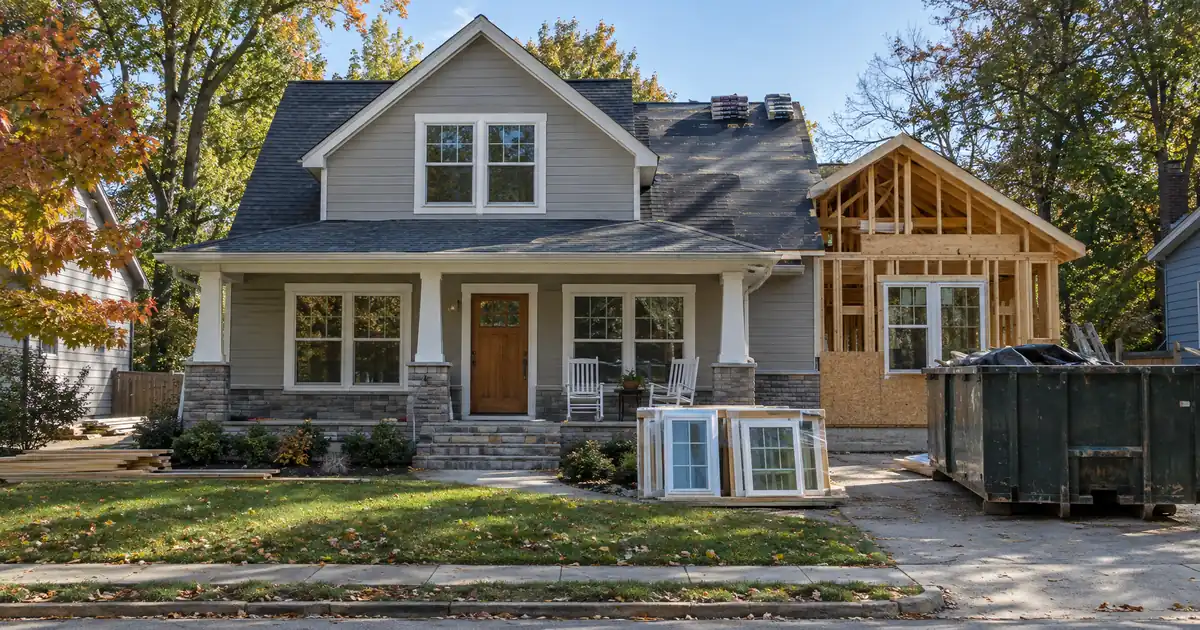
The Quick Read: A DSCR loan works for an auction property you plan to hold as a rental once it is rentable, while hard money works for an auction purchase that has a short deadline, needs repairs, or has not yet proven it can carry itself as a rental, and many buyers use both in sequence. The two loans answer different questions. DSCR asks whether the rent covers the payment, and hard money asks whether the collateral, the plan, and the exit hold up. Across the wholesale network Lendmire works with, auction buyers most often start with short-term money and move to long-term rental financing later.
- DSCR qualifies primarily on property-level rental income covering the payment, subject to lender guidelines.
- Hard money sizes the loan on collateral, the project plan, and the exit.
- Auction deadlines are usually far tighter than a DSCR purchase process, so hard money often wins the bid-day decision.
- A DSCR loan funds a rentable property and does not pay for renovation.
- The refinance exit should be tested before the bid, not after the win.
Side-by-Side
The table below shows the structural differences for an auction buyer. The DSCR column reflects Lendmire’s network guidelines. The hard money column shows published industry norms alongside the short-term structures the network places. Everything varies by lender, property, and experience, and nothing here is a commitment to lend.
What this loan actually costs to carry.
Hard money is sized against the project and priced by time. Enter the deal and see how much the program will lend, the cash required at closing, the carry while you hold it, and what is left at the exit.
Leverage tiers on the current program: 85% with fewer than 2, 90% with 2 or more, 93% with 5 or more completed projects — every tier capped at 75% of after-repair value. Loan amounts up to $5,000,000, larger by exception; terms of 6 to 18 months, interest-only, no prepayment penalty. The rehab portion funds in draws against completed work, not at closing.
Program parameters shown update from Lendmire’s centralized guideline source. Rate, points, and months are editable assumptions, not quoted terms.
Cost cap sets the loan · positive spread
Illustrative estimate only — not a quote, Loan Estimate, approval, or commitment to lend. Rate, points, and months are editable assumptions. Hard money is business-purpose financing for real estate investors, not a consumer mortgage. Leverage on the current program tops out at 93% of project cost for investors with a documented track record, capped at 75% of after-repair value, with rehab funding up to 100% of the documented budget released in draws; actual terms vary by lender, borrower experience, property, and exit. Lendmire is a mortgage broker, not a lender.
| Factor | DSCR Loan | Hard Money |
|---|---|---|
| Review basis | Rent versus PITIA, plus credit | Collateral, plan, and exit, plus credit |
| Documentation | Appraisal with rent survey, entity papers | Contract, entity papers, ID, value opinion |
| Property condition | Must be rentable as bought | As-is or rehab, with draws |
| Property types | Rentals; some types not offered | Non-owner-occupied 1-4 units |
| Entity vesting | LLC common | LLC common |
| Term structure | Long-term, 30-year fixed spine | Short, interest-only, 6-18 months |
| Timeline | Multi-step process, suits planned holds | Built for short windows |
| Reserves | Commonly around 6 months of PITIA | Proof of liquidity, amounts vary |
| Fits an auction deadline? | Rarely, unless funds are arranged early | Often, when committed before the bid |
| Exit | Long-term hold | Refinance or sale within the term |
Why Auctions Complicate the Choice
Auctions change the loan decision because the deadline, the property condition, and the unknowns all arrive at once. Most auction sales require certified funds, and the financing is usually settled before the bid rather than after the win. Deadlines vary by jurisdiction, according to a foreclosure-auction glossary. One New York example calls for certified funds equal to ten percent of the bid on auction day, with the balance due after the sale on a schedule the terms set out, per a New York law-firm article.
Then come the property unknowns. Auction properties are typically sold as-is, with little or no pre-bid inspection. Occupancy may be unclear, and title or lien questions can surface late. Each unknown matters differently to each loan type.
Three questions sort most auction deals:
1. Can the property be rented today, with working systems, utilities, and no occupant dispute?
2. Does the auction’s funding window leave room for an appraisal, title work, and a lender’s review?
3. Do you plan to hold the property long-term, or reposition it and sell?
If the answer to the first question is no, DSCR generally cannot fund the purchase. If the answer to the second is no, DSCR is a poor fit for the purchase step no matter how good the rent looks.
How Each Loan Actually Works
A DSCR loan divides the property’s monthly rent by its PITIA, which is principal, interest, taxes, insurance, and any HOA dues. On a vacant property, market rent from the appraisal stands in for a lease.
Coverage of 1.00 is where many select programs start, and stronger ratios open better pricing and leverage. A separate select-lender path takes coverage below 1.00, with leverage and terms adjusted. Clearing 1.00 does not mean the property produces positive cash flow, because the ratio compares rent to PITIA only. Repairs, vacancy, management, utilities, and capital expenses sit outside the calculation.
Hard money works differently. The lender looks at the borrower and the asset together. Underwriting typically reviews the purchase contract, entity documents, ID, a broker price opinion or appraisal for as-is and after-repair value, and proof of liquidity. Credit is still pulled. On rehab deals, the lender holds the repair budget back and releases it in draws as work is completed. Terms run short, and the loan is often interest-only, so the full balance comes due at the end. SmartAsset notes that a hard money borrower may pay interest only and then owe one large balloon payment at the end of the term.
Both products are designed for non-owner-occupied investment properties. Because they are business-purpose investor loans, they are reviewed differently from a standard owner-occupied mortgage. The CFPB’s Truth in Lending exam procedures list credit extended primarily for a business purpose as exempt. That is why both loans can look at the property rather than your personal debt-to-income ratio, and it is also why a documented business purpose matters on every file.
When DSCR Is the Better Fit
DSCR is the better fit when the property is rentable now and the plan is to hold it. Three auction situations tend to qualify.
Post-auction properties that reverted to the lender. Properties that become lender-owned after a failed auction can usually be financed on normal timelines, without the funds-on-the-gavel pressure.
Properties you buy with cash and finance afterward. Some buyers pay cash at the auction and then arrange a cash-out refinance on a rentable property. On the network’s DSCR files, cash-out typically tops out around 75% LTV on a standard investment rental, and about 6 months of seasoning is the common expectation. Hard Money vs Investment Property Cash-Out Refinance in an LLC covers that path in more detail.
Rent-ready properties with a long auction window. Some online platforms and some jurisdictions leave more room. If the property is clean, vacant or leased, and the window allows a full appraisal and title review, a DSCR purchase can work directly.
On a DSCR purchase, most files across the network land at 75% to 80% LTV on an investment property, with select high-leverage programs reaching 85% LTV at roughly a 700 credit score and above. A 620 floor exists in parts of the network, most programs want around 660, and 700 and above unlocks the strongest leverage tiers. Loan sizes reach up to $3,000,000 on standard programs, with smaller balances available through select lenders, and above $2,500,000 the network generally holds to 30-year fixed structures. Entity-held purchases, such as an LLC, are common, subject to lender program eligibility.
Property type matters too. DSCR on manufactured homes, log homes, and barndominiums is not offered in the network, and auction inventory sometimes includes exactly those. A larger down payment can lift the DSCR, but it does not erase leverage caps, credit floors, reserve rules, or property eligibility. The strongest files clear both tests: enough equity and enough rental coverage.
When Hard Money Is the Better Fit
Hard money is the better fit when time, condition, or uncertainty rules DSCR out. Four auction situations point this way.
Tight funds deadlines. When certified funds are due within hours or days of the gavel, a loan arranged and committed before the bid is the practical route. Investors often line up bridge financing in advance, so funds are in place before they raise a paddle.
Properties that need work. DSCR funds a rent-ready asset and cannot pay for renovation. Hard money can fund the purchase and the rehab together, with the repair budget released in draws against completed work. Lenders review the budget and scope, and an unrealistic rehab budget can stop a deal.
Properties without a proven rental profile. If the occupancy status is unclear or the rent has not been tested, collateral-based underwriting handles the uncertainty better than a rent-based ratio.
Borrowers with experience for stronger leverage. On the network’s hard money programs, fix-and-flip loans are sized to project cost in tiers: 85% of project cost with fewer than 2 completed projects, 90% at 2 or more, and 93% at 5 or more. Every tier is capped at 75% of after-repair value. Bridge purchases without rehab go up to 80% of purchase price. Up to 100% of the rehab budget funds in draws, and that figure is a rehab-budget share, not a purchase LTV. There is no true 100% purchase program.
Market surveys report that hard money lenders typically lend 65% to 75% of collateral value, with 25% to 35% down, according to Corporate Finance Institute. The network’s loan-to-cost structure above is how experienced borrowers get past that range. All of these figures vary by lender, property, and experience.
Other network parameters for hard money: loans run up to $5,000,000 with larger amounts by exception, terms run 6 to 18 months, and loans are interest-only with no prepayment penalty. A 620 minimum score applies, with additional conditions below 660, and first-time investors qualify at the lower leverage tiers. The collateral must be non-owner-occupied residential property with one to four units, and ground-up construction can go to 10 units. Commercial, land, and owner-occupied properties are not on the sheet. The network covers 41 markets, including Washington, D.C.
One Auction Property, Two Paths
Consider a vacant auction house that needs paint, flooring, and one major system repair. It is a single-unit investment property, and you plan to hold it as a rental.
Path one, DSCR only. The appraiser will not support a rent estimate on a property that cannot be occupied, and a DSCR loan does not fund the repairs. Even if the deadline were generous, the property is not rent-ready, so this path does not work.
Path two, bridge and refinance. Hard money covers the purchase and the repair draws. You complete the work, place a tenant, and then apply for a DSCR refinance. Many investors refinance out of hard money into long-term DSCR financing once the property is stabilized, and Lendmire brokers that path.
Now run the exit test before bidding. Suppose the appraised market rent after repairs covers the future PITIA at around 1.2x. That would clear a 1.00 benchmark with some cushion. But if your estimate lands near 1.00 or below, the refinance may shrink or fail, and you would be holding a balloon-style loan that comes due on the lender’s schedule. A coverage ratio just under 1.00 might still work through a select lender that reviews sub-1.00 files, but leverage and terms would adjust. That is a structural choice to make deliberately, not a rescue plan.
Using two loans also means two sets of costs and two approvals. Compare that total with what a single-loan path would cost, and decide whether the property earns its place after both.
What Can Go Wrong
The most common failure is the exit. A refinance can fail because rent comes in lower than expected, the appraisal is short, the property is not fully stabilized, or credit slipped during the rehab. When the hard money term ends before the refinance qualifies, the investor faces an extension request, a sale, or a scramble. Refinance Out of Hard Money vs Sell the Property works through that decision.
Other risks are specific to auctions:
- Unknown occupancy. A tenant or former owner still in the property can delay rehab and rental income.
- Title surprises. Liens and clouded title can complicate both the purchase loan and the later refinance.
- Repair overruns. Hard money lenders hold back repair funds, so cost overruns come out of your liquidity.
- Property too damaged for either product. If the home cannot be insured or occupied even after the budgeted work, neither loan is a good fit, and cash may be the only workable tool.
Pre-Auction Readiness Checklist
Before bid day, confirm each of these:
1. Proof of funds and a written financing plan, in the form the auction requires.
2. Confirmation that the auction accepts lender-sourced funds.
3. Entity documents and a clear business-purpose rationale for the purchase.
4. A rent estimate for the stabilized property and the resulting coverage ratio.
5. A repair budget you would defend to a lender.
6. A named exit: refinance, sale, or hold, with a backup if the first fails.
7. Reserve and liquidity documentation, since both products look for it.
Key Terms Defined
PITIA is principal, interest, taxes, insurance, and association dues, the monthly obligation DSCR compares against rent.
DSCR is the debt service coverage ratio, monthly rent divided by PITIA.
After-repair value (ARV) is the estimated value of the property once planned work is finished.
Loan-to-cost is the loan amount as a share of the total project cost, used on rehab loans.
Balloon payment is a large lump sum due at the end of a short-term loan.
The Verdict
Neither loan is better in the abstract. DSCR is a long-term rental product for properties that already work as rentals. Hard money is a short-term tool for properties and deadlines that do not.
If the property is rentable, the auction window is generous, and you plan to hold, DSCR can work directly. If the deadline is tight, the property needs work, or the rent is unproven, hard money covers the purchase and DSCR becomes the planned exit. The flip point is the exit test: if you cannot show the refinance works before you bid, the short-term loan is the riskier choice, however convenient it feels on auction day.
For the full picture of how these loans work across the network, see Lendmire’s complete DSCR loans guide.
Frequently Asked Questions
Can a DSCR loan fund an auction purchase directly?
Sometimes, but rarely. It works when the property is rentable and the auction leaves room for an appraisal with a rent survey, title work, and lender review. Many auctions require certified funds within a window too short for that process, so buyers often arrange short-term financing first.
Does hard money skip credit checks and underwriting?
No. Underwriting is asset-based, built around the property, the plan, and the exit, but credit is still reviewed. The network’s hard money programs look for a 620 minimum score, with additional conditions below 660.
Can an LLC buy an auction property with either loan?
Yes on both, subject to lender program eligibility. Entity vesting is common for investors, and the entity documents are part of the file on either loan type. The business purpose should be documented clearly in both cases.
What happens if the rent does not cover the payment after the rehab?
The DSCR refinance may be smaller or may not qualify. Options include a lower-leverage structure, a select-lender path that reviews sub-1.00 coverage with adjusted terms, selling the property, or negotiating more time on the short-term loan.
Does clearing 1.00 mean the property cash flows?
No. The ratio compares rent to PITIA only. Repairs, vacancy, management, utilities, and capital expenses sit outside the calculation, so run those separately before you bid.
Next Step
If you are buying, rehabbing or refinancing an investment property on a short timeline and want to see how the numbers work, Lendmire can help you compare hard money options based on the project, the exit plan, leverage, and your goals.
About Lendmire
As a DSCR and non-QM mortgage broker, Lendmire — NMLS# 2371349 — connects investors with wholesale lending channels across 41 markets, including Washington, D.C. The property’s rental income, not the borrower’s tax returns, is central to lender review, which works for self-employed operators and portfolios beyond four financed properties. Scotsman Guide named Lendmire a Top Mortgage Workplace in both 2025 and 2026.
Get Started
Ready to find the right loan for you?
See your offer in seconds. No credit pull, no obligation.
Informational only. Not a Loan Estimate, approval, or commitment to lend. Program availability and eligibility are subject to lender guidelines, credit approval, property review, and underwriting.
References
1. REI Prime, Foreclosure Auction glossary
2. Daeryun Law, Public Auction of Real Estate in New York
3. SmartAsset, Hard Money Loans
4. CFPB, Truth in Lending Act exam procedures
5. Corporate Finance Institute, Hard Money Loan
This article is part of Lendmire’s hard money loan program — full qualification details, guidelines, and scenarios live on the program page.
Related reading: Can You Open an LLC Before Closing a DSCR Loan? · Hard Money Documentation for a Flip Exiting Into a DSCR Loan · Can a W-2 Employee Get a DSCR Loan on a Rental?
Brandon Miller
Founder & CEO, Mortgage Loan Originator, Lendmire LLC
- Mortgage Loan Originator · NMLS# 1129696 · Verify on NMLS Consumer Access
- North Carolina Real Estate Broker · License# 343312 · Verify on NCREC
- North Carolina Insurance Producer · License# 19053198 · Property, Casualty, Life, Health · Verify on NAIC SBS
- Lendmire LLC · Firm NMLS# 2371349 · Verify firm licensure
Required disclosures. Lendmire (NMLS# 2371349) operates as a licensed mortgage broker, not a direct lender or depository. The discussion in this article is general in nature and should not be relied upon as financial, legal, or tax advice — every investment scenario is unique and should be reviewed by a qualified professional. Any loan inquiry is subject to lender underwriting, and this article is not a commitment to lend or a guarantee of approval. Mortgage rates, loan terms, and program guidelines vary by borrower, property, and state, and may change without notice. Equal Housing Opportunity. Verify licensure at NMLS Consumer Access.