
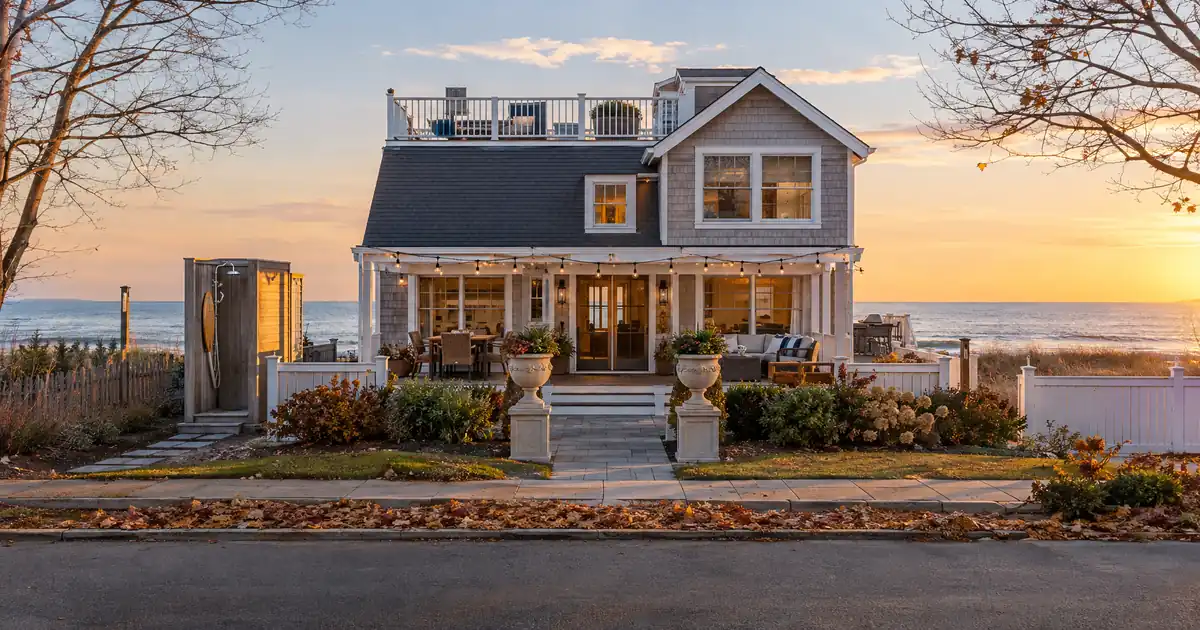
The Quick Read: A DSCR lender reads storm damage through three separate tests, and a coastal rental has to pass all three: the property must be habitable and in acceptable condition, it must carry insurance that actually covers the loss, and it must still show rent that covers the full monthly payment.
- Condition comes from the appraisal. Heavy damage can make a property ineligible until it is repaired.
- Insurance sits inside the payment the rent has to cover, so higher premiums move the coverage ratio.
- A vacant or uninhabitable unit has no usable rent, which usually pushes the file toward repair financing first and a DSCR loan after stabilization.
- Clearing 1.00 is not the same as positive cash flow. Repairs, vacancy and deductibles sit outside the calculation.
Everything below is subject to lender guidelines, credit approval and property review. It is not a commitment to lend.
DSCR Calculator
Run the numbers in your market
Rate source: Freddie Mac 30-yr average via FRED® — Federal Reserve Bank of St. Louis · effective Oct 29, 2026
Prefilled with starting assumptions — enter your own rent or nightly figures, taxes, insurance, and HOA for a more accurate picture.
Program parameters update from Lendmire’s centralized guideline source. Taxes and insurance are editable estimates.
As of Oct 29, 2026 · General Freddie Mac market benchmark, not a Lendmire loan offer. Rent, nightly rate, occupancy, taxes, and insurance are editable estimates. Short-term rental figures are estimates only and vary significantly by season, property type, management approach, and local short-term-rental rules — confirm local regulations before relying on them. Qualifying income for short-term rentals varies by program — some use appraisal market rent, others use documented STR history or projections — and is confirmed in underwriting. Not a Loan Estimate, approval, or commitment to lend. Program availability and eligibility are subject to lender guidelines, credit approval, property review, and underwriting.
What Does a DSCR Lender Look at After a Storm?
The lender looks at condition, insurance and claim status, and rent. Each is reviewed on its own, and a strong score on one does not rescue a weak score on another. Rent can look fine on paper while the appraisal flags the roof, or the insurance can be perfect on a unit that is sitting empty.
DSCR loans qualify primarily on property-level rental income covering the payment, subject to lender guidelines. That does not mean the file skips property review. Across the wholesale network, nearly every program still wants an appraisal, proof of insurance and a clear read on the property’s condition. The complete DSCR loans guide covers the basic ratio. This article covers what changes when a hurricane has touched the building.
Key Terms Defined
- DSCR: monthly rent divided by the monthly payment of principal, interest, taxes, insurance and any HOA dues.
- PITIA: the full housing payment that sits under the ratio, including insurance.
- As Is condition: how the appraiser rates the property on the day of inspection, damage included.
- Subject to repair: a value opinion that assumes listed repairs are finished.
- Loss-of-rents coverage: insurance that pays some rent while a covered loss keeps the unit empty.
- Named-storm deductible: a separate, usually percentage-based deductible that applies to hurricane wind damage.
- Substantial damage: a local determination that repair cost reaches 50 percent of the building’s pre-damage market value in a flood zone.
How Does the Appraisal Treat the Damage?
The appraiser records condition and market rent in the same report, and both feed the loan size. Appraisers rate condition on a C1 to C6 scale. McKissock’s appraisal education explains that if any part of a dwelling warrants a C6, the whole dwelling is rated C6. A C6 means damage or deferred maintenance serious enough to affect safety, soundness or structural integrity.
The same page notes that the report states an As Is rating and, when needed, a Condition Subject to Repair rating. For a storm-hit rental, that split matters. A cracked fascia and missing shingles on a leased unit read very differently from a collapsed roof section and a gutted interior.
Timing creates the first snag. If the appraisal or inspection predates the storm, a lender may ask for a post-disaster inspection before moving forward. That can be a drive-by confirmation that no observable damage occurred, or a fuller interior and exterior review when the neighborhood took heavy hits. A lender sizes the loan on its own appraisal and rent figure, not on the owner’s after-repair estimate.
The Damage-Severity Ladder
The path depends on how bad the damage is and whether a tenant is still paying. This is the part of the file most investors misjudge.
| Damage level | Lease status | What the lender looks for | Likely path |
|---|---|---|---|
| Cosmetic | Leased, occupied | Photos, claim status, intact coverage | Standard DSCR file |
| Moderate | Leased or short vacancy | Repair scope, contractor estimates, insurance | Repairs first, or conditions on the appraisal |
| Heavy | Vacant | Habitability, permits, proof of completion | Repair or bridge financing, then DSCR |
| Uninhabitable | No rent | No usable lease or market-rent support | Rebuild and stabilize before applying |
Select lenders in the network will review moderate cases with conditions attached. Heavy cases usually do not fit a DSCR loan until the property is livable and rentable again. The condition test does not relax because the money is meant for repairs.
How Does a Lender Read Insurance on a Coastal Rental?
Insurance is the stealth problem on coastal files because it sits inside the payment. A higher premium or a new wind policy lowers the coverage ratio even when rent never changes. Lenders also look past the premium to the structure of the policy.
Four items get the most attention:
1. Wind versus flood. Named-storm and wind coverage do not pay for rising water. Flood needs its own policy. Investors who assume one covers the other find the gap after the loss.
2. Percentage deductibles. A BiggerPockets thread on hurricane insurance claims describes hurricane and wind deductibles in the range of 2% to 5% of coverage. On a large dwelling limit, that is real cash the owner must hold.
3. Replacement cost versus actual cash value. Replacement cost lets repairs be funded at current prices. Actual cash value subtracts depreciation, which can leave a gap on an older roof.
4. Loss-of-rents coverage. It helps carry the property while it is empty, but limits are common. An insurer’s guide to rental hurricane coverage notes that major rebuilds can run 18 to 24 months, so a 12-month rent cap can run out early.
On flood, the federal baseline is useful context. The OCC’s consumer guidance says the federal minimum is the lesser of the outstanding loan balance, the National Flood Insurance Program maximum, or the property’s insurable value, and the NFIP maximum for a one-to-four family non-condo residence is $250,000. Federal flood rules apply to federally regulated or backed lenders, so whether a given DSCR program applies a flood requirement is that program’s own rule. Private flood policies can exceed the NFIP cap, which matters on higher-value coastal buildings.
Where the Flood-Zone Repair Rule Breaks the Plan
In a flood zone, a repair can turn into a rebuild. Under FEMA’s NFIP guidance on substantial improvement and damage, if repair cost equals or exceeds 50 percent of the building’s pre-damage market value, the building must be brought up to current floodplain standards. The local floodplain administrator or building official makes that call, building by building.
For a DSCR file, that means elevation work, longer permitting and a longer vacancy than the investor planned. Flood policies can carry increased cost of compliance coverage toward that work, but it has its own limits and generally requires the local determination before work starts. Get the determination letter before the contractor touches the building, because the appraiser and lender will ask what the finished property looks like.
Open Claim Versus Settled Claim
An open claim means the loss is not fully measured, and lenders dislike unknowns. A settled claim with repairs finished is a much cleaner file. Order of events matters:
1. Photograph everything before any cleanup or temporary repair.
2. Let the adjuster inspect before permanent work begins.
3. Keep receipts for emergency mitigation such as tarping and water extraction.
4. Track insurance proceeds, because covered repair money is often released in stages.
5. Collect the paperwork that proves the work is finished.
A prior claim does not by itself sink a file. Open items do, because the lender cannot tell what the property is worth, or what it will cost to carry, until the claim resolves.
DSCR vs. conventional financing
There are two common ways to finance an investment property, and they qualify you differently — here’s how investors weigh them.
Why investors choose it
- Qualifies on the property’s rental income — no personal tax returns, W-2s, or pay stubs needed to document income.
- No personal debt-to-income ceiling to clear, so existing mortgages and obligations don’t cap your borrowing the same way.
- Can be closed in an LLC, keeping the property inside a business entity.
- Built for scaling — not held to the limit on number of financed properties that conventional financing applies.
- Underwriting centers on the deal: generally qualifies when the rent covers the payment, a 1.00x coverage ratio being a common baseline (confirmed in underwriting).
- Designed specifically for investment property, including long-term and, where the program allows, short-term rentals.
Where it’s strong
- Often the lowest ongoing financing cost for a buyer who fully qualifies on personal income — a fit for a first property or a cost-first purchase.
Trade-offs for investors
- Requires full personal income documentation and must fit within a debt-to-income limit — salary, existing debts, and other mortgages all count.
- Typically held in your personal name rather than a business entity.
- Caps how many financed properties you can carry, which can become a ceiling as a portfolio grows.
- Evaluates you as a borrower as much as the property, which usually means more paperwork.
How investors usually choose: a first or single property often optimizes for the lowest financing cost; portfolio builders often optimize for leverage, vesting in an LLC, and scaling past conventional caps. The right answer depends on your goals, the property, and current guidelines — both paths run through select lenders in Lendmire’s wholesale network, with eligibility and terms confirmed in underwriting.
Proof of Repair: What the File Needs
The lenders and appraisers both want evidence that the damage is gone. A solid package usually includes:
- Contractor invoices showing scope and final payment.
- Permits and final inspection sign-offs.
- Before and after photos of each repaired area.
- The adjuster’s report and the claim settlement letter.
- A re-inspection or appraisal update confirming completion.
- A signed lease, or an appraiser-supported market rent figure, for the repaired unit.
Missing sign-offs are the usual reason a repaired property still carries a condition on the appraisal.
Worked Illustration: One Modeled Coastal Rental
Run the ratio on a modeled single-family rental, using assumptions rather than market data. Before the storm, rent covers the full payment at roughly 1.25x. After the storm, the owner buys a separate wind policy and the insurance line climbs. The same rent now covers the payment at about 1.05x, and the file is thinner but intact.
Then the roof fails and the unit sits empty. No lease means no rent, and without an appraiser-supported market rent on a habitable property the ratio has nothing to measure. After repairs are finished and signed off, a new lease returns the ratio to roughly 1.05x. The lender reads the post-repair number, not the pre-storm one.
That 1.05x is a coverage ratio, not cash flow. The deductible, the vacancy months and the repair overruns all fall outside it. Many select programs start at 1.00.
What Leverage and Credit Look Like on a Storm-Affected File
The network’s standard figures apply, with no special storm tier. Purchases typically land at 75% to 80% LTV on an investment property, and a cash-out refinance tops out around 75% LTV on a standard rental. Credit floors start at 620 in parts of the network, most programs want about 660, and 700 or higher opens the strongest leverage tiers.
Programs commonly want about six months of PITIA, stepping up to roughly nine months on loans above $1,500,000. A larger down payment can lift the coverage ratio, but it never erases the leverage caps, credit floors or property eligibility rules.
Common Mistakes
- Binding a hurricane policy before checking whether the lender accepts the deductible.
- Assuming wind coverage handles flood.
- Applying with a pre-storm appraisal and no post-disaster update.
- Starting repairs in a flood zone before the substantial-damage determination.
- Counting vacant months as rent when no lease or market-rent support exists.
- Treating a 1.00 or better ratio as proof the property cash flows.
If the Property Is Already Financed
A storm after closing leaves the owner with a different question: refinance, draw equity, or hold. The same tests apply. The refinance appraisal reads As Is condition, the rent must be real, and insurance must be in force. Lendmire’s piece How to Cash Out a Coastal Rental After Hurricane Damage on a DSCR Loan covers that side in detail. Cash-out also carries seasoning expectations, generally around six months of ownership on a recent purchase.
Frequently Asked Questions
Can I get a DSCR loan on a hurricane-damaged rental?
Light, repaired or cosmetic damage on a leased unit can be reviewed in a normal DSCR file. Heavy damage usually has to be repaired and stabilized first, often with bridge or repair financing, and then refinanced. Approval is subject to lender guidelines and the appraisal.
Does a vacant, damaged unit still qualify on rent?
Rarely. DSCR files need either a lease or an appraiser-supported market rent on a property that can actually be rented. A unit that cannot be occupied has no usable rent figure, so the ratio cannot be tested until it is livable.
Will the lender order a new appraisal?
Often. If the appraisal predates the storm, a lender may require a post-disaster inspection or update. A new loan is sized on that lender’s own appraisal and rent figure, not on the borrower’s estimate of the repaired value.
Is flood treated differently from wind?
Yes. Wind and named-storm policies do not cover rising water, so flood needs its own policy. In a flood zone, FEMA’s 50 percent rule can also change what repairs are required, which affects cost and vacancy.
Does an open claim stop a refinance?
It can slow or stall one. Until the claim settles and repairs are documented, the lender cannot confirm condition, value or carrying cost. A settled claim with sign-offs and photos is far easier to review.
Next Step
If you are buying or refinancing a rental property and want to see how the numbers work, Lendmire can help you compare DSCR loan options based on the property income, credit profile, leverage, and investor goals. Call 828-256-2183 or request a quote through the site. Coastal buyers who price the wind, flood and deductible structure before they make an offer tend to see the real coverage ratio sooner.
About Lendmire
As a non-QM mortgage broker (NMLS# 2371349), Lendmire facilitates DSCR investor loans across 41 markets, including Washington, D.C. DSCR eligibility is generally reviewed around property-level rental income instead of personal income documentation, subject to lender guidelines, which can suit LLC-structured portfolios and self-employed borrowers who don’t fit conventional boxes. Lendmire is a two-time Scotsman Guide Top Mortgage Workplace (2025, 2026).
Get Started
Ready to find the right loan for you?
See your offer in seconds. No credit pull, no obligation.
Informational only. Not a Loan Estimate, approval, or commitment to lend. Program availability and eligibility are subject to lender guidelines, credit approval, property review, and underwriting.
References
1. McKissock: Understanding appraisal condition ratings C1 to C6
2. BiggerPockets: Hurricane insurance claims
3. Steadily: Hurricane insurance for rental property
4. OCC helpwithmybank.gov: Flood insurance amount
5. FEMA NFIP Unit 8: Substantial improvement and substantial damage
This article is part of Lendmire’s DSCR loan program — full qualification details, guidelines, and scenarios live on the program page.
Related reading: Can You Buy a Pittsburgh Rental With a DSCR Loan? · Is a 40-Year DSCR Loan Worth It on a Rental? · Can a W-2 Employee Get a DSCR Loan on a Rental?
Brandon Miller
Founder & CEO, Mortgage Loan Originator, Lendmire LLC
- Mortgage Loan Originator · NMLS# 1129696 · Verify on NMLS Consumer Access
- North Carolina Real Estate Broker · License# 343312 · Verify on NCREC
- North Carolina Insurance Producer · License# 19053198 · Property, Casualty, Life, Health · Verify on NAIC SBS
- Lendmire LLC · Firm NMLS# 2371349 · Verify firm licensure
Disclosures. The information presented in this article is general market commentary, not financial, legal, or tax advice. Lendmire is a mortgage brokerage (NMLS# 2371349) — not a direct lender or depository institution — and loan placement is subject to lender underwriting. Nothing in this content represents a commitment to lend. Loan terms, pricing, and program availability vary based on borrower qualifications, property characteristics, and state of subject property, and are subject to change at any time. Lendmire complies with Equal Housing Opportunity requirements. Consumer access: nmlsconsumeraccess.org.