
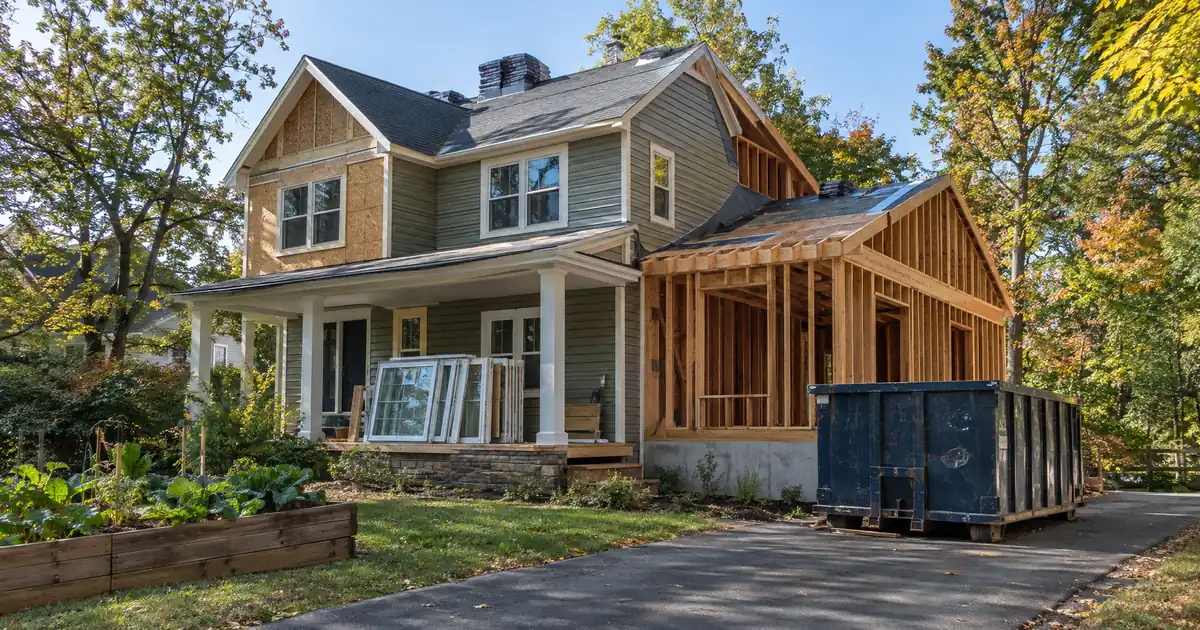
The Quick Read: The appraiser credits what local buyers have paid for comparable finished homes, not what your rehab cost. That appraised value caps your loan, while a separate rent opinion drives the coverage test. No reliable national percentage exists for how much rehab spend gets recognized.
- Cost is not value. Appraisers build the number from recent sales of similar renovated homes.
- Your own after-repair estimate is a planning figure. The lender’s appraisal is the underwriting figure.
- Receipts and permits prove what was done and when. They do not set what the work is worth.
- Any rehab dollar the appraisal does not recognize stays in the deal as your own cash.
- Value and rent are two separate tests. Either one can be the limit on your loan.
What Does the Appraiser’s Credit Actually Mean?
The credit is the part of your rehab spend that shows up as higher appraised value. Appraisers call it contributory value: what the work adds to market value, as set by buyer behavior. Madison Park Appraisal describes it as the market’s verdict, not the contractor’s invoice. It can be more than cost (rare), less than cost (common), or about equal.
DSCR Calculator
Run the numbers in your market
Rate source: Freddie Mac 30-yr average via FRED® — Federal Reserve Bank of St. Louis · effective Oct 29, 2026
Prefilled with starting assumptions — enter your own rent or nightly figures, taxes, insurance, and HOA for a more accurate picture.
Program parameters update from Lendmire’s centralized guideline source. Taxes and insurance are editable estimates.
As of Oct 29, 2026 · General Freddie Mac market benchmark, not a Lendmire loan offer. Rent, nightly rate, occupancy, taxes, and insurance are editable estimates. Short-term rental figures are estimates only and vary significantly by season, property type, management approach, and local short-term-rental rules — confirm local regulations before relying on them. Qualifying income for short-term rentals varies by program — some use appraisal market rent, others use documented STR history or projections — and is confirmed in underwriting. Not a Loan Estimate, approval, or commitment to lend. Program availability and eligibility are subject to lender guidelines, credit approval, property review, and underwriting.
Three numbers get confused in rehab deals. They come from different people and carry different weight.
| Number | Who produces it | Does the lender use it? |
|---|---|---|
| Your cost basis | You, from purchase plus rehab | Sometimes, early in ownership |
| Your after-repair value (ARV) | You, as a plan | No, planning only |
| Appraised value | Lender’s appraiser, from comps | Yes, it sizes the loan |
DSCR loans are built for finished, rent-ready property. The rehab itself usually runs on your cash or a short-term bridge loan. The DSCR loan then pays that off. So the appraisal at the exit is the moment your renovation either gets recognized or doesn’t.
Key Terms Defined
After-repair value (ARV): your estimate of what the property is worth once the work is done. It is a planning number.
Appraised value: the opinion of value from the appraiser the lender orders. This one counts.
Cost basis: what you paid for the property plus what you spent on the rehab.
Contributory value: what a specific improvement adds to market value, as shown by what buyers actually pay.
Seasoning: the waiting period after you buy before a lender will size a refinance on the new appraisal rather than your cost.
Over-improvement: finishes or additions that exceed what the neighborhood’s buyers and renters pay for.
Rent schedule: the appraiser’s opinion of market rent, built from rental comps. The appraisal forms for this carry names like 1007 (single-family rent schedule) and 1025 (2-4 unit income). Those names come from the agency world. DSCR files borrow the forms, not the agency rules.
How Does the Appraiser Turn a Finished Rehab Into a Number?
The appraiser uses the sales comparison approach. It works in four steps.
1. Pick comps. The appraiser finds recent sales of similar homes nearby, with attention to condition and finish level.
2. Adjust for differences. If a comp has a superior renovated kitchen and yours is older, the comp gets adjusted down for that feature. HomeLight’s sales comparison explainer shows this kind of adjustment.
3. Reconcile. The adjusted comp values are weighed into a single opinion of value.
4. Run rental comps. Separately, the appraiser forms an opinion of market rent from nearby leases.
The cost approach (rebuild cost minus depreciation) matters mostly when comps are thin. It is not the main event on a typical rental.
Here is the catch. The appraiser cannot give you credit that no sale supports. Expressions Remodeling makes the point plainly: if no sold home shows buyers paying for a feature, it cannot be added. Your comps set the ceiling.
What Gets Credited and What Doesn’t
Credit follows comp support, not effort or spend. Here is a rough sorting, with no dollar claims attached.
| Rehab item | Likely credit | Why |
|---|---|---|
| Roof, mechanicals, deferred repairs | Usually strong | Fixes what comps lack |
| Kitchens and baths in line with area | Partial to strong | Matches renovated sales |
| Flooring, paint, fixtures | Partial | Condition adjustment only |
| High-end finishes above area norms | Weak | Comps do not pay for it |
| Elaborate landscaping, hardscape | Rarely full | Market rarely expects it |
For context on the cost-versus-value gap, the NARI summary of the NAR Remodeling Impact Report puts a new steel front door at 100% cost recovery and closet renovation at 83%. Bathroom renovation lands at 50%. Those are Realtor estimates for resale, covered in the full NAR report. They are not appraiser or DSCR measures. Use them only to see that most projects return less than they cost.
An improvement may support a higher appraised value, depending on comps and underwriter review. That is as precise as honest gets.
Overbuilding and the Neighborhood Ceiling
Spending more does not push the number past the neighborhood ceiling. If your finishes exceed what nearby buyers and renters pay for, the appraiser has no comp to adjust against. Work that removes function or is poorly executed can even pull value down, as Advanced Appraisals notes.
The same page makes another point worth keeping. Receipts and permits help verify when work was done and the home’s effective age. The market still sets what the work is worth. Invoices are evidence of scope, never proof of value.
Which Value Does the Lender Use?
It depends on seasoning. Across the wholesale network, a cash-out refinance tops out around 75% LTV on a standard rental, and about 6 months of ownership is the common seasoning expectation. Inside that window, many programs size the loan off your cost basis rather than the new appraisal. After it, the appraised value generally drives sizing.
That timing is where rehab deals get tripped up. The seasoning clock usually starts at purchase, not when the last contractor leaves. A fast rehab does not shorten the wait. Programs differ on the details, so confirm with your broker before you plan the exit. Lendmire’s piece DSCR Value Rules Before and After Seasoning on a BRRRR Rehab goes deeper on that handoff.
If you are buying rather than refinancing, most purchase files land at 75%-80% LTV, subject to lender guidelines. The cost-versus-value question matters most on the refinance exit.
One Rehab, Four Appraisals
Run the numbers on an illustrative deal using index points, not dollars. You buy at 100 and spend 20 on rehab, so your all-in cost is 120. Assume a 75% cash-out LTV on a standard rental, past seasoning. These are modeled assumptions, not market data. Every figure here varies by lender and program — guidelines, property type, leverage, and credit profile all apply.
| Appraisal | Loan (75%) | Cash left in deal |
|---|---|---|
| High: 160 | 120 | 0 |
| Target: 150 | 112.5 | 7.5 |
| Low: 130 | 97.5 | 22.5 |
| Weak: 115 | 86.25 | 33.75 |
Read it across. A miss on appraised value shrinks the loan proportionally, because the loan is a percentage of value. That trapped cash limits what you can put into the next deal.
The rule of thumb that falls out: the deal works cleanly when acquisition plus rehab sits at or below the cash-out LTV applied to the realistic appraised value. At 75%, that means all-in cost at or below three-quarters of value. Thin margins have no cushion for a low appraisal.
DSCR vs. conventional financing
There are two common ways to finance an investment property, and they qualify you differently — here’s how investors weigh them.
Why investors choose it
- Qualifies on the property’s rental income — no personal tax returns, W-2s, or pay stubs needed to document income.
- No personal debt-to-income ceiling to clear, so existing mortgages and obligations don’t cap your borrowing the same way.
- Can be closed in an LLC, keeping the property inside a business entity.
- Built for scaling — not held to the limit on number of financed properties that conventional financing applies.
- Underwriting centers on the deal: generally qualifies when the rent covers the payment, a 1.00x coverage ratio being a common baseline (confirmed in underwriting).
- Designed specifically for investment property, including long-term and, where the program allows, short-term rentals.
Where it’s strong
- Often the lowest ongoing financing cost for a buyer who fully qualifies on personal income — a fit for a first property or a cost-first purchase.
Trade-offs for investors
- Requires full personal income documentation and must fit within a debt-to-income limit — salary, existing debts, and other mortgages all count.
- Typically held in your personal name rather than a business entity.
- Caps how many financed properties you can carry, which can become a ceiling as a portfolio grows.
- Evaluates you as a borrower as much as the property, which usually means more paperwork.
How investors usually choose: a first or single property often optimizes for the lowest financing cost; portfolio builders often optimize for leverage, vesting in an LLC, and scaling past conventional caps. The right answer depends on your goals, the property, and current guidelines — both paths run through select lenders in Lendmire’s wholesale network, with eligibility and terms confirmed in underwriting.
When Rent Limits the Loan Before Value Does
Value is only the first test. DSCR compares the property’s rent to its full payment of principal, interest, taxes, insurance, and any HOA dues (PITIA). The lender uses the appraiser’s market rent opinion, not your pro forma, subject to lender guidelines and any lease in place.
Coverage of 1.00 is where many select programs start. A separate select-lender path takes coverage below 1.00 with leverage and terms adjusted. Stronger ratios open better pricing and leverage.
So a rehab can win the value test and still be held back by rent. You might see a strong appraisal and a loan sized lower than expected because the rent opinion would not cover a larger payment. Unlike value, rent supports come from lease comps. If no nearby leases show the higher rent your finishes imply, the rent opinion stays modest.
One more clarification. Clearing 1.00 does not mean positive cash flow. Repairs, vacancy, management, utilities, and capital reserves sit outside the calculation.
In practice, DSCR files after a rehab often stall on the rent side. Investors model value carefully and rent loosely. The stronger files pull rental comps before buying and size both tests at once.
Making the Finished Work Visible to the Appraiser
Appraisers cannot credit what they cannot see or document. Hand over a complete package:
- An itemized scope of work with before-and-after photos.
- Receipts and permits, which confirm timing and effective age.
- A short list of recent comps you believe are fair, as suggestions only.
- A signed lease and deposit records, if the property is tenanted.
Two traps deserve a mention. First, old listing photos and public records may still show the dated “before” condition, so your photos matter. Second, unpermitted work is a risk. It can draw questions or be discounted. Scheduling the appraisal soon after you apply, and before a tenant moves in when possible, also helps.
If the Appraisal Comes In Low
You have options, and none is free. Start with the report itself. Check whether the comps match your finish level and whether any facts are wrong.
- Request reconsideration. Reconsideration practices vary by lender and program. Evidence that moves a number is better comps and corrected facts. Complaints and invoices do not.
- Restructure. A smaller loan, more cash in, or a different structure may still work.
- Wait. Value can be revisited later, and seasoning may change your sizing basis.
- Walk or pivot. You typically pay for the appraisal but can decline to proceed.
A larger down payment or cash left in the deal can improve the loan-to-value picture. It never erases leverage caps, credit floors (a 620 floor exists in parts of the network, with most programs wanting around 660), reserve rules (commonly around 6 months of PITIA), or property eligibility. The strongest files clear both tests: enough equity and enough rental coverage. Note too that manufactured homes, log homes, and barndominiums are not offered through these DSCR programs.
Common Mistakes
- Spend X, expect X back. Appraiser sources and the NAR figures above both contradict it.
- Treating your ARV as the lender’s number. The lender’s own appraisal controls.
- Assuming no appraisal on a DSCR refinance. An appraisal is normally part of the file.
- Handing over invoices as proof of value. They prove work, not worth.
- Ignoring the rent test. Value can clear while rent limits the loan.
- Assuming one seasoning rule fits every program. It does not.
Each of these strands cash. For the budgeting side, see Lendmire’s article How Much Rehab Cost a DSCR Lender Credits a First-Time Flipper. The complete DSCR loans guide covers the loan mechanics around it. Tax treatment varies; consult a qualified professional before relying on any deduction.
Frequently Asked Questions
Does a DSCR appraiser give credit for every dollar I spent on rehab?
No. The appraiser credits what comparable finished sales support. Spend that exceeds neighborhood norms, or that buyers do not pay for, shows up as little or no added value. The shortfall stays as your own cash.
Does the lender use my after-repair value?
No. Your ARV is a planning figure. The lender orders its own appraisal, and that appraised value, subject to seasoning rules, sizes the loan.
Can rent limit my loan even when the appraisal is strong?
Yes. The appraiser’s market rent opinion feeds the coverage test. If rent would not cover a larger payment, the loan can be sized lower than value alone allows, subject to lender guidelines.
Can I challenge a low appraisal?
Sometimes. You can also decline to proceed, though you typically still pay for the appraisal.
How long do I have to wait before the new appraisal counts?
It varies by program. About 6 months of ownership is the common expectation for cash-out across most of the network. Inside that window, sizing often leans on cost basis, and details differ by lender.
Next Step
If you are buying or refinancing a rental property and want to see how the numbers work, Lendmire can help you compare DSCR loan options based on the property income, credit profile, leverage, and investor goals. Lendmire is a broker arranging DSCR financing through select lenders in its network across 41 markets, including Washington, D.C. Every file is underwritten individually, and nothing here is a commitment to lend. Run a rehab through an illustrative calculator before you buy, and size it against the appraisal you could realistically get, not the one you hope for.
About Lendmire
Lendmire (NMLS# 2371349) is a mortgage brokerage built around DSCR investor lending, with programs available in 41 markets, including Washington, D.C. DSCR lenders commonly evaluate rental-income coverage instead of personal income paperwork — a practical fit for LLC-owned and multi-property investors. Terms vary by lender, property, leverage, and program. Scotsman Guide named Lendmire a Top Mortgage Workplace in both 2025 and 2026.
Get Started
Ready to find the right loan for you?
See your offer in seconds. No credit pull, no obligation.
Informational only. Not a Loan Estimate, approval, or commitment to lend. Program availability and eligibility are subject to lender guidelines, credit approval, property review, and underwriting.
References
2. HomeLight’s sales comparison explainer
3. Expressions Remodeling: How Neighborhood Comps Affect Renovation
4. newnari.org: Remodeling Impact Report Top Projects Cost Recovery and Owner Satisfaction
5. NAR: Remodeling Impact Report
6. Advanced Appraisals: How Upgrades and Renovations Impact Market Value
This article is part of Lendmire’s DSCR loan program — full qualification details, guidelines, and scenarios live on the program page.
Related reading: Is a Rehabbed Rental Ready for a DSCR Loan Right After the Rehab? · Can You Use Delayed Financing for a DSCR Refinance? · How Much a DSCR Refinance Lends Against Rental Income
Brandon Miller
Founder & CEO, Mortgage Loan Originator, Lendmire LLC
- Mortgage Loan Originator · NMLS# 1129696 · Verify on NMLS Consumer Access
- North Carolina Real Estate Broker · License# 343312 · Verify on NCREC
- North Carolina Insurance Producer · License# 19053198 · Property, Casualty, Life, Health · Verify on NAIC SBS
- Lendmire LLC · Firm NMLS# 2371349 · Verify firm licensure
Compliance and disclosures. Lendmire (NMLS# 2371349) is a licensed mortgage broker and is not a direct lender, depository institution, financial advisor, or tax professional. Content in this article is general market analysis and educational information — not financial, legal, or tax advice for any specific situation. Lendmire does not guarantee loan approval; every transaction is subject to underwriting by the funding lender. Mortgage pricing and loan program guidelines are subject to change at any time without notice and vary by borrower characteristics, property type, and state regulations. Lendmire complies with Equal Housing Opportunity. Licensure verification: NMLS Consumer Access.