
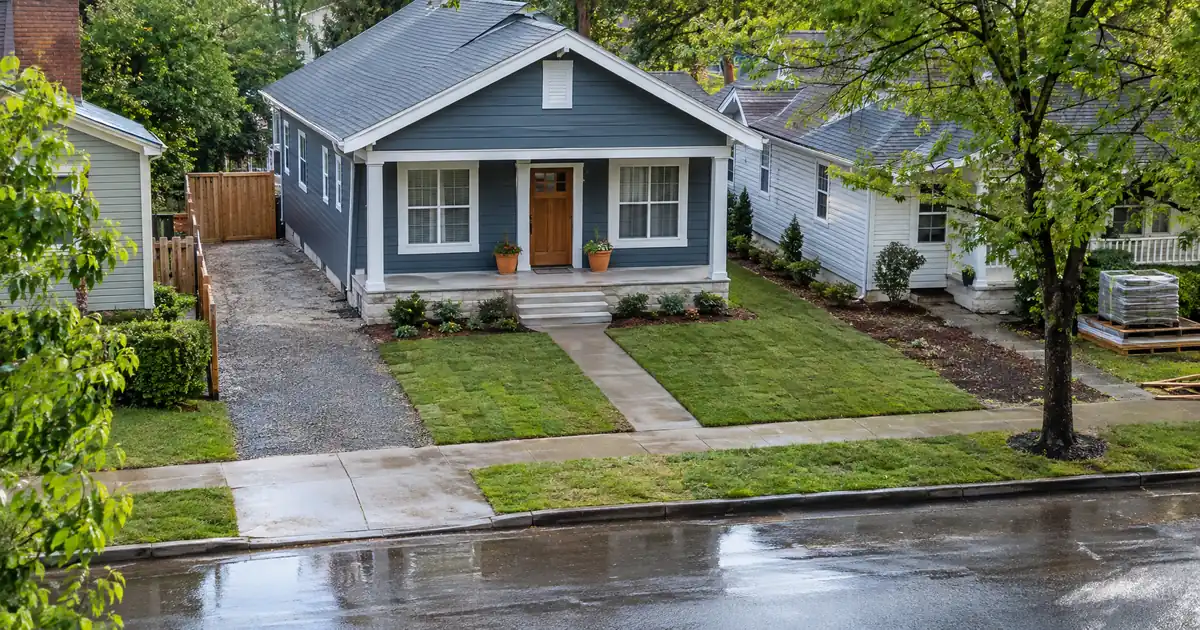
The Quick Read: A DSCR loan fits an investor buying or owning a rent-ready property who wants long-term financing based on rental coverage. Hard money fits an investor whose property needs work, or whose calendar leaves little room for a full appraisal-and-underwriting file, and who has a clear plan to sell or refinance.
- DSCR qualifies primarily on property-level rental income covering the payment, subject to lender guidelines.
- Hard money is underwritten mainly on the collateral and the exit plan, and varies by lender, property, and experience.
- A property that needs repairs before it can be rented is usually a hard money candidate, not a DSCR candidate.
- A stabilized, leased property on a tight date is the case many investors overlook, and DSCR can still work there if the file is complete up front.
These two loans are not substitutes. One is a permanent structure built to hold a rental. The other is a short-term bridge built to get you into a property and out again. The right answer depends on three things: the property’s condition, how many steps your calendar allows, and what happens when the short-term loan comes due.
What this loan actually costs to carry.
Hard money is sized against the project and priced by time. Enter the deal and see how much the program will lend, the cash required at closing, the carry while you hold it, and what is left at the exit.
Leverage tiers on the current program: 85% with fewer than 2, 90% with 2 or more, 93% with 5 or more completed projects — every tier capped at 75% of after-repair value. Loan amounts up to $5,000,000, larger by exception; terms of 6 to 18 months, interest-only, no prepayment penalty. The rehab portion funds in draws against completed work, not at closing.
Program parameters shown update from Lendmire’s centralized guideline source. Rate, points, and months are editable assumptions, not quoted terms.
Cost cap sets the loan · positive spread
Illustrative estimate only — not a quote, Loan Estimate, approval, or commitment to lend. Rate, points, and months are editable assumptions. Hard money is business-purpose financing for real estate investors, not a consumer mortgage. Leverage on the current program tops out at 93% of project cost for investors with a documented track record, capped at 75% of after-repair value, with rehab funding up to 100% of the documented budget released in draws; actual terms vary by lender, borrower experience, property, and exit. Lendmire is a mortgage broker, not a lender.
Side-by-Side
The table below describes typical DSCR programs across Lendmire’s wholesale network and published industry norms for hard money. Both vary by lender, property, and borrower, and nothing here is a commitment to lend.
| Factor | DSCR Loan | Hard Money |
|---|---|---|
| Review basis | Rent covering the payment | Collateral value and exit plan |
| Documentation | Credit, entity papers, reserves | Application, assets, project plan |
| Property condition | Generally rent-ready | Can fund purchase plus repairs |
| Property types | 1-4 unit rentals; no manufactured homes | 1-4 unit residential; varies by lender |
| Entity vesting | LLC common, subject to program terms | LLC common |
| Timeline | More steps: appraisal, title, entity files | Fewer steps, less underwriting |
| Reserves | Commonly around 6 months of PITIA | Cash for carry, down payment, draws |
| Term | Long-term; 30-year fixed is the spine | Short-term, interest-only, balloon |
The table leaves out pricing on purpose.
What Controls the Calendar on Each Loan?
On a DSCR file, the calendar is set mostly by steps the lender and third parties control. On a hard money file, there are simply fewer steps. No neutral source gives a reliable day count for either product, so plan around the sequence, not a promise.
1. Scenario check and application. You provide the contract or address, a credit authorization, and bank statements for reserves.
2. Entity documents. If you close in an LLC, the operating agreement and related papers come into play, subject to lender program eligibility.
3. Appraisal with a rent schedule. For a single-unit rental, the appraiser documents market rent on Form 1007, which Fannie Mae’s appraiser guidance describes as the comparable rent schedule for a one-unit investment property. For two to four units, the appraisal uses Form 1025.
4. Title and insurance. These run alongside the appraisal.
5. Underwriting and conditions. The lender reviews the file and issues conditions to clear.
The appraiser is usually the stage you control least. The appraised market rent, not your own projection, typically sets the coverage number.
Hard money works differently. The lender looks at the property’s value, often the after-repair value, along with your liquidity, your rehab budget, and how you plan to get out. BiggerPockets explains that these loans are short-term and secured by a first-position lien. Paperwork is lighter, but it is not absent. Expect an application, asset statements, a schedule of properties you own, and a project plan.
Some of this you can control. Entity papers, insurance quotes, reserve statements, and a lease or rent evidence can all be gathered before you go under contract. The appraisal and underwriting queue sit with others.
When a DSCR Loan Is the Better Fit
A DSCR loan is the better fit when the property is already rentable, you intend to hold it, and the closing date is firm but not impossible. It is also the better fit when you want a structure that still works after the first year.
The stabilized rental with a hard date. Picture an investor buying a leased duplex with a contract date that is tight but realistic. The property needs no repairs. Rent is documented. The entity papers are ready. This is the overlooked case. The date alone does not justify a short-term loan, because the investor would then pay twice to end up in the same place.
The investor who wants to scale. Qualification is property-level, so a growing portfolio does not run into a personal debt-to-income ceiling. Most DSCR purchase files land at 75%-80% LTV (20%-25% down). A select high-leverage DSCR tier goes as low as 15% down on an investment-property purchase, generally with a score of roughly 700 or higher. Credit floors vary: 620 exists in parts of the network, most programs want around 660, and 700+ unlocks the strongest leverage tiers. Standard loan sizes run up to $3,000,000 on standard programs (smaller balances available through select lenders).
The investor who prefers a long runway. The 30-year fixed is the spine of the product. Extended terms and interest-only periods are available through select lenders in the network, and ARM structures exist for those who want them. A short-term loan has no equivalent.
Coverage deserves a plain explanation. DSCR divides monthly rent by the full monthly housing obligation: principal, interest, taxes, insurance, and any association dues. A reading of 1.00 is where many select programs start. A separate select-lender path takes coverage below 1.00, with leverage and terms adjusted. Stronger ratios open better pricing and leverage. One caution applies, though. Clearing 1.00 is not the same as positive cash flow. Repairs, vacancy, management, utilities, and capital expenses all sit outside the calculation.
A larger down payment can lift the ratio. It does not erase leverage caps, credit floors, reserve rules, or property eligibility. The strongest files clear both tests: enough equity and enough rental coverage.
Where DSCR does not fit. DSCR is not offered on manufactured homes (single- or double-wide), log homes, or barndominiums. A vacant or distressed property is a harder case, because the appraiser’s rent opinion becomes the rent used for lender review and the property generally has to be rent-ready.
When Hard Money Is the Better Fit
Hard money is the better fit when the property cannot yet be underwritten as a rental, when the closing date leaves no room for a full file, or when you need repair capital alongside the purchase. It is a tool for transitions.
The distressed or vacant property. If the roof, kitchen, or systems need work before anyone can live there, a rental loan will not be underwritten. Hard money can fund the purchase and the repairs together. Fix-and-flip leverage is tiered by documented completed projects: 93% of project cost at 5+ completed projects, 90% of project cost at 2+, and 85% of project cost with fewer than 2. Every tier is capped at 75% of after-repair value. A bridge purchase with no rehab can reach up to 80% of purchase price, while cash-out and rate-and-term refinances run up to 65% of value. Separately, the rehab budget itself can fund in draws against completed work. These figures vary by lender, property, and experience, and the top tier is reserved for experienced investors.
The date that truly cannot move. Suppose a seller will accept only a short, firm closing window, or a deal is competing against cash offers. A loan with fewer steps and lighter underwriting can be the difference between winning and losing the contract. That is a legitimate reason. Just be honest about what you are buying with it: a shorter path now, and an obligation to exit later.
The short-hold flip. If you plan to sell within the loan term, a rental structure’s long runway has little value. Terms on this type of program run roughly 6-18 months, interest-only, with no prepayment penalty. For hard money specifically, the minimum credit score is 620, with additional conditions below 660, and first-time investors qualify at the lower leverage tiers. Collateral is non-owner-occupied residential property of one to four units, with loan amounts up to $5,000,000.
The tradeoff you accept. BiggerPockets notes that these lenders focus on the real estate rather than the borrower’s income or credit. That is not a free pass. Underwriting still looks at your liquidity, your experience, and your plan. The short term also means a balloon comes due. If your sale or refinance slips, you can face extension costs or, in the worst case, lose equity.
The Hybrid: Hard Money First, DSCR After
Many investors do not choose between the two loans. They use one to enter and the other to stay. Buy and rehab on a bridge loan, lease the property, then refinance into long-term DSCR financing once it is stabilized. Lendmire, a non-QM DSCR mortgage broker, arranges the long-term DSCR side of that exit path.
The plan has real friction, and it deserves a stress test before you commit:
- Seasoning can misalign. Refinance programs commonly expect a period of ownership before they will lend, and that period varies by lender.
- Lease documentation can be missing. A signed lease and deposit evidence make the refinance file much cleaner.
- The appraisal can come in short. If the value or rent opinion disappoints, the refinance may not pay off the bridge loan.
- Closing costs get paid twice. Costs on the bridge loan and on the refinance both come out of the investor’s pocket, which can strain the plan’s cash needs.
What Happens If the Date Slips?
A missed date can cost the deal, so the fallback plan matters as much as the first choice. Before you pick a loan, ask what you do if the file is not done by the contract date.
On a DSCR file, the usual risk is a late appraisal or an open condition. Ask the seller about a short extension early, while you still have goodwill. Keep a second path in mind if the property is rent-ready: a hard money bridge that you refinance into DSCR afterward. That path costs more steps, but it protects the contract.
On a hard money file, the risk shows up later. A short term gives you little room if rehab runs long or the appraisal on your exit comes in light. Build a cushion into the project timeline. Line up the long-term lender before you close the bridge, not after.
If neither loan can meet the date, the honest answer may be to renegotiate the date, or to pass. A structure that does not match the property adds risk of its own, so do not stretch one to fit.
Entity and Business-Purpose Basics
Both products commonly close in an LLC, subject to lender program eligibility. On a DSCR file, entity documents add steps, so an undocumented LLC or an unclear partner arrangement can stall things.
DSCR loans are designed for non-owner-occupied investment properties. Because they are business-purpose investor loans, they are reviewed differently from a standard owner-occupied mortgage. The OCC’s handbook on truth in lending notes the business-purpose exemption and cautions that a checked box alone may not be enough evidence of purpose. The practical takeaway is simple: document what the property is for.
Pre-Contract Checklist for a Tight Date
Before you sign, these steps help compress a DSCR timeline:
- Order entity documents and confirm who signs.
- Gather reserve statements, since the amount required depends on the lender, the file, and the loan size. Conservative rate-and-term files at modest leverage under $1,500,000 can see reserves waived, and loans above that size typically step up to about 9 months.
- Get insurance quotes in hand.
- Collect lease and deposit evidence, if the property is leased.
- Ask the broker to run the scenario before you commit.
For a short-term rental, add more. Form 1007 was not designed for nightly-rate properties, so Fannie Mae’s guidance tells appraisers to use monthly-lease comparables. STR programs use other income methods. They typically allow purchase to 75% LTV, expect a 640+ score and about 12 months of hosting history, and carry a 1.00 coverage floor on purchases.
Key Terms Defined
DSCR (debt service coverage ratio): the property’s monthly rent divided by its full monthly housing obligation.
PITIA: principal, interest, taxes, insurance, and association dues, the full monthly obligation used in the DSCR calculation.
Loan-to-cost: the loan amount as a share of the total project cost, used on many hard money files instead of value alone.
After-repair value (ARV): the estimated value of a property once planned repairs are complete.
Seasoning: the period you must own a property before a lender will refinance it.
Balloon: the lump-sum balance that comes due at the end of a short-term loan.
The Balanced Verdict
If the property is rent-ready and the date is tight but achievable, start with DSCR. Prepare the file before contract, and keep a bridge loan as the backup. You get a long-term structure and avoid paying closing costs twice.
If the property needs work, or the date leaves no room for a full file, hard money is a reasonable tool. Take it with a funded exit plan and a cushion for delays. Do not take it only because it feels less demanding on paperwork, because it still asks for documents and a clear way out.
The flip point is the property’s condition. A rent-ready property favors DSCR. An unrentable property favors a bridge. Everything else is a question of how much certainty you need now, and how much you are willing to pay later for it. For more on program parameters, see Lendmire’s complete DSCR loans guide.
Frequently Asked Questions
Is a DSCR loan a hard money loan?
No. A DSCR loan is a long-term non-QM investor loan that qualifies primarily on property-level rental income covering the payment, subject to lender guidelines. Hard money is a short-term, collateral-based bridge. The term, the amortization, and the property-condition expectations all differ.
Can a DSCR loan fund repairs?
Generally not as a purchase-plus-rehab product. DSCR programs typically expect a rent-ready property, because the appraisal documents market rent for a property that can be leased. If the home needs significant work first, a bridge loan or other rehab financing usually comes first.
Can I use an LLC for either loan?
Often yes, subject to lender program eligibility. On a DSCR file, entity documents add steps, so having them ready before contract helps. Hard money lenders commonly work with entities as well, though requirements vary.
Can I refinance hard money into DSCR later?
Yes, many investors do, once the property is stabilized and leased. The refinance depends on seasoning, lease documentation, and the appraisal. Because closing costs are paid twice, run the numbers before choosing the two-step path.
Does hard money require no paperwork?
No. The file is lighter than a DSCR file, but underwriting still looks at your liquidity, experience, and exit.
Next Step
If you are buying, rehabbing or refinancing an investment property on a short timeline and want to see how the numbers work, Lendmire can help you compare hard money options based on the project, the exit plan, leverage, and your goals. Lendmire is a broker that arranges financing through select lenders in its wholesale network, across 41 markets including Washington, D.C. Every file is underwritten individually, and nothing here is a commitment to lend.
About Lendmire
Lendmire (NMLS# 2371349) is a mortgage brokerage built around DSCR investor lending, with programs available in 41 markets, including Washington, D.C. DSCR lenders commonly evaluate rental-income coverage instead of personal income paperwork, a practical fit for LLC-owned and multi-property investors. Terms vary by lender, property, leverage, and program. Scotsman Guide named Lendmire a Top Mortgage Workplace in both 2025 and 2026.
Get Started
Ready to find the right loan for you?
See your offer in seconds. No credit pull, no obligation.
Informational only. Not a Loan Estimate, approval, or commitment to lend. Program availability and eligibility are subject to lender guidelines, credit approval, property review, and underwriting.
References
1. Fannie Mae Appraiser Update
2. BiggerPockets Hard Money Guide (PDF)
3. OCC Comptroller’s Handbook, Truth in Lending Act
This article is part of Lendmire’s hard money loan program — full qualification details, guidelines, and scenarios live on the program page.
Related reading: How Much a DSCR Cash-Out Refinance Costs to Close for an Investor · How Much Cash Comes Out of a DSCR Cash-Out Refinance on a Condotel? · How DSCR Loan Scaling Works for an Investor Adding Rentals
Brandon Miller
Founder & CEO, Mortgage Loan Originator, Lendmire LLC
- Mortgage Loan Originator · NMLS# 1129696 · Verify on NMLS Consumer Access
- North Carolina Real Estate Broker · License# 343312 · Verify on NCREC
- North Carolina Insurance Producer · License# 19053198 · Property, Casualty, Life, Health · Verify on NAIC SBS
- Lendmire LLC · Firm NMLS# 2371349 · Verify firm licensure
Compliance and disclosures. Lendmire (NMLS# 2371349) is a licensed mortgage broker and is not a direct lender, depository institution, financial advisor, or tax professional. Content in this article is general market analysis and educational information — not financial, legal, or tax advice for any specific situation. Lendmire does not guarantee loan approval; every transaction is subject to underwriting by the funding lender. Mortgage pricing and loan program guidelines are subject to change at any time without notice and vary by borrower characteristics, property type, and state regulations. Lendmire complies with Equal Housing Opportunity. Licensure verification: NMLS Consumer Access.