
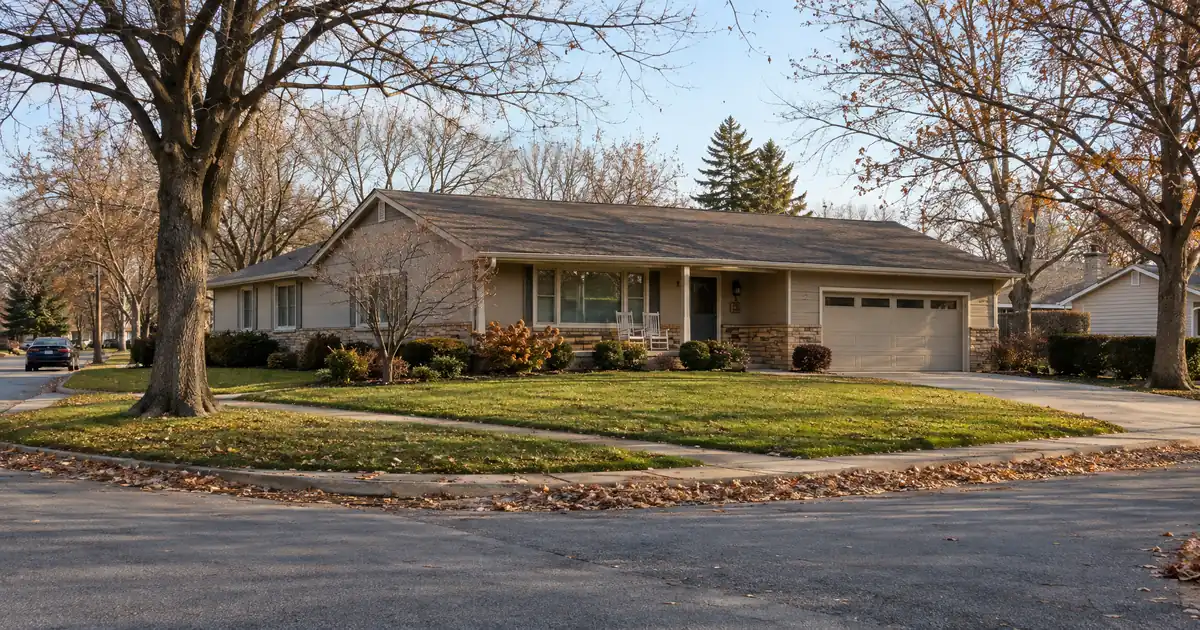
The Quick Read: Usually, yes: when the program offers an interest-only period, it is written into the single note, so it applies to every rental in the pool together, but it is not guaranteed on every blanket product, it depends on the leverage and coverage of your file, and it only delays principal rather than removing it. Interest-only is a feature of the loan, not of each property. That is why it usually runs pool-wide instead of rental by rental. The bullets below are the short version.
- One note, one structure. Interest-only on a blanket loan normally covers every property in the pool, not a hand-picked few.
- Not every blanket product has it. Across the wholesale network Lendmire works with, the 30-year portfolio DSCR loan offers an interest-only period. The rental portfolio term loan does not list it.
- It lifts the coverage number. Principal drops out of the payment used in the test, so the same rent produces a higher ratio.
- It resets everything at once. When the period ends, every property steps up to a full payment on the same date.
- Everything else still applies. Credit, leverage, reserves and property eligibility do not loosen because the loan is interest-only.
Lendmire is a mortgage broker arranging DSCR investor loans through select lenders in its wholesale network, across 41 markets including Washington, D.C. The rest of this piece covers the mechanics, the exceptions, and how to decide. For the full background, start with Lendmire’s complete DSCR loans guide.
What Is a Blanket DSCR Loan, and Where Does Interest-Only Fit?
A blanket DSCR loan is one note secured by several rentals. Lenders also call it a portfolio DSCR loan or a cross-collateralized loan. Those three names describe the same thing. Every property secures the whole debt, and the loan is reviewed mainly on the rental income the pool produces, subject to lender guidelines.
Two structures sit in the network, and they treat interest-only differently.
The 30-year portfolio DSCR loan covers two to twenty properties under one note. Loan sizes run from $300,000 to $5,000,000, with larger balances on review. Leverage goes up to 80% of value on a purchase or rate-and-term refinance of an investment property. The pooled coverage floor is 1.00. Rate types include fixed and adjustable, the term is 30 years, and an interest-only period is available. Eligible property types are single-family, two-to-four unit, condo and townhome.
The rental portfolio term loan is built for five or more rental properties or units under one loan. Loan sizes run from $500,000 to $50,000,000, with larger balances on review. Leverage goes up to 75% of value. Terms are three, five, seven or ten years, with a balloon payment due at maturity. Interest-only is not listed as a feature of this structure. Small multifamily of five or more units is eligible only here.
So the first answer to your question is a product question. If you want interest-only on a pool, the 30-year portfolio structure is the one that offers it. All figures are program ceilings or floors, not quotes, and they are subject to lender guidelines.
Does the Interest-Only Period Apply to Every Rental?
On a blanket loan, yes, it normally applies to every rental in the pool. There is one note, one payment schedule and one interest-only window. The lender does not tag rental A as interest-only and rental B as amortizing inside the same note. The whole pool is tested and paid on the same basis.
Think of a note as a single contract. The period, the amortization schedule and the reset date belong to the contract. The properties are collateral for it.
That raises the natural follow-up. Can you split the pool, with some rentals interest-only and some amortizing? Do not assume so. A split inside one note is not the normal structure. The usual way to mix payment styles is to put the rentals on separate loans, and the table later in this piece compares the two paths. If a lender tells you a split is possible on a blanket, get it confirmed in writing, in the note terms, before you plan around it.
There is one more reason “every rental” can fail. The pool must fit the product. A property type outside the program, such as an owner-occupied home, co-op, mixed-use or commercial building, cannot sit in the pool. Manufactured and mobile homes are not reviewable on any of these programs. Short-term rental rules can vary by city, county, HOA and property type, so confirm local rules before relying on projected rental income.
How Does Interest-Only Change the Pooled Coverage Math?
Interest-only raises the coverage ratio because the payment in the denominator gets smaller while the rent stays the same. The standard test divides rent by the full monthly obligation: principal, interest, taxes, insurance and any association dues. With an interest-only period, principal drops out. Taxes, insurance and dues stay in.
On a blanket loan, the test is pooled. Add up the rent from every property, add up the full obligations, and divide. Stronger rentals can offset weaker ones. On the 30-year portfolio structure, the pooled floor is 1.00.
Here is a modeled illustration, not market data. Say you hold three similar rentals with equal obligations. Coverage runs in a fully amortizing structure and an interest-only structure like this:
| Rental | Amortizing coverage | Interest-only coverage |
|---|---|---|
| Rental A | About 1.25 | About 1.40 |
| Rental B | About 1.00 | About 1.12 |
| Rental C | About 0.90 | About 1.01 |
| Pooled | About 1.05 | About 1.18 |
Notice two things. The pool clears 1.00 either way, and the interest-only pool has noticeably more cushion. Rental C sits under 1.00 on its own in the amortizing column. A single rental below 1.00 can sit in a pool whose combined coverage clears the floor, and underwriting tests the pooled coverage, the leverage and the terms. Interest-only does not change that logic. It only moves each ratio up.
Blanket interest-only files are typically qualified on the interest-only payment. Some products instead test a fully amortizing payment as a stress check, and the basis is a lender-by-lender term. Confirm which one applies to your file in writing (question three in the checklist below).
One caution about the word “clears.” A ratio above 1.00 does not mean positive cash flow. The test compares rent to the monthly obligation only. Repairs, vacancy, management, utilities and capital expenses sit outside it.
What Happens When the Interest-Only Period Ends?
When the period ends, every rental in the pool steps up to a full payment on the same date. The balance has not shrunk, because no principal was paid. Amortization then begins on that full balance over the years that remain on the schedule. For example, a ten-year interest-only period on a 30-year schedule leaves twenty years to repay the balance. Compressing the principal into fewer years makes the new payment higher than a standard 30-year payment would have been.
On a single loan, a payment jump hits one property. On a blanket, it hits the whole portfolio at once. That is the biggest planning difference.
Before you choose interest-only, run three numbers:
1. The pooled coverage during the interest-only period.
2. The pooled coverage after the reset, using the full payment.
3. The cash left each month after your own expenses in both phases.
If the post-reset coverage dips below the floor, you will need a plan. Options include refinancing before the reset, paying principal voluntarily during the interest-only window, raising rents, or selling a property. Those are decisions to make before closing, not in the last year of the window.
Why Do These Loans Allow Interest-Only at All?
The short answer is that blanket DSCR loans are business-purpose investor loans, so the consumer rules that restrict interest-only on owner-occupied mortgages do not apply to them. Interest-only is a program choice, not a legal gray area.
DSCR loans are designed for non-owner-occupied investment properties. Because they are business-purpose investor loans, they are reviewed differently from a standard owner-occupied mortgage. For contrast, the CFPB’s compliance guide explains that qualified mortgages cannot include interest-only payments. The federal rulemaking behind that standard also states that business-purpose loans are not covered, and that investment-purpose loans are treated as business-purpose. That is general background, not legal advice.
The practical takeaway is simple. Do not let anyone tell you interest-only on an investor loan is off-limits or riskier by law. It is a feature each lender chooses to offer, price and limit.
What Does Interest-Only Not Change?
Interest-only changes the payment schedule. It does not change what the lender needs to see. This is the misconception that costs investors the most time.
- Credit. The portfolio programs carry a credit floor of 640, and some structures ask for 680 or 720. Interest-only does not lower it.
- Leverage. The caps above still bind. A cash-out on a portfolio loan never goes above 75% of the pooled value on standard rentals. Inside the first six months of ownership, the loan is also capped at 90% of total cost (purchase price plus documented improvements), and at 100% of total cost from six to twelve months. The leverage ceiling still applies, and the loan is the lower of the two. After twelve months, appraised value alone is the basis. A rate-and-term refinance is not subject to the cost-basis cap.
- Reserves. They still depend on the lender, the leverage and the loan size. The term loan also holds reserves for taxes, insurance and capital expenditures.
- Rent evidence. Every property still needs a lease or an appraiser-supported market rent.
- Entity. Some structures require a special-purpose entity, typically an LLC, subject to program terms. Recourse loans carry a personal guarantee.
A lower payment is not a lower requirement. Interest-only can lift the ratio, but it cannot lift a credit score or add equity.
What If You Sell or Refinance One Rental During the Interest-Only Window?
Selling one property out of a blanket depends on the release terms in your loan documents. Without a partial-release clause, a sale can force payoff of the whole note. With one, the release price runs above the property’s allocated balance, and the remaining portfolio must still cover its debt service.
Interest-only adds a wrinkle. Because the balance stays flat, the allocated balance on each property never shrinks during the window. You will not build the equity cushion that principal paydown normally gives you. If you plan to sell a property in the first few years, the release price will sit at or near its original allocation, so confirm the release language and the substitution rules before you sign.
Cross-collateralization works the other way too. Default on the note puts every property at risk, not just the one that struggled. That is the price of pooling.
Blanket Interest-Only or Separate Loans?
A blanket makes sense when you want one note, one payment and pooled coverage. Separate loans make sense when you want flexibility. Here is how they compare.
| Factor | Blanket (30-year portfolio) | Separate loans |
|---|---|---|
| Interest-only scope | Whole pool together | Chosen per loan |
| Coverage test | Pooled, strong offsets weak | Each property alone |
| Selling one rental | Depends on release terms | Pay off that loan only |
| Reset date | One date for all | Staggered if you choose |
| Paperwork | One closing, one servicer | Several closings |
Extended terms and interest-only periods are available on single-property loans through select lenders in the network, so separate loans do not rule out interest-only. They just let you mix. If one rental needs the cushion and another does not, separate loans handle that more cleanly. If you mainly want to consolidate, the blanket is simpler.
Is Interest-Only Right for Your Pool?
Interest-only fits best when the pool is strong enough on its own, you have a clear plan for the reset, and you want the cushion more than the principal paydown. It fits worst when you are using it to squeeze a weak pool past the floor with no plan for what follows.
It tends to fit when:
- The pooled coverage after the reset still looks workable on the full payment.
- You plan to refinance, sell or raise rents before the window ends.
- You want extra monthly breathing room while you stabilize or renovate.
- You hold the portfolio for cash flow rather than quick turnover.
It tends not to fit when:
- The pool clears 1.00 only because of interest-only and falls short after the reset.
- You expect to sell individual properties early.
- You are counting on principal paydown to build equity.
- You cannot absorb the step-up if refinancing is not available when you need it.
A broker’s honest view: the strongest files clear both tests. They have enough equity and enough rental coverage, and they would still work if the interest-only period disappeared. Treat the interest-only window as a margin of safety, not the thing holding the deal up.
Questions to Ask Before You Commit
Get these answers in writing, in the term sheet or note terms, not on a phone call.
1. Does this specific product offer an interest-only period, and for how long?
2. Does the period apply to every property in the pool, or can it be split?
3. Is the file qualified on the interest-only payment or on a full-payment stress test?
4. Do leverage or coverage requirements differ for interest-only files?
5. What is the full payment after the reset, and what is the remaining amortization term?
6. What are the partial-release, substitution and sale terms?
7. What are the prepayment terms, and do they change during or after the window?
8. Are there any property types in the pool that the program does not accept?
Key Terms Defined
Blanket loan: One note secured by several rentals, also called a portfolio or cross-collateralized loan.
Interest-only period: A stretch of the loan when payments cover interest, taxes and insurance but no principal.
Pooled DSCR: Total rent from all properties divided by total monthly obligations, so stronger rentals can offset weaker ones.
Reset (recast): The date the interest-only period ends and full amortizing payments begin on the unchanged balance.
Cross-collateralization: Every property in the pool secures the whole debt, not just its own share.
Partial release: A loan clause that lets you sell one property out of the pool by paying a release price, which runs above that property’s allocated balance.
Frequently Asked Questions
Can I make only some of my rentals interest-only on one blanket loan?
Not in the usual structure. The interest-only period belongs to the note, so it covers the whole pool. If you want a mix of interest-only and amortizing payments, separate loans are the normal route. If any lender offers a split inside one note, confirm it in writing before relying on it.
Does interest-only on a blanket loan lower the credit score I need?
No. Credit, leverage and reserve rules stay the same. The portfolio programs carry a credit floor of 640, with some structures asking for 680 or 720, subject to lender guidelines. Interest-only changes the payment used in the coverage test, not the other requirements.
Do both blanket structures offer interest-only?
No. The 30-year portfolio DSCR loan has an interest-only period available. The rental portfolio term loan, which is for five or more properties or units and carries a balloon at maturity, does not list it as a feature.
What happens to my payment when the interest-only period ends?
It rises on every property at once. The balance has not been paid down, so amortization starts on the full amount over the remaining years of the schedule. Run the post-reset payment and pooled coverage before you choose interest-only.
Does a 1.00 coverage ratio mean the pool will be cash-flow positive?
No. The test compares rent only to the monthly obligation. Repairs, vacancy, management, utilities and capital expenses are outside it, so budget for them separately.
Next Step
If you are buying or refinancing a rental property and want to see how the numbers work, Lendmire can help you compare DSCR loan options based on the property income, credit profile, leverage, and investor goals. Programs change and every file is underwritten individually, subject to lender guidelines and not a commitment to lend.
About Lendmire
Lendmire — NMLS# 2371349 — is a mortgage brokerage specializing in DSCR investor loans, helping arrange financing across 41 markets, including Washington, D.C., through wholesale and investor-lending channels. The model centers on property-level rental income reviewed by the lender rather than W-2 documentation, subject to lender guidelines, suiting entity-owned and multi-property investors. Lendmire holds Scotsman Guide Top Mortgage Workplace recognition for 2025 and 2026.
Get Started
Ready to find the right loan for you?
See your offer in seconds. No credit pull, no obligation.
Informational only. Not a Loan Estimate, approval, or commitment to lend. Program availability and eligibility are subject to lender guidelines, credit approval, property review, and underwriting.
References
1. CFPB ATR/QM Small Entity Compliance Guide
2. Federal Register: CFPB Ability-to-Repay and Qualified Mortgage final rule
This article is part of Lendmire’s DSCR loan program — full qualification details, guidelines, and scenarios live on the program page.
Related reading: How Much Larger a DSCR Loan Gets on Interest-Only Payments · How to Lower Your Loan-to-Value on a Rental Before a DSCR Refinance · How to Move a Rental Into an Interest-Only DSCR Loan
Brandon Miller
Founder & CEO, Mortgage Loan Originator, Lendmire LLC
- Mortgage Loan Originator · NMLS# 1129696 · Verify on NMLS Consumer Access
- North Carolina Real Estate Broker · License# 343312 · Verify on NCREC
- North Carolina Insurance Producer · License# 19053198 · Property, Casualty, Life, Health · Verify on NAIC SBS
- Lendmire LLC · Firm NMLS# 2371349 · Verify firm licensure
Compliance and disclosures. Lendmire (NMLS# 2371349) is a licensed mortgage broker and is not a direct lender, depository institution, financial advisor, or tax professional. Content in this article is general market analysis and educational information — not financial, legal, or tax advice for any specific situation. Lendmire does not guarantee loan approval; every transaction is subject to underwriting by the funding lender. Mortgage pricing and loan program guidelines are subject to change at any time without notice and vary by borrower characteristics, property type, and state regulations. Lendmire complies with Equal Housing Opportunity. Licensure verification: NMLS Consumer Access.