
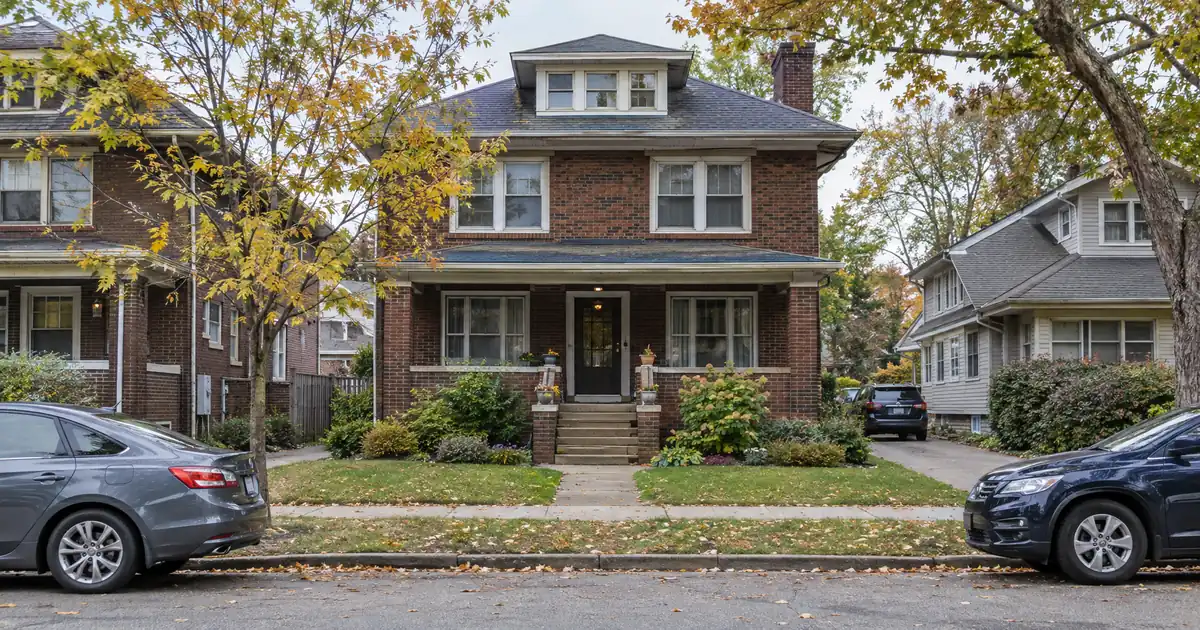
The Quick Read: Usually, yes: a Logan, Ohio rental can get a DSCR loan without a signed lease, because the lender substitutes the appraiser’s market-rent opinion for the lease, and this works most reliably on a purchase of a vacant, rent-ready property, while refinances, short-term rental programs, and homes needing heavy repairs follow stricter rules. DSCR stands for debt service coverage ratio. It measures whether the property’s rent covers its monthly housing payment. The loan is reviewed primarily on property-level rental income covering the payment, subject to lender guidelines.
- A vacant, move-in-ready property is commonly financeable on a purchase. The rent figure comes from the appraisal.
- Refinances are pickier. Many programs want a lease or an operating history first.
- When a lease does exist, most programs count the lower of the lease and the market rent.
- Short-term rentals use a different income method, and a property that needs heavy work is a condition problem, not a lease problem.
- Passing the coverage test is not the same as making money. Repairs, vacancy, and management sit outside the calculation.
Logan is a useful example here, not a special case. It is a small market near Hocking Hills tourism, which makes it a good test of what happens when rent comps are thin and some owners dream of nightly rates. The rules below apply to any small-market rental in the country.
DSCR Calculator
Run the numbers in Ohio
Rate source: Freddie Mac 30-yr average via FRED® — Federal Reserve Bank of St. Louis · effective Oct 29, 2026
Prefilled with starting assumptions — enter your own rent or nightly figures, taxes, insurance, and HOA for a more accurate picture.
Program parameters update from Lendmire’s centralized guideline source. Taxes and insurance are editable estimates.
As of Oct 29, 2026 · General Freddie Mac market benchmark, not a Lendmire loan offer. Rent, nightly rate, occupancy, taxes, and insurance are editable estimates. Short-term rental figures are estimates only and vary significantly by season, property type, management approach, and local short-term-rental rules — confirm local regulations before relying on them. Qualifying income for short-term rentals varies by program — some use appraisal market rent, others use documented STR history or projections — and is confirmed in underwriting. Not a Loan Estimate, approval, or commitment to lend. Program availability and eligibility are subject to lender guidelines, credit approval, property review, and underwriting.
Why Doesn’t a DSCR Loan Need a Lease?
A DSCR loan does not need a lease because the lender reviews the rental income the property can earn, not your paycheck and not your tenant’s paperwork. If no tenant is paying, the appraiser’s opinion of market rent stands in as the income number. The property has to look like a rental, and the rent opinion has to support the payment.
DSCR loans are designed for non-owner-occupied investment properties. Because they are business-purpose investor loans, they are reviewed differently from a standard owner-occupied mortgage. You sign an affidavit that you will not live in the home. That is also why you cannot move into one unit and still use the program.
Think about what a lease actually proves. It shows someone agreed to pay a certain amount. A market-rent opinion shows what the property should rent for when someone does. On a purchase, lenders in our wholesale network are generally comfortable with the second kind of evidence, as long as the home is ready to rent.
For the full picture of how these loans work, see our complete DSCR loans guide.
How Is Rent Set When There Is No Lease?
The lender orders an appraisal with a rent schedule attached. For a single-family home or condo, that attachment is Form 1007, the Single-Family Comparable Rent Schedule. The appraiser prepares it, and it lists comparable rentals nearby, adjustments for differences, and one final reconciled monthly market rent. Two to four unit properties use a small-income-property appraisal report that carries its own rent analysis.
Here is what the appraiser does in plain terms:
1. Finds recently rented homes similar in size, age, and location.
2. Adjusts each one up or down for things like square footage, bedrooms, and condition.
3. Reconciles the adjusted figures into a single monthly rent for your property.
That one number becomes your income in the DSCR math. Divide it by the full monthly housing payment, which means principal, interest, taxes, insurance, and any HOA dues (together, PITIA). The result is your coverage ratio.
One point matters more on a vacant property than anywhere else. With a lease in place, a signed number gives the lender something to compare against a weak rent opinion. With no lease, the appraiser’s figure carries the whole file. Anything that moves it moves your ratio.
Lease or No Lease: How Each Situation Is Counted
Most programs we place files with count the lower of the signed lease and the market rent. That is industry practice, not a law, and individual programs set their own wording. The table shows how it typically plays out.
| Situation | Rent typically counted | What it means for you |
|---|---|---|
| Vacant, rent-ready | Market rent | Appraisal drives the file |
| Lease above market | Market rent | Extra lease rent adds nothing |
| Lease at market | Either (they match) | Cleanest file |
| Lease below market | Lease amount | Ratio is held down |
| Month-to-month or expired | Usually market rent | Treated close to vacant |
Two lessons come out of this. First, a high lease does not rescue a weak ratio. Second, a below-market lease to a friend or relative can hurt you, because the lower figure may become the number the lender uses. If you are buying a property with a sitting tenant on a cheap legacy lease, ask the lender which figure it will use before you offer.
Purchase vs. Refinance: Where the Rules Change
The biggest swing factor is whether you are buying or refinancing. A purchase of a vacant, rent-ready home is the easiest case. A refinance of a vacant home is stricter, and the answer depends on the program.
| Factor | Purchase | Refinance |
|---|---|---|
| Vacant property | Commonly accepted if rent-ready | Program-dependent |
| Rent basis | Appraiser’s market rent | Lease or market rent, per program |
| Typical leverage | 75%–80% LTV on a purchase | Cash-out up to 75% LTV |
| Seasoning | Not applicable | About 6 months is a common expectation on cash-out |
LTV means loan-to-value, the loan balance as a share of the property’s value. Seasoning is the waiting period a lender wants between buying a property and refinancing it.
Some refinance programs ask for a lease in place or a stretch of rental history. Others are flexible on single-family homes and tighter on multi-unit buildings, where a lender may accept only one or two vacant units. That is why we tell investors to treat “it depends on the program” as the honest answer on a vacant refinance, then shop that exact scenario across lenders.
If you are running a buy-fix-rent-refinance plan, put two clocks on your calendar. One is the vacancy you will carry during the work. The other is the seasoning period before you can pull cash out. They are separate, and one does not shorten the other.
Does the Home Have to Be Rent-Ready?
Yes. Condition matters more than vacancy. A clean, livable, vacant house with working systems can be appraised as a rental. A house that needs a new roof, a kitchen, and a furnace is a different problem. The appraiser may value it “as is” or subject to repairs, and the lender may decline to treat it as a stabilized rental until the work is done.
Investors in that spot commonly use short-term renovation financing first, then refinance into a DSCR loan once the home is finished and rent-ready. Leverage and terms depend on the program and the file.
Property type matters too. Manufactured homes (single- and double-wide), log homes, and barndominiums are not offered through our network’s DSCR programs. That is worth knowing in rural southeast Ohio, where unusual structures turn up often. Ordinary single-family homes, condos, and small multi-unit buildings are the typical fit.
A Worked Example: Vacant Single-Family, No Lease
Here is a modeled example, not a quote and not a market statistic. Say you are buying a vacant three-bedroom house in a small Ohio town. You plan 25% down, which is a 75% LTV purchase, with a credit score above 700. You have not found a tenant yet. Each figure is subject to lender guidelines and a complete review of property type, leverage, and credit.
The appraiser’s rent opinion, set against the full monthly payment, produces a coverage ratio of roughly 1.15x. That clears 1.00, which is where many select programs start. Subject to lender guidelines, the file can move forward without a lease.
Now run the variants:
- The rent opinion comes in 10% lower. Your ratio drops to roughly 1.03x. Still above 1.00, but with very little cushion.
- It comes in 20% lower. The ratio falls to roughly 0.92x. That is below 1.00. Coverage below 1.00 is available through select lenders in the network, with leverage and terms adjusted. It is a different path from the standard programs, not a lower line on the same one.
- You put more down instead. A larger down payment lowers the monthly payment, which lifts the ratio. It does not erase credit floors, reserve rules, or property eligibility. The strongest files clear both tests: enough equity and enough rental coverage.
Notice what the ratio left out. It does not count repairs, vacancy, property management, or utilities. A file at 1.15x can still lose money in a bad month. Clearing the test makes you eligible. It does not make the deal profitable.
What Does a Small Market Like Logan Change?
Thin comps are the main issue. A town the size of Logan simply has fewer rentals changing hands than a big metro. Redfin’s Hocking County rental listings show a small mix of houses, half-duplexes, and affordable or income-restricted communities, plus listings near the college. When the pool of comparable rentals is that shallow, an appraiser may reach farther out for comps or lean harder on adjustments.
That is useful to know before you sign a purchase contract. Gather your own rent comps first. Look at what similar homes in town have actually rented for, not what listings ask. Walk the appraiser through them if the lender allows it. A well-supported number is harder to knock down.
Also be honest about the tourism angle. Hocking Hills draws visitors, and some owners buy in Logan with a nightly-rental plan in mind. For a standard DSCR file, your coverage figure is the long-term monthly rent. Model that figure as the baseline, and treat any nightly-rental upside as a separate case.
Can a Vacation Rental Qualify Without a Lease?
Sometimes, but not on the long-term rent form. The Form 1007 rent schedule was built for monthly rent, not nightly pricing or seasonality. Class Valuation, an appraisal management firm, explains that the form cannot capture short-term rental income. Fannie Mae’s appraiser update goes further and says taking a nightly rate times 30 is incorrect. Appraisers are expected to use monthly-lease comparables.
Short-term rental financing therefore uses its own method. Typically that means market-data reports and some hosting history. In our network, a short-term rental purchase goes up to 75% LTV with about a 1.00 coverage floor, and you should expect a 640 or higher credit score and about 12 months of hosting history. Refinances sit around 70% LTV with a 1.00 coverage floor, and a short-term rental cash-out tops out at 70% LTV, versus 75% on a standard rental. Short-term rental rules can vary by city, county, HOA, and property type, so investors should confirm local rules before relying on projected rental income.
DSCR vs. conventional financing
There are two common ways to finance an investment property, and they qualify you differently — here’s how investors weigh them.
Why investors choose it
- Qualifies on the property’s rental income — no personal tax returns, W-2s, or pay stubs needed to document income.
- No personal debt-to-income ceiling to clear, so existing mortgages and obligations don’t cap your borrowing the same way.
- Can be closed in an LLC, keeping the property inside a business entity.
- Built for scaling — not held to the limit on number of financed properties that conventional financing applies.
- Underwriting centers on the deal: generally qualifies when the rent covers the payment, a 1.00x coverage ratio being a common baseline (confirmed in underwriting).
- Designed specifically for investment property, including long-term and, where the program allows, short-term rentals.
Where it’s strong
- Often the lowest ongoing financing cost for a buyer who fully qualifies on personal income — a fit for a first property or a cost-first purchase.
Trade-offs for investors
- Requires full personal income documentation and must fit within a debt-to-income limit — salary, existing debts, and other mortgages all count.
- Typically held in your personal name rather than a business entity.
- Caps how many financed properties you can carry, which can become a ceiling as a portfolio grows.
- Evaluates you as a borrower as much as the property, which usually means more paperwork.
How investors usually choose: a first or single property often optimizes for the lowest financing cost; portfolio builders often optimize for leverage, vesting in an LLC, and scaling past conventional caps. The right answer depends on your goals, the property, and current guidelines — both paths run through select lenders in Lendmire’s wholesale network, with eligibility and terms confirmed in underwriting.
What Else Counts: Credit, Reserves, and Loan Size
Skipping the lease does not skip the rest of the file. Across our wholesale network, you can expect these typical ranges, all subject to lender guidelines:
- Credit score: a 620 floor exists in parts of the network, most programs want around 660, and 700 or higher unlocks the strongest leverage.
- Leverage on a purchase: most files land between 75% and 80% LTV. Select high-leverage programs reach 85% LTV with roughly a 700 score or higher.
- Reserves: commonly about 6 months of PITIA, stepping up to about 9 months on larger loans. Some conservative files at modest leverage may see reserves waived.
- Loan size: up to $3,000,000 on standard programs.
Vacant properties may carry different terms than leased ones, since lenders price in their own risk. Credit, reserves, and property eligibility apply either way.
Key Terms Defined
DSCR (debt service coverage ratio): the property’s monthly rent divided by its monthly housing payment. A result of 1.00 means the rent just covers the payment.
PITIA: principal, interest, taxes, insurance, and any HOA dues. It is the full monthly housing payment used in the ratio.
Market rent: what an appraiser concludes a property would rent for, based on comparable rentals nearby.
Rent-ready: a property in livable condition that could be rented without major repairs.
Seasoning: the waiting period between buying a property and refinancing it.
LTV (loan-to-value): the loan balance as a percentage of the property’s value.
Before You Apply: A No-Lease Checklist
- Pull your own rent comps for similar homes in the same town.
- Confirm the property is clean, safe, and rental-ready before the appraisal.
- Ask the lender which rent figure it uses: lease, market rent, or the lower of the two.
- Know whether you are buying or refinancing, because the rules differ.
- Have your entity paperwork ready if you are buying through an LLC, subject to program eligibility.
- Line up proof of insurance and your reserves.
- Check your credit score against the tier you are targeting.
Common Mistakes
Assuming a vacant refinance works like a vacant purchase. It often does not. Ask first.
Counting on a high lease to lift the ratio. An above-market lease gets trimmed to market rent.
Using nightly vacation rates as the rent used for lender review. The standard rent schedule does not work that way.
Skipping your own rent research. The appraiser’s number drives the file, so know where it should land.
Reading a passing ratio as profit. Repairs, vacancy, and management are outside the math.
Frequently Asked Questions
Can I get a DSCR loan on a vacant house I just bought?
Usually, yes on a purchase, if the home is rent-ready. The appraiser’s market-rent opinion supplies the income figure. If you already own the home and want to refinance while it sits empty, the answer depends on the program, and some want a lease or operating history.
What if the appraiser’s rent comes in lower than I expected?
The ratio falls with it. A larger down payment can bring the payment down and lift the ratio, though it cannot override credit, reserve, or property rules.
Does a signed lease help if it is higher than market rent?
No. Most programs count the lower of the lease and the market rent, so extra rent above market adds nothing to your ratio.
Can I qualify a Hocking Hills-style vacation rental without a lease?
It uses a different method. Short-term rental programs rely on market-data reports and hosting history, not the long-term rent schedule. On a purchase, leverage goes up to 75% LTV with a 640 or higher score expected. Leverage, reserves, and pricing vary by lender and program; the final terms follow the full file review.
Can I live in one unit of a duplex and still use a DSCR loan?
No. DSCR loans are for non-owner-occupied investment property, and you sign an occupancy affidavit to that effect.
Next Step
If you are buying or refinancing a rental property and want to see how the numbers work, Lendmire can help you compare DSCR loan options based on the property income, credit profile, leverage, and investor goals. Lendmire is a mortgage broker arranging DSCR financing through select lenders in its wholesale network across 41 markets, including Washington, D.C. You can reach the team at 828-256-2183 or request a quote. Programs change and every file is underwritten individually, so nothing here is a commitment to lend.
In a small market like Logan, the best preparation is local: know what comparable homes actually rent for before the appraiser does.
About Lendmire
Lendmire — NMLS# 2371349 — is a mortgage brokerage specializing in DSCR investor loans, helping arrange financing across 41 markets, including Washington, D.C., through wholesale and investor-lending channels. The model centers on property-level rental income reviewed by the lender rather than W-2 documentation, subject to lender guidelines, suiting entity-owned and multi-property investors. Lendmire holds Scotsman Guide Top Mortgage Workplace recognition for 2025 and 2026.
Get Started
Ready to find the right loan for you?
See your offer in seconds. No credit pull, no obligation.
Informational only. Not a Loan Estimate, approval, or commitment to lend. Program availability and eligibility are subject to lender guidelines, credit approval, property review, and underwriting.
References
1. Fannie Mae Form 1007 (Single-Family Comparable Rent Schedule)
2. Redfin: Hocking County rentals
3. Class Valuation: Form 1007 and short-term rentals
4. Fannie Mae Appraiser Update
This article is part of Lendmire’s DSCR loan program — full qualification details, guidelines, and scenarios live on the program page.
Related reading: Can You Vest a Rental in an LLC Before a DSCR Loan Closes? · How Much a DSCR Loan Lends on an NAS Pensacola Rental · How to Apply for a DSCR Loan on a Rental Property
Guides: DSCR Loans in Logan, OH · DSCR Loans in Ohio
Brandon Miller
Founder & CEO, Mortgage Loan Originator, Lendmire LLC
- Mortgage Loan Originator · NMLS# 1129696 · Verify on NMLS Consumer Access
- North Carolina Real Estate Broker · License# 343312 · Verify on NCREC
- North Carolina Insurance Producer · License# 19053198 · Property, Casualty, Life, Health · Verify on NAIC SBS
- Lendmire LLC · Firm NMLS# 2371349 · Verify firm licensure
Compliance and disclosures. Lendmire (NMLS# 2371349) is a licensed mortgage broker and is not a direct lender, depository institution, financial advisor, or tax professional. Content in this article is general market analysis and educational information — not financial, legal, or tax advice for any specific situation. Lendmire does not guarantee loan approval; every transaction is subject to underwriting by the funding lender. Mortgage pricing and loan program guidelines are subject to change at any time without notice and vary by borrower characteristics, property type, and state regulations. Lendmire complies with Equal Housing Opportunity. Licensure verification: NMLS Consumer Access.