
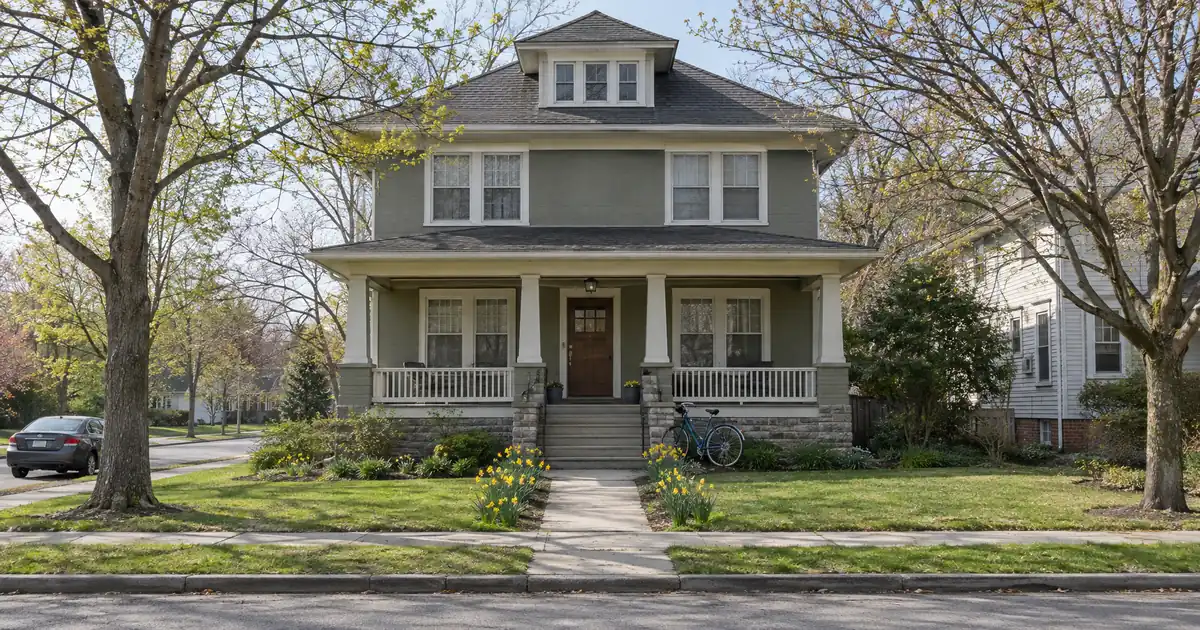
The Quick Read: It depends on who lives there and which program you use. A relative who shares your household makes the home owner-occupied, so a DSCR loan is off the table. A relative who rents as a separate household is sometimes allowed, with extra documentation and a lease priced at real market rent, subject to lender guidelines.
- Living there yourself, or sharing a household with the tenant, rules out a DSCR loan.
- A relative in a separate household is a program-by-program call. Some lenders bar it outright.
- Most programs count the lower of the signed lease or the appraiser’s market rent.
- Paying full market rent improves the ratio. It does not override a program that bans family tenants.
- Confirm eligibility before you order an appraisal or sign a purchase contract.
Everyone wants a simple yes or no here. The honest answer is a short checklist, and this guide walks through it.
DSCR Calculator
Run the numbers in your market
Rate source: Freddie Mac 30-yr average via FRED® — Federal Reserve Bank of St. Louis · effective Oct 29, 2026
Prefilled with starting assumptions — enter your own rent or nightly figures, taxes, insurance, and HOA for a more accurate picture.
Program parameters update from Lendmire’s centralized guideline source. Taxes and insurance are editable estimates.
As of Oct 29, 2026 · General Freddie Mac market benchmark, not a Lendmire loan offer. Rent, nightly rate, occupancy, taxes, and insurance are editable estimates. Short-term rental figures are estimates only and vary significantly by season, property type, management approach, and local short-term-rental rules — confirm local regulations before relying on them. Qualifying income for short-term rentals varies by program — some use appraisal market rent, others use documented STR history or projections — and is confirmed in underwriting. Not a Loan Estimate, approval, or commitment to lend. Program availability and eligibility are subject to lender guidelines, credit approval, property review, and underwriting.
Why Does Family Tenancy Raise Eyebrows at All?
A DSCR loan (debt service coverage ratio loan) qualifies primarily on property-level rental income covering the payment, subject to lender guidelines. The ratio is monthly rent divided by PITIA, which stands for principal, interest, taxes, insurance, and association dues. Your personal paychecks are not the test.
That design only works if the rent is real. DSCR loans are built for non-owner-occupied investment properties. They are business-purpose loans, so lenders review them differently from a standard owner-occupied mortgage.
A lease with a relative is not automatically fake. But lenders worry about it, and the worry has a name: arm’s-length dealing. Cornell’s Legal Information Institute describes an arm’s-length deal as one between unrelated parties with roughly equal bargaining power, and it names family transactions as the classic case that falls outside it. McKissock, an appraiser-education provider, adds that in a true arm’s-length deal no party makes unusual concessions.
Translate that to your file. A mother paying a below-market rent is a concession. A brother who can stop paying without consequence is a soft lease. The lender sees risk it cannot price.
Living There vs. Renting It: The Line That Matters
Living in the property, or sharing a household with the tenant, is a flat no. The borrower certifies that the home is an investment rental. If your parent moves in with you, or your adult child lives in your unit, the property is no longer non-owner-occupied.
Renting to a relative who runs a separate household is a different question. It is not an occupancy problem. It is a lease-quality problem, and programs answer it differently.
| Who lives in the property | DSCR outcome | What to do |
|---|---|---|
| You, the borrower | Not eligible | Use an owner-occupied loan |
| Parent or child in your household | Not eligible | Same: occupancy conflict |
| Relative, separate household, market rent | Program-dependent | Confirm the program allows it first |
| Relative, discounted rent | Lower ratio, program-dependent | Re-lease at documented market rent |
| Relative’s company as tenant | Program-dependent | Must read as arm’s-length |
| Unrelated tenant | Simplest file | Standard documentation |
| LLC member living there | Often restricted | Check entity occupancy rules |
| Room or ADU rented to family | Underwritten on single-unit market rent | Extra room income is ignored |
Entity borrowers add a wrinkle. Some programs restrict occupancy by any LLC member or their family, subject to program terms. Holding title in an LLC never fixes an occupancy conflict. A life estate that lets a relative live there is the same story: it is an occupancy conflict, and no arm’s-length rent exists to count.
How Do Programs Differ on Family Tenants?
Across the wholesale network, no single rule governs this. Some programs bar related-party tenants outright. Others allow them with a tighter documentation package. A few care mostly about occupancy and say little about who the separate-household tenant is.
You find out where your program sits by asking one question before anything else: does this program allow a lease to a relative? If the answer is no, stop. No lease, however well written, fixes a program that prohibits it.
Ask it early. An investor who learns the answer after paying for an appraisal has bought an expensive lesson. A broker who sees many lenders’ guidelines can usually route a family-tenant file to the programs that accept it, or tell you plainly that none will.
How Does a Family Lease Change the Coverage Number?
Most programs count the lower of two figures: the signed lease rent or the appraiser’s market rent. That is typical, not universal.
The appraiser estimates market rent on a rent schedule form, Form 1007 for single-family and condos or Form 1025 for two-to-four-unit properties. The figure comes from comparable rentals. A family discount does not change it.
Picture a house where the market rent supports a coverage ratio around 1.20x. You lease it to your sister at a friendly discount, and the lender counts the lease. The ratio might fall to roughly 1.00x or below. That shift can change your approval, your leverage tier, and your pricing.
The reverse does not help. If you sign a lease above market, most programs cap the income at market rent. Inflating the lease to boost the ratio buys nothing, and it makes the file look worse.
Here is how the numbers connect to your loan structure:
- Purchases typically run 75%-80% LTV (loan-to-value, the loan as a share of the property’s value) on investment properties across most programs. Select high-leverage programs reach 85% LTV with roughly a 700+ score.
- Cash-out refinances top out around 75% LTV, with about 6 months of seasoning as the common expectation.
- 1.00 coverage is where select programs start. Stronger ratios open better pricing and leverage. A separate select-lender path takes coverage below 1.00, with leverage and terms adjusted.
A larger down payment lowers the payment and can lift the ratio. It never erases leverage caps, credit floors, reserve rules, or property eligibility. The strongest files clear both tests: enough equity and enough rental coverage.
One more point. Clearing 1.00 is not the same as positive cash flow. The ratio compares rent to PITIA only. Repairs, vacancy, management, utilities, and capital expenses sit outside it. A family lease at a sweetheart rent can pass the ratio and still lose money.
What Does a Family Lease File Need?
A related-party file typically carries more paper than a stranger’s lease. Think of it as proving the rent is real and the relationship has no strings attached. The usual package:
- A signed, fixed-term lease. A month-to-month family tenancy generally gets treated like any other lease under the lower-of logic, and a fresh written lease is the usual fix.
- Bank records showing rent paid from the tenant’s own account.
- A security deposit record.
- A comparison to local rental listings supporting the rent level.
- Disclosure of the family relationship.
Disclose it. A misstated occupancy certification or a hidden relationship is a misrepresentation problem, and that is far worse than a lower ratio. Honest files with a lower number can be restructured. Dishonest ones cannot.
Many investors in this spot are new to the paperwork, and the payment trail is the piece most often missing. Rent handed over in cash or paid from the borrower’s own account looks like a circle, not income. In files like this, the stronger ones show a clean, repeated deposit trail before the lender ever asks.
What Doesn’t Fix It
A few popular fixes do nothing for an ineligible file.
Paying full market rent. It fixes the ratio. It does not make the lease arm’s-length, and it does not override a program that bars family tenants.
Putting the property in an LLC. Entity vesting does not change who lives there or who the tenant is, and some programs restrict LLC members’ occupancy too.
Market-rent paper from the appraiser. The appraisal tells the lender what the home could rent for. It does not turn a related-party lease into a stranger’s.
Renting by the room to relatives. Programs underwrite on single-unit market rent, so extra room income is ignored.
A relative’s business as master tenant. Treatment is program-specific, and the lease must read as arm’s-length.
Bundling it into a blanket loan. One weak family lease can pull down the coverage of the whole pool. Keep family leases off bundled files.
What If the Family Tenant Is Already There?
This is the common version. You bought with a conventional loan, your cousin moved in, and now you want to refinance into a DSCR loan. You have three practical paths.
1. Re-lease at documented market rent. If the program allows family tenants, a new written lease at market rent with a payment trail can clean up the file.
2. Move to a different product. If the program bars family tenants, a loan designed for the situation may fit better.
3. Replace the tenant or restructure. An unrelated tenant at market rent is the simplest file, and it matters most if you plan to scale. Every file then reads the same way.
If the home is vacant, the appraiser’s market rent alone sets the income. Leasing to a relative after closing then becomes a loan-document and occupancy question. Confirm it with the program first, because a plan to hand the keys to family can contradict what you certified at closing.
DSCR vs. conventional financing
There are two common ways to finance an investment property, and they qualify you differently — here’s how investors weigh them.
Why investors choose it
- Qualifies on the property’s rental income — no personal tax returns, W-2s, or pay stubs needed to document income.
- No personal debt-to-income ceiling to clear, so existing mortgages and obligations don’t cap your borrowing the same way.
- Can be closed in an LLC, keeping the property inside a business entity.
- Built for scaling — not held to the limit on number of financed properties that conventional financing applies.
- Underwriting centers on the deal: generally qualifies when the rent covers the payment, a 1.00x coverage ratio being a common baseline (confirmed in underwriting).
- Designed specifically for investment property, including long-term and, where the program allows, short-term rentals.
Where it’s strong
- Often the lowest ongoing financing cost for a buyer who fully qualifies on personal income — a fit for a first property or a cost-first purchase.
Trade-offs for investors
- Requires full personal income documentation and must fit within a debt-to-income limit — salary, existing debts, and other mortgages all count.
- Typically held in your personal name rather than a business entity.
- Caps how many financed properties you can carry, which can become a ceiling as a portfolio grows.
- Evaluates you as a borrower as much as the property, which usually means more paperwork.
How investors usually choose: a first or single property often optimizes for the lowest financing cost; portfolio builders often optimize for leverage, vesting in an LLC, and scaling past conventional caps. The right answer depends on your goals, the property, and current guidelines — both paths run through select lenders in Lendmire’s wholesale network, with eligibility and terms confirmed in underwriting.
Is a Federal Tenant Rule at Work Here?
Not directly, though it explains the lender’s thinking. The Protecting Tenants at Foreclosure Act defines a bona fide tenant. Per an OCC bulletin, that tenant is not the borrower or the borrower’s child, spouse, or parent. The lease comes from an arm’s-length deal, and the rent is not substantially below fair market rent. Nolo notes the Act was made permanent in 2018.
That is a foreclosure-protection rule, not a DSCR underwriting rule. It does not ban family tenants on investor loans. It does show why a lender may doubt that a family tenant would count as bona fide if the loan ever went bad. Treat that link as an inference, not a stated reason for any program’s policy.
Tax Test vs. Lender Test
The tax test and the lender test are different standards. Passing one says nothing about the other. Tax treatment varies; consult a qualified professional.
What If DSCR Doesn’t Fit?
If a relative needs to live in the home, a DSCR loan is the wrong tool. A family member who wants to occupy the property may qualify for an owner-occupied loan of their own. That is a different product with different documentation.
If you want a DSCR loan, the simplest route is an unrelated tenant at market rent. Short of that, the program has to expressly allow your family arrangement. Programs also vary on loan size. Standard programs run up to $3,000,000, and lender guidelines on reserves, commonly around 6 months of PITIA, vary by leverage and loan size.
Not eligible under any of the network’s DSCR programs: manufactured homes (single- and double-wide), log homes, and barndominiums. Those are not offered, no matter who the tenant is.
Mistakes That Cost Investors
- Ordering an appraisal before confirming family-tenant eligibility.
- Signing a discounted family lease, then wondering why the ratio sagged.
- Inflating the lease above market to chase a number.
- Skipping the disclosure and hoping nobody asks.
- Assuming an LLC changes who counts as family.
- Moving a relative in after closing without checking the occupancy certification.
If this sounds like your situation, start with the program question, then the lease. The complete DSCR loans guide covers how the ratio, leverage, and credit tiers fit together. Lendmire’s piece Can a W-2 Investor With Two Rentals Use Room Rent for a DSCR Loan? covers the room-rental angle in more depth.
If you are buying or refinancing a rental property and want to see how the numbers work, Lendmire can help you compare DSCR loan options based on the property income, credit profile, leverage, and investor goals.
Key Terms Defined
DSCR (debt service coverage ratio): monthly rent divided by the full monthly payment, PITIA.
Non-owner-occupied: a property the borrower does not live in and does not plan to live in.
Arm’s-length: a deal between unrelated parties, each acting in their own interest.
Related-party tenant: a renter with a family or business tie to the borrower.
Market rent: what comparable homes in the area rent for, as estimated by the appraiser.
Seasoning: the waiting period a lender wants after a purchase before a cash-out refinance.
Frequently Asked Questions
Can my parent rent a house I finance with a DSCR loan?
Only if your parent lives in a separate household and the specific program allows related-party tenants. If your parent lives with you, the property is owner-occupied and DSCR does not apply. Some programs bar family tenants outright, so confirm before you order an appraisal.
Does paying full market rent make a family lease acceptable?
It protects the coverage ratio, but it does not make the lease arm’s-length and it does not override a program that prohibits family tenants. Market rent is necessary for a family file to work, not sufficient.
Do I have to tell the lender the tenant is family?
Yes. The occupancy certification and the lease documents are signed representations. Hiding the relationship risks a misrepresentation problem that is much harder to fix than a lower ratio.
What if I discover the issue at refinance?
You can re-lease at documented market rent if the program allows family tenants, switch to a different loan type, or replace the tenant. Which path fits depends on the program, the property, and current lender guidelines.
Can I move a relative in after closing?
Check first. If the relative would share your household, that contradicts the investment-rental certification you signed. If it is a separate household, it becomes a loan-document question for the program to confirm.
About Lendmire
Lendmire, NMLS# 2371349, is a non-QM mortgage broker serving real estate investors in 41 markets, including Washington, D.C., through DSCR investor loan programs. Qualification is generally reviewed around the subject property’s rental income, not the borrower’s W-2 history — a practical fit for LLC-titled portfolios and self-employed investors. All scenarios remain subject to lender review and program guidelines. Two consecutive Scotsman Guide Top Mortgage Workplace recognitions (2025, 2026).
Get Started
Ready to find the right loan for you?
See your offer in seconds. No credit pull, no obligation.
Informational only. Not a Loan Estimate, approval, or commitment to lend. Program availability and eligibility are subject to lender guidelines, credit approval, property review, and underwriting.
References
1. Cornell Legal Information Institute: Arm’s Length
2. McKissock
3. OCC Bulletin 2009-28 (Protecting Tenants at Foreclosure Act)
4. Nolo: Protections for Tenants After a Landlord’s Foreclosure
This article is part of Lendmire’s DSCR loan program — full qualification details, guidelines, and scenarios live on the program page.
Related reading: How a DSCR Loan Works on an Edgartown Rental · Can You Choose Which Co-Buyer Is the Guarantor on a DSCR Loan? · How a 40-Year Single-Family DSCR Loan Sets the Down Payment
Brandon Miller
Founder & CEO, Mortgage Loan Originator, Lendmire LLC
- Mortgage Loan Originator · NMLS# 1129696 · Verify on NMLS Consumer Access
- North Carolina Real Estate Broker · License# 343312 · Verify on NCREC
- North Carolina Insurance Producer · License# 19053198 · Property, Casualty, Life, Health · Verify on NAIC SBS
- Lendmire LLC · Firm NMLS# 2371349 · Verify firm licensure
Compliance and disclosures. Lendmire (NMLS# 2371349) is a licensed mortgage broker and is not a direct lender, depository institution, financial advisor, or tax professional. Content in this article is general market analysis and educational information — not financial, legal, or tax advice for any specific situation. Lendmire does not guarantee loan approval; every transaction is subject to underwriting by the funding lender. Mortgage pricing and loan program guidelines are subject to change at any time without notice and vary by borrower characteristics, property type, and state regulations. Lendmire complies with Equal Housing Opportunity. Licensure verification: NMLS Consumer Access.