
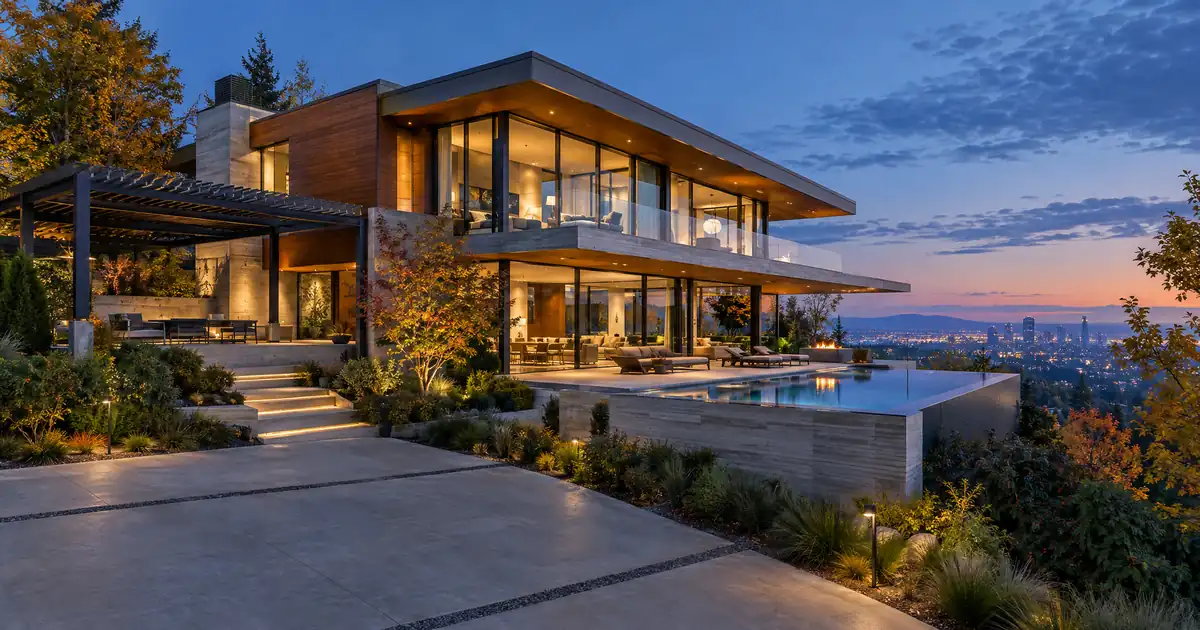
The Quick Read: A lender tests the whole parcel against its acreage cap, but it counts value only for the house and the site that supports it. Land above the cap is usually carved out of the appraisal, or the file is declined. Either way, the loan is sized on a smaller value than the contract price. All of this is subject to lender guidelines.
- Two tests, not one. The acreage cap decides eligibility. The appraisal decides how much value the loan can lean on.
- Most files sit at five acres or fewer. Select programs reach further at lower loan sizes. Tighter limits apply as the balance grows.
- Rural status is a separate screen. A parcel can pass the acreage test and fail the rural test.
- Excess land rarely adds rent. It can still add to the price, which squeezes both leverage and coverage.
- Check before you sign. Confirm acreage and rural status before going under contract, not after the appraisal.
Key Terms Defined
Acreage cap: the largest parcel size a program will accept. It is lender policy, not law.
Excess land: acres beyond what the home needs to function as a residence or rental. Appraisers may value it separately or not at all.
Contributing site: the yard, driveway, and outbuilding area that support the house. This is the land that carries value in the loan.
Rural classification: a lender’s label for areas that are thinly populated or lightly built up. It is judged apart from parcel size.
LTV (loan-to-value): the loan amount divided by the appraised value, or by the purchase price if that is lower.
DSCR (debt service coverage ratio): monthly rent divided by the full monthly housing obligation: principal, interest, taxes, insurance, and any HOA dues.
PITIA: that full monthly obligation, spelled out as principal, interest, taxes, insurance, and association dues.
DSCR Calculator
Run the numbers in your market
Rate source: Freddie Mac 30-yr average via FRED® — Federal Reserve Bank of St. Louis · effective Oct 29, 2026
Prefilled with starting assumptions — enter your own rent or nightly figures, taxes, insurance, and HOA for a more accurate picture.
Program parameters update from Lendmire’s centralized guideline source. Taxes and insurance are editable estimates.
As of Oct 29, 2026 · General Freddie Mac market benchmark, not a Lendmire loan offer. Rent, nightly rate, occupancy, taxes, and insurance are editable estimates. Short-term rental figures are estimates only and vary significantly by season, property type, management approach, and local short-term-rental rules — confirm local regulations before relying on them. Qualifying income for short-term rentals varies by program — some use appraisal market rent, others use documented STR history or projections — and is confirmed in underwriting. Not a Loan Estimate, approval, or commitment to lend. Program availability and eligibility are subject to lender guidelines, credit approval, property review, and underwriting.
Why There Is No Single Number
No law sets an acreage limit for DSCR loans. Each program sets its own, and across the wholesale network where Lendmire places files, the limits differ by loan size, property type, and rural status.
That is the first thing to understand. Searching for “the” acreage limit sends investors in circles, because the honest answer is a set of tiers.
Here is how the tiers look on most files we place. The typical ceiling is five acres or fewer. Parcels classed as agricultural or rural-recreational are outside the programs entirely. Working farms, ranches, and raw land are not offered.
DSCR is also an investor product. These are business-purpose loans on rentals, so lenders care about how well the property can be valued, resold, and rented. A big parcel makes all three harder. Fewer comparable sales exist, and the buyer pool shrinks.
Your complete DSCR loans guide covers the full program picture.
Two Separate Tests
The acreage test and the rural test are different screens, and files fail on either one. Investors often blur them, which leads to bad assumptions at the offer stage.
| Factor | Acreage test | Rural test |
|---|---|---|
| What it measures | Total parcel size | Area population and built-up density |
| Who applies it | Lender program rules | Lender, using appraiser input |
| Typical fix | Split the parcel | Pick a different property |
| Changes with loan size? | Yes | Yes, at the top tiers |
The acreage test looks at the total parcel tied to the mortgage. That means every acre in the legal description, not just the lawn around the house.
The rural test asks something else. Appraisers often want to see a neighborhood that is at least a quarter developed with structures. A 3-acre lot in a thinly built-up area can fail the rural screen, while a 5-acre lot in a developed pocket may not. Rural does not mean automatically ineligible. It does mean you are inside a tighter box.
How Underwriting Handles an Acreage File, Step by Step
The order matters, because eligibility runs before income. A property that fails an early screen has no loan amount at all.
1. Eligibility screens. The lender checks construction type, acreage, rural designation, occupancy, and short-term-rental status. Manufactured homes, log homes, and barndominiums are not offered in these programs, whatever the acreage.
2. Parcel check. Total acreage is compared with the cap for your loan size and rural status.
3. Appraisal. The appraiser values the property from comparable sales. Two- to four-unit properties use an operating income report. Single-family files use the standard appraisal and rent schedule forms.
4. Land adjustment. Comps are adjusted for lot-size differences, and the appraiser decides how much of the land supports value.
5. Loan sizing. The loan is the lowest result of three tests: the leverage cap on appraised value, the rent coverage, and eligibility.
Step four is where investors get surprised. The appraiser may credit the full parcel, only the house and its site, or something in between. Which one you get depends on the program, the comps, and how the land is used.
How the Appraiser Separates Site From Excess Land
Appraisers do not price every acre equally. The first acres, the ones that hold the house, drive most of the value. Extra land typically adds value at a reduced rate relative to that core homesite.
Usability matters as much as size. A steep wooded acre and a flat, buildable acre are not the same thing. NAR describes how a review appraiser spots inconsistent adjustments, such as one comp adjusted at $6,000 per acre and another at $2,000. The difference needs an explanation, like usable versus unusable ground. That example is an illustration of method, not a market rate.
Land can also be treated as a separate property. If that excess could stand alone, it can be valued as an additional site. WorkingRE explains the same idea: excess land that could be sold off separately becomes, in effect, two properties, each with its own comps.
A DSCR lender can go further than the appraiser. Many programs in the network instruct the appraiser to value only the house and its contributing site, then carve out the rest. Rural appraisers sometimes work from an effective area rather than raw acreage, which discounts wetland, slope, or poor access.
One more wrinkle: large parcels have fewer comparable sales. Thin comps make a value harder to support, and a lender that cannot support the value will not lend against it.
How Jumbo Loan Size Changes the Acreage Answer
The same land can be eligible at one loan size and ineligible at another. That is the central jumbo point, and it catches investors who assume the cap is fixed.
| Loan size | Acreage and rural treatment |
|---|---|
| Up to $3,000,000 | Five acres or fewer typical; rural collateral of five acres or less to 75% LTV on an investment purchase; up to twenty acres possible through select lenders |
| Above $3,000,000 | No rural property; ten acres maximum on a non-rural parcel |
| Above $3,000,000, cash-out | Not available; purchase or rate-and-term only |
Picture a 30-acre ranch. It fails the acreage test outright, whatever the loan size. Now picture a 6-acre estate in a remote county. It may pass at a modest balance and fail the rural test once the loan reaches $3,000,000.
Appraisals tighten too. Above $2,000,000, two appraisals are required, and the lower of the two governs value. If one appraiser credits excess land and the other does not, the stricter number wins.
Terms and leverage vary by file, and programs change. Treat the table as a map of how the pressure builds, not a promise for your property.
A Worked Example
Let the contract price equal 100 index points. These numbers are modeled, not market data and not dollars.
A buyer purchases a rural-edge estate priced at 100. The parcel passes the acreage test. The appraiser credits the house and contributing site at 85 and carves out the rest.
- Full value counted: a 75% LTV purchase on an investment property sizes the loan at 75.
- Excess land carved out: the same 75% applies to 85, so the loan drops to about 64.
- Cash to the buyer’s side: the buyer funds the gap between the price and the smaller loan, including the value of land the lender will not count. These specifics are subject to lender guidelines and a full review of property, leverage, and credit.
That is 36 points of cash instead of 25, on the same property at the same price. The extra 11 points are the land the lender declined to count.
Now run it as a cash-out refinance, where the ceiling is 75% LTV. The same carve-out shrinks proceeds by the same logic. If the file is also rural-restricted, leverage can step down further, with terms set by the lender. Terms depend on the lender’s guidelines, the property type, the leverage, and a full review of the credit profile.
A bigger down payment helps the monthly payment and can lift coverage. It does not erase the leverage cap, the acreage rule, or the property-eligibility screens. The strongest files clear both tests: enough equity and enough rental coverage.
Purchase, Refinance, Cash-Out: Where the Haircut Lands
On a purchase, the loan uses the lower of price or appraised value. A price inflated by acreage appraises short, and you fund the difference.
On a rate-and-term refinance, a lower value base shrinks the room under the leverage ceiling. You may find you cannot refinance the existing balance without bringing cash.
On a cash-out refinance, a lower value base cuts proceeds directly. Cash-out tops out around 75% LTV across most of the network, and about six months of seasoning is the common expectation. Above $3,000,000, cash-out is not offered at all on acreage-heavy files. The exact numbers vary by lender and program and follow a full review of property, leverage, and credit.
Short-term-rental collateral adds its own limits. Purchase leverage tops out at 75% and cash-out at 70%. Those files also expect a track record of hosting. Short-term rental rules can vary by city, county, HOA, and property type, so investors should confirm local rules before relying on projected rental income. Final terms depend on the lender’s guidelines, the property type, and the borrower’s complete credit picture.
What Our Desk Sees on Acreage Files
On acreage files, the contract price is usually the weakest number in the deal. Sellers price the lifestyle and the land. The lender prices the house and its site, and the gap between those two shows up as cash at the table.
The other pattern: rural rent is usually the weakest part of the file. Coverage risk and value risk stack on top of each other. A property that looks safe on rent can still disappoint at the appraisal.
DSCR vs. conventional financing
There are two common ways to finance an investment property, and they qualify you differently — here’s how investors weigh them.
Why investors choose it
- Qualifies on the property’s rental income — no personal tax returns, W-2s, or pay stubs needed to document income.
- No personal debt-to-income ceiling to clear, so existing mortgages and obligations don’t cap your borrowing the same way.
- Can be closed in an LLC, keeping the property inside a business entity.
- Built for scaling — not held to the limit on number of financed properties that conventional financing applies.
- Underwriting centers on the deal: generally qualifies when the rent covers the payment, a 1.00x coverage ratio being a common baseline (confirmed in underwriting).
- Designed specifically for investment property, including long-term and, where the program allows, short-term rentals.
Where it’s strong
- Often the lowest ongoing financing cost for a buyer who fully qualifies on personal income — a fit for a first property or a cost-first purchase.
Trade-offs for investors
- Requires full personal income documentation and must fit within a debt-to-income limit — salary, existing debts, and other mortgages all count.
- Typically held in your personal name rather than a business entity.
- Caps how many financed properties you can carry, which can become a ceiling as a portfolio grows.
- Evaluates you as a borrower as much as the property, which usually means more paperwork.
How investors usually choose: a first or single property often optimizes for the lowest financing cost; portfolio builders often optimize for leverage, vesting in an LLC, and scaling past conventional caps. The right answer depends on your goals, the property, and current guidelines — both paths run through select lenders in Lendmire’s wholesale network, with eligibility and terms confirmed in underwriting.
Rent and Coverage on Larger Parcels
Land adds little rent. A tenant pays for the house, so a price lifted by acreage can leave coverage thinner against a bigger obligation.
The coverage test is plain: monthly rent against full PITIA. Many select programs start at 1.00 coverage. A separate select-lender path takes coverage below 1.00, with leverage and terms adjusted. Stronger ratios open better pricing and leverage.
Clearing 1.00 is not the same as positive cash flow. DSCR leaves out repairs, vacancy, management, utilities, and capex. On acreage, add mowing, road upkeep, and well or septic repairs to that list. Those are real costs the ratio ignores.
For how lenders count lease income against appraisal rent, see Lendmire’s piece How Much Rent a DSCR Lender Counts If the Lease Beats Appraisal. A guest house or second dwelling raises a related question, covered in Lendmire’s article How Much ADU Rent a Jumbo Lender Counts Toward Your Loan.
When the General Rule Breaks
Real files rarely match the table. These are the edge cases we see most.
The excess is carved out instead of killing the file. Over the cap does not always mean decline. Some programs exclude the excess from the appraisal and lend on the rest, while other programs treat the parcel as ineligible. Ask which approach applies before you spend money on an appraisal.
A federal rural lookup says rural. That tool is not an investor eligibility test. A property can show as rural there and still work for a DSCR lender. The reverse also happens.
The land can be split. Options include splitting off the excess acreage, buying only the homesite, or using a lender outside the super jumbo tier. Splitting needs a separate legal description and deed, and it is only realistic when local rules allow it. Do not assume it is easy.
Usable versus unusable acres. Wetland, steep ground, and poor access change what the appraiser credits. Raw acreage and effective acreage can be far apart.
Thin comps. When fewer sales support the value, the lender may shorten the comp radius, discount value, or decline.
Different property class. Working farms, ranches, and raw land are not offered, even if the house itself is lovely.
The Agency Contrast, in One Paragraph
Agency-backed mortgages work differently, and the contrast explains why DSCR feels stricter. Fannie Mae’s Selling Guide requires the appraisal to report the actual site size. An appraiser may not value only 5 acres of an unsubdivided 40-acre parcel. DSCR loans are not agency products. A non-QM lender can restrict the value it uses or exclude excess land, which is exactly why the carve-out exists.
A Pre-Contract Checklist
Run these in order, before you write an offer.
1. Pull the parcel’s total acreage from county records, not the listing.
2. Check the loan size against the acreage tier you fall into.
3. Ask whether the program counts the whole parcel or only the homesite.
4. Ask how land above the cap is treated: carved out of value, or ineligible.
5. Check rural status, including how developed the surrounding neighborhood is.
6. Confirm the property type is eligible. Barndominiums, log homes, and manufactured homes are not.
7. Gather the address, property type, unit count, acreage, survey or parcel map, lease or hosting history, and the appraisal.
8. Model the deal at the carved-out value, not the contract price.
Common Mistakes
Treating every acre as value. The lender credits the house and its site. The rest is a bonus at best.
Mixing up rural and acreage. Passing one test says nothing about the other.
Assuming price equals appraised value. On acreage, the appraisal is where the price gets tested.
Reading the cap as universal. Limits shift with loan size and program. A number from one lender’s page does not carry over.
Ignoring the second appraisal. At the top loan sizes, the lower of two values governs.
Frequently Asked Questions
Does the acreage cap apply to the whole parcel or just the house lot?
The whole parcel. The cap tests every acre tied to the mortgage. Value is different: lenders typically count only the house and its contributing site, and land above the cap is usually carved out of the appraisal. Terms vary by program and file.
What is excess land in a DSCR appraisal?
Excess land is acreage beyond what the home needs as a residence or rental. An appraiser may value it at a reduced rate, value it separately if it could stand alone, or leave it out under lender instructions.
Does going over the acreage cap mean an automatic decline?
Not always. The answer depends on the program, loan size, and rural status, so ask before ordering an appraisal.
Can I split off the extra acres to fit the cap?
Sometimes. Splitting needs a separate legal description and deed, and local rules must allow it. Other routes are buying only the homesite or placing the file with a lender outside the super jumbo tier.
Does a bigger loan change the acreage limit?
Yes. Above $3,000,000, no rural property is allowed and non-rural parcels top out at ten acres. Two appraisals apply above $2,000,000.
Next Steps
Acreage files reward early questions. Bring the parcel size, the rural status, and the price you expect to pay, then test the deal against the carved-out value.
If you are buying or refinancing a rental property and want to see how the numbers work, Lendmire can help you compare DSCR loan options based on the property income, credit profile, leverage, and investor goals. As a broker, Lendmire arranges financing through select lenders in its wholesale network across 41 markets, including Washington, D.C. Qualification is subject to lender guidelines. This is not a commitment to lend.
Tax treatment varies; consult a qualified professional.
About Lendmire
As a non-QM mortgage broker (NMLS# 2371349), Lendmire facilitates DSCR investor loans across 41 markets, including Washington, D.C. DSCR eligibility is generally reviewed around property-level rental income instead of personal income documentation, subject to lender guidelines, serving LLC-structured portfolios and self-employed borrowers who don’t fit conventional boxes. A two-time Scotsman Guide Top Mortgage Workplace (2025, 2026).
Get Started
Ready to find the right loan for you?
See your offer in seconds. No credit pull, no obligation.
Informational only. Not a Loan Estimate, approval, or commitment to lend. Program availability and eligibility are subject to lender guidelines, credit approval, property review, and underwriting.
References
1. NAR – How Can Two Appraisers Value the Same Property Differently
2. WorkingRE – Excess or Surplus Land
3. Fannie Mae Selling Guide B4-1.3-04
This article is part of Lendmire’s DSCR loan program — full qualification details, guidelines, and scenarios live on the program page.
Related reading: How Much a Jumbo DSCR Refinance Lends on a Former Home · How a DSCR Lender Counts Seasoning on a Rental Refinance · How a DSCR Lender Counts Equity in Place of a Down Payment
Brandon Miller
Founder & CEO, Mortgage Loan Originator, Lendmire LLC
- Mortgage Loan Originator · NMLS# 1129696 · Verify on NMLS Consumer Access
- North Carolina Real Estate Broker · License# 343312 · Verify on NCREC
- North Carolina Insurance Producer · License# 19053198 · Property, Casualty, Life, Health · Verify on NAIC SBS
- Lendmire LLC · Firm NMLS# 2371349 · Verify firm licensure
Disclosure information. Lendmire is a state-licensed mortgage brokerage under NMLS# 2371349. Lendmire is not a depository institution, direct lender, or financial advisor — all loans referenced are placed through wholesale lender partners and are subject to each lender's underwriting standards. This article is provided for general informational purposes and is not a commitment to lend, nor does it constitute financial, legal, or tax advice. Loan programs, terms, rates, and qualification standards change without notice and depend on borrower profile, property type, and the state in which the subject property is located. Equal Housing Opportunity provider. NMLS Consumer Access: nmlsconsumeraccess.org.