
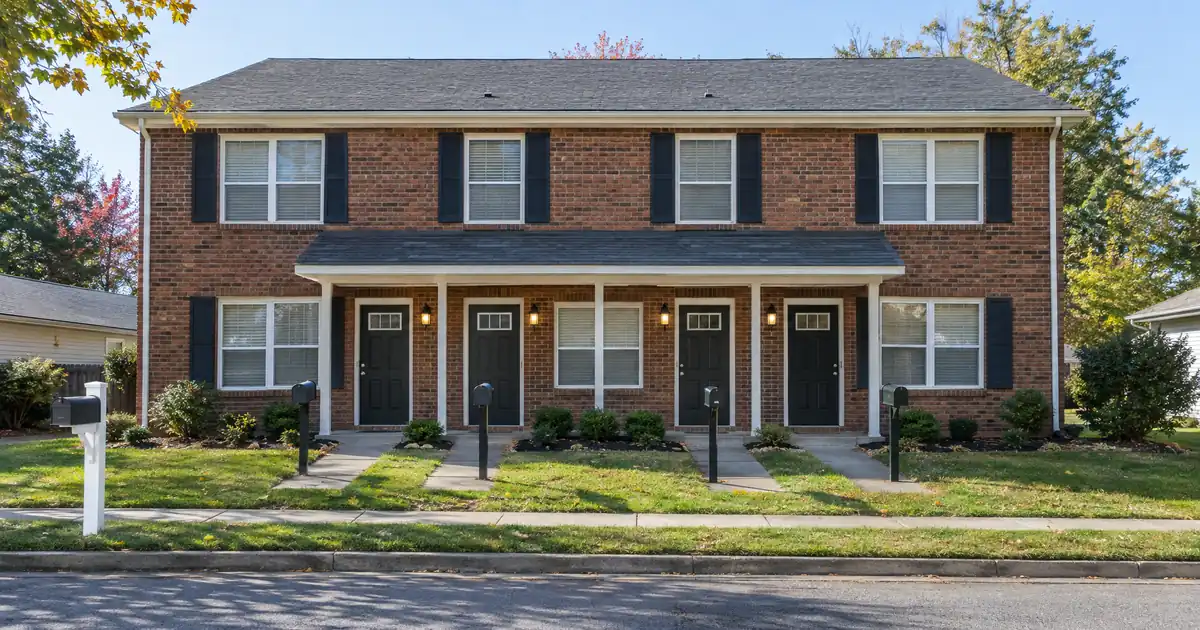
The Quick Read: If you will live in one unit of the fourplex, you generally need an owner-occupied loan, such as conventional, FHA, or VA, because DSCR loans are built for non-owner-occupied investment property. The two products differ in what the loan is for, who occupies the building, and what gets underwritten.
- Living in any unit generally puts the file on the owner-occupied side. DSCR programs are designed for investment property you do not occupy.
- Conventional underwriting looks at you personally: income, debts, and credit. DSCR looks at the building’s rent against its full housing payment.
- Rent from the other three units can help you qualify on an owner-occupied loan, but it is treated under defined rules, and your own unit’s rent generally does not count.
- A common path is to buy owner-occupied, live there, then move out and consider a DSCR refinance, subject to lender guidelines.
The honest answer comes first. Conventional financing is for the borrower who will live in the building and can document personal income. DSCR is for the investor who will not live there and wants the property’s rent to carry the file. Those are two different lanes, and occupancy decides which one you are in before credit, leverage, or reserves ever come up.
DSCR Calculator
Run the numbers in your market
Rate source: Freddie Mac 30-yr average via FRED® — Federal Reserve Bank of St. Louis · effective Oct 29, 2026
Prefilled with starting assumptions — enter your own rent or nightly figures, taxes, insurance, and HOA for a more accurate picture.
Program parameters update from Lendmire’s centralized guideline source. Taxes and insurance are editable estimates.
As of Oct 29, 2026 · General Freddie Mac market benchmark, not a Lendmire loan offer. Rent, nightly rate, occupancy, taxes, and insurance are editable estimates. Short-term rental figures are estimates only and vary significantly by season, property type, management approach, and local short-term-rental rules — confirm local regulations before relying on them. Qualifying income for short-term rentals varies by program — some use appraisal market rent, others use documented STR history or projections — and is confirmed in underwriting. Not a Loan Estimate, approval, or commitment to lend. Program availability and eligibility are subject to lender guidelines, credit approval, property review, and underwriting.
Side-by-Side
The conventional column reflects published industry norms. The DSCR column reflects how programs in Lendmire’s wholesale network typically work, subject to lender guidelines.
| Factor | DSCR Loan | Conventional (Owner-Occupied) |
|---|---|---|
| Occupancy | Non-owner-occupied investment | You live in one unit |
| Review basis | Property rent vs. PITIA | Personal income, debts, credit |
| Documentation | Appraisal with rent schedule | Pay records, tax returns, assets |
| Rent from other units | Core of the file | Usable in defined ways |
| Your own unit’s rent | Not applicable (you don’t live there) | Generally not usable to qualify |
| Entity vesting | LLC often possible, subject to program terms | Commonly a personal borrower |
| Reserves | Commonly around 6 months of PITIA | Varies by program and file |
| Timeline | Not a selling point either way | Not a selling point either way |
| Best-fit borrower | Investor who won’t occupy | Owner-occupant with documentable income |
Why the Occupancy Question Comes First
A DSCR loan qualifies primarily on property-level rental income covering the payment, subject to lender guidelines. That design only makes sense when the borrower is running the building as a business. If you sleep in one of the four units, the building is no longer a pure rental, and the file belongs with owner-occupied programs.
Some pages online suggest a fourplex house hack can run under DSCR by counting your own unit’s rent. Eligibility varies by program, but across the programs in our network that reading does not hold for a building you occupy. Treat any quote built on that assumption with suspicion.
Misstating occupancy is a serious legal risk, not a paperwork shortcut. One investor-education source notes that owner-occupied loans expect you to actually live there and that misrepresenting intent is mortgage fraud. “I’ll move in later” is not a plan to put on a DSCR application.
There is one legal wrinkle worth separating from the product question. Federal rules can treat credit for a rental property you will occupy as business purpose when it has more than two units; the CFPB’s Regulation Z rule also sets a 14-day owner-occupancy threshold for its non-owner-occupied safe harbor. That tells you how the law classifies the credit. It does not make the loan a DSCR loan, because DSCR programs add their own non-owner-occupied condition. Two tests, two answers.
What Conventional Does With a Fourplex
On an owner-occupied fourplex, the lender underwrites you first. Your income, debts, and credit drive approval, and the building’s rent plays a supporting role. For two-to-four-unit buildings, the appraisal typically includes a rent analysis on Form 1025, and HUD’s Mortgagee Letter 2023-17 names that form as required documentation for rental income on two-to-four-unit properties.
The occupied unit’s rent generally cannot be used to qualify. Rent from the other units can count, usually at a reduced percentage rather than in full. An industry training deck describes net rental income as a percentage of appraisal rent or existing leases, but that material is dated, so confirm current agency treatment with the lender rather than relying on it.
A twist for three- and four-unit buildings. A self-sufficiency test: net rental income from all units, including yours, must cover the projected payment. A fourplex that fails the test cannot be FHA-financed no matter how strong your income is. That test is separate from the qualifying-income math, which leaves your unit out.
When DSCR Is the Better Fit
DSCR is the right tool when the building is not your home. For investors in that position, it often works better than conventional for these reasons:
- Irregular or hard-to-document income. Self-employed owners and those with heavy write-offs often find personal income documentation painful. DSCR shifts the file to the rent.
- Several financed properties. Personal debt-to-income and property-count limits tighten as a portfolio grows. Property-level qualification sidesteps much of that.
- Entity ownership. Holding title in an LLC is commonly workable on DSCR, subject to program eligibility. Owner-occupied financing usually runs through a personal borrower.
- The building you moved out of. A buyer who lived in the fourplex, then moved out and rents all four units, is a natural DSCR refinance candidate, subject to lender guidelines.
On a purchase, most files in the network land at 75%–80% LTV, with a select high-leverage tier reaching 85% LTV on investment property for roughly a 700+ score. Cash-out refinances top out around 75% LTV. Credit expectations start at a 620 floor in parts of the network, with most programs wanting around 660 and 700+ unlocking the strongest leverage. Standard programs reach up to $3,000,000. Reserves commonly run around 6 months of PITIA, stepping up to about 9 months on loans above $1,500,000.
Coverage matters too. A 1.00 ratio is where select programs start, and stronger ratios open better terms. Separately, a select-lender path takes coverage below 1.00 with leverage and terms adjusted. One caution: clearing 1.00 is not the same as positive cash flow. DSCR compares rent to PITIA only, so repairs, vacancy, management, utilities, and capex sit outside the number.
Buyers who want the full picture can read Lendmire’s complete DSCR loans guide.
When Conventional Is the Better Fit
Conventional wins when you will live in the building and your personal income supports it. It is the straightforward answer for a salaried or well-documented borrower buying their first multi-unit home.
Consider the borrower who earns steady traditional employment income, plans to occupy one unit for years, and wants the owner-occupied structure. For that buyer, the owner-occupied route fits the facts and avoids any occupancy conflict. FHA and VA belong in the same conversation for eligible buyers.
The flip point is simple. If you will not live in the building, conventional owner-occupied financing is the wrong product, however strong your income. If you will live there, DSCR is the wrong product, however attractive the rental coverage looks.
The Sequence Most House-Hackers Actually Use
The cleaner framing is a sequence, not a binary choice. Buy the fourplex with owner-occupied financing and live in it. Later, when you move out and all four units are rented, review a DSCR refinance on the building. Lender requirements for that step, including any seasoning and lease documentation, depend on the program and the file.
A parallel version is the two-property structure: owner-occupied financing for the home you live in, DSCR only for separate pure-investment properties you buy afterward.
Picture an investor who buys a fourplex, lives in one unit for a stretch, then moves out with all units leased. The rent-to-PITIA ratio on the full building is what a DSCR lender would then review, with LTV, credit, reserves, and property eligibility all still applying. A larger down payment can lift the ratio, but it never erases leverage caps, credit floors, or reserve rules.
An LLC does not fix an occupancy problem. An entity does not change where you live, and the occupancy affidavit still applies. Business-purpose treatment also does not mean “no rules.” As the ABA Banking Journal explains, Regulation Z covers natural persons, so entity loans are exempt from it, but other rules can still apply.
DSCR vs. conventional financing
There are two common ways to finance an investment property, and they qualify you differently — here’s how investors weigh them.
Why investors choose it
- Qualifies on the property’s rental income — no personal tax returns, W-2s, or pay stubs needed to document income.
- No personal debt-to-income ceiling to clear, so existing mortgages and obligations don’t cap your borrowing the same way.
- Can be closed in an LLC, keeping the property inside a business entity.
- Built for scaling — not held to the limit on number of financed properties that conventional financing applies.
- Underwriting centers on the deal: generally qualifies when the rent covers the payment, a 1.00x coverage ratio being a common baseline (confirmed in underwriting).
- Designed specifically for investment property, including long-term and, where the program allows, short-term rentals.
Where it’s strong
- Often the lowest ongoing financing cost for a buyer who fully qualifies on personal income — a fit for a first property or a cost-first purchase.
Trade-offs for investors
- Requires full personal income documentation and must fit within a debt-to-income limit — salary, existing debts, and other mortgages all count.
- Typically held in your personal name rather than a business entity.
- Caps how many financed properties you can carry, which can become a ceiling as a portfolio grows.
- Evaluates you as a borrower as much as the property, which usually means more paperwork.
How investors usually choose: a first or single property often optimizes for the lowest financing cost; portfolio builders often optimize for leverage, vesting in an LLC, and scaling past conventional caps. The right answer depends on your goals, the property, and current guidelines — both paths run through select lenders in Lendmire’s wholesale network, with eligibility and terms confirmed in underwriting.
Key Terms Defined
- DSCR: Debt service coverage ratio, which compares a property’s monthly rent to its full monthly housing payment (principal, interest, taxes, insurance, and any HOA dues).
- PITIA: Principal, interest, taxes, insurance, and association dues, the full monthly obligation on the property.
- Owner-occupied: A property where the borrower lives in at least one unit as a residence.
- Self-sufficiency test: An FHA check on three- and four-unit buildings that requires net rental income to cover the projected payment.
- Form 1025: The appraisal report used for two-to-four-unit properties, including a rent analysis.
Which Path Fits You
| Your situation | Likely lane |
|---|---|
| Living in one unit for years | Owner-occupied (conventional, FHA, VA) |
| Planning to move out later | Owner-occupied now, DSCR review later |
| Never living there, scaling a portfolio | DSCR |
| Self-employed, will occupy | Owner-occupied with documented income |
| Wanting LLC title, not occupying | DSCR, subject to program terms |
Verdict
Occupancy settles the question before the numbers do. If you live in the fourplex, use owner-occupied financing and let the other units’ rent support the file where the rules allow. If you do not, DSCR is a strong fit because the building’s rent carries the loan. Most house-hackers end up using both, in order.
If you are buying or refinancing a rental property and want to see how the numbers work, Lendmire can help you compare DSCR loan options based on the property income, credit profile, leverage, and investor goals. Reach the team at 828-256-2183 or request a quote.
Frequently Asked Questions
Can I use a DSCR loan on a fourplex I live in?
Generally no. DSCR programs are designed for non-owner-occupied investment property, so living in a unit moves the file to owner-occupied financing. Eligibility varies by program, but a quote that ignores your occupancy should not be relied on.
Can I count the rent from my own unit?
Not to qualify on conventional financing, where the occupied unit’s rent is generally excluded. FHA’s self-sufficiency test for three- and four-unit buildings is different: it counts rent from all units, including yours, though that test sits apart from qualifying income.
Can I refinance into DSCR after moving out?
Often that is the natural next step once all units are rented, subject to lender guidelines, credit, reserves, and property review. The specific requirements depend on the program and the file.
Is a fourplex residential or commercial?
A four-unit building is treated as residential in most programs. Buildings of five or more units move into commercial financing, which is a separate lane from these loans.
What if I’m self-employed and will live in the building?
Owner-occupied financing is still the lane, with income documented under the program you choose. DSCR is not a workaround for occupancy.
Tax treatment varies; consult a qualified professional.
About Lendmire
Lendmire (NMLS# 2371349) is a mortgage brokerage focused on DSCR investor financing, helping arrange programs through wholesale and investor-lending channels in 41 markets, including Washington, D.C. DSCR loans are evaluated by the lender on property cash flow rather than personal income, subject to lender guidelines, supporting LLC closings and accommodating investors with four or more financed properties. Scotsman Guide Top Mortgage Workplace in both 2025 and 2026.
Get Started
Ready to find the right loan for you?
See your offer in seconds. No credit pull, no obligation.
Informational only. Not a Loan Estimate, approval, or commitment to lend. Program availability and eligibility are subject to lender guidelines, credit approval, property review, and underwriting.
References
3. HUD Mortgagee Letter 2023-17
4. Enact MI: Calculating Rental Income
5. ABA Banking Journal: Regulation Z exemption and LLC guarantors
This article is part of Lendmire’s DSCR loan program — full qualification details, guidelines, and scenarios live on the program page.
Related reading: DSCR vs Conventional Loan for a Renter Buying a Rental · How to Buy a Noda Duplex With a DSCR Loan · How to Get a DSCR Loan on a Stonington Rental Property
Brandon Miller
Founder & CEO, Mortgage Loan Originator, Lendmire LLC
- Mortgage Loan Originator · NMLS# 1129696 · Verify on NMLS Consumer Access
- North Carolina Real Estate Broker · License# 343312 · Verify on NCREC
- North Carolina Insurance Producer · License# 19053198 · Property, Casualty, Life, Health · Verify on NAIC SBS
- Lendmire LLC · Firm NMLS# 2371349 · Verify firm licensure
Disclosures. The information presented in this article is general market commentary, not financial, legal, or tax advice. Lendmire is a mortgage brokerage (NMLS# 2371349) — not a direct lender or depository institution — and loan placement is subject to lender underwriting. Nothing in this content represents a commitment to lend. Loan terms, pricing, and program availability vary based on borrower qualifications, property characteristics, and state of subject property, and are subject to change at any time. Lendmire complies with Equal Housing Opportunity requirements. Consumer access: nmlsconsumeraccess.org.