
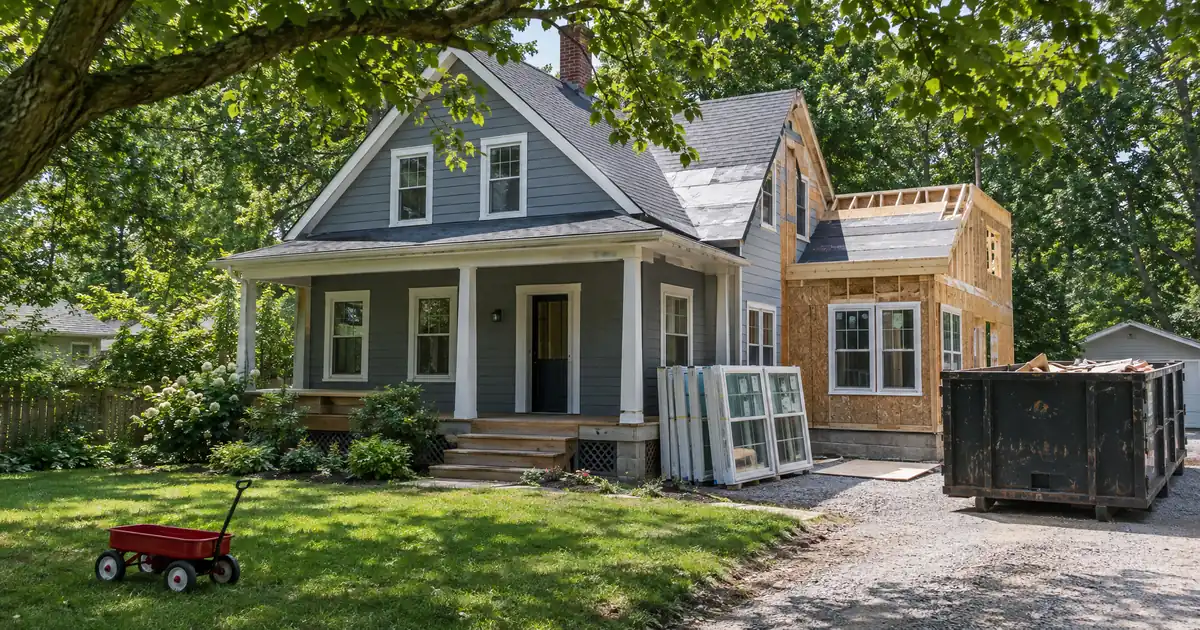
The Quick Read: A DSCR loan is built for a rental that already produces income, while hard money is built for a deal that needs time, repairs, or a bridge. Neither is a safe harbor for approval, because each one tests a different weakness in your file.
- DSCR qualifies primarily on property-level rental income covering the payment, subject to lender guidelines.
- Hard money qualifies primarily on the asset, the plan, and the exit, and varies by lender, property, and experience.
- A vacant or unfinished property usually points to hard money; a leased, stable one points to DSCR.
- Credit still matters on both. Most DSCR programs want around 660, and hard money starts at a 620 minimum with added conditions below 660.
- Many investors use both in sequence: buy and renovate on hard money, then refinance into long-term DSCR financing.
Approval worry usually comes from one of three places: thin credit, a property that isn’t rent-ready, or income that is hard to document. Each product handles those differently. This piece walks through who each loan really fits, where files get declined, and what to do when the numbers fall short.
What this loan actually costs to carry.
Hard money is sized against the project and priced by time. Enter the deal and see how much the program will lend, the cash required at closing, the carry while you hold it, and what is left at the exit.
Leverage tiers on the current program: 85% with fewer than 2, 90% with 2 or more, 93% with 5 or more completed projects — every tier capped at 75% of after-repair value. Loan amounts up to $5,000,000, larger by exception; terms of 6 to 18 months, interest-only, no prepayment penalty. The rehab portion funds in draws against completed work, not at closing.
Program parameters shown update from Lendmire’s centralized guideline source. Rate, points, and months are editable assumptions, not quoted terms.
Cost cap sets the loan · positive spread
Illustrative estimate only — not a quote, Loan Estimate, approval, or commitment to lend. Rate, points, and months are editable assumptions. Hard money is business-purpose financing for real estate investors, not a consumer mortgage. Leverage on the current program tops out at 93% of project cost for investors with a documented track record, capped at 75% of after-repair value, with rehab funding up to 100% of the documented budget released in draws; actual terms vary by lender, borrower experience, property, and exit. Lendmire is a mortgage broker, not a lender.
Side-by-Side
The table below describes Lendmire’s wholesale network on the DSCR side. The hard money column reflects the typical program sheet for business-purpose investor loans and varies by lender, property, and experience. Pricing is left out on purpose; it lives in the calculator only.
| Factor | DSCR Loan | Hard Money |
|---|---|---|
| Review basis | Rent vs. full housing payment | Asset value, plan, exit |
| Property condition | Must be rentable as-is | Distressed or mid-rehab is fine |
| Borrower documents | Entity papers, lease or rent evidence, reserves | Application, entity papers, budget, experience |
| Credit | 620 floor in parts of the network; most want ~660 | 620 minimum, added conditions below 660 |
| Property types | Investment property, 1-4 units and more | Non-owner-occupied 1-4 units; construction to 10 |
| Term structure | 30-year fixed spine; extended terms via select lenders | 6-18 months, interest-only |
| Reserves | Commonly around 6 months of PITIA, varies | Cash for down payment, rehab gap, carry |
| Where files stall | Weak rent coverage, low appraisal, thin reserves | Weak budget, no clear exit, low equity cushion |
How Does Each Lender Decide Yes or No?
DSCR lenders test the property first. Hard money lenders test the deal first. Both still look at you, which is why “easy approval” is the wrong way to think about either one.
DSCR files turn on rent versus PITIA (principal, interest, taxes, insurance, and any HOA dues). Divide monthly rent by that total. Many select programs start at 1.00; stronger ratios open better pricing and leverage. A separate path through select lenders in the network goes below 1.00, with leverage and terms adjusted. The rent number comes from the lease or from an appraiser’s market rent schedule, so a low appraisal can sink a file that looked fine on paper.
Then come credit, reserves, and leverage. Most files land at 75%-80% LTV on a purchase (20%-25% down), and select high-leverage programs reach 85% with roughly a 700+ score. A larger down payment lowers the payment and can lift the ratio, but it never erases a credit floor, a reserve rule, or a property-eligibility limit. The strongest files clear both tests: enough equity and enough rental coverage.
Typical DSCR declines come from five places:
- Rent that doesn’t cover the payment at the requested leverage
- An appraisal or rent schedule that comes in light
- A credit score under the program floor
- Reserves that are short or poorly documented
- Entity documents that don’t match how title will be held
Hard money files turn on equity cushion. For fix-and-flip, leverage on the current program runs 93% of project cost at 5+ completed projects, 90% of project cost at 2+, and 85% below that, with every tier capped at 75% of after-repair value. Up to 100% of the rehab budget funds in draws against completed work. Bridge purchases without rehab go up to 80% of purchase price, and refinances up to 65% of value. All of this varies by lender, property, and experience.
Market sizing is more conservative in general. Corporate Finance Institute describes hard money lenders sizing loans against collateral value, with an expected repayment horizon of one to five years. The network’s current program sits at 6-18 months, so the exit plan is a bigger part of approval than most first-timers expect.
Hard money declines come from a rehab budget that looks unrealistic, a value or after-repair value that doesn’t support the loan, no believable exit, or a borrower with no cash in the deal. A lender that sees a bad deal will pass on it. “Asset-based” does not mean “anything goes.”
When a DSCR Loan Is the Better Fit
A DSCR loan fits when the property is leased or leasable today and you plan to hold it. It also fits when your personal income is hard to document, since the file is reviewed on the property’s rent rather than your tax returns.
Picture an investor with a self-employed income that shows heavy write-offs, buying a duplex that is already leased. A conventional file would struggle on debt-to-income. A DSCR file looks at whether the two units’ rent clears the full payment, then at credit, reserves, and entity documents. That is a cleaner test for this borrower.
DSCR is also the stronger home for a long hold. The 30-year fixed is the spine of the product, with 40-year terms and interest-only periods through select lenders, and ARMs for investors who want them. Loan sizes run up to $3,000,000 on standard programs (smaller balances available through select lenders), and above $2,500,000 the network generally holds to 30-year fixed structures.
Two cautions. First, clearing 1.00 does not mean the property cash flows. Repairs, vacancy, management, utilities, and capex all sit outside the calculation. Second, DSCR loans are designed for non-owner-occupied investment properties. Because they are business-purpose investor loans, they are reviewed differently from a standard owner-occupied mortgage.
Property type matters too. DSCR on manufactured homes (single- and double-wide), log homes, and barndominiums is not offered in the network.
When Hard Money Is the Better Fit
Hard money fits when the property can’t yet pass a rental test. That means a vacant shell, a mid-rehab flip, or a purchase where you need a bridge until the numbers stabilize. The lender is underwriting where the property is going, not where it is.
Say you buy a distressed fourplex that needs a full unit-by-unit rehab. No DSCR lender can count rent that doesn’t exist, and an appraiser can’t produce a credible in-place rent schedule on units that are uninhabitable. Hard money funds the purchase and releases rehab money in draws as work is completed.
It also fits investors with a credit dent. The program starts at a 620 minimum score, with additional conditions below 660, and first-time investors qualify at the lower leverage tiers. That is not a promise of approval. Underwriting stays centered on the property, the plan, and the exit.
The tradeoff is the clock. Terms run 6-18 months, interest-only, with no prepayment penalty. There are no multi-year options on the current program. If the exit slips because rehab runs long or the refinance doesn’t qualify, you are up against maturity. Collateral is non-owner-occupied residential, 1-4 units, with ground-up construction up to 10 units. Commercial, industrial, land, and owner-occupied are not on the sheet.
Loan amounts go up to $5,000,000, larger by exception, and smaller balances vary by lender. Hard money isn’t available in LA, MN, ND, SD, or in Baltimore, Chicago, or Detroit.
What If Your Numbers Fall Short?
Start with the failure point, then pick the fix.
1. Weak DSCR coverage: Put more money down, lower the loan amount, or look at a different property. Select lenders in the network will review coverage below 1.00 with leverage and terms adjusted.
2. Low appraisal or rent schedule: Ask for a reconsideration with in-neighborhood comps and a documented lease. Don’t argue without evidence.
3. Credit under the floor: Check whether a score near 620 fits a specific program, or whether hard money’s lower tiers match the deal. Neither is guaranteed.
4. Property not rent-ready: This is the classic hard money case. Finish the work, lease it, then revisit DSCR.
5. Thin reserves: Reserves vary by lender, leverage, loan size, and transaction type. They are commonly around 6 months of PITIA. Conservative rate-term files at modest leverage under $1,500,000 can see reserves waived, and larger loans typically step up to about 9 months. Document the funds before the file goes in.
The Hand-Off: Hard Money First, DSCR Second
Many investors buy and renovate on hard money, then refinance into long-term DSCR financing once the property is leased. Lendmire brokers that path. The step that gets underestimated is the take-out. The DSCR lender reviews the property under its rules at that time, so the rent, appraisal, credit, and reserves all have to hold up. If one slips, you are still on a short maturity.
Build a backup before you close the first loan. That could mean extra reserves, a conservative rent estimate, or room to sell. For the deeper mechanics, see Lendmire’s piece Selling vs DSCR Refinance for a BRRRR Investor Using Hard Money, and the complete DSCR loans guide for how the long-term side works.
Which Loan Matches Your Worry?
| Your situation | Likely fit |
|---|---|
| Leased rental, hold long-term | DSCR |
| Vacant or needs rehab | Hard money |
| Self-employed, complex income | DSCR, if the property is rent-ready |
| Credit near the floor | Depends on program and file |
| Need to renovate, then hold | Hard money, then DSCR |
Key Terms Defined
DSCR: Monthly rent divided by the full monthly housing payment (PITIA).
PITIA: Principal, interest, taxes, insurance, and any HOA dues.
After-repair value (ARV): The estimated value of a property once renovation is complete.
Loan-to-cost: The loan as a share of purchase price plus renovation budget.
Draws: Rehab funds released in stages as completed work is verified.
Recourse: The borrower or guarantor remains personally liable if the property doesn’t cover the debt.
A Quick Word on the Business-Purpose Frame
Both loans are business-purpose. The CFPB’s Regulation Z rule on exempt transactions says a creditor must determine in each case whether a transaction is primarily for an exempt purpose. The Federal Register’s ability-to-repay final rule states that business-purpose loans are not covered by the ability-to-repay provisions, and that investment-purpose loans are treated as business-purpose. That is why a file can be reviewed on rent or collateral. It is a fact-specific determination, not a label you can pick.
Tax treatment varies; consult a qualified professional.
The Verdict
Choose DSCR when the property can earn rent today and you plan to hold it. Choose hard money when the property needs time or work and you have a believable exit. If you are unsure, the honest test is simple: could an appraiser put a market rent on this property today, and would that rent cover the full payment at the leverage you want? If yes, start with DSCR. If no, hard money may be the bridge, as long as the exit holds. Neither one is guaranteed, and every file is underwritten individually.
If you are buying, rehabbing or refinancing an investment property on a short timeline and want to see how the numbers work, Lendmire can help you compare hard money options based on the project, the exit plan, leverage, and your goals. Reach the team at 828-256-2183.
Frequently Asked Questions
Is a DSCR loan a hard money loan?
No. A DSCR loan is long-term rental financing qualified primarily on property-level rental income covering the payment. Hard money is a short-term, interest-only bridge qualified on the asset, plan, and exit.
Which is easier to get approved for?
It depends on what is weak in your file. A property that isn’t rent-ready can’t use DSCR, and a thin exit plan can sink hard money. Both review credit, and both can decline a deal.
Can I be denied for either?
Yes. DSCR files get declined for weak rent coverage, low appraisals, credit, or reserves. Hard money files get declined for an unrealistic budget, thin equity, or no clear exit.
What if my DSCR is under the minimum?
Many select programs start at 1.00. A separate path through select lenders takes coverage below 1.00, with leverage and terms adjusted. A larger down payment or smaller loan can also lift the ratio.
How do I avoid being stuck at hard money maturity?
Run the DSCR math on the stabilized property before you buy, keep reserves in place, and have a sale as a backup. Terms run 6-18 months, so schedule the refinance early.
About Lendmire
Lendmire is a non-QM mortgage brokerage (NMLS# 2371349) arranging DSCR investor loans in 41 markets, including Washington, D.C. DSCR eligibility is generally reviewed around property-level rental income rather than personal income, subject to lender and program guidelines, a fit for self-employed investors and LLC-owned portfolios. Lendmire was recognized as a Scotsman Guide Top Mortgage Workplace in 2025 and 2026.
Get Started
Ready to find the right loan for you?
See your offer in seconds. No credit pull, no obligation.
Informational only. Not a Loan Estimate, approval, or commitment to lend. Program availability and eligibility are subject to lender guidelines, credit approval, property review, and underwriting.
References
1. Corporate Finance Institute, Hard Money Loan
2. CFPB, Regulation Z §1026.3 Exempt transactions
3. Federal Register, Ability-to-Repay and Qualified Mortgage Standards Final Rule
This article is part of Lendmire’s hard money loan program — full qualification details, guidelines, and scenarios live on the program page.
Related reading: How to Get a DSCR Loan on a Stonington Rental Property · Jumbo DSCR Loan vs Hard Money on a Condo With HOA Litigation · How to Buy a Noda Duplex With a DSCR Loan
Brandon Miller
Founder & CEO, Mortgage Loan Originator, Lendmire LLC
- Mortgage Loan Originator · NMLS# 1129696 · Verify on NMLS Consumer Access
- North Carolina Real Estate Broker · License# 343312 · Verify on NCREC
- North Carolina Insurance Producer · License# 19053198 · Property, Casualty, Life, Health · Verify on NAIC SBS
- Lendmire LLC · Firm NMLS# 2371349 · Verify firm licensure
Compliance and disclosures. Lendmire (NMLS# 2371349) is a licensed mortgage broker and is not a direct lender, depository institution, financial advisor, or tax professional. Content in this article is general market analysis and educational information — not financial, legal, or tax advice for any specific situation. Lendmire does not guarantee loan approval; every transaction is subject to underwriting by the funding lender. Mortgage pricing and loan program guidelines are subject to change at any time without notice and vary by borrower characteristics, property type, and state regulations. Lendmire complies with Equal Housing Opportunity. Licensure verification: NMLS Consumer Access.