
The Quick Read: The appraiser does not add up your receipts; the report reflects what recent nearby sales say a renovated property is worth, so the way to get rehab recognized is to put comparable-sale evidence in front of the appraiser through the lender, before the report is finalized.
- The lender’s appraisal sizes the loan. Your after-repair estimate is only a planning number.
- Cost is not value. The market decides what a renovation contributes, and that is often less than what you spent.
- When values slip, recent renovated sales matter far more than invoices.
- The formal route to a second look is a written reconsideration request, routed through the lender.
- Value is one test and rent coverage is another. Winning the first can weaken the second.
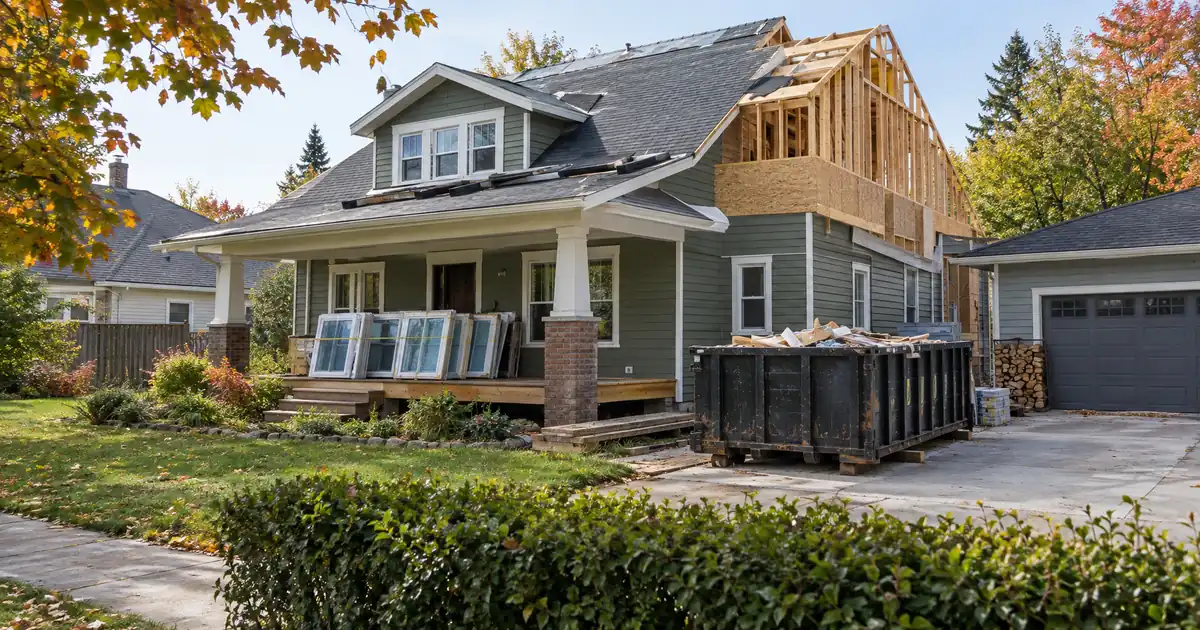
Picture an investor who just finished a full interior renovation on a duplex. The contractor invoices total a number she is proud of, and the appraisal comes back close to the pre-rehab price. She did nothing wrong, exactly. She just assumed the appraisal works like an accounting exercise. It doesn’t.
DSCR Calculator
Run the numbers in your market
Rate source: Freddie Mac 30-yr average via FRED® — Federal Reserve Bank of St. Louis · effective Oct 29, 2026
Prefilled with starting assumptions — enter your own rent or nightly figures, taxes, insurance, and HOA for a more accurate picture.
Program parameters update from Lendmire’s centralized guideline source. Taxes and insurance are editable estimates.
As of Oct 29, 2026 · General Freddie Mac market benchmark, not a Lendmire loan offer. Rent, nightly rate, occupancy, taxes, and insurance are editable estimates. Short-term rental figures are estimates only and vary significantly by season, property type, management approach, and local short-term-rental rules — confirm local regulations before relying on them. Qualifying income for short-term rentals varies by program — some use appraisal market rent, others use documented STR history or projections — and is confirmed in underwriting. Not a Loan Estimate, approval, or commitment to lend. Program availability and eligibility are subject to lender guidelines, credit approval, property review, and underwriting.
This article walks through how the process really works, step by step, and where it breaks. It also covers what to do when the number holds. For the broader picture of how these loans fit together, see Lendmire’s complete DSCR loans guide.
Key Terms Defined
After-repair value (ARV): the investor’s estimate of what the property will be worth once the work is finished. It is a planning figure, not a lender input.
Appraised value: the opinion of value in the lender-ordered report, built mainly from comparable sales.
Contributory value: what a specific improvement adds to market value, as set by buyer behavior rather than by what the work cost.
Cost basis: what you paid for the property, often plus documented improvements. Some refinance files size the loan off this number until seasoning is met.
Reconsideration of value (ROV): a written request that the appraiser take a second look based on new or corrected information.
Market rent: the appraiser’s opinion of what the property would lease for, reported separately from value on a rent schedule.
What Does a DSCR Appraisal Actually Measure?
It measures two things: market value from comparable sales, and market rent from a rent schedule. On a single-family rental, that usually means a full appraisal paired with a 1007 rent schedule. On a two-to-four-unit property, the 1025 operating income statement form covers both. Those form names are the only agency material that matters here; they describe the report, not the loan program.
Across the wholesale network Lendmire works with, a DSCR loan still carries an appraisal. The rental income test replaces personal income documentation as the primary qualifier, subject to lender guidelines. It does not replace the valuation.
Most reports are written on an as-is basis. An appraisal “subject to completion” instead assumes the work is finished, and the report should make clear the current value is different. Many programs want the property rent-ready, so a heavy rehab is often handled with a short-term bridge loan first, then a DSCR refinance once the work is done.
Why Doesn’t the Appraisal Credit My Rehab Spending?
Because the appraiser values the whole property against the market, not the renovation against its price tag. McKissock, an appraiser-education publisher, makes the point that cost does not always equal value. In some markets buyers pay well above build cost, and in others well below. An appraiser-run explainer from Madison Park Appraisal adds that contributory value is more often less than cost than more.
Here are the usual reasons a rehab goes uncredited:
| Symptom | Likely cause | Fixable? |
|---|---|---|
| Value near pre-rehab price | Comps are unrenovated or dated | Often, with better comps |
| Work not mentioned in report | Omission of updates | Usually, via a lender request |
| Square footage or beds wrong | Factual error | Yes |
| Value fine, rent low | Rent schedule comps are weak | Sometimes |
| Value below bridge lender’s number | Different appraisal, different comps | Rarely; plan around it |
The last row trips up many investors. A hard-money lender’s after-repair figure and the refinance lender’s appraisal are separate reports with separate comp selections. Plan around the second number, not the first.
How Do Falling Values Change the Picture?
When prices soften, the appraiser leans on the most recent closed sales, and those may be distressed or reduced-price deals that pull the whole comp set down. Fast Company reports that 64 of the 300 largest housing markets, about 21%, saw falling year-over-year prices while national prices rose 1.1%. That split matters. Your local comps decide the result, not the national headline.
In a soft market, a renovated property can still be supported, but only by renovated sales that closed recently and nearby. Older sales get time-adjusted downward. A comp set made of unrenovated homes leaves the appraiser nothing to credit your work against.
Markets also differ in how they treat the same improvement. A kitchen and bath update may be recognized in a tight neighborhood where buyers pay for finished product, and ignored in one where every sale is a fixer.
What Evidence Helps Before the Appraiser Visits?
The best time to influence the report is before it’s written. Build a packet and pass it to the lender or broker to forward. Do not contact the appraiser directly. Pressure, or suggesting a target value, tends to backfire.
| Item | What it proves | Delivered by |
|---|---|---|
| Before-and-after photos | Condition change | Investor, via lender |
| Scope of work and invoices | What was done, tied to line items | Investor |
| Permits and final sign-offs | Work was completed properly | Investor |
| One or two renovated closed sales | What the market pays for finished product | Investor or broker |
| Upgrade list | Quality and condition details to adjust for | Investor |
Frame the rehab in the language the appraiser uses: condition rating, quality of finishes, and adjustments against comps. A line reading “$80,000 of renovation” tells the appraiser little. A list showing a new roof, updated kitchen, and replaced mechanicals, next to three renovated sales that closed nearby, tells a story the appraiser can use.
Fewer, stronger comps beat volume. (Quality of comps is the whole game here.)
How Should You Read the Report?
Read it like an auditor. Check these items, value and rent separately:
- Condition and quality ratings match the property as it stands today.
- The update description mentions the completed work.
- Square footage, bedroom and bath counts, and unit count are correct.
- Comparable sales are recent, close, and similar in condition.
- The rent schedule uses true rental comps, not aspirational listings.
Many DSCR files get derailed by a rent miss rather than a value miss. Rehab can lift value without lifting market rent, and the rent figure drives the coverage ratio.
How Do You Request a Reconsideration the Right Way?
Ask in writing, through the lender, and bring new or corrected information. The interagency guidance on reconsiderations of value describes how regulated institutions can build these processes, and the CFPB announcement says the guidance covers information the appraiser may not have considered, or deficiencies in the report.
Keep the scope straight. That guidance is non-binding and aimed at regulated institutions on residential valuations. Business-purpose DSCR lenders each run their own review policy, so a reconsideration is a request the lender may honor, not a right.
The steps look like this:
1. Identify the specific issue: a factual error, an omitted improvement, or weak comps.
2. Write a short request that names the problem and attaches evidence.
3. Submit it through the lender or your broker, not to the appraiser.
4. Offer new sales without naming a number you want.
5. Accept that the review can hold the value, and in some cases lower it.
| Tends to move the number | Tends not to |
|---|---|
| Closed renovated sales nearby | Invoices alone |
| Documented factual errors | Asking for a specific figure |
| Recent, similar-condition comps | Listings and asking prices |
| Permits and photos of finished work | Pressure on the appraiser |
Where an appraiser used older, wider-radius comps, the winning argument was better comps, not louder arguments.
DSCR vs. conventional financing
There are two common ways to finance an investment property, and they qualify you differently — here’s how investors weigh them.
Why investors choose it
- Qualifies on the property’s rental income — no personal tax returns, W-2s, or pay stubs needed to document income.
- No personal debt-to-income ceiling to clear, so existing mortgages and obligations don’t cap your borrowing the same way.
- Can be closed in an LLC, keeping the property inside a business entity.
- Built for scaling — not held to the limit on number of financed properties that conventional financing applies.
- Underwriting centers on the deal: generally qualifies when the rent covers the payment, a 1.00x coverage ratio being a common baseline (confirmed in underwriting).
- Designed specifically for investment property, including long-term and, where the program allows, short-term rentals.
Where it’s strong
- Often the lowest ongoing financing cost for a buyer who fully qualifies on personal income — a fit for a first property or a cost-first purchase.
Trade-offs for investors
- Requires full personal income documentation and must fit within a debt-to-income limit — salary, existing debts, and other mortgages all count.
- Typically held in your personal name rather than a business entity.
- Caps how many financed properties you can carry, which can become a ceiling as a portfolio grows.
- Evaluates you as a borrower as much as the property, which usually means more paperwork.
How investors usually choose: a first or single property often optimizes for the lowest financing cost; portfolio builders often optimize for leverage, vesting in an LLC, and scaling past conventional caps. The right answer depends on your goals, the property, and current guidelines — both paths run through select lenders in Lendmire’s wholesale network, with eligibility and terms confirmed in underwriting.
Which Numbers Should You Run Before You Ask?
Run the break-even math first. The loan size comes from the appraised value times the program’s leverage limit, so a miss changes what you can pull out or whether a bridge payoff is covered at all.
Consider four outcomes against a planning ARV of 100 on an index: the appraisal lands at 100, 95, 90, or 85. On a cash-out refinance, most programs in Lendmire’s wholesale network top out around 75% LTV, so the maximum loan scales directly with those figures. At 100 the ceiling is 75. At 95 it is 71.25, and at 90 it drops to 67.5. If your payoff and costs sit at 72, you clear at 100 but fall short at 95 (71.25 is just under 72), and the gap widens at 90.
Then look at coverage. DSCR compares rent to the full monthly obligation (principal, interest, taxes, insurance, and any HOA dues). A bigger loan raises that obligation, so a value win can nudge coverage down even as it raises proceeds. The standard starting point for select programs is 1.00; stronger ratios open better pricing and leverage. Clearing 1.00 also isn’t the same as positive cash flow, since repairs, vacancy, management, and capex sit outside the calculation.
Underwrite the deal to survive an appraisal that comes in short. If the project only works at the top-end number, the margin is too thin.
When Does a Better Appraisal Not Change the Loan?
When the loan is sized on cost basis. On a refinance, lenders often look to the lower of appraised value or cost basis until seasoning is met. Across most of Lendmire’s network, cash-out refinances top out around 75% LTV, with about six months of seasoning the common expectation. Programs vary, so set expectations before ordering the report. A correct, favorable appraisal on a file still inside seasoning may leave the loan amount unchanged.
What Are Your Options If the Number Holds?
| Option | Fits when | Tradeoff |
|---|---|---|
| Bring cash to the table | Gap is modest | Ties up capital |
| Take a smaller loan | You can still cover the payoff | Less cash back |
| Wait and reappraise | Market is stabilizing | Carrying costs continue |
| Second appraisal or another lender | Clear errors or weak comps | Cost, and the result can go either direction |
| Sell | Numbers no longer support holding | Gives up the rental thesis |
Some investors also use a purchase-money path or sub-1.00 coverage through select lenders in the network, with leverage and terms adjusted. Neither fixes a value problem, though. Both are separate decisions.
Common Mistakes
- Treating the ARV as the lender’s number.
- Sending a stack of weak comps instead of one or two strong ones.
- Contacting the appraiser directly.
- Confusing a value win with a coverage win.
- Ignoring seasoning and cost-basis sizing.
- Assuming a national price dip tells you what local comps will do.
Frequently Asked Questions
Can I give the appraiser my renovation receipts?
You can include them in the evidence packet, sent through the lender or broker. Receipts show what you spent, but the appraiser needs closed sales of comparable renovated homes to translate that work into value.
Does a DSCR loan skip the appraisal?
No. Property income replaces personal income documentation as the main qualifier, subject to lender guidelines, but the property is still valued and a rent opinion is still reported.
Can an appraisal challenge lower my value?
Yes. A review can confirm the original number or revise it down. Request one only when you have a specific error or stronger comps.
Why is my hard-money after-repair value different from my refinance appraisal?
They are two separate reports, often with different comp selections and different purposes. Size your plan around the refinance lender’s number.
Does falling value always mean my appraisal fails?
No. Local comps matter more than national averages. A renovated property with recent supporting sales can hold up even where nearby prices are soft.
About Lendmire
Lendmire (NMLS# 2371349) is a mortgage broker arranging DSCR investor financing through select lenders in its wholesale network across 41 markets, including Washington, D.C. If you are buying or refinancing a rental property and want to see how the numbers work, Lendmire can help you compare DSCR loan options based on the property income, credit profile, leverage, and investor goals. For related reading, see Lendmire’s piece How Much Rehab Cost a DSCR Appraisal Returns in a Slipping Market. Tax treatment varies; consult a qualified professional. Scotsman Guide named Lendmire a Top Mortgage Workplace in both 2025 and 2026.
Get Started
Ready to find the right loan for you?
See your offer in seconds. No credit pull, no obligation.
Informational only. Not a Loan Estimate, approval, or commitment to lend. Program availability and eligibility are subject to lender guidelines, credit approval, property review, and underwriting.
References
1. McKissock, The Cost Approach
3. Fast Company, Housing Market Home Prices Falling
4. Federal Register, Interagency Guidance on Reconsiderations of Value
5. CFPB, Agencies Finalize ROV Guidance
This article is part of Lendmire’s DSCR loan program — full qualification details, guidelines, and scenarios live on the program page.
Related reading: Can You Get an Interest-Only DSCR Loan on a Condo? · DSCR Loan per Property vs Blanket Loan for Five Rentals: Collateral · How to Buy a Noda Duplex With a DSCR Loan
Brandon Miller
Founder & CEO, Mortgage Loan Originator, Lendmire LLC
- Mortgage Loan Originator · NMLS# 1129696 · Verify on NMLS Consumer Access
- North Carolina Real Estate Broker · License# 343312 · Verify on NCREC
- North Carolina Insurance Producer · License# 19053198 · Property, Casualty, Life, Health · Verify on NAIC SBS
- Lendmire LLC · Firm NMLS# 2371349 · Verify firm licensure
Disclosures. The information presented in this article is general market commentary, not financial, legal, or tax advice. Lendmire is a mortgage brokerage (NMLS# 2371349) — not a direct lender or depository institution — and loan placement is subject to lender underwriting. Nothing in this content represents a commitment to lend. Loan terms, pricing, and program availability vary based on borrower qualifications, property characteristics, and state of subject property, and are subject to change at any time. Lendmire complies with Equal Housing Opportunity requirements. Consumer access: nmlsconsumeraccess.org.