
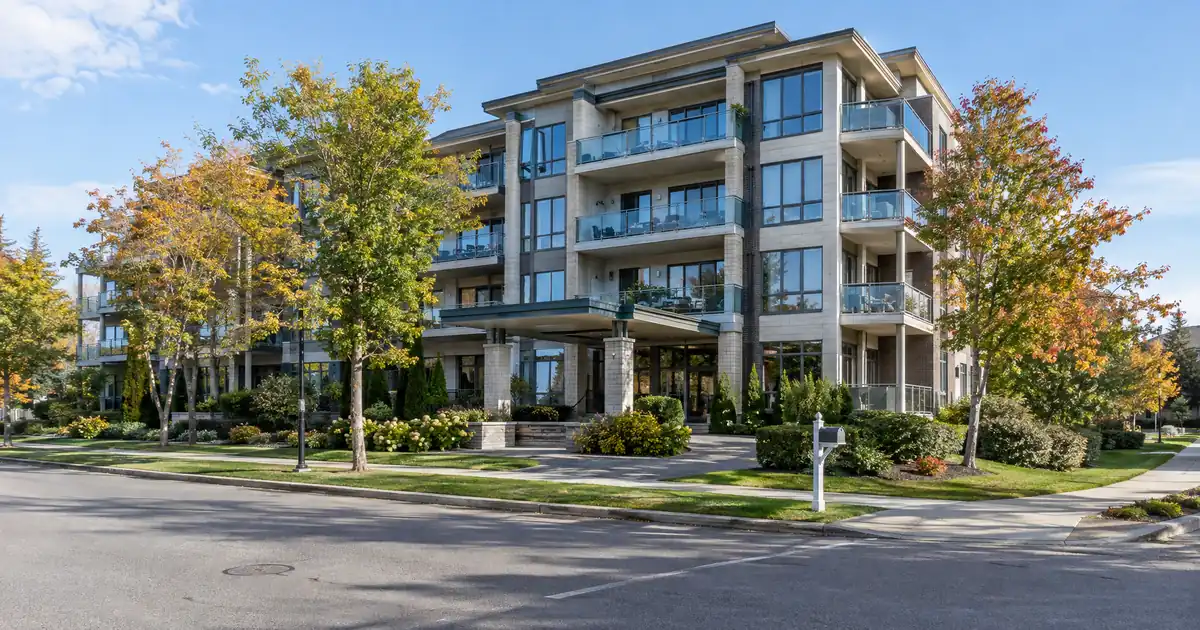
The Quick Read: Sometimes, but only when two separate tests both pass. The building must be acceptable to the program, and the program must accept your trust, either on title or as the borrower. A revocable trust, or an LLC owned by one, is the most workable route.
- The building decides the condo question. Putting the unit in a trust does not change that answer.
- The program decides the trust question. Revocable trusts are the easiest to place; irrevocable trusts usually need a workaround.
- A real person still signs a personal guarantee, even when a trust or LLC is the borrower.
- Purchase leverage typically runs 75%-80% LTV on an investment property, subject to lender guidelines.
- Coverage is rent measured against the full monthly obligation, and HOA dues count against you.
Key Terms Defined
Non-warrantable condo: A condo project that fails the standards Fannie Mae and Freddie Mac use to buy loans. It is a financing label, not a defect in the building.
Vesting: The name that appears on the deed. It might be you, a trust, an LLC, or a trust-owned LLC.
Trustee certification: A short document that proves who runs the trust and that the trustee can pledge the property as collateral. Some programs ask for the full trust agreement instead.
Personal guarantee: Your signed promise to repay the loan if the borrowing entity does not.
PITIA: Principal, interest, taxes, insurance, and association dues. This is the monthly obligation that rent must cover.
DSCR (debt service coverage ratio): Monthly rent divided by PITIA. A result of 1.00 means rent equals the payment.
DSCR Calculator
Run the numbers in your market
Rate source: Freddie Mac 30-yr average via FRED® — Federal Reserve Bank of St. Louis · effective Oct 29, 2026
Prefilled with starting assumptions — enter your own rent or nightly figures, taxes, insurance, and HOA for a more accurate picture.
Program parameters update from Lendmire’s centralized guideline source. Taxes and insurance are editable estimates.
As of Oct 29, 2026 · General Freddie Mac market benchmark, not a Lendmire loan offer. Rent, nightly rate, occupancy, taxes, and insurance are editable estimates. Short-term rental figures are estimates only and vary significantly by season, property type, management approach, and local short-term-rental rules — confirm local regulations before relying on them. Qualifying income for short-term rentals varies by program — some use appraisal market rent, others use documented STR history or projections — and is confirmed in underwriting. Not a Loan Estimate, approval, or commitment to lend. Program availability and eligibility are subject to lender guidelines, credit approval, property review, and underwriting.
Two Gates, Not One
Think of this as two checkpoints, and the order matters. Gate one is the building. Gate two is the vesting. Fail either and the file stops.
People blur the two constantly. A trust gets blamed for a building problem, or the reverse. Then the investor fixes the wrong thing.
Here is how the gates split:
- Gate one (the project): Why is the building non-warrantable? The program reviews that reason on its own merits.
- Gate two (the vesting): Will this specific program take a trust on title, or as the borrower? That is a program-by-program call.
One point makes planning easier. Trust vesting does not turn a non-warrantable building into a harder or easier one. A building that works for an individual or an LLC buyer generally works for a trust-structured buyer too, if the trust itself is acceptable. A building that fails stays failed.
DSCR loans are non-QM, business-purpose products, so the agency checklist does not run the show. Scotsman Guide notes that DSCR programs cover both warrantable and non-warrantable condos, and that investors often turn to them because agency condo rules have narrowed. An older Scotsman Guide piece is more cautious. It says non-warrantable condos with high investor ownership or other red flags won’t meet many programs’ criteria.
Both views are right. Across a wholesale network, eligibility changes from lender to lender. Some programs welcome these buildings. Others pass on them.
Why Does a Condo Get Labeled Non-Warrantable?
The label usually comes from the building’s ownership mix, its legal situation, or its finances. DSCR programs review each cause case by case. Some causes are easier to place than others.
| Trigger | How DSCR programs often treat it |
|---|---|
| Heavy investor ownership | Often the easiest cause to place |
| Pending litigation | Reviewed case by case; can be a stopper |
| Commercial space in the building | Usually reviewed for size and use |
| Weak HOA reserves or delinquent dues | May mean added documents or lower leverage |
| Developer control or rental pooling | Can rule out a unit entirely |
| Condotel features | Often have their own requirements |
Investor concentration is the cause investors see most. A tower where many owners rent out their units can fail the agency test and still work on a DSCR file. Developer control and mandatory rental pooling are a different story. Those can end the conversation.
Expect a condo questionnaire and the association budget. Expect a look at insurance, reserves, and litigation too. Many files also see a modest leverage or pricing adjustment on non-warrantable units, depending on the program.
One more flag: short-term rental rules can vary by city, county, HOA, and property type, so investors should confirm local rules before relying on projected rental income. Some buildings bar nightly rentals outright, even when the loan itself is fine.
Can a Trust Hold a Non-Warrantable Condo Directly?
Directly on title, it depends on the program. A revocable trust is the most workable, and many programs will take it. Others prefer that the trust own an LLC and the LLC be the borrower. Irrevocable, land, and blind trusts are usually limited or not workable.
Programs split on this. Some treat a revocable trust as a normal vesting option. Others refuse a trust as the direct borrower but welcome a trust that owns the borrowing LLC. A few lenders in the network are flexible. Most want to see the structure before they say yes.
Here is how the four common structures compare:
| Structure | Typical acceptance | Guarantee | Key documents |
|---|---|---|---|
| Revocable trust on title | Program-dependent | Yes | Trust certification or agreement |
| Trust-owned LLC | Widely workable | Yes | Entity papers plus trust papers |
| LLC only | Common, subject to program terms | Yes | Articles, operating agreement, EIN |
| Individual name | Broadly accepted | Yes | Standard file |
A word on trust types. A revocable trust is mainly an estate-planning tool. You keep control and can change it. That is why lenders tolerate it. An irrevocable trust moves control away from you, which makes lenders nervous about who can sign. Lendmire’s piece Revocable vs Irrevocable Trust on a Non-Warrantable DSCR Condo Loan goes deeper on that split.
A trust also does not replace an LLC for liability protection. The trust solves an estate problem. The LLC addresses a liability problem. Neither changes how the loan is reviewed.
What Does the Personal Guarantee Look Like?
You still sign, whatever the title says. Most DSCR programs expect at least one real person to guarantee the loan, even when a trust or LLC is the borrower. A trust does not make the loan non-recourse, and it does not shrink the loan amount.
Trustee authority is the other piece. The person who signs the loan papers must have power under the trust to pledge the condo. The same name should appear on the deed, the title policy, the loan documents, and the HOA paperwork. If the trust is on title, the trustee’s name goes where your own name would otherwise go. Mismatches here cause more delays than most investors expect.
How the DSCR Math Works With a Trust
Entity or trust vesting does not change the coverage calculation. Rent over PITIA is rent over PITIA. HOA dues sit in the denominator, and on a condo they can be heavy.
Picture a hypothetical investor buying a tower unit in a building flagged only for investor concentration. She holds the unit through a revocable trust that owns an LLC. She puts down 25%, so the loan is 75% LTV on an investment-property purchase. Her credit is above 700, and market rent covers the full monthly obligation, HOA dues included, at roughly 1.15x. This is an illustration, not a quote. Each figure is subject to lender guidelines and a complete review of property type, leverage, and credit.
On paper this file has a strong shape. Coverage clears 1.00, leverage sits in the typical purchase band, and credit is in a stronger tier. The open questions are the two gates: the program’s view of the building and its view of the trust-plus-LLC structure.
Now flip the dues. Suppose the HOA raises assessments and coverage slips toward 1.00. A larger down payment can lower the payment and lift the ratio. It cannot erase leverage caps, credit floors, reserve rules, or property eligibility. The strongest files clear both tests: enough equity and enough rental coverage.
A DSCR above 1.00 is also not the same as positive cash flow. The ratio compares rent to PITIA only. Repairs, vacancy, management, utilities, and capital costs sit outside the calculation.
What Do Programs Typically Require?
Most programs we place files with ask for these ranges. All are subject to lender guidelines, and none are a commitment to lend:
- Purchase leverage: typically 75%-80% LTV on an investment property. Select high-leverage programs reach 85% on a purchase with a stronger credit score.
- Cash-out refinance: tops out around 75% LTV on a standard rental, with about six months of seasoning as the common expectation.
- Coverage: 1.00 is where many select programs start. A separate path through select lenders in the network takes coverage below 1.00, with leverage and terms adjusted.
- Credit: a 620 floor exists in parts of the network. Most programs want around 660, and 700+ unlocks the strongest leverage.
- Reserves: commonly about six months of PITIA, with about nine months on loans above $1,500,000. Reserve rules vary by lender, leverage, and loan size.
- Loan size: up to $3,000,000 on standard programs.
Non-warrantable status can pull the leverage toward the lower end of those ranges. The complete DSCR loans guide walks through how these pieces fit together. Subject to program terms, an LLC or trust-owned LLC title is a common structure for investors who want entity ownership.
DSCR vs. conventional financing
There are two common ways to finance an investment property, and they qualify you differently — here’s how investors weigh them.
Why investors choose it
- Qualifies on the property’s rental income — no personal tax returns, W-2s, or pay stubs needed to document income.
- No personal debt-to-income ceiling to clear, so existing mortgages and obligations don’t cap your borrowing the same way.
- Can be closed in an LLC, keeping the property inside a business entity.
- Built for scaling — not held to the limit on number of financed properties that conventional financing applies.
- Underwriting centers on the deal: generally qualifies when the rent covers the payment, a 1.00x coverage ratio being a common baseline (confirmed in underwriting).
- Designed specifically for investment property, including long-term and, where the program allows, short-term rentals.
Where it’s strong
- Often the lowest ongoing financing cost for a buyer who fully qualifies on personal income — a fit for a first property or a cost-first purchase.
Trade-offs for investors
- Requires full personal income documentation and must fit within a debt-to-income limit — salary, existing debts, and other mortgages all count.
- Typically held in your personal name rather than a business entity.
- Caps how many financed properties you can carry, which can become a ceiling as a portfolio grows.
- Evaluates you as a borrower as much as the property, which usually means more paperwork.
How investors usually choose: a first or single property often optimizes for the lowest financing cost; portfolio builders often optimize for leverage, vesting in an LLC, and scaling past conventional caps. The right answer depends on your goals, the property, and current guidelines — both paths run through select lenders in Lendmire’s wholesale network, with eligibility and terms confirmed in underwriting.
Moving an Existing Condo Into a Trust
This is where federal law enters. If you already own the unit with a mortgage and want to deed it into your trust, you risk setting off the loan’s due-on-sale clause. That clause lets a lender demand full repayment when title transfers.
A federal statute carves out an exception. Justia’s text of 12 U.S.C. § 1701j-3 bars a lender from calling a loan over a transfer into an inter vivos trust where the borrower stays a beneficiary and occupancy rights are not transferred. Sounds like a green light. It is not, for most investors.
The exception is written for residential property with fewer than five units, as this law-firm explainer notes. The related regulation is framed around a home the borrower occupies or will occupy. For a rental, the occupancy condition is a real question. Do not assume the protection applies.
Transfers into an LLC are not on the exception list at all. Have an attorney review the loan documents before you deed anything.
The cleaner route avoids the issue. Close the new DSCR loan with the vesting you want, right at origination. That is also an argument for settling the structure before you sign a purchase contract, or before you refinance an existing loan.
Check Before Assuming You Need Non-QM
Agency rules have moved recently. A Fannie Mae lender letter retired the 50% investment-property concentration limit on established projects reviewed under full review on investor loans. So a building that was non-warrantable only because of investor concentration may now fit agency standards.
Other agency project tests remain, and individual lenders may keep their own limits. Still, ask first. If the unit is reviewed on agency terms, conventional financing may be an option worth comparing. DSCR remains the practical route when the building fails for other reasons, or when you own many financed properties. Scotsman Guide notes that agency programs won’t back investors who already hold 10 financed properties, while DSCR loans carry no such cap.
Where These Files Stall
Across non-warrantable condo files, a few failure modes show up repeatedly. The building is often fine and the paperwork is the problem.
- Deeding first, financing second. Closing personally, then moving the unit into a trust afterward, can cause due-on-sale, insurance, and title problems.
- An unfunded or unclear trust. The title company needs proof the trust exists and the trustee can encumber the property.
- Mismatched names. The deed, loan documents, insurance, and HOA records must all agree on who owns the unit.
- The wrong trust type. An irrevocable or land trust sent to a program built for revocable trusts. The fix is often a trust-owned LLC.
- A building problem mistaken for a trust problem. Litigation or developer control kills the file, and the trust gets the blame.
- Resale blind spots. A non-warrantable unit can be harder to sell later, because the next buyer may need conventional financing.
The pattern from the broker’s desk: files with a single, explainable building issue and clean vesting do well. Files with two or three moving pieces stall. Reduce the variables before you submit.
Trust, LLC, or Both?
The honest answer is that it depends on your goals, and an attorney should help choose.
- If estate planning is the priority and the program takes revocable trusts, a trust on title may be enough.
- If liability protection matters, an LLC does that job. A trust-owned LLC covers both.
- If the program wants an LLC borrower, the trust-owned version satisfies it and keeps your estate plan intact.
- If the trust is irrevocable, talk to an estate attorney about a separate LLC owned by the trust.
Pick the structure before you pick the unit. It is far easier to match a building to a vesting than the reverse.
This article is general education and is not legal or tax advice. Tax treatment varies, so consult a qualified attorney or CPA about your own situation before choosing a structure.
Frequently Asked Questions
Can a trust buy a non-warrantable condo directly on a purchase?
Sometimes. Some programs will take a revocable trust on title from day one, while others want the trust to own an LLC that borrows. Settle it before contract, because changing the vesting after you are in contract adds friction.
Does putting the condo in a trust lower my loan amount or make the loan non-recourse?
No on both. The trust does not change how the loan is sized, and a personal guarantee is still expected. The structure affects title, estate planning, and who signs, not the underwriting math.
Does an irrevocable trust work?
Usually not as the borrower. Irrevocable trusts are limited because control sits outside your hands. The common fix is an LLC owned by the trust, subject to lender program eligibility, with an estate attorney involved.
Can I move my condo into a trust after closing?
You can, but it carries risk. A due-on-sale clause may apply, and the federal trust exception is written around occupied homes of fewer than five units. Get attorney review first, or build the vesting into the new loan at origination.
Can a non-warrantable condo become warrantable later?
It can, if the cause changes. A building that failed only on investor concentration might now meet agency standards after recent rule changes. Ask the HOA and a lender to review the building again before you assume the label is permanent.
Next Steps
If you are buying or refinancing a rental property and want to see how the numbers work, Lendmire can help you compare DSCR loan options based on the property income, credit profile, leverage, and investor goals. As a mortgage broker, Lendmire arranges financing through select lenders in its wholesale network, across 41 markets including Washington, D.C. You can start with a quote request. Whatever you choose, confirm the building’s status with the HOA before you commit.
About Lendmire
Lendmire (NMLS# 2371349) is a mortgage brokerage focused on DSCR investor financing, helping arrange programs through wholesale and investor-lending channels in 41 markets, including Washington, D.C. DSCR loans are evaluated by the lender on property cash flow rather than personal income, subject to lender guidelines, supporting LLC closings and accommodating investors with four or more financed properties. Scotsman Guide Top Mortgage Workplace in both 2025 and 2026.
Get Started
Ready to find the right loan for you?
See your offer in seconds. No credit pull, no obligation.
Informational only. Not a Loan Estimate, approval, or commitment to lend. Program availability and eligibility are subject to lender guidelines, credit approval, property review, and underwriting.
References
1. Scotsman Guide, “Invest in Your Future”
2. Scotsman Guide, “Get in the Game”
3. Justia, 12 U.S.C. § 1701j-3
4. Adam Leitman Bailey, P.C., due-on-sale exceptions
5. Fannie Mae Lender Letter LL-2026-03
This article is part of Lendmire’s DSCR loan program — full qualification details, guidelines, and scenarios live on the program page.
Related reading: Condo vs Single-Family Rental for an Interest-Only DSCR Loan · Can a Condo Fail the Questionnaire and Still Get a DSCR Loan? · How a Jumbo DSCR Loan Works on a Condo in HOA Litigation
Brandon Miller
Founder & CEO, Mortgage Loan Originator, Lendmire LLC
- Mortgage Loan Originator · NMLS# 1129696 · Verify on NMLS Consumer Access
- North Carolina Real Estate Broker · License# 343312 · Verify on NCREC
- North Carolina Insurance Producer · License# 19053198 · Property, Casualty, Life, Health · Verify on NAIC SBS
- Lendmire LLC · Firm NMLS# 2371349 · Verify firm licensure
Legal disclosures. Lendmire (NMLS# 2371349) is a state-licensed mortgage brokerage that arranges financing through wholesale lender relationships. Lendmire is not a direct lender, depository institution, or registered financial advisor. The discussion above is general informational content about real estate financing — it is not financial, legal, or tax advice, and readers should consult licensed professionals for guidance on their individual circumstances. Loan inquiries are subject to lender underwriting; this article does not represent a commitment to lend. Loan terms, rates, and qualification standards vary by borrower, property, and state, and are subject to change at any time. Equal Housing Opportunity. NMLS Consumer Access: nmlsconsumeraccess.org.