
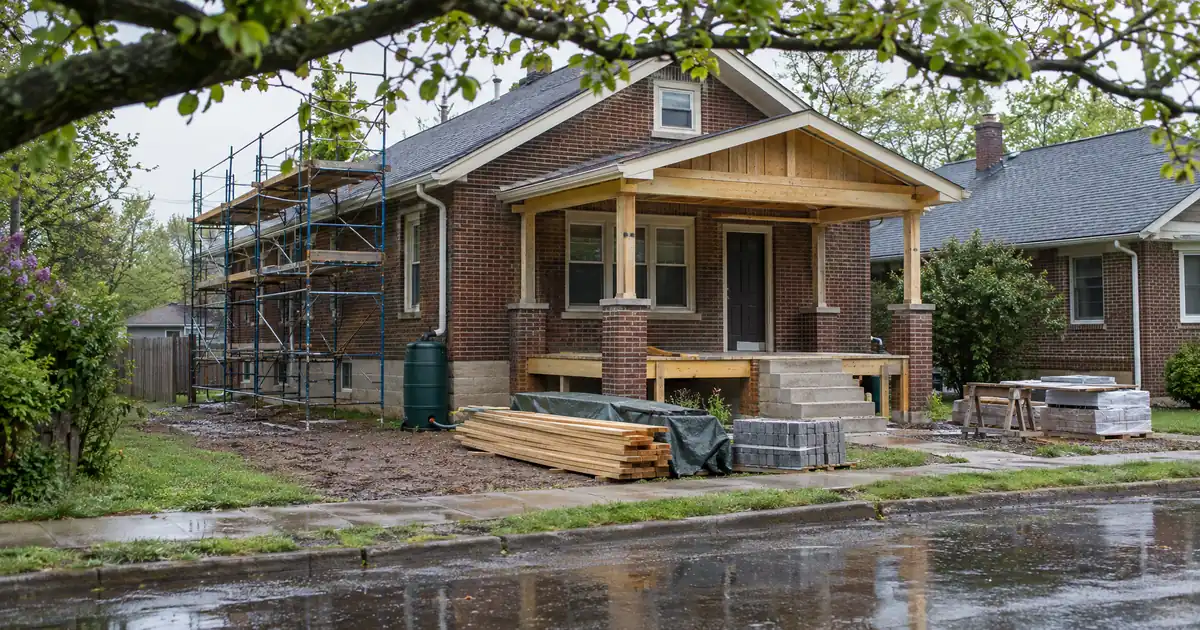
The Quick Read: A DSCR loan fits a fixer-upper that is already livable and rentable, because it qualifies primarily on property-level rental income covering the payment, subject to lender guidelines. Hard money fits a property that needs real work first, because it is sized on the deal’s value, rehab plan, and exit. Many investors use both, one after the other.
- DSCR needs a property an appraiser would call rent-ready. Hard money does not.
- Hard money can fund the repairs. A DSCR loan generally does not.
- Hard money is a short bridge. A DSCR loan is the long-term hold.
- Using both means two closings and two sets of costs.
- The refinance appraisal is the pivot that makes or breaks the handoff.
The honest answer comes down to one question: could a tenant move in today? If yes, or after light cosmetic work, a DSCR loan (debt service coverage ratio, which compares the property’s rent to its full monthly payment) is usually the cleaner tool. If the house needs a roof, a kitchen, or working utilities, hard money is the tool built for that stage. It is a short-term loan secured by the property and sized on the project. Neither is better. They solve different problems at different points in the life of the same house.
What this loan actually costs to carry.
Hard money is sized against the project and priced by time. Enter the deal and see how much the program will lend, the cash required at closing, the carry while you hold it, and what is left at the exit.
Leverage tiers on the current program: 85% with fewer than 2, 90% with 2 or more, 93% with 5 or more completed projects — every tier capped at 75% of after-repair value. Loan amounts up to $5,000,000, larger by exception; terms of 6 to 18 months, interest-only, no prepayment penalty. The rehab portion funds in draws against completed work, not at closing.
Program parameters shown update from Lendmire’s centralized guideline source. Rate, points, and months are editable assumptions, not quoted terms.
Cost cap sets the loan · positive spread
Illustrative estimate only — not a quote, Loan Estimate, approval, or commitment to lend. Rate, points, and months are editable assumptions. Hard money is business-purpose financing for real estate investors, not a consumer mortgage. Leverage on the current program tops out at 93% of project cost for investors with a documented track record, capped at 75% of after-repair value, with rehab funding up to 100% of the documented budget released in draws; actual terms vary by lender, borrower experience, property, and exit. Lendmire is a mortgage broker, not a lender.
Side-by-Side
The hard money column reflects typical industry structures. Program specifics vary by lender, property, and experience, and nothing here is a commitment to lend.
| Factor | DSCR Loan | Hard Money |
|---|---|---|
| Review basis | Rent vs. full monthly payment | Value, rehab plan, and exit |
| Personal income docs | Not the focus | Not the focus; experience counts |
| Property condition | Rent-ready, livable | Distressed or mid-rehab is fine |
| Rehab funds | Generally none built in | Rehab budget released as work finishes |
| Term structure | Long-term, 30-year fixed spine | Short, interest-only bridge |
| Entity vesting | LLC common, per program | LLC common, per lender |
| Reserves | Commonly around 6 months | Varies by lender and experience |
| Exit | Keep holding the property | Sell or refinance |
| Prepayment terms | Often apply; ask up front | Varies; some carry none |
Key Terms Defined
PITIA is the full monthly housing obligation: principal, interest, taxes, insurance, and any association dues.
ARV (after-repair value) is what the property is expected to be worth once the work is finished.
Loan-to-cost is the loan as a share of what the project costs, rather than a share of the value.
Draw is a release of rehab money after a stage of work is completed and checked.
Seasoning is the waiting period between buying a property and refinancing it.
Rent-ready means the property is livable and rentable now, with working systems, a usable kitchen and bath, and a sound roof.
What Does Each Lender Actually Underwrite?
A DSCR lender underwrites the rent. A hard money lender underwrites the project.
On a DSCR file, the appraiser sets both value and market rent. The lender then compares that rent to PITIA. The file also needs a credit report, proof of reserves, and entity papers if the property is vested in an LLC, subject to lender program eligibility. Personal income paperwork is not the center of the file. The property’s income is.
Hard money looks at different things. Corporate Finance Institute describes hard money as sized on a percentage of collateral value, with market loans commonly at 65% to 75% of that value and repayment expected within one to five years. Across Lendmire’s wholesale network, the structure looks different from that general market picture. Fix-and-flip leverage runs up to 93% of project cost for borrowers with 5+ completed projects, 90% of project cost at 2+, and 85% of project cost with fewer than two. Every tier is capped at 75% of after-repair value. Up to 100% of the rehab budget funds in draws against completed work. Terms run 6 to 18 months, interest-only, with no prepayment penalty. All of it varies by lender, property, and experience.
One clarification matters. Hard money underwriting is asset-based, but it is not blind. Credit still counts, with a 620 minimum score and added conditions below 660. The top leverage tier is reserved for experienced investors. First-time investors qualify at the lower tiers.
The Real Question: Is It Rentable Today?
This is where fixer-upper decisions are made, and it is not a coin flip. A DSCR lender needs rent it can count. The appraiser’s condition call decides whether the property supports that, not the label you put on the project.
Light cosmetic work on a livable home is a different case from a gutted house. Fresh paint, flooring, fixtures, and landscaping rarely change the answer. A missing kitchen, a failed roof, or no working utilities usually does.
| Rehab scope | Usual fit |
|---|---|
| Cosmetic, already livable | DSCR often works directly |
| Moderate, systems questionable | Depends on the appraiser’s condition call |
| Heavy, not habitable | Hard money first, then refinance |
The middle row is where files get argued over. Ask the lender how it treats condition before you commit to a contract. Whether a particular DSCR program allows any renovation holdback is a program-guideline question. Do not assume one exists.
One more caution. Clearing 1.00 coverage is not the same as positive cash flow. DSCR compares rent to PITIA only. Repairs, vacancy, management, utilities, and capital expenses sit outside the calculation.
When a DSCR Loan Is the Better Fit
A DSCR loan wins when the property can carry itself now and you plan to keep it. That means a livable house, light cosmetic updates, and a lease that can start soon.
The mechanics favor the long hold. The spine of the product is the 30-year fixed, and select lenders in the network offer extended 40-year terms and interest-only periods. Most files land at 75% to 80% LTV on a purchase, which means 20% to 25% down. Select high-leverage programs reach 85% LTV on a purchase with roughly a 700+ score. Most programs want a score around 660, though a 620 floor exists in parts of the network. Loan sizes run up to $3,000,000 on standard programs (smaller balances available through select lenders).
Coverage matters too. A ratio of 1.00 is where many select programs start, and stronger ratios open better terms and leverage. A separate select-lender path takes coverage below 1.00 with leverage and terms adjusted. A larger down payment can lift the ratio, but it does not erase credit floors, reserve rules, or property eligibility. The strongest files clear both tests: enough equity and enough rent.
Picture a livable duplex that needs paint, flooring, and fixtures. Assume modeled rent that covers the full monthly obligation at roughly 1.2x. The rehab is small enough to pay from reserves, and a tenant can move in right after. Running a bridge loan here would mean two closings for work that did not need one.
Reserves are commonly around 6 months of PITIA. Conservative rate-and-term files at modest leverage under $1,500,000 can see reserves waived. Loans above that size typically step up to about 9 months. These figures vary by lender, leverage, loan size, and transaction type.
When Hard Money Is the Better Fit
Hard money wins when the property cannot be rented yet. The same goes when the project needs funding, or when you need a short runway before a refinance.
The network structure matches that job. A bridge purchase without rehab goes up to 80% of purchase price. A fixer with a rehab budget draws against the loan-to-cost tiers described above. Loan amounts go up to $5,000,000, larger by exception. Collateral is non-owner-occupied residential, 1 to 4 units. These are business-purpose loans for investment property, not for a home you live in. There is no true 100% purchase program. The closest feature is funding up to 100% of the rehab budget through draws, and that is a rehab figure, not a purchase loan.
Say you find a dated three-bedroom with a failing roof and no usable kitchen. No DSCR appraisal will call that rent-ready. A bridge loan buys it and funds the work in stages. Interest is only on what has been drawn, and no prepayment penalty applies. Then you stabilize the house and move to long-term financing.
There is a tradeoff. A 6 to 18 month term has to hold the whole plan. Hard money is a clock. Plan the exit before you close.
How the Two Work Together
Many investors refinance out of hard money into long-term DSCR financing once the property is stabilized, and Lendmire brokers that path. The sequence is:
1. Buy the property below its repaired value with a bridge loan. 2. Complete the rehab through draws. 3. Lease it to a tenant. 4. Wait out the seasoning period, about 6 months on most cash-out files. 5. Refinance with a DSCR loan that pays off the bridge.
The new appraisal governs, not your projected ARV. A DSCR cash-out refinance tops out around 75% LTV of the new appraised value on most of the network. Lendmire’s piece Sell the Flip vs. Refinance Out of Hard Money Into a DSCR Rental covers that decision in more depth.
The cost of this route is real. You pay closing costs twice and may meet prepayment terms on the permanent loan. That tradeoff can make sense on a heavy fixer with serious value-add, but not on a cosmetic one.
Where the Handoff Breaks
The refinance is where good plans go wrong. Four failure points come up again and again:
- Low appraisal. If the finished house appraises under projections, the new loan sizes smaller than the bridge payoff needs.
- Low rent. If market rent comes in thin, coverage falls short, and the file may need adjusted leverage or terms.
- Late rehab. Delays push lease-up and seasoning later.
- Stacked clocks. Rehab, lease-up, and seasoning must all fit inside the bridge term. With a 6 to 18 month term, that is tighter than it looks.
Build a backup. Know your cash position if the appraisal misses, and ask about extensions before closing. A payoff-only refinance into a DSCR loan can clear a maturing bridge if the cash-out can wait. That adds a second refinance later, with more closing costs.
Pre-Closing Checklist
Before you choose either path, settle these:
- Insurance. A vacant or under-renovation property may need different coverage than a rented one.
- Entity. Decide whether the property will be held in an LLC, subject to lender program eligibility.
- Reserves. Know what the permanent loan will want, since reserves vary by lender, leverage, and loan size.
- Scope and budget. Hard money wants a plan and a budget. DSCR wants a rentable property.
- Exit. Write down how the bridge gets repaid if the first plan slips.
Both Are Business-Purpose Loans
DSCR loans are designed for non-owner-occupied investment properties. Because they are business-purpose investor loans, they are reviewed differently from a standard owner-occupied mortgage. The CFPB and eCFR texts of the federal rule describe the exemption for credit extended primarily for business or commercial purposes. The practical point is simple: keep the use of funds business-related.
The Balanced Verdict
Use DSCR when the property is rent-ready and you want to hold it. Use hard money when the property needs work before anyone can live there. Use both when it is a heavy fixer with real upside, and accept the cost of two closings.
Match the loan to the property’s condition, not to the loan’s reputation. Cosmetic fixer? Skip the bridge. Gut job? Skip the DSCR application for now. Mid-level rehab? Ask the lender how it reads the condition first.
For the full picture on how these loans work, see Lendmire’s complete DSCR loans guide.
Frequently Asked Questions
Can I use a DSCR loan on a fixer-upper?
Yes, if the property is livable and rentable at closing. Light cosmetic work usually fits. A property that is not habitable generally does not, because the appraisal has to support rent. Whether a program offers any rehab holdback depends on the lender.
Does hard money cover repairs?
Yes. In Lendmire’s network, up to 100% of the rehab budget funds in draws against completed work. Total leverage depends on loan-to-cost tiers, capped at 75% of after-repair value, and varies by lender, property, and experience.
Can I refinance hard money into a DSCR loan?
Often, once the property is rent-ready and leased. Expect a seasoning period of about 6 months on most cash-out files. The new appraisal sets the loan size, not your projected after-repair value.
Which one is cheaper?
Pricing lives in the calculator, not here. The better comparison is total project cost: one closing versus two, how long you hold the bridge, and any prepayment terms on the permanent loan.
Do either of these need income documents?
Neither is built around personal income paperwork. DSCR qualifies primarily on property-level rental income covering the payment, subject to lender guidelines. Hard money centers on the property, the plan, and the exit, though credit and experience still count.
Next Step
If you are buying, rehabbing or refinancing an investment property on a short timeline and want to see how the numbers work, Lendmire can help you compare hard money options based on the project, the exit plan, leverage, and your goals. Lendmire is a broker arranging investor financing through select lenders in its wholesale network across 41 markets, including Washington, D.C.
About Lendmire
A non-QM mortgage broker (NMLS# 2371349), Lendmire arranges DSCR financing for real estate investors in 41 markets — 40 states plus Washington, D.C. Because deals are underwritten primarily on property cash flow rather than personal income documentation, the structure suits self-employed buyers and entity-owned portfolios. Lendmire places loans through wholesale investor lenders; it is not a direct lender. Scotsman Guide named Lendmire a Top Mortgage Workplace in both 2025 and 2026.
Get Started
Ready to find the right loan for you?
See your offer in seconds. No credit pull, no obligation.
Informational only. Not a Loan Estimate, approval, or commitment to lend. Program availability and eligibility are subject to lender guidelines, credit approval, property review, and underwriting.
References
1. Corporate Finance Institute – Hard money loan
2. CFPB – 12 CFR 1026.3 Exempt transactions
This article is part of Lendmire’s hard money loan program — full qualification details, guidelines, and scenarios live on the program page.
Related reading: How to Buy a Downtown Greenville Rental With a DSCR Loan · DSCR Loan vs Hard Money for a Time-Sensitive Rental Purchase · DSCR Cash-Out Seasoning vs. a Hard Money Bridge for an LLC Rental
Brandon Miller
Founder & CEO, Mortgage Loan Originator, Lendmire LLC
- Mortgage Loan Originator · NMLS# 1129696 · Verify on NMLS Consumer Access
- North Carolina Real Estate Broker · License# 343312 · Verify on NCREC
- North Carolina Insurance Producer · License# 19053198 · Property, Casualty, Life, Health · Verify on NAIC SBS
- Lendmire LLC · Firm NMLS# 2371349 · Verify firm licensure
Disclosure information. Lendmire is a state-licensed mortgage brokerage under NMLS# 2371349. Lendmire is not a depository institution, direct lender, or financial advisor — all loans referenced are placed through wholesale lender partners and are subject to each lender's underwriting standards. This article is provided for general informational purposes and is not a commitment to lend, nor does it constitute financial, legal, or tax advice. Loan programs, terms, rates, and qualification standards change without notice and depend on borrower profile, property type, and the state in which the subject property is located. Equal Housing Opportunity provider. NMLS Consumer Access: nmlsconsumeraccess.org.