
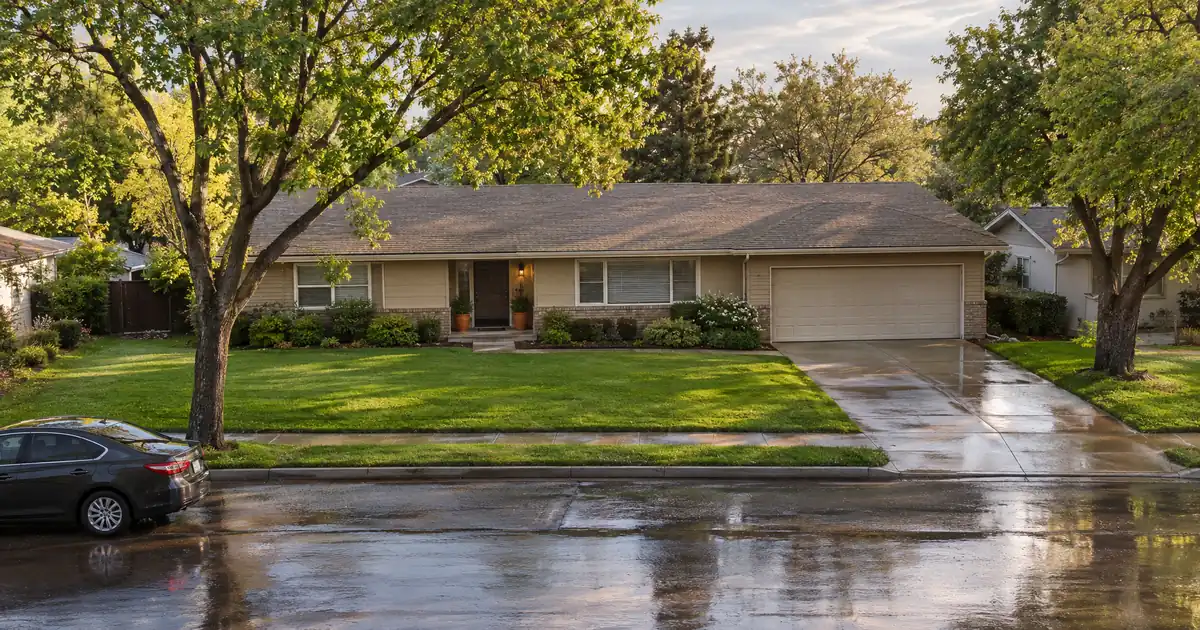
The Quick Read: A personal deed with an LLC running the rental is a setup these lenders can underwrite. You borrow personally, the property is the collateral, and the LLC stays an operating layer. On an investment property, lines in Lendmire’s wholesale network top out at 70% combined loan-to-value, subject to lender guidelines.
- The lender reads the recorded deed. If it names you or your revocable living trust, you are the borrower.
- The LLC’s income is not tested. Your personal credit, debt-to-income ratio, and equity drive the file.
- An investment line needs a 700 credit profile and runs up to $500,000.
- An LLC cannot hold title on this product. A property already deeded to an LLC needs a vesting change or a different loan.
- Keeping the deed personal removes the LLC’s shield on that property, so insurance and paperwork matter more.
What Does “Personal Deed, LLC Runs It” Actually Mean?
It is a hybrid. You own the property on paper. The LLC operates it. That means the LLC might sign leases, collect rent, hold the bank account, and pay vendors.
How large a line the equity supports.
An equity line is sized by combined loan-to-value, occupancy, and credit — not by rental coverage. Switch the occupancy or the credit band and the ceiling moves with it.
Investment-property lines require a 700 minimum credit score; second-home lines start at a 640 minimum and primary-residence lines at 600, and the combined-LTV ceiling steps down as the credit band drops on primary-residence and second-home lines and holds on investment-property lines; the line cap steps down on primary-residence lines and holds at every tier on investment-property and second-home lines.
A debt-to-income ratio above 45% requires 680+ credit. Profiles under 640 are limited to single-family homes. At least 75% of the approved line is drawn at closing. Ceilings, floors, and caps update from Lendmire’s centralized guideline source.
Line estimate
Illustrative estimate only — not a quote, Loan Estimate, approval, or commitment to lend. The rate is an editable assumption; equity-line pricing is variable through both the draw and repayment periods and never converts to fixed. Occupancy and credit drive the ceiling together: an investment property tops out at 70% combined LTV (minimum credit 700, line cap $500,000); a second home tops out at 90% combined LTV (minimum credit 640, line cap $500,000), with the ceiling stepping down as the credit band drops (the cap holds at every tier); a primary residence tops out at 90% combined LTV (minimum credit 600), and its $750,000 maximum line is available only at 75% combined LTV or below with a 700-or-better credit profile (720 on the longer-runway program) and a full appraisal. Lines above $500,000 require a full appraisal. Credit, debt-to-income, property type, and full underwriting review all affect the final line.
Four roles can sit with two different parties:
- Owner of record: you, or your revocable trust.
- Borrower on the line: you.
- Landlord and rent collector: often the LLC.
- Debt holder: you personally, because there is no entity guaranty to hide behind.
Many investors land here by accident. They formed an LLC for the business, then found that the equity line they wanted would not close in the LLC’s name. This is common, and it is workable. It just needs to be set up on purpose.
Why Do HELOC Lenders Want the Deed in Your Name?
A home equity line is a personal loan secured by a lien on property you own. The lender checks title, then underwrites the person on that title.
NerdWallet reports that lines on investment properties come with a smaller pool of lenders and lower borrowing limits than lines on a primary home. The same page says market-wide ceilings run up to 80% for investment properties, with many lenders setting theirs below 70%. On the network Lendmire works with, an investment line tops out at 70% combined loan-to-value, with no tier above it.
The title rule is a lender program rule. No federal law bars an LLC from borrowing. Across the wholesale network, the lines we place require title held by an individual or a revocable living trust. LLCs, corporations, partnerships, and irrevocable, blind, or land trusts cannot hold title. That is the sharpest structural difference from a DSCR loan, which is built for entity ownership.
How Does Underwriting Treat This Setup, Step by Step?
1. Title check. The lender reads the vesting on the recorded deed. It does not look behind your LLC. A personal-name deed passes this step.
2. Borrower review. Your credit and debt load are tested. Investment lines need at least a 700 credit profile, and the debt-to-income ratio tops out at 50%. The lender reviews your file on the interest-only payment at the maximum draw, not on what you plan to borrow.
3. Combined leverage. The existing first mortgage and the new line are added together. On an investment property, that total cannot pass 70% of value.
4. Valuation. Because an investment line caps at $500,000, it normally runs on an automated valuation. A full appraisal is required only above $500,000, and you can request one anyway.
5. Documents. Expect ID, the vesting deed, the first-mortgage statement, leases, and the insurance declarations page. This is where an LLC-run rental can create friction, covered below.
6. Recording. The line becomes a lien on the property in your name. The debt is yours alone.
The LLC’s rent history may help your story. It does not replace your personal numbers.
What Does the Network’s Investment Line Look Like?
Here are the typical terms, all subject to lender guidelines and full file review:
- Combined leverage: up to 70% CLTV on an investment property. Credit above 700 does not buy more leverage. It only adds comfort.
- Line size: $25,000 to $500,000 on investment property.
- Structure: a 5-year interest-only draw, then a 25-year fully amortizing repayment. Pricing floats during both phases.
- Draw at closing: at least 75% of the line is drawn at closing.
- Lien position: first or second.
- Property types: single-family, 2-4 units, townhomes, PUDs, and condos, including non-warrantable condos. Manufactured homes, co-ops, condotels, log homes, and commercial, mixed-use, or agricultural properties are not offered.
- Exposure: up to three lines per borrower, and borrowers with more than 15 financed properties are not eligible.
- Availability: these lines are placed in Lendmire’s 16 full-service states (AL, CA, CO, FL, GA, IN, MI, MT, NM, NC, OH, PA, TN, TX, VA, WA). That is narrower than the 41-market DSCR footprint.
A bankruptcy needs four years of seasoning from discharge or dismissal. Foreclosure history on investment files follows a seven-year path, and a short sale or deed-in-lieu follows four.
What Should Sit on Paper Between You and the LLC?
When the owner and the landlord are different parties, tenants, insurers, and lenders may each see a different name. Close that gap in writing.
Ask an attorney about a master lease or management agreement between you and the LLC. It should say who collects rent, who pays expenses, and who answers to tenants. Ask your insurance agent how the policy should list the named insured and any additional insureds. Mismatched names are the most common friction point we see on these files.
Keep rent flowing through clean channels. Mixing personal and LLC money is the habit that most weakens an LLC’s protection.
If you move line proceeds into the LLC, document how. It can be a capital contribution or a member loan. Either way, write it down and keep the bank trail. Tax treatment can depend on how the funds are used and how the property is held; borrowers should keep clear records and speak with a qualified tax professional before relying on any deduction.
Where Does the General Rule Break?
Liability. If the property is titled in your name, the LLC does not shield that asset. A claim tied to the building can reach you personally. Many investors respond with stronger liability coverage and an umbrella policy. This is an attorney and insurance-agent conversation. The line itself does not create the exposure, but it keeps the property outside the LLC.
Re-titling out of an LLC. Some investors consider a quick deed to themselves before applying, then a deed back afterward. That has real costs. A transfer into or out of an LLC can trigger a due-on-sale clause in your existing mortgage. The federal due-on-sale statute lets a lender demand payment in full if the property is transferred without its written consent. Its protected exceptions cover residential property with fewer than five units, and a legal explainer on those exceptions notes that a transfer into an LLC is not on the list. Taking a second lien such as an equity line is itself protected. Many lenders never enforce on a transfer to the owner’s own LLC, but enforcement stays their option. Treat it as a risk to plan around, not a free move. A second recording also brings title-insurance questions.
Trusts are treated differently. A revocable living trust can hold title on this product. An irrevocable, blind, or land trust cannot. Moving a property into your own revocable trust is a different step from moving it into an LLC.
Entity-level lines. Some community banks and credit unions write business lines to LLCs. These are commercial-style products, and they usually require a personal guaranty. A guaranty puts your personal assets back behind that specific debt, so the LLC wall gets thinner.
Properties that cannot go through this route. If your property is already in an LLC and you want to leave it there, an equity line is the wrong tool. A DSCR cash-out refinance fits better.
Which Route Fits Which Title Situation?
| Route | Who borrows | Title needed | What is underwritten |
|---|---|---|---|
| Line on the personal-deed property | You | You or revocable trust | Your credit and DTI |
| Entity-level business line | LLC plus guaranty | LLC | Business and guarantor |
| DSCR cash-out refinance | LLC or you | LLC allowed* | Property rent vs. payment |
| Line on another personal property | You | You or revocable trust | Your credit and DTI |
*Subject to lender program eligibility.
The last route is easy to overlook. If you own a rental or home in your own name with equity, you can take the line there and move the cash into the LLC. The collateral stays personal, and the LLC property stays where it is.
What Does a DSCR Cash-Out Do Differently?
A DSCR loan is reviewed primarily on property-level rental income covering the payment, subject to lender guidelines. Your personal debt-to-income ratio is not the center of the file. Across the network, cash-out refinances on standard rentals top out around 75% LTV, and about six months of seasoning is the common expectation. Coverage of 1.00 is where many select programs start. A separate select-lender path takes coverage below 1.00, with leverage and terms adjusted. Credit floors vary, with most programs wanting around 660 and 700+ unlocking the strongest leverage.
Clearing 1.00 is not the same as positive cash flow. The ratio compares rent to the monthly housing payment only. Repairs, vacancy, management, and capital costs sit outside it. For more detail, see the complete DSCR loans guide.
If your priority is keeping the deed in your LLC, DSCR is the cleaner path. If your priority is a flexible, draw-as-needed line and you are fine with personal title, the equity line fits.
What Does a Worked Example Look Like?
Picture an investor with a duplex titled in her own name. An LLC she controls signs the leases and pays the vendors. The existing first mortgage uses about half of the property’s value, which is a modeled assumption, not a market figure.
Under a 70% combined cap, the new line can add roughly 20 more points of value, and not a point beyond. She has a 700+ credit profile and a debt-to-income ratio well under 50%. The file works on her personal numbers. The LLC’s lease income does not change the cap.
Now change one fact. The duplex is deeded to the LLC. The equity line is off the table until title moves, and moving it raises the due-on-sale questions above. A DSCR cash-out at up to 75% LTV, after seasoning, would be the more natural fit. It would keep the LLC on title and test the rent instead of her personal debt load. Each figure is subject to lender guidelines and a complete review of property type, leverage, and credit.
The same property fits different programs depending on title and goals. That is why the best program for your situation depends on the vesting, the leverage you need, and your credit profile.
How Do You Define “Best” for This Setup?
Skip the headline-number approach. Use a scorecard:
- Title fit: does the program accept your vesting as it stands today?
- Leverage: is the combined cap enough for your plan?
- Credit and DTI: do your personal numbers clear the bar?
- Structure: is a 5-year draw with 25-year repayment right for how you will use the money?
- Paper trail: can you document the move of funds into the LLC?
- Exit path: will this vesting complicate a later DSCR refinance?
A broker that shops several wholesale lenders can match your scenario to a program. A single lender can only show you its own.
Key Terms Defined
Combined loan-to-value (CLTV): your first mortgage plus the new line, divided by the property’s value.
Vesting: how title is held on the recorded deed, such as an individual, a trust, or an LLC.
Due-on-sale clause: a mortgage term that lets the lender demand payment in full if the property is transferred without its consent.
DSCR: debt service coverage ratio, which compares monthly rent to the full monthly housing payment.
Draw period: the stretch when you can borrow against the line and payments are interest-only.
What Mistakes Should You Avoid?
- Deeding the property after you apply. Check with your lender, servicer, and title company first.
- Assuming the LLC’s income helps the file. It does not on this product.
- Letting the LLC sign leases with no written agreement between you and it.
- Skipping the insurance conversation after title and operations stop matching.
- Ignoring exit planning. Today’s vesting can complicate a later DSCR move.
This article is educational and is not legal or tax advice. Talk with a qualified attorney and CPA about your own title, entity, and tax situation before you move property or funds.
Frequently Asked Questions
Can an LLC be the borrower on an investment property HELOC?
Not on the lines Lendmire places. Title must be held by an individual or a revocable living trust. Some community banks write business lines to LLCs, usually with a personal guaranty.
Does keeping the deed personal hurt my liability protection?
Yes, for that property. An LLC shields only the assets it owns, so a property in your name sits outside it. Many investors add liability coverage and an umbrella policy. An attorney and your insurance agent can tell you what fits.
Can I deed the property out of my LLC, take the line, and deed it back?
It may be possible, but it can carry risk. A transfer into an LLC is not among the statute’s listed exceptions, so it may trigger a due-on-sale clause in your first mortgage. Enforcement is the lender’s choice. It can also add title work and may raise insurance questions.
How much can I borrow on a rental through this route?
Up to 70% combined loan-to-value on an investment property, with lines from $25,000 to $500,000. Your existing first mortgage counts toward that cap. Terms are subject to lender guidelines and full file review.
When is a DSCR cash-out the better choice?
When you want the LLC on title or your personal debt-to-income ratio is the obstacle. DSCR qualifies primarily on property-level rental income covering the payment, subject to lender guidelines, and standard rentals typically top out around 75% LTV on a cash-out.
Next Step
If you are considering a home equity line and want to see how the numbers work, Lendmire can help you compare HELOC options based on the property, the equity available, credit profile, combined leverage, and your goals. Lendmire is a broker, not a lender, and every figure here is subject to lender guidelines and is not a commitment to lend.
About Lendmire
Lendmire (NMLS# 2371349) is a mortgage brokerage serving homeowners and real estate investors in its 16 full-service states. Home equity lines of credit are arranged through wholesale lending channels; Lendmire brokers the line and the lender underwrites each application under its occupancy-based guidelines. Scotsman Guide named Lendmire a Top Mortgage Workplace in both 2025 and 2026.
Investors who want the broader program framework can review how DSCR loans work.
Get Started
Ready to find the right loan for you?
See your offer in seconds. No credit pull, no obligation.
Informational only. Not a Loan Estimate, approval, or commitment to lend. Program availability and eligibility are subject to lender guidelines, credit approval, property review, and underwriting.
References
1. NerdWallet – HELOC on investment property
3. FedLaws – Garn-St Germain triggers and exceptions
This article is part of Lendmire’s investment property HELOC program — full qualification details, guidelines, and scenarios live on the program page.
Related reading: Best Investment Property HELOC Program for a Rental Property Renovation · Best Investment Property HELOC Program on an Inherited Rental Property · Best Investment Property HELOC Program on a Rental Condo
Brandon Miller
Founder & CEO, Mortgage Loan Originator, Lendmire LLC
- Mortgage Loan Originator · NMLS# 1129696 · Verify on NMLS Consumer Access
- North Carolina Real Estate Broker · License# 343312 · Verify on NCREC
- North Carolina Insurance Producer · License# 19053198 · Property, Casualty, Life, Health · Verify on NAIC SBS
- Lendmire LLC · Firm NMLS# 2371349 · Verify firm licensure
Disclosure information. Lendmire is a state-licensed mortgage brokerage under NMLS# 2371349. Lendmire is not a depository institution, direct lender, or financial advisor — all loans referenced are placed through wholesale lender partners and are subject to each lender's underwriting standards. This article is provided for general informational purposes and is not a commitment to lend, nor does it constitute financial, legal, or tax advice. Loan programs, terms, rates, and qualification standards change without notice and depend on borrower profile, property type, and the state in which the subject property is located. Equal Housing Opportunity provider. NMLS Consumer Access: nmlsconsumeraccess.org.