
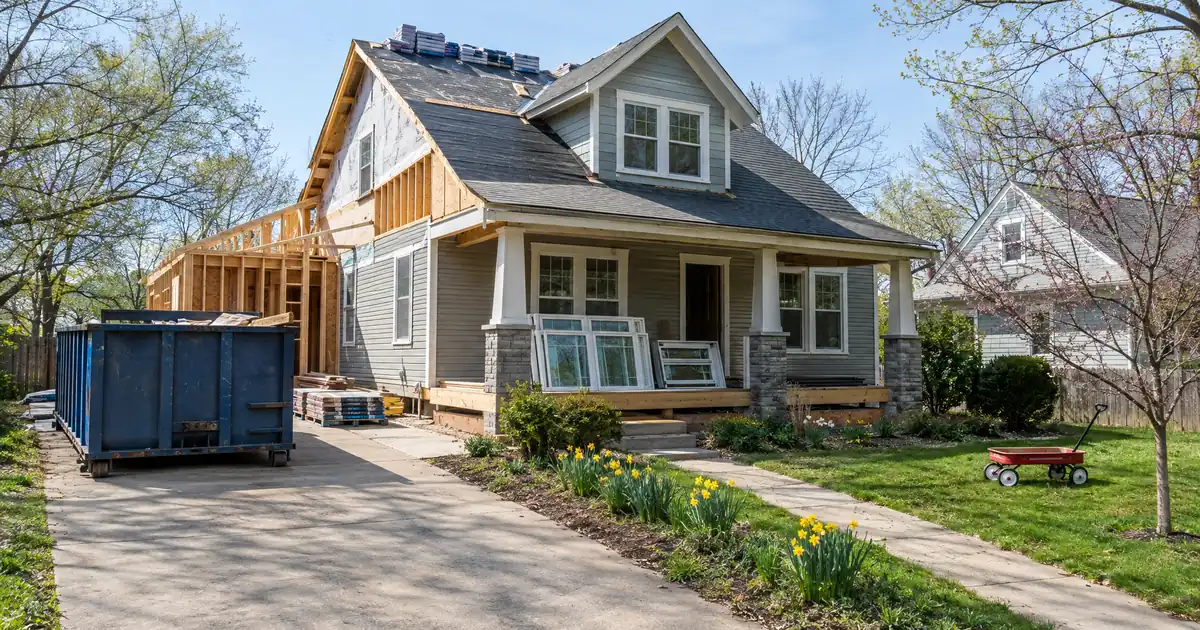
The Quick Read: The right program depends on your property’s condition, your exit plan, and how much cash you need. Hard money sizes the loan on the asset, not your income. That makes it a good fit for unfinished, vacant, or in-transition rentals, and it comes with a short maturity you have to plan around.
- Hard money cash-out and rate/term refinances typically go up to 65% of value, interest-only, for 6-18 months, with no prepayment penalty. Terms vary by lender, property, and experience.
- A finished, leased rental can often pull more cash through a long-term DSCR cash-out refinance, at around 75% LTV on standard rentals.
- Fit matters more than the label. A bridge should match the date your exit becomes possible.
- Your credit, reserves, and the appraisal still shape the outcome. Nothing here is a commitment to lend.
What Does “Hard Money Cash-Out Refinance” Actually Mean?
The phrase covers two different deals, and mixing them up is how investors pick the wrong product.
Meaning one: a hard money loan is the cash-out vehicle. You own a property, and a short-term lender sizes a new loan on its value. The loan pays off any existing debt, and the rest comes to you. Underwriting centers on the property, your plan, and the exit.
Meaning two: you refinance out of a hard money loan. A long-term rental loan pays off the short-term note. Many investors treat this as the normal ending for a bridge.
Both are legitimate. They solve different problems. This article covers both because most investors who search this phrase are trying to decide between them.
A bridge loan, in plain terms, is temporary financing secured by the property. Hold that thought. It drives everything below.
Key Terms Defined
Hard money loan: A short-term, interest-only loan sized mainly on the property’s value and your plan for it.
Bridge loan: Temporary financing that “bridges” you to a planned payoff, usually a sale or a long-term refinance.
Cash-out refinance: A new loan that pays off the old one and hands you the difference.
Rate/term refinance: A new loan that only replaces the old debt and closing costs, with no meaningful cash back.
Seasoning: The waiting period a lender wants between an event, such as a purchase, and a refinance based on new value.
DSCR (debt service coverage ratio): Monthly rent divided by the full monthly payment: principal, interest, taxes, insurance, and any HOA dues.
LTV (loan-to-value): The loan balance as a percentage of the property’s appraised value.
How Underwriting Treats the Deal, Step by Step
Here is the sequence a hard money cash-out file typically follows across the wholesale lenders Lendmire works with.
1. The lender classifies the transaction. If the new loan only pays off the old debt plus costs, it is a rate/term refinance. Anything meaningfully above that is cash-out. Cash-out usually carries tighter leverage, so the label matters.
2. The property gets valued. The lender relies on its own valuation, not your after-repair estimate. A low appraisal shrinks the loan. Then you either bring cash to the table or ask for more time on the existing note.
3. Leverage is applied. On the network’s hard money program, cash-out and rate/term refinances go up to 65% of value. That cap is a common reason hard money can leave less cash in your pocket than a long-term cash-out.
4. Your profile is checked. A 620 minimum credit score applies, with additional conditions below 660. Underwriting stays asset-based, meaning it looks at the property, the plan, and the exit. Experience affects leverage tiers on other hard money products, and the strongest tiers are reserved for experienced investors.
5. Title orders the payoff. The existing lender issues a payoff statement. New loan proceeds retire that note first. Whatever remains after costs is your cash-out.
6. The exit gets mapped. Hard money terms run 6-18 months. Lenders want to see how you leave: a sale, or a refinance into long-term financing.
Loans go up to $5,000,000 on this program, larger by exception, and smaller balances vary by lender. Collateral is non-owner-occupied residential property, 1-4 units. Hard money loans are business-purpose loans, which means they are reviewed differently from a standard owner-occupied mortgage.
Which Program Type Fits Your Situation?
There is no single winner. The best program for your situation depends on whether the property is finished, leased, and ready to season. Here is how the main options compare on the network’s published parameters.
| Factor | Hard Money Cash-Out | Bridge to Purchase | DSCR Cash-Out |
|---|---|---|---|
| Sized on | Value and plan | Purchase price | Value plus rent coverage |
| Leverage | Up to 65% of value | Up to 80% of price | ~75% LTV standard rentals |
| Term | 6-18 months, interest-only | 6-18 months | 30-year fixed spine |
| Prepayment penalty | None | None | Varies by program |
| Property condition | Can be in transition | Can be in transition | Finished and leased |
Short-term rentals run lower: a 70% cash-out ceiling applies to short-term-rental collateral, versus about 75% on standard rentals. Leverage on the hard money side is also priced in different ways, so always confirm which basis a figure uses. Final terms depend on the lender’s guidelines, the property type, and the borrower’s complete credit picture.
Notice the gap between 65% and 75%. On a stabilized rental, the long-term loan often returns more cash. Hard money wins when the property cannot yet qualify for long-term financing.
Criteria worth comparing between programs
Because a broker sees many lenders’ guidelines, here is what separates one program from another:
- Term length against your exit date. A 6-month note on a 9-month plan is a trap.
- Extension terms. Ask what an extension costs and whether it needs a new valuation.
- Prepayment structure. The network’s hard money program carries none, but minimum-interest or exit fees can exist elsewhere.
- Draw mechanics. Rehab funds typically release against completed work.
- Fees before funding. Compare every line item, not just the headline.
- Credit and reserves. Floors differ by lender, leverage, and loan size.
The Cost of Speed: A Breakeven Test
Hard money charges you for flexibility. The question is whether the cash you pull out earns more than the holding cost.
Run it this way:
1. List what the proceeds will do. Down payment on the next deal? A partner buyout? A rehab budget?
2. Estimate how many months you will hold the short-term note before the exit.
3. Add the closing costs to open it, plus any extension, plus the closing costs on the exit loan.
4. Compare that total to what the redeployed cash is expected to produce over the same months.
If the next deal is strong and the hold is short, it pencils. If the hold stretches, each extra month of interest-only carry eats the benefit.
Here is a percentage-only picture. Say your existing note is already at roughly the 65% cap on a property’s value. A refinance there is basically a payoff with little left over after costs. That is a rate/term outcome with cash-out pricing. Not ideal.
Now flip it. A property with modest debt and plenty of equity can return real cash at 65%. Short hold, strong use of funds, clear exit. That is where hard money cash-out earns its keep.
Where the Rule Breaks: Edge Cases
Payoff first, cash-out later. If the bridge is about to mature and equity is secondary, a payoff-only refinance can stop the clock. You then pull equity once seasoning is met. The cost is a second set of closing costs.
Cost basis versus appraised value. Before seasoning, some lenders size on purchase price plus documented rehab. After seasoning, they use appraised value. Ask which basis applies to you.
Unfinished rehab or a vacant unit. Long-term rental programs generally want a finished, leased property. If yours is not, extend the bridge or use hard money as the bridge to stabilization.
Low appraisal. The loan shrinks. You may need to bring cash or extend the old note.
Seasoning clocks. Seasoning is lender policy, not law. Lenders measure it from different starting points, such as title recording or rehab completion. Ask how each lender counts it before the bridge closes. Lofty notes that many lenders want 6 to 12 months before a cash-out based on new appraised value, which lengthens your holding costs. In Lendmire’s network, about 6 months is the common expectation on DSCR cash-out refinances.
Prepayment. Hard money here has none, but your existing bridge might. Check both ends.
Short-term rentals. Cash-out on an STR typically runs at the lower 70% ceiling, and programs usually ask for around 12 months of hosting history. Short-term rental rules can vary by city, county, HOA, and property type, so investors should confirm local rules before relying on projected rental income.
Planning the Exit Before You Close
Treat the exit as part of the original decision. If you cannot sell or refinance at maturity, you are negotiating from weakness.
Here is the sequence that works:
- Before you close the bridge, talk to the long-term lender about seasoning and property requirements.
- Midway through the term, confirm the property is finished and leased, and get the rent schedule in order.
- A few months before maturity, order the appraisal and start underwriting for the takeout.
Many investors refinance out of hard money into long-term DSCR financing once the property is stabilized, and Lendmire brokers that path. DSCR loans qualify primarily on property-level rental income covering the payment, subject to lender guidelines. Most programs want about a 660 score, a 620 floor exists in parts of the network, and 700+ opens the strongest tiers. Coverage of 1.00 is where many select programs start, and a separate select-lender path allows coverage below 1.00 with leverage and terms adjusted.
Clearing 1.00 does not mean positive cash flow. Repairs, vacancy, management, and utilities sit outside the calculation. If you want the full picture, the complete DSCR loans guide covers qualification in detail.
If the exit slips, you have three options: extend the bridge, refinance into a second short-term note, or sell. Each costs something. Decide which you would pick before you need it.
Getting the File Ready
Delays on short-term loans usually come from missing paperwork, not from the lender’s pace. Gather these up front:
- Entity documents and vesting information, if the property sits in an LLC
- Current mortgage or bridge statement, so title can request the payoff
- Insurance evidence on the property
- Lease agreements and rent history, if the property is rented
- Rehab scope and receipts, if work was done
- A written exit plan with a realistic date
- Credit and reserve documentation
For reserves, programs vary by lender, leverage, loan size, and transaction type. On DSCR files, around six months of PITIA is common, and larger loans typically step up to about nine.
Common Mistakes
- Picking a term that matches the best case, not the likely case. Build in slack.
- Treating the appraisal like your own estimate. The lender’s number controls.
- Ignoring the cost of the exit loan. You pay to open it, too.
- Assuming hard money will roll into permanent financing. Many will not. Line up a separate lender.
- Chasing leverage and skipping reserves. Credit floors and reserve rules still apply.
Frequently Asked Questions
Can you do a cash-out refinance with a hard money loan?
Yes, on a non-owner-occupied 1-4 unit property. The network’s hard money program lends up to 65% of value on cash-out and rate/term refinances, interest-only, for 6-18 months, subject to lender guidelines.
Is hard money or DSCR better for cash-out on a rental?
It depends on whether the property is finished and leased. A stabilized rental often supports more cash through a DSCR cash-out at about 75% LTV on standard rentals. A property in transition may only fit hard money.
Is income verification required?
Hard money underwriting is asset-based, so it looks at the property, the plan, and the exit rather than your personal income. A credit score and reserves still apply.
What credit score do I need?
A 620 minimum applies on the hard money program, with additional conditions below 660. First-time investors qualify at the lower leverage tiers. Approval is never automatic.
What happens if I cannot exit before the note matures?
You can extend the bridge, refinance into another short-term note, or sell. Each costs money and requires lender agreement. That is why mapping the takeout before closing is the most important step.
Next Step
If you are buying, rehabbing or refinancing an investment property on a short timeline and want to see how the numbers work, Lendmire can help you compare hard money options based on the project, the exit plan, leverage, and your goals. Lendmire is a broker that arranges financing through select lenders in its wholesale network across 41 markets, including Washington, D.C. Request a quote at Lendmire’s quote page or call 828-256-2183.
About Lendmire
Lendmire, NMLS# 2371349, is a non-QM mortgage broker serving real estate investors in 41 markets, including Washington, D.C., through DSCR investor loan programs. Qualification is generally reviewed around the subject property’s rental income, not the borrower’s W-2 history — a practical fit for LLC-titled portfolios and self-employed investors. All scenarios remain subject to lender review and program guidelines. Two consecutive Scotsman Guide Top Mortgage Workplace recognitions (2025, 2026).
Get Started
Ready to find the right loan for you?
See your offer in seconds. No credit pull, no obligation.
Informational only. Not a Loan Estimate, approval, or commitment to lend. Program availability and eligibility are subject to lender guidelines, credit approval, property review, and underwriting.
References
This article is part of Lendmire’s hard money loan program — full qualification details, guidelines, and scenarios live on the program page.
Related reading: Short-Term Rental Cash-Out Refinance Requirements on a Multifamily Building · Short-Term Rental Cash-Out Refinance Requirements for a First-Time Host · DSCR Cash-Out Refinance Requirements Right After a Rate-and-Term Refinance
Brandon Miller
Founder & CEO, Mortgage Loan Originator, Lendmire LLC
- Mortgage Loan Originator · NMLS# 1129696 · Verify on NMLS Consumer Access
- North Carolina Real Estate Broker · License# 343312 · Verify on NCREC
- North Carolina Insurance Producer · License# 19053198 · Property, Casualty, Life, Health · Verify on NAIC SBS
- Lendmire LLC · Firm NMLS# 2371349 · Verify firm licensure
Required disclosures. Lendmire (NMLS# 2371349) operates as a licensed mortgage broker, not a direct lender or depository. The discussion in this article is general in nature and should not be relied upon as financial, legal, or tax advice — every investment scenario is unique and should be reviewed by a qualified professional. Any loan inquiry is subject to lender underwriting, and this article is not a commitment to lend or a guarantee of approval. Mortgage rates, loan terms, and program guidelines vary by borrower, property, and state, and may change without notice. Equal Housing Opportunity. Verify licensure at NMLS Consumer Access.