
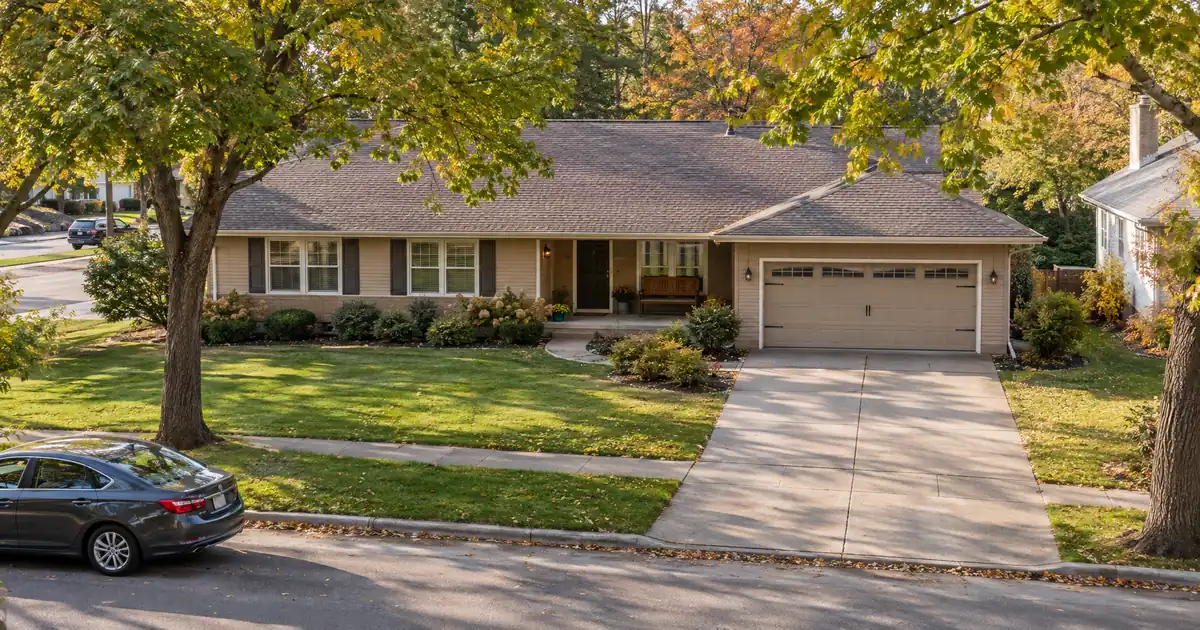
The Quick Read: Yes, but only in part, and only when the lender’s program offers the exception. Delayed financing waives the usual seasoning wait on a cash-out refinance for a rental you bought without a loan. It does not waive rent coverage, reserves, credit, or the leverage cap, and it returns roughly what you documented paying, not the appraised gain.
- Delayed financing is a seasoning exception inside a cash-out refinance. It is not a separate loan.
- Cash back is tied to your documented purchase cost, not to a higher appraisal.
- Across our wholesale network, cash-out leverage tops out at 75% LTV on a standard rental, and the exception is set by each program.
- The rent-coverage test, appraisal, and reserves still apply.
- Rehab spending and appreciation generally wait for a seasoned cash-out.
What Is Delayed Financing, and Is It a Cash-Out Refinance?
It is a cash-out refinance with one rule relaxed: the waiting period. Seasoning is the stretch of ownership a lender wants before it will lend against a property’s current value. For cash-out loans, most programs we place files with expect about six months of ownership, measured from title recording.
DSCR Cash-Out Calculator
Run the cash-out numbers in your market
Rate is an editable market assumption — the live benchmark loads when available.
Prefilled with starting assumptions — enter your property’s value, balance, taxes, and insurance for a more accurate picture.
Program parameters update from Lendmire’s centralized guideline source. Taxes and insurance are editable estimates.
Fallback assumption · General Freddie Mac market benchmark, not a Lendmire loan offer. Property value, balance, taxes, and insurance are editable estimates. Maximum loan-to-value varies by lender, program, property type, and seasoning. Not a Loan Estimate, approval, or commitment to lend. Program availability and eligibility are subject to lender guidelines, credit approval, property review, and underwriting.
A cash buyer has no mortgage to pay off, so this can look like a regular loan. It still counts as cash-out, because you are pulling money back out of a property you own free and clear. The idea started in agency lending. The Fannie Mae Selling Guide has a delayed financing exception. It says all other cash-out requirements still apply and cash-out pricing applies.
That agency rule is only the origin story. DSCR loans are business-purpose investor loans, built for non-owner-occupied rentals and reviewed differently from an owner-occupied mortgage. Each DSCR lender writes its own version of the exception, or none at all. So the first question is never “does the concept exist.” It is “does this program offer it, and on what terms.”
How Does It Work on a Rental You Bought in Cash?
You buy with cash, document the purchase, then apply for a cash-out refinance before the seasoning clock would normally let you. The steps run the same way on most files.
1. Buy with cash. No loan or lien secured by the rental at purchase. BiggerPockets, an investor-education forum, describes the exception as requiring that purchase money not be secured by the subject property.
2. Apply for the cash-out refinance. Agency-style rules put this inside roughly six months of purchase. A SmartAsset explainer says that after six months the exception no longer applies and the loan becomes a standard cash-out.
3. Document the purchase. The closing or settlement statement shows what you paid. A BiggerPockets overview says that statement determines your cost, and that closing costs can count toward the recoverable total.
4. Get the appraisal. The loan is sized off the lower of the leverage cap applied to value and the documented investment.
5. Clear the normal tests. The lender still checks rent coverage, credit, reserves, and property eligibility.
Notice what step five says. Delayed financing removes the wait. It does not remove underwriting.
How Much Cash Can You Actually Get Back?
Usually less than people expect. The cap is your documented cost, and the leverage ceiling sits on top of that. On a standard rental in our network, cash-out tops out at 75% LTV. On a short-term rental, cash-out leverage is lower, at 70%.
Here is how the sizing logic plays out. These are modeled assumptions, expressed in percentages, not market data.
| Scenario | Appraisal vs. price | What limits the loan |
|---|---|---|
| Bought near market | About equal | Leverage cap on value |
| Bought below market | Well above price | Documented cost |
| Appraises low | Below price | Appraised value |
| Heavy rehab after purchase | Above price | Documented cost |
Picture an investor who pays cash for a duplex that appraises right at the purchase price. The lender can size the loan to the 75% cap on that value. Now say a second investor buys a dated duplex at a steep discount, and it appraises well above cost. The loan is held to the documented cost, so the discount stays locked in the property. That is the central tradeoff: take money out now at roughly cost, or wait for seasoning and size on current value.
A low appraisal cuts the other way. If value comes in under your price, the loan shrinks and you recover less than you put in, as the SmartAsset guide notes.
Clearing the coverage test is also a separate question from cash flow. DSCR compares rent to the full monthly payment on principal, interest, taxes, insurance, and any association dues. Repairs, vacancy, management, and capital spending sit outside it. A file can clear 1.00 and still leave you with thin real-world margins.
What Counts as a Cash Purchase?
Truly unsecured money. The grid below is how these situations usually land, though each program makes its own call.
| How you funded the purchase | Usually works? |
|---|---|
| Savings, sale proceeds | Yes |
| Hard money or bridge loan on the rental | No |
| Any lien recorded on the rental | No |
| Credit card or loan secured by another property | Depends |
| Gift funds | Depends on program |
| Seller financing | Generally no |
The financed-purchase answer is blunt. A BiggerPockets thread puts it this way: if you did not buy with cash, there are no delayed financing rules. If a lender recorded a lien on the rental at purchase, the exception generally fails and standard seasoning applies.
The gray zone is cash borrowed against something else. Funds from a card or a line secured by a different property may still count as cash toward the subject, per the BiggerPockets overview. A separate thread says the new loan may have to repay that borrowing, which defeats the point. Treat it as a question for the specific program before you buy, not after.
Gift funds and related-party purchases are program-specific. Agency rules call for an arm’s-length original purchase, and many programs follow that logic. We would rather say “ask first” than guess.
Do Rehab Costs and LLC Purchases Change the Answer?
Rehab, yes. The exception generally returns purchase cost, not what you spent fixing the place up. Rehab dollars usually wait for a seasoned cash-out, where the loan is sized on the new value. If your plan is buy cheap, renovate heavily, then pull capital, delayed financing is probably the wrong tool.
LLC ownership is a program question. If you bought in an LLC, whether it works can turn on who owns the entity and how title is vested, subject to lender program eligibility. Settle the vesting before you close on the cash purchase, because changing it afterward can complicate the paper trail.
Delayed Financing or Wait Out Seasoning?
Choose based on where you bought relative to market and how much work you did.
| Factor | Delayed financing | Seasoned cash-out |
|---|---|---|
| Wait | None to short | About 6 months |
| Sized on | Documented cost | Appraised value |
| Rehab recovered | Generally no | Yes, via value |
| Best fit | Near-market, no rehab | Discount buy or heavy rehab |
| Leverage cap, standard rental | 75% LTV | 75% LTV |
Delayed financing fits a recent cash purchase at or near market with little work. It lets you redeploy capital while a good deal is still on the table. A seasoned cash-out fits a discount purchase or a rehab, where waiting for value to show up on the appraisal can return more. After the exception window, you can generally do a standard cash-out once seasoning is met, though that is subject to program guidelines.
How the DSCR Version Differs From the Agency Rule
The agency rule is a single published standard. DSCR is a patchwork. Across our wholesale network, programs differ on whether they offer the exception at all, how they set the window, and how they treat entities and funding sources. Some do not offer it. Those that do still run their own tests.
Here is what holds across the programs we place files with:
- Cash-out refinance tops out around 75% LTV on a standard rental, with about six months of seasoning as the common expectation.
- Coverage of 1.00 is where select programs start, and stronger ratios open better pricing and leverage. Coverage below 1.00 is available through select lenders in the network, with leverage and terms adjusted.
- Credit floors begin at 620 in parts of the network. Most programs want around 660, and 700 or higher opens the strongest leverage tiers.
- Reserves commonly run about six months of the monthly payment, stepping up to roughly nine months on loans above $1,500,000. This varies by lender, leverage, and loan size.
- Loan sizes run up to $3,000,000 on standard programs.
- Manufactured homes, log homes, and barndominiums are not offered through these programs.
Every figure above is subject to lender guidelines, and none is a commitment to lend. The complete DSCR loans guide covers how these parts fit together.
What Documents Will the Lender Want?
Plan on a short, specific pile of paper.
- Settlement statement from the cash purchase, showing price and closing costs.
- Source-of-funds records showing where the purchase money came from. Third-party summaries of the agency guide, such as homebuyer.com, list bank statements for this purpose.
- Title evidence that no lien secured the purchase.
- Lease or rent information for the coverage calculation.
- Entity documents if the rental is held in an LLC.
A clean paper trail matters more than a big down payment here. A larger cash buy does not erase credit floors, reserve rules, or property eligibility. The strongest files clear both tests: enough equity and enough rental coverage.
What Breaks Eligibility?
A handful of things sink the exception, and most are decided before you ever apply.
- A loan or lien on the rental at purchase, including hard money.
- A purchase that was not at arm’s length.
- A program that simply does not offer the exception.
- Rent that does not cover the payment at the leverage you want.
- Short reserves.
- An ineligible property type.
- A low appraisal that shrinks the loan below your cost.
What Does It Cost, and When Does It Not Pencil?
You pay cash-out pricing and face cash-out leverage limits, since the Fannie Mae guide applies the cash-out treatment even under the exception. Closing costs on the refinance come on top. If the cash you recover is small relative to those costs, waiting can win, particularly when seasoning will soon unlock a larger, value-based loan.
One more practical point from our side of the desk. On files like this, the surprises almost never come from the exception itself. They come from the pieces around it: a purchase funded through a line on another property, an entity vested differently than the lender expects, or a rental whose coverage looked fine on paper until the full monthly payment was counted. Raise those three things before you wire the purchase funds.
Lendmire’s related pieces on limits on a delayed financing cash-out go further on sizing.
Key Terms Defined
- Delayed financing: a seasoning exception that lets a cash buyer take out a cash-out refinance soon after purchase.
- Seasoning: the ownership period a lender wants before lending against current value.
- Cash-out refinance: a new loan that pays off any existing loan and returns extra cash.
- DSCR: debt service coverage ratio, meaning monthly rent compared with the full monthly payment on the property.
- LTV: loan-to-value, the loan amount as a share of the property’s value.
- Reserves: liquid funds a lender wants you to hold after closing, counted in months of payment.
Frequently Asked Questions
Can I do this one day after buying in cash?
Possibly, where the program offers the exception. One investor summary says a request can technically be made the day after closing, but that is anecdotal. Under agency-style rules the window runs about six months, after which the loan becomes a standard cash-out. Confirm the window with the specific program before you buy.
Is it the same as the 90-day rule?
No. People sometimes use that label loosely for short ownership periods, but delayed financing is not defined by 90 days. It is a seasoning exception, and the window and terms depend on the program you use.
Do I still need to meet the rent-coverage test?
Yes. The exception waives seasoning only. A DSCR file still qualifies primarily on property-level rental income covering the payment, subject to lender guidelines, along with credit, reserves, and the appraisal.
Can hard money count as cash?
Generally no. A lien recorded on the rental at purchase usually means the exception fails and standard seasoning applies.
Will I get back the full appraised value?
No. The loan is limited by the lower of your documented cost and the leverage cap, which is 75% LTV on a standard rental cash-out in our network. Rehab spending and appreciation generally wait for a seasoned cash-out.
If you are buying or refinancing a rental property and want to see how the numbers work, Lendmire can help you compare DSCR loan options based on the property income, credit profile, leverage, and investor goals. Reach the team at 828-256-2183 or request a quote.
Cash buyers who plan the funding source and the paper trail before the purchase, rather than after, are the ones who find the exception actually usable.
Investors weighing their equity options can start with Lendmire’s guide to cash-out refinance on an investment property.
About Lendmire
Lendmire (NMLS# 2371349), a non-QM mortgage broker serving investors in 41 markets including Washington, D.C., helps structure DSCR scenarios commonly evaluated around a property’s rental income rather than personal income paperwork, subject to lender guidelines. A Scotsman Guide Top Mortgage Workplace in 2025 and 2026, Lendmire places loans through wholesale investor lenders and is not a direct lender.
Get Started
Ready to find the right loan for you?
See your offer in seconds. No credit pull, no obligation.
Informational only. Not a Loan Estimate, approval, or commitment to lend. Program availability and eligibility are subject to lender guidelines, credit approval, property review, and underwriting.
References
1. Fannie Mae Selling Guide B2-1.3-03
2. BiggerPockets: Cash-out refi, BRRRR, delayed financing a problem
3. SmartAsset: Delayed Financing guide
4. BiggerPockets: Delayed Financing, An Overview
5. BiggerPockets: BRRRR Financing Problems
6. homebuyer.com: Cash Out Refinance Transactions B2
This article is part of Lendmire’s investment property cash-out refinance program — full qualification details, guidelines, and scenarios live on the program page.
Brandon Miller
Founder & CEO, Mortgage Loan Originator, Lendmire LLC
- Mortgage Loan Originator · NMLS# 1129696 · Verify on NMLS Consumer Access
- North Carolina Real Estate Broker · License# 343312 · Verify on NCREC
- North Carolina Insurance Producer · License# 19053198 · Property, Casualty, Life, Health · Verify on NAIC SBS
- Lendmire LLC · Firm NMLS# 2371349 · Verify firm licensure
Legal disclosures. Lendmire (NMLS# 2371349) is a state-licensed mortgage brokerage that arranges financing through wholesale lender relationships. Lendmire is not a direct lender, depository institution, or registered financial advisor. The discussion above is general informational content about real estate financing — it is not financial, legal, or tax advice, and readers should consult licensed professionals for guidance on their individual circumstances. Loan inquiries are subject to lender underwriting; this article does not represent a commitment to lend. Loan terms, rates, and qualification standards vary by borrower, property, and state, and are subject to change at any time. Equal Housing Opportunity. NMLS Consumer Access: nmlsconsumeraccess.org.