
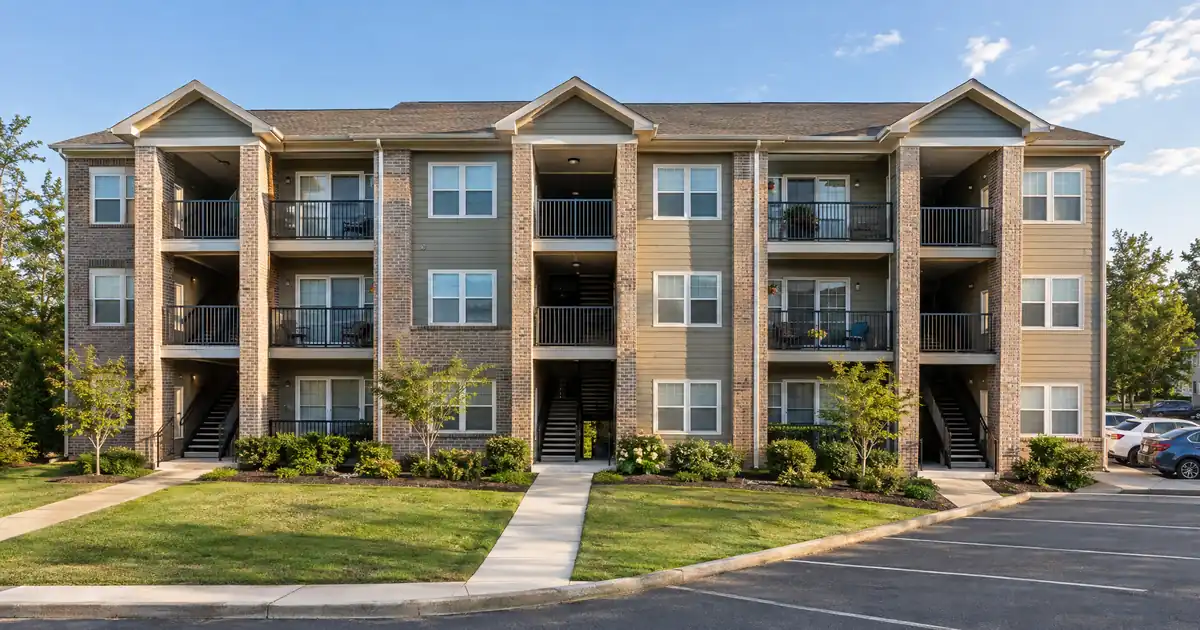
The Quick Read: It depends on unit count: on buildings with five or more units, higher net operating income (NOI) that is documented and already in place usually lifts the appraised value and the cash-out, while on two-to-four-unit rentals the appraisal leans on comparable sales and the loan leans on rent coverage, so the effect is smaller. NOI is the rent left after operating costs, before any loan payment.
- On 5+ units, value is mostly income divided by a market cap rate, so more verified NOI means more value.
- On 2-4 units, higher rents help coverage, but the appraisal rests on comparable sales.
- Cash-out is capped by the lower of a leverage limit and an income-coverage limit.
- Projected, pro forma, or newly pushed rents usually get discounted or ignored.
- Across the wholesale network, cash-out on standard rentals tops out around 75% LTV, subject to lender guidelines.
Key Terms Defined
Cap rate: the annual NOI divided by a property’s value, used in reverse to turn income into a value estimate.
T-12: the trailing twelve months of actual collections and expenses for a building.
DSCR (debt service coverage ratio): rent, or NOI on larger buildings, divided by the loan payment.
PITIA: principal, interest, taxes, insurance, and any association dues, the full monthly obligation on a 1-4 unit loan.
LTV (loan-to-value): the loan balance as a percentage of appraised value.
Seasoning: the ownership period a lender wants before it will pay cash out.
Forced appreciation: value you create by raising income instead of waiting for the market.
DSCR Cash-Out Calculator
Run the cash-out numbers in your market
Rate source: Freddie Mac 30-yr average via FRED® — Federal Reserve Bank of St. Louis · effective Oct 29, 2026
Prefilled with starting assumptions — enter your property’s value, balance, taxes, and insurance for a more accurate picture.
Program parameters update from Lendmire’s centralized guideline source. Taxes and insurance are editable estimates.
As of Oct 29, 2026 · General Freddie Mac market benchmark, not a Lendmire loan offer. Property value, balance, taxes, and insurance are editable estimates. Maximum loan-to-value varies by lender, program, property type, and seasoning. Not a Loan Estimate, approval, or commitment to lend. Program availability and eligibility are subject to lender guidelines, credit approval, property review, and underwriting.
How Does NOI Turn Into Value?
On larger buildings, value equals NOI divided by the cap rate. Corporate Finance Institute defines the cap rate as NOI divided by market value, then applies that market rate to a target property to estimate what it is worth.
BiggerPockets gives a clean illustration of the effect. A $20,000 NOI increase adds $200,000 of value at a 10% cap rate. The author calls that forced appreciation, and it is the engine behind the multifamily buy, rehab, rent, refinance, repeat strategy. The article is dated, so borrow the formula, not the cap rate.
The multiple works both ways, because the cap rate is set by the market, not by you. The table below holds a 10% NOI gain constant against a starting 7% cap rate. These are illustrative percentages, not market data.
| Cap rate moves to | Value change after a 10% NOI gain |
|---|---|
| 6.5% | About +18.5% |
| 7.0% (unchanged) | +10% |
| 7.5% | About +2.7% |
| 8.0% | About -3.8% |
A half-point move in the cap rate can wipe out most of a 10% income gain. Treat the formula as a sensitivity check, not a promise.
How Does a Lender Size the Cash-Out?
Two ceilings set the loan, and the lower one wins. One is the leverage cap applied to appraised value. Across most programs in our wholesale network, a cash-out refinance on a standard rental tops out around 75% LTV. The other is the loan size your income can carry at the required coverage ratio.
Here is the sequence, step by step:
1. The appraiser estimates value.
2. The leverage cap turns that value into a maximum loan.
3. The coverage test turns income into a second maximum loan.
4. The lender takes the smaller of the two.
5. Net cash equals the new loan minus the payoff, closing costs, and required reserves.
Reserves vary by lender, leverage, and loan size. Many files want around 6 months of PITIA in the bank, and loans above $1,500,000 often step up to about 9 months. Standard programs run up to $3,000,000. Most programs also want about 6 months of ownership, measured from title recording, before they pay cash out.
On a 1-4 unit loan, coverage is rent divided by PITIA, and 1.00 is where select programs start. Stronger ratios open better pricing and leverage. A separate select-lender path goes below 1.00, with leverage and terms adjusted. On larger buildings, coverage is NOI divided by annual debt service. Whether a given 5+ unit building fits a DSCR program depends on the lender and the property, so confirm that before you plan around it.
A Before-and-After Example
Run the numbers on an index building worth 100 units of value, with existing debt at 50% of value. These are modeled assumptions, not market facts.
| Item | Before | After a 10% NOI gain |
|---|---|---|
| Appraised value (same cap rate) | 100 | 110 |
| Value ceiling at 75% LTV | 75 | 82.5 |
| Less existing payoff | 50 | 50 |
| Cash-out if value binds | 25 | 32.5 |
If the value ceiling binds, a 10% NOI gain lifts proceeds by about 30%, because leverage multiplies the gain. That is the good case.
Now say the coverage test binds instead. The income-supported loan scales roughly in line with NOI, so a 10% gain supports roughly a 10% larger loan at the same terms. The gain still helps, but far less than in the value-bound case.
Either way, pulling the maximum cash thins your coverage. A file that clears the ratio with room to spare is a safer file than one that barely passes.
When Raising NOI Does Not Raise Cash-Out
Higher NOI on your books is not the same as higher NOI on the appraiser’s. These are the common ways the gain disappears:
- The appraiser rebuilds the number. The appraiser estimates market rent, vacancy, and expenses, then capitalizes one year of stabilized NOI.
- Expenses get normalized. Appraisals-Unlimited explains that small owners often under-report costs by self-managing, deferring maintenance, or skipping reserves. A credible appraisal adds a market management fee and funds reserves.
- Above-market rent is trimmed. The same source says rents propped up by concessions, short-term leases, or a related-party tenant get adjusted down.
- Contract rent loses to market rent. In a BiggerPockets discussion of market versus contract rent, a commenter shows $200,000 of NOI at a 7 cap implying about $2.86 million, while an appraiser who trims rents to reach $175,000 of NOI lands near $2.5 million. That is a commenter’s example, not a benchmark.
- Pro forma income is not credited. Light renovations with leases not yet signed will not count. Underwriters work from income that is in place.
- The other ceiling binds first. If the coverage test is the lower cap, a value gain alone adds nothing.
- Seasoning has not been met. Cash-out generally waits on about 6 months of ownership, however strong the new income is.
- Credit or reserves fall short. A 620 score is the floor in parts of the network, most programs want around 660, and 700+ unlocks the strongest leverage tiers. Reserves still have to be there.
Which NOI Levers Do Underwriters Credit?
Some levers show up in documents fast and some do not. This table is a practitioner read, not a rule.
| Lever | Easy to verify? | Credit risk |
|---|---|---|
| Signed lease renewals at higher rent | Yes, with leases | Low if near market |
| Filling vacant units | Yes, with a rent roll | Low to moderate |
| Utility bill-backs | Yes, after a few billing cycles | Moderate |
| Expense cuts | Only if they hold in the T-12 | Moderate |
| Rents pushed above market | Hard to verify | High |
| Planned renovations, unsigned leases | No | Not credited |
A utility bill-back is a good example of a small lever. A BiggerPockets forum post describes a modest monthly charge across 8 units adding a few thousand dollars of annual NOI, which at a typical cap rate translates into a meaningfully larger amount of value. That is anecdotal, but it shows why small, repeatable income items matter at a cap-rate multiple.
Does the Unit Count Change the Answer?
Yes. The unit count decides which test does the work, and this is the fork most investors miss.
| Item | 2-4 units | 5+ units |
|---|---|---|
| Main value driver | Comparable sales | Income (NOI ÷ cap rate) |
| Coverage test | Rent ÷ PITIA | NOI ÷ debt service |
| Effect of raising rents | Helps coverage; value moves less | Helps both value and coverage |
| Lender lane | Residential investor loan | Commercial-style review |
A BiggerPockets forum reply on forced appreciation makes the same point. Unit upgrades matter less to appraisals of small multifamily because those lean on comparable sales, while buildings of 5+ units are valued on NOI.
For a small building, the raised-rent play still has a payoff. Higher rent used for lender review improves your coverage ratio, which can support stronger terms. It just does not change the appraisal the way it would on a 20-unit property.
One caution: clearing 1.00 is not the same as positive cash flow. The ratio compares rent to PITIA only. Repairs, vacancy, management, utilities, and capital spending sit outside it.
Is the Capex Worth It?
Sometimes. The test is whether the added NOI, divided by your cap rate, exceeds what you spent.
Each added dollar of verified NOI is worth roughly 1 divided by the cap rate in value. At a 7% cap rate, that is about 14 times. A project that adds a modest, durable income stream can repay itself in value, and leverage then multiplies the cash you recover.
Be skeptical of any project whose income depends on rents above market or on tenants who have not signed. Be equally skeptical if the cap rate in your area is drifting up. In that case, the same NOI supports less value than you modeled.
Our broader read, from looking across many lenders’ guidelines, is that the files that cash out cleanly share one trait: the income was already in the T-12 before the appraisal was ordered.
Sequence Matters More Than Speed
Refinancing before the new income shows in your trailing numbers leaves value on the table. A sound order looks like this:
1. Get leases signed at the new rents.
2. Run a clean T-12 that shows the increase.
3. Clean up expenses so they look believable to an underwriter.
4. Confirm seasoning, reserves, and credit.
5. Then order the appraisal.
Mixed-use buildings, heavy rehabs, and high-vacancy properties are usually not stabilized enough for this path. A common route is a short-term bridge loan first, then a refinance once the T-12 supports the ratio. Overstating NOI to a lender can also sink a file, since the figures have to match your books.
For the full picture of how DSCR financing fits together, our complete DSCR loans guide covers qualification, leverage, and documents.
Frequently Asked Questions
Does higher NOI always raise the appraised value?
No. It raises value when the appraiser accepts the income as in place and market-supported, and when the cap rate holds. On 2-4 unit buildings, comparable sales carry more weight than income. A rising cap rate can also offset your gain.
Can I refinance right after a renovation?
You can apply, but the new income has to be documented to count. Seasoning is also a factor, since cash-out generally expects about 6 months of ownership from title recording. Light renovations with unsigned leases will not be credited at the appraisal.
What if my coverage is too low even though my value is high?
Then the income ceiling binds, and your loan shrinks to fit it. You can raise verified income, reduce the requested loan, or look at a select-lender path below 1.00 coverage, where leverage and terms adjust. Eligibility depends on the lender, the property, and your credit.
Should I take the maximum cash-out available?
Not automatically. A larger loan lowers your coverage and leaves a thinner cushion if vacancy rises or the cap rate shifts. Many investors stop short of the maximum for that reason. Leverage, reserves, and pricing vary by lender and program; the final terms follow the full file review.
Do manufactured homes, log homes, or barndominiums qualify?
No. These property types are not offered in the network’s DSCR programs, however strong the rents are.
If You Are Planning a Cash-Out
If you are buying or refinancing a rental property and want to see how the numbers work, Lendmire can help you compare DSCR loan options based on the property income, credit profile, leverage, and investor goals. As a broker, it arranges financing through select lenders in its wholesale network across 41 markets, including Washington, D.C. Every file is reviewed individually, and nothing here is a commitment to lend.
For how equity extraction works on an investment property, see Lendmire’s guide to cash-out refinance on an investment property.
About Lendmire
Lendmire is a DSCR-focused mortgage brokerage, NMLS# 2371349, placing investor loans across 41 markets, including Washington, D.C. DSCR eligibility is generally reviewed by the lender around a property’s rental income rather than personal income documentation, which fits LLC-held rentals, self-employed investors, and portfolios scaling past conventional financed-property limits. Scotsman Guide named Lendmire a Top Mortgage Workplace in both 2025 and 2026.
Get Started
Ready to find the right loan for you?
See your offer in seconds. No credit pull, no obligation.
Informational only. Not a Loan Estimate, approval, or commitment to lend. Program availability and eligibility are subject to lender guidelines, credit approval, property review, and underwriting.
References
1. Corporate Finance Institute — Cap Rate
2. BiggerPockets — 3 Steps to Increase Multifamily Value
3. Appraisals-Unlimited — Multifamily and Small Investment Property Appraisals
4. BiggerPockets Forum — Underwriting Value: Market Rent or Contract Rent
6. BiggerPockets Forum — Forced Appreciation
This article is part of Lendmire’s investment property cash-out refinance program — full qualification details, guidelines, and scenarios live on the program page.
Related reading: Best DSCR Cash-Out Refinance Program on a Condotel · Best DSCR Cash-Out Refinance Program for a Renovation or ADU · Short-Term Rental Cash-Out Refinance Options for an Investment Property
Brandon Miller
Founder & CEO, Mortgage Loan Originator, Lendmire LLC
- Mortgage Loan Originator · NMLS# 1129696 · Verify on NMLS Consumer Access
- North Carolina Real Estate Broker · License# 343312 · Verify on NCREC
- North Carolina Insurance Producer · License# 19053198 · Property, Casualty, Life, Health · Verify on NAIC SBS
- Lendmire LLC · Firm NMLS# 2371349 · Verify firm licensure
Important disclosures. Lendmire (NMLS# 2371349) is a licensed mortgage brokerage. Lendmire is not a direct lender, depository institution, or financial advisor. All loan inquiries are subject to lender underwriting; this article does not constitute a commitment to lend. Rates, terms, and program guidelines are subject to change without notice and vary by borrower profile, property type, and state. Information in this article is general in nature and is not financial, legal, or tax advice. Equal Housing Opportunity. NMLS Consumer Access: nmlsconsumeraccess.org.