
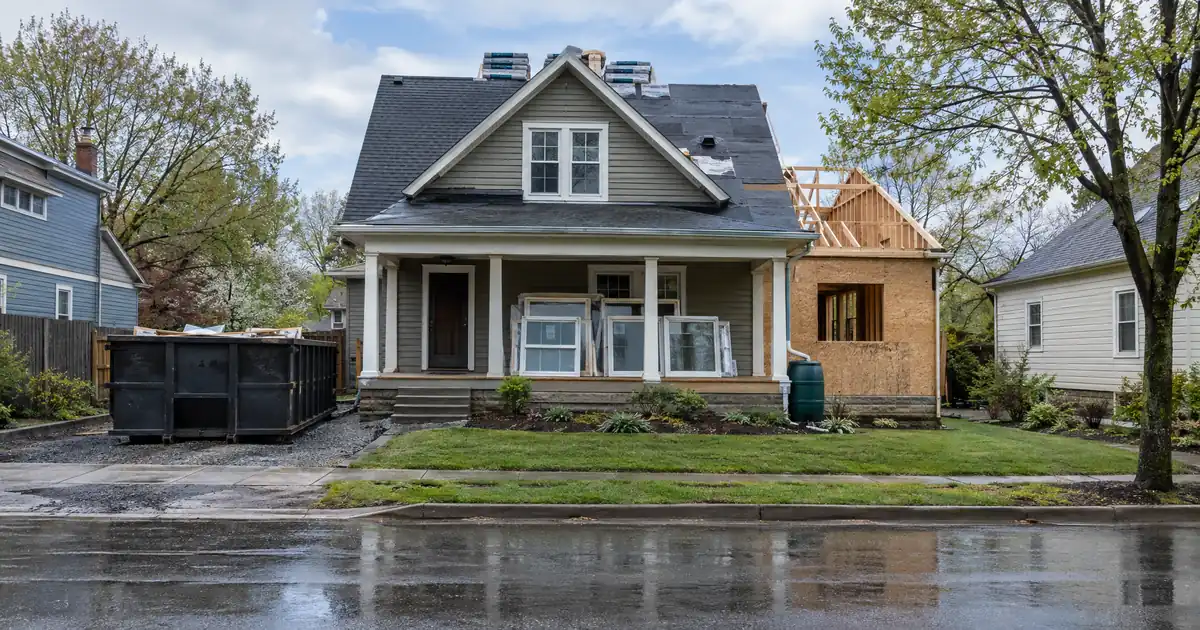
The Quick Read: Usually, yes: a rental bought with cash can often be refinanced into a cash-out loan that returns part of the purchase money, so you never borrow hard money, provided the lender offers delayed financing, the purchase was truly all cash, and the property still passes the rent, appraisal, and reserve tests. The loan is sized on what you paid, not on what the property may be worth after repairs. Every file is underwritten individually, subject to lender guidelines.
- Delayed financing is a seasoning exception inside a normal cash-out refinance. It is not a separate loan product.
- Hard money does not count as cash, because the settlement statement shows the financing.
- On a standard rental, cash-out leverage tops out around 75% LTV across most of the network, so you typically do not get 100% of your cash back.
- The rent test (DSCR) still applies, along with an appraisal and reserves.
- A rehab-heavy deal is a different story. Delayed financing returns purchase money, not renovation capital.
What Delayed Financing Actually Is
Delayed financing lets a cash buyer refinance soon after closing without waiting out the usual seasoning period. Seasoning is the waiting period a lender wants between buying a property and taking cash out of it. On most files across the wholesale network, that wait is about six months from the recorded title date.
Delayed financing waives that wait for one kind of borrower: someone who paid cash and can prove it. The loan is still a cash-out refinance. It carries the same appraisal, the same rent test, and the same leverage cap as any other cash-out file.
This is a lender-by-lender feature. Some programs in the network offer it, and others do not. That is why you vet the lender before you buy, not after.
The concept comes from the agency mortgage world. Fannie Mae’s Selling Guide lists a delayed financing exception inside its cash-out refinance rules and states that the other cash-out requirements and pricing still apply. DSCR loans are not agency loans, so treat that as a model for the idea. It is not the rulebook for your file.
Why a Cash Buyer Might Skip Hard Money
Hard money is built for speed of execution and for rehab. It is short-term, asset-based money. Terms usually run 6 to 18 months, interest-only, with no prepayment penalty. A bridge purchase without rehab can run up to 80% of purchase price, and the figures vary by lender, property, and experience.
That structure carries a clock. The note comes due on a set date. If your refinance exit is not ready by then, you are negotiating from a corner.
A cash buyer can skip all of that. You pay with your own money, you take the property without a maturity date hanging over it, and you pull capital back out through the refinance. You also avoid the extra layer of fees that comes with a short-term loan.
The trade-off is that your cash sits in the deal until the refinance closes. That is capital you cannot use elsewhere. So the real question is not whether cash works. It is whether tying up your own money costs you more than borrowing would.
Cash plus refinance fits best when the property needs little or no rehab, the seller will take a clean cash offer, and you already know which lender will refinance it. Hard money still fits better when the property needs heavy work. A hard-money rehab program can fund up to 100% of the rehab budget in draws against completed work, which your own cash does not do for you.
There is also a third option people forget. If you do not want to put all your cash in, a DSCR purchase loan typically runs 75% to 80% LTV on a purchase of an investment property, and select high-leverage programs reach 85% LTV with roughly a 700+ score. That skips hard money without using all your cash.
Early Refinance or Wait for Seasoning?
A cash buyer has two paths. You can refinance early under delayed financing, or you can wait out normal seasoning and borrow against the appraised value. The right pick depends on whether you bought at or below market.
| Factor | Early (delayed financing) | After seasoning |
|---|---|---|
| Timing | Soon after the cash purchase | Roughly six months of title seasoning |
| Loan sized on | Lower of cost or value | Full appraised value |
| Cash recovered | Capped near what you paid | Can exceed what you paid |
| Cash left in deal | Remainder of cost | Often less, if value rose |
| Main risk | Lender may not offer it | Your cash stays tied up longer |
On a below-market buy, waiting can return more. Taking money out early is capped at cost, even if the appraisal comes in higher. On an at-market buy with no value created, the early path costs you very little and frees capital sooner.
Closing costs also hit twice, once at purchase and again at the refinance. Count both before you decide the early route is worth it.
What Counts as a Cash Purchase
Lenders look at one question: did a loan secured by this property pay for it? If yes, the purchase was not cash. The table below shows where common funding sources land.
| Funding source | Counts as cash? | Why |
|---|---|---|
| Your own savings | Yes | Traceable to your accounts |
| Hard money or bridge loan | Generally no | Lien secured by the property |
| Seller financing | Generally no | Financing appears on the settlement statement |
| Partner or gift funds | Depends | Must match vesting and source of funds |
| Money borrowed against another property | Often yes | Confirm with the specific lender |
| A loan placed after closing | Treated as a refinance | Not a cash purchase |
The partner case trips up more files than you would expect. If the refinance is in your own name but the purchase money came from a partnership account, the paper trail does not match, and the file stalls. Match the vesting to the source of funds. Title held in an LLC is generally workable, subject to lender program eligibility, but the entity that paid is usually the entity that must refinance.
The Paper Trail You Need
Homebuyer.com’s summary of the agency guideline lists the original settlement statement and bank statements showing the source of funds as the key documents. The same approach holds for DSCR files. Gather these before you apply:
1. The original settlement statement showing no financing against the property.
2. Bank statements tracing the purchase money to your own accounts.
3. Proof of an arm’s-length purchase, meaning an ordinary sale between unrelated parties.
4. Title and vesting that match the entity on the refinance.
5. A current lease or a market rent opinion for the rent test.
6. Reserve statements, since reserves vary by lender, leverage, and loan size.
Incomplete paperwork is the most common way a delayed financing file falls apart. Lenders treat this exception as an all-or-nothing documentation test.
A Worked Example in Percentages
Picture an investor who buys a duplex for all cash. The property needs light cosmetic work and little else. Run the numbers as percentages of what you paid, since these are modeled assumptions, not market data.
Under delayed financing, proceeds are the lower of cost or value, multiplied by the cash-out leverage cap. On a standard rental, that cap is around 75% LTV on a cash-out refinance. So the investor gets back up to about 75% of the purchase price, before refinance costs, and roughly 25% stays in the deal. These specifics are subject to lender guidelines and a full review of property, leverage, and credit.
Now say the duplex appraises 15% above what the investor paid. Under the early path, that extra value is not borrowable. Cash back stays near 75% of cost.
Under the seasoned path, the lender applies the same 75% to the full appraised value. That works out to about 86% of what the investor originally paid. That is roughly 11 percentage points more cash back, in exchange for waiting out seasoning.
Compare that with hard money on the same duplex. A bridge purchase can fund up to 80% of purchase price, so less of your own cash goes in at the start. But the note carries a maturity date, interest accrues on the balance, and the refinance still has to pass the same rent and appraisal tests when the note comes due. Both paths run into the same exit tests. Cash simply removes the deadline.
Cash Plus Refinance vs. Hard Money, Side by Side
| Factor | Cash + cash-out refinance | Hard money purchase |
|---|---|---|
| Upfront capital | Full purchase price | Down payment plus fees |
| Maturity date | None | Typically 6 to 18 months |
| Cash recovery | Capped near cost, early | Depends on later refinance |
| Rehab funding | Your own cash | Draws against completed work |
| Main risk | Cash tied up; lender must offer it | Note comes due before refinance |
| Best when | Light rehab, clean cash offer | Heavy rehab, limited cash |
Neither route wins every deal. Cash gives you control and removes the clock. Hard money gives you reach, which means more purchases per dollar of your own capital.
Does the Rent Test Still Apply?
Yes. Delayed financing waives the seasoning wait. It does not waive underwriting. DSCR loans are business-purpose investor loans, so they are reviewed differently from a standard owner-occupied mortgage, and the lender qualifies the file primarily on property-level rental income covering the payment, subject to lender guidelines.
Here is how the number works. The lender divides monthly rent by the full monthly payment, which covers principal, interest, taxes, insurance, and any HOA dues. A bigger loan raises the payment and lowers the coverage ratio. That is why cash-out files run tighter than purchases at the same price.
A coverage ratio of 1.00 is where many select programs start. A separate select-lender path takes coverage below 1.00, with leverage and terms adjusted. Stronger ratios open better pricing and leverage.
Clearing 1.00 does not mean the property produces positive cash flow. The ratio compares rent to the payment only. Repairs, vacancy, management, utilities, and capital expenses sit outside the calculation, so budget for them separately.
Other gates stay in place. Most programs want a credit score around 660, a 620 floor exists in parts of the network, and 700+ opens the strongest leverage tiers. Reserves vary by lender, leverage, and loan size, commonly around six months of the full monthly payment. Standard loan sizes run up to $3,000,000 on standard programs (smaller balances available through select lenders). Manufactured homes, log homes, and barndominiums are not offered, so delayed financing does not rescue them.
For the broader picture of how these loans fit together, see the complete DSCR loans guide.
A Simple Decision Path
Work through these in order:
- Light or no rehab, clean cash offer, lender confirmed: buy with cash and use the early path.
- Below-market buy with a large gap to appraised value: consider waiting out seasoning, or hold the cash and decide later.
- Heavy rehab, limited cash: hard money may fit better, with the refinance planned in advance.
- Want to keep some cash back: a DSCR purchase loan skips hard money and keeps part of your capital free.
- Already bought with financing: go to the payoff-only path below.
What Can Go Wrong
Four things stall most of these files.
- The lender does not offer the exception. Ask before you offer on the property, not after closing.
- The appraisal comes in low. Proceeds are the lower of cost or value, so a low appraisal cuts your cash back.
- Rent coverage falls short. A larger loan lowers the ratio. Some files need a smaller loan or a different structure.
- The paper trail has a gap. A partner account, a gift, or a mismatched entity can end the file.
Many DSCR loans also carry prepayment penalties. Ask what yours is before you commit, especially if you may sell or refinance again.
Already Used Hard Money? Here Is the Fallback
If a hard-money loan paid for the purchase, delayed financing is off the table. You still have a clear path.
A refinance that pays off the hard money and returns no cash is a rate-and-term refinance. Seasoning rules often apply only to cash-out. Whether cash comes back at closing is what sets the classification. Extra cash out generally waits until seasoning passes, about six months from the recorded title date on most files.
Many investors refinance out of hard money into long-term DSCR financing once the property is stabilized, and Lendmire arranges that path.
Key Terms Defined
Delayed financing: a seasoning exception that lets a cash buyer take cash out soon after purchase, sized on what was paid.
Cash-out refinance: a new loan that pays off the old balance and returns extra cash at closing.
Rate-and-term refinance: a new loan that changes the terms without returning cash.
Seasoning: the waiting period between buying a property and borrowing against it.
Cost basis: what you paid for the property, plus eligible costs where the lender allows them.
DSCR: debt service coverage ratio, which compares monthly rent to the full monthly payment.
LTV: loan-to-value, the loan amount as a percentage of the property value.
Frequently Asked Questions
Is delayed financing a separate loan product?
No. It is an exception inside an ordinary cash-out refinance. You still get an appraisal, a rent test, a leverage cap, and reserve requirements. The exception only changes the seasoning wait. Terms depend on the lender’s guidelines, the property type, the leverage, and a full review of the credit profile.
Does hard money count as cash?
Generally not. A hard-money purchase shows a lien on the settlement statement, and lenders treat that as financing. Cash tied to your own accounts counts. Money borrowed against a different property may still count, but confirm it with the specific lender.
Can I borrow on the appraised value right after buying?
Not under delayed financing. Proceeds are sized on the lower of documented cost or value. To borrow on full appraised value, you wait out normal seasoning, about six months on most files, and then take a standard cash-out.
Does delayed financing waive the rent-coverage test?
No. The property still has to pass the DSCR test. Many select programs start at 1.00, and a separate select-lender path takes coverage below 1.00, with leverage and terms adjusted. Qualification stays subject to lender guidelines, credit review, and property review.
Can I buy in an LLC and refinance in my own name?
That usually creates a mismatch. The entity that paid should generally be the entity that refinances, and the source of funds has to trace to that entity. Settle this with the lender before you close on the purchase.
Next Step
If you are buying, rehabbing or refinancing an investment property on a short timeline and want to see how the numbers work, Lendmire can help you compare hard money options based on the project, the exit plan, leverage, and your goals. The brokerage arranges DSCR and hard money financing through select lenders in its wholesale network, across 41 markets, including Washington, D.C. Programs change, and nothing here is a commitment to lend.
Short-term rental rules can vary by city, county, HOA, and property type, so investors should confirm local rules before relying on projected rental income.
About Lendmire
A DSCR-focused mortgage broker, Lendmire (NMLS# 2371349) places investor financing across 41 markets — 40 states plus Washington, D.C. — with DSCR eligibility generally reviewed by the lender on property cash flow instead of tax returns, subject to lender guidelines. Scotsman Guide named Lendmire a Top Mortgage Workplace in 2025 and 2026.
Get Started
Ready to find the right loan for you?
See your offer in seconds. No credit pull, no obligation.
Informational only. Not a Loan Estimate, approval, or commitment to lend. Program availability and eligibility are subject to lender guidelines, credit approval, property review, and underwriting.
References
1. Fannie Mae Selling Guide B2-1.3-03, Cash-Out Refinance Transactions
2. Homebuyer.com, Fannie Mae Guideline Summary for B2-1.3-03
This article is part of Lendmire’s hard money loan program — full qualification details, guidelines, and scenarios live on the program page.
Related reading: Best Hard Money Cash-Out Refinance Program When the Hard Money Note Is Coming Due · Best DSCR Cash-Out Refinance Program When Exiting Hard Money on a Duplex · Hard Money Cash-Out Refinance Lenders That Lend on Cost Basis Instead of Appraised Value
Brandon Miller
Founder & CEO, Mortgage Loan Originator, Lendmire LLC
- Mortgage Loan Originator · NMLS# 1129696 · Verify on NMLS Consumer Access
- North Carolina Real Estate Broker · License# 343312 · Verify on NCREC
- North Carolina Insurance Producer · License# 19053198 · Property, Casualty, Life, Health · Verify on NAIC SBS
- Lendmire LLC · Firm NMLS# 2371349 · Verify firm licensure
Disclosure information. Lendmire is a state-licensed mortgage brokerage under NMLS# 2371349. Lendmire is not a depository institution, direct lender, or financial advisor — all loans referenced are placed through wholesale lender partners and are subject to each lender's underwriting standards. This article is provided for general informational purposes and is not a commitment to lend, nor does it constitute financial, legal, or tax advice. Loan programs, terms, rates, and qualification standards change without notice and depend on borrower profile, property type, and the state in which the subject property is located. Equal Housing Opportunity provider. NMLS Consumer Access: nmlsconsumeraccess.org.