
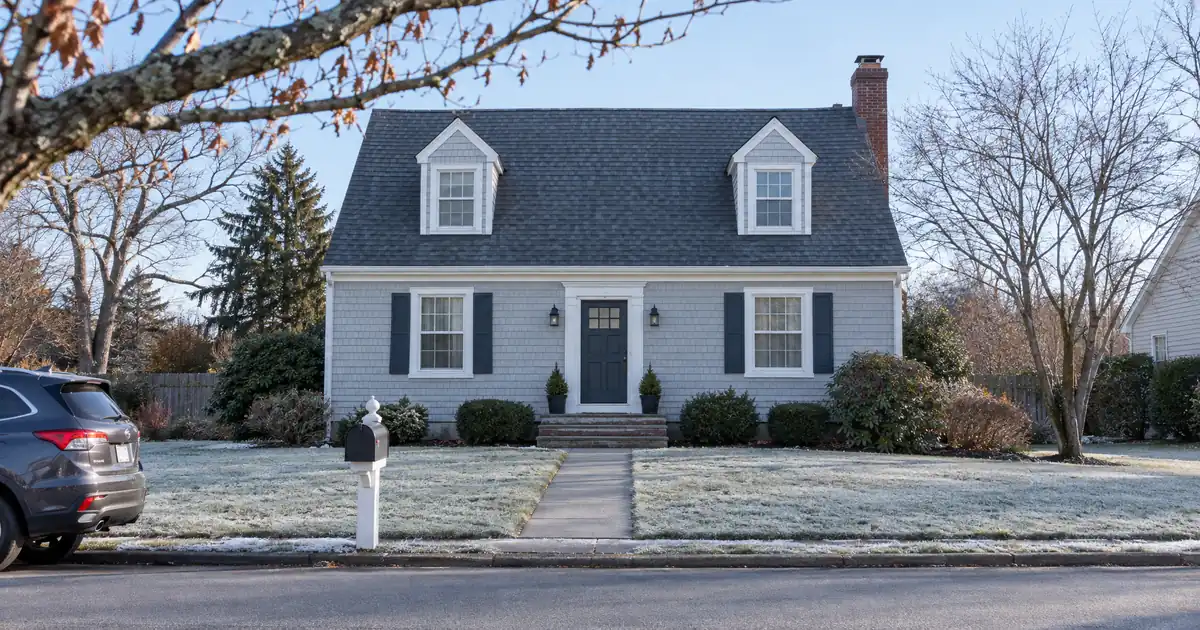
The Quick Read: On a rental cash-out refinance, the appraisal produces two separate conclusions: a market value that sets the loan ceiling and a market-rent opinion that sets the coverage ratio. La Crosse works here as an illustration only; the mechanics are the same in any market, and the figures below are not La Crosse data.
- Value drives the loan-to-value test. Most programs across the wholesale network cap a rental cash-out at 75% LTV.
- Rent drives the coverage test. 1.00 is where many select programs start, and stronger ratios open better terms.
- The smaller of the two resulting loan sizes governs the file.
- Expect a full appraisal on a rental cash-out. Waivers are rare.
- A low value and a low rent opinion can fail independently, so prepare for both.
Why Does a Rental Cash-Out Need a New Appraisal?
A cash-out on a rental almost always requires a full appraisal, because the lender is sizing a larger loan against current value and current rent. The lender orders it and the borrower pays for it. The appraiser works for the lender, not the owner.
DSCR Cash-Out Calculator
Run the cash-out numbers in your market
Rate source: Freddie Mac 30-yr average via FRED® — Federal Reserve Bank of St. Louis · effective Oct 29, 2026
Prefilled with starting assumptions — enter your property’s value, balance, taxes, and insurance for a more accurate picture.
Program parameters update from Lendmire’s centralized guideline source. Taxes and insurance are editable estimates.
As of Oct 29, 2026 · General Freddie Mac market benchmark, not a Lendmire loan offer. Property value, balance, taxes, and insurance are editable estimates. Maximum loan-to-value varies by lender, program, property type, and seasoning. Not a Loan Estimate, approval, or commitment to lend. Program availability and eligibility are subject to lender guidelines, credit approval, property review, and underwriting.
A refinance that returns cash is a cash-out, even when the cash pays off other debt. Programs in the network typically expect about 6 months of ownership, measured from title recording, before sizing on appraised value. Inside that window, a lender may size from the lower of value or cost basis.
DSCR loans are designed for non-owner-occupied investment properties. Because they are business-purpose investor loans, they are reviewed differently from a standard owner-occupied mortgage. For the full program picture, see Lendmire’s complete DSCR loans guide.
What Does the Appraiser Do at the Property?
The appraiser inspects the property, picks comparable sales, and adjusts them for size, condition, and location. Sales comparison is the primary method on most one-to-four-unit rentals. The income approach usually plays a supporting role.
On small residential property, that support is typically a gross rent multiplier. The California State Board of Equalization explains that a multiplier comes from comparing the sale prices of closely comparable properties with their gross rents, and that appraisers commonly use it on smaller residential properties because they carry little non-rental income. SmartAsset defines the multiplier as price divided by annual gross rent and notes it ignores operating expenses, vacancy, and management costs. Fuller capitalization methods divide net operating income by a cap rate; Azibo walks through both approaches.
| Approach | What it uses | Role on 1–4 units |
|---|---|---|
| Sales comparison | Adjusted comparable sales | Usually leads |
| Gross rent multiplier | Price vs. gross rent of comps | Supporting check |
| Capitalization | Net income and a cap rate | Occasional, more common on larger assets |
If your appraiser in La Crosse or anywhere else has few nearby comps, the report leans harder on adjustments. That is where value misses tend to start.
How Is the Rent Opinion Built?
The appraiser selects comparable rentals, adjusts them, and reconciles to one monthly market-rent figure. That figure comes from leases on comparable properties, not from your pro forma or your net income.
Single-family rentals get a comparable rent schedule, Form 1007. Two-to-four-unit properties get the small residential income property report, Form 1025. Those are agency form names the non-QM market borrows; the forms do not make agency rules govern a DSCR file.
Rent in a DSCR file is compared to PITIA: principal, interest, taxes, insurance, and any HOA dues. That is simpler than the commercial formula, which divides net operating income by debt service. Clearing 1.00 is not the same as positive cash flow. Repairs, vacancy, management, utilities, and capex sit outside the ratio.
Lease Rent or Appraiser Rent: Which Counts?
It depends on the program, so confirm before the appraisal is ordered. Many files credit the lower of the lease and the appraiser’s market rent. A few lenders use the higher of the two within a variance band. A vacant unit relies on the appraiser’s figure alone.
| Situation | Typical treatment |
|---|---|
| Lease above market | Excess usually earns nothing in the ratio |
| Lease below market | Lease can cap the ratio |
| Vacant | Appraiser’s rent stands alone |
| Short-term rental | Form 1007 reflects long-term lease comps, not nightly income |
Short-term rentals run on their own terms in the network: cash-out up to 70% LTV, a 640+ score, about 12 months of hosting history, and a 1.00 coverage floor on refinances. Short-term rental rules can vary by city, county, HOA, and property type, so investors should confirm local rules before relying on projected rental income. Terms depend on the lender’s guidelines, the property type, the leverage, and a full review of the credit profile.
A lease below market has a fix: renew at documented market rent before the appraisal.
From Appraisal to Cash: Two Tests, One Loan
Two tests run in parallel. The value test multiplies appraised value by the cash-out LTV, which tops out around 75% across most of the network. The rent test checks that rent covers the full payment on the new, larger loan. The smaller result governs. Subtract the payoff and closing costs, and what remains is the cash to the borrower.
Run the numbers on the new balance, not the old one. Cash-out raises the payment, so coverage falls after a refinance even if rent never moves.
Picture an investor with a single-family rental whose coverage sits at roughly 1.4x on the existing loan. Pulling out a large draw may push the new ratio toward 1.1x. That still clears the 1.00 starting point on many select programs, but it leaves less room if the appraiser’s rent comes in under the lease.
The loan itself must fit the program too. Standard programs run up to $3,000,000. Credit tiers start at a 620 floor, though most programs want about 660, and 700+ unlocks the strongest leverage. Reserves commonly run about 6 months of PITIA, stepping up to about 9 months above $1,500,000. Coverage below 1.00 is available through select lenders in the network, with leverage and terms adjusted. Every figure here is subject to lender guidelines and individual underwriting.
Experience from broker desks: the file that surprises people is rarely the one with a weak value. It is the one with strong equity and a rent opinion that came in under the lease. Pull comparable leases yourself before ordering, and decide your fallback first.
Where the General Rule Breaks
- Second liens. If you keep a low-balance first lien, coverage generally has to clear after both payments.
- Unit count. Two to four units use Form 1025. Larger buildings usually move to commercial treatment.
- Ineligible property types. Manufactured homes (single- and double-wide), log homes, and barndominiums are not offered in the network’s DSCR programs.
- Rehabbed units. After a rehab, the appraiser may compare your finished unit to unrenovated rentals. Documented improvements may support a higher appraised value, depending on comps and underwriter review.
If the Appraisal Comes in Low
You have four realistic options: request a reconsideration through the lender, take a smaller draw, do a payoff-only refinance, or wait. You do not contact the appraiser directly. Supplying facts, such as leases, a rent roll, and an improvement list, is appropriate. Suggesting a value or rent conclusion is not.
Each dollar of value lost removes only the LTV percentage of that dollar from the loan, so a modest miss often means a modestly smaller draw. A rent miss can hit harder because it can push the coverage ratio below a program’s floor.
Preparation Checklist
- Current leases and a rent roll for every unit.
- A written list of improvements with dates and receipts.
- Access arranged for each unit, including tenant notice.
- Your own comparable rentals, kept for your planning rather than sent to the appraiser.
- A fallback plan: smaller draw, a paydown, or a different structure.
Key Terms Defined
- Market rent: the monthly rent the appraiser concludes a unit would earn from comparable leases.
- Rent schedule: the report section, Form 1007 or 1025, that shows rent comps and the reconciled figure.
- Appraised value: the appraiser’s value conclusion, which sets the LTV ceiling.
- PITIA: principal, interest, taxes, insurance, and any association dues.
- Seasoning: the ownership period required before cash-out is sized on appraised value.
Frequently Asked Questions
Can a lender skip the appraisal on a rental cash-out?
Rarely. Investor cash-outs almost always need a full appraisal, and waivers or drive-by valuations are the exception. Plan and budget for a full report with a rent schedule.
Does the appraiser use my lease or market rent?
It depends on the program. Many files credit the lower of the two; some use the higher within a variance band. Vacant units rely on the appraiser’s figure alone. Ask your broker before the appraisal is ordered.
Can I send the appraiser my own comps?
Not directly. If the report has errors or weak comps, the lender routes a reconsideration request. Providing leases and documented facts is fine; proposing a value conclusion is not.
Does clearing 1.00 mean the rental cash-flows?
No. The ratio compares rent to PITIA only. Repairs, vacancy, management, utilities, and capex sit outside it, so underwrite those separately.
What if the rent opinion comes in below 1.00 coverage?
Programs below 1.00 are available through select lenders in the network, with leverage and terms adjusted. Alternatively, take a smaller draw or document a stronger lease.
If you are buying or refinancing a rental property and want to see how the numbers work, Lendmire, a mortgage broker arranging DSCR financing through select lenders in its wholesale network across 41 markets, including Washington, D.C., can help you compare DSCR loan options based on the property income, credit profile, leverage, and investor goals. Qualification is subject to lender guidelines and is not a commitment to lend.
For the mechanics of pulling equity out of a rental property, see Lendmire’s guide to cash-out refinance on an investment property.
About Lendmire
Lendmire (NMLS# 2371349) is a mortgage brokerage built around DSCR investor lending, with programs available in 41 markets, including Washington, D.C. DSCR lenders commonly evaluate rental-income coverage instead of personal income paperwork — a practical fit for LLC-owned and multi-property investors. Terms vary by lender, property, leverage, and program. Scotsman Guide named Lendmire a Top Mortgage Workplace in both 2025 and 2026.
Get Started
Ready to find the right loan for you?
See your offer in seconds. No credit pull, no obligation.
Informational only. Not a Loan Estimate, approval, or commitment to lend. Program availability and eligibility are subject to lender guidelines, credit approval, property review, and underwriting.
References
1. California State Board of Equalization – Lesson 9, Multipliers
2. SmartAsset – Rental Property Analysis
3. Azibo – Rental Appraisal guide
This article is part of Lendmire’s investment property cash-out refinance program — full qualification details, guidelines, and scenarios live on the program page.
Related reading: Short-Term Rental Cash-Out Refinance Lenders on a Rental Qualified by Its Rent · Short-Term Rental Cash-Out Refinance Requirements Within a Year of Buying · Best Short-Term Rental Cash-Out Refinance Program to Maximize Cash Out
Guides: Investment Property Cash-Out Refinance in La Crosse, WI · Investment Property Cash-Out Refinance in Wisconsin
Brandon Miller
Founder & CEO, Mortgage Loan Originator, Lendmire LLC
- Mortgage Loan Originator · NMLS# 1129696 · Verify on NMLS Consumer Access
- North Carolina Real Estate Broker · License# 343312 · Verify on NCREC
- North Carolina Insurance Producer · License# 19053198 · Property, Casualty, Life, Health · Verify on NAIC SBS
- Lendmire LLC · Firm NMLS# 2371349 · Verify firm licensure
Important disclosures. Lendmire (NMLS# 2371349) is a licensed mortgage brokerage. Lendmire is not a direct lender, depository institution, or financial advisor. All loan inquiries are subject to lender underwriting; this article does not constitute a commitment to lend. Rates, terms, and program guidelines are subject to change without notice and vary by borrower profile, property type, and state. Information in this article is general in nature and is not financial, legal, or tax advice. Equal Housing Opportunity. NMLS Consumer Access: nmlsconsumeraccess.org.