
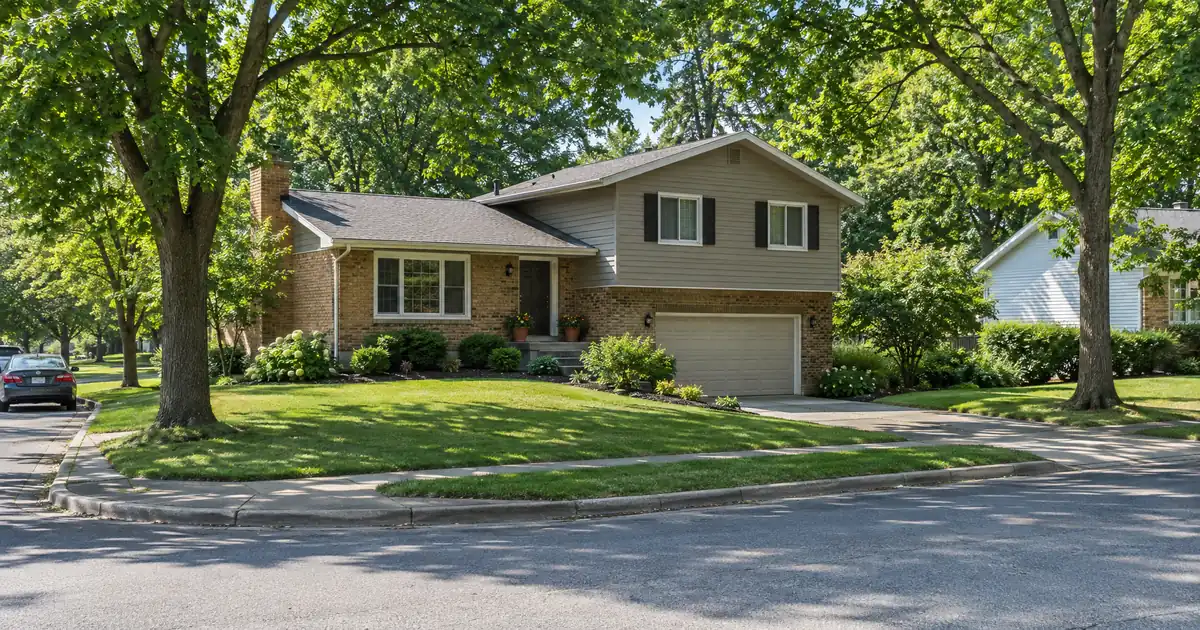
The Quick Read: On a rental cash-out refinance, the appraiser’s value opinion, not your own estimate, is the number the lender multiplies by the program’s leverage cap. On a standard rental, that cap tops out around 75% LTV across most of the network, and your existing payoff comes out of the result before any cash reaches you. A second ceiling, built from rent and coverage, can cut the loan even lower. Final terms depend on the lender’s guidelines, the property type, and the borrower’s complete credit picture.
- The appraiser owns the value. Your Zillow number, your after-repair estimate, and your cap-rate math do not set the loan.
- Value is only one ceiling. Rent coverage sets a second one, and the loan is the lower of the two.
- Payoff stays fixed, so a small value miss causes a larger cash miss.
- Inside the seasoning window, about 6 months from title recording, sizing can rest on documented cost instead of appraised value.
- Plan proceeds below the best case. Programs change and every file is underwritten individually.
Most investors treat the appraisal as a formality. It is the deal. Here is how it works start to finish, and where the rules bend.
DSCR Cash-Out Calculator
Run the cash-out numbers in your market
Rate source: Freddie Mac 30-yr average via FRED® — Federal Reserve Bank of St. Louis · effective Oct 29, 2026
Prefilled with starting assumptions — enter your property’s value, balance, taxes, and insurance for a more accurate picture.
Program parameters update from Lendmire’s centralized guideline source. Taxes and insurance are editable estimates.
As of Oct 29, 2026 · General Freddie Mac market benchmark, not a Lendmire loan offer. Property value, balance, taxes, and insurance are editable estimates. Maximum loan-to-value varies by lender, program, property type, and seasoning. Not a Loan Estimate, approval, or commitment to lend. Program availability and eligibility are subject to lender guidelines, credit approval, property review, and underwriting.
What Does the Appraised Value Actually Do in a Cash-Out?
The appraised value is the value side of the loan. The lender takes the appraiser’s opinion, applies the cash-out LTV cap, and subtracts what you still owe. What remains, less closing costs, is your cash.
Most programs Lendmire places files with cap cash-out at 75% LTV on a standard rental. Short-term-rental collateral generally sits lower, around 70%. A lower appraisal means a smaller loan. Because your payoff does not shrink when value drops, cash falls faster than value does.
That is why the appraisal matters more than almost any other step. You control the property, the rent, and the paperwork. You do not control the number.
How Does an Appraiser Arrive at Value?
Appraisers use one or more of three approaches. The Appraisal Institute describes them as sales comparison, cost, and income. The income approach is often applied to investment and rental properties, using expected or comparable rents.
| Approach | What it uses | Where it tends to matter |
|---|---|---|
| Sales comparison | Recent nearby sales of similar homes | Single-family rentals |
| Cost | Land plus replacement cost, less depreciation | Newer or unusual properties |
| Income | Expected or comparable rents | Rentals, small multifamily |
On a single-family rental, sales comparison usually drives value. The appraiser studies closed sales, contract sales, and listings of the most comparable properties, then adjusts for differences. Fannie Mae’s Selling Guide describes that process. It is cited here only as a description of appraisal practice. DSCR loans are not agency products and follow each program’s own guidelines.
On two- to four-unit properties, appraisers often cross-check with a gross rent multiplier, which is sale price divided by gross rent. The California State Board of Equalization notes that this multiplier is common on small residential property because it carries little non-rental income.
(Practically, the comps still carry most of the weight on small residential. Rent decides the loan; comps decide the value.)
Which Appraisal Forms Get Ordered?
One appraisal is ordered on the subject property, and it usually produces two outputs: a market value and a market-rent opinion. The value feeds the LTV test. The rent feeds the coverage test.
The forms come from appraisal-industry standards. Fannie Mae’s learning center lists the 1004 residential report, the 1007 comparable rent schedule, and the 1025 small residential income report.
- One-unit rental: a 1004-type report plus a 1007 rent schedule.
- Two- to four-unit: a 1025, which carries value and per-unit rents together.
These names are borrowed vocabulary. They tell you what the appraiser delivers, not which rules govern the loan.
How Does Underwriting Turn That Value Into a Loan Amount?
Underwriting applies two tests, and the loan is the lower result. Here is the sequence.
1. Value test. Appraised value times the cash-out LTV cap gives the value-based maximum loan. On a standard rental, the cap is 75%.
2. Rent test. The rent used for review, divided by the required coverage ratio, gives the maximum monthly obligation. DSCR compares rent to PITIA only. Select programs start at 1.00; stronger ratios open better pricing and leverage.
3. Take the lower ceiling. Whichever test binds first sets the loan.
4. Net the cash. Subtract your existing payoff and closing costs from the loan amount. The remainder is your cash out.
5. Check reserves and credit. Reserves commonly run around 6 months of PITIA, stepping up to about 9 months on loans above $1,500,000. Credit floors start at 620 in parts of the network, with most programs wanting around 660. Scores of 700 and up unlock the strongest leverage tiers. All of this is subject to lender guidelines.
Clearing 1.00 does not mean positive cash flow. Repairs, vacancy, management, utilities, and capex all sit outside the calculation.
Lendmire’s complete DSCR loans guide covers the coverage math in more depth.
Why Does a Small Value Miss Hurt So Much?
Because your payoff is fixed. Each appraised dollar lost removes 75 cents of loan on a standard rental, and none of it comes off what you owe.
Picture a rental with a clean payoff and a value you expected at a given level. If the appraisal lands a few percent short, the loan shrinks by 75% of the shortfall. Your cash drops by that same amount. As a share of the cash you planned to take, the hit is far bigger than the few percent the value missed.
This is why proceeds planning should run below the best case. A cushion turns a surprise into a non-event. In a BRRRR, where the refinance funds the next purchase, a shortfall can turn a planned cash-out into a file where you bring cash instead.
Where Does the Rule Break? Named Edge Cases
The general rule is value times LTV, less payoff. These situations bend it.
Inside the seasoning window
Programs commonly expect about 6 months of ownership, measured from title recording, before cash-out sizes on appraised value. Inside that window, the loan is typically sized on the lower of appraised value or documented cost. A strong appraisal does not help there.
The break-even is simple. Divide your documented cost by the cash-out LTV. Below that appraised value, cost is the limit; above it, value is the limit. At 75%, an appraisal needs to run roughly 133% of your cost basis before value starts to bind instead. Documented rehab spend, with receipts, helps establish that basis.
Seasoning rules differ from lender to lender. This is one reason a broker who sees many guidelines can steer a file toward the program that fits the timeline. Lendmire’s piece Can a Rental Cash-Out Refinance Use Appraised Value With No Seasoning? goes deeper on that question.
Paid-off rentals
With no payoff to subtract, the new loan comes entirely from appraised value. It is still a cash-out refinance, not a rate-and-term, and it still gets a full appraisal.
High value, low rent
Equity does not set the loan alone. A property can have strong value and weak rent. In that case the rent test binds first, and the loan lands below what the LTV cap would allow. Investors who watch only one number get surprised.
Vacant versus leased
A vacant single-family rental typically gets a 1007 showing market rent only. A leased one gets the 1007 compared against the lease. Either way, the appraiser’s rent opinion feeds the coverage ratio.
Appraisal waivers
Agency waiver programs are built around owner-occupied, limited cash-out deals. They essentially never apply to a DSCR investment cash-out. Expect a full appraisal.
Reconsideration of value
A reconsideration of value is a formal request, routed through the lender, asking the appraiser to review a clear error or a missed comparable. It is narrow. Disagreement alone is not evidence, and the value can stay exactly where it was. Treat it as a long shot, not a plan.
Short-term rentals
Short-term-rental collateral follows different leverage. Cash-out generally sits near 70%, and programs expect a 640+ score and about 12 months of hosting history. On refinances the coverage floor is 1.00. Short-term rental rules can vary by city, county, HOA, and property type, so investors should confirm local rules before relying on projected rental income.
Property types outside the network
Manufactured homes, log homes, and barndominiums are not offered through these DSCR programs. No appraisal result changes that.
What Does the Decision Look Like in Practice?
Run both ceilings before you order anything. Estimate value conservatively, check rent against the coverage you need, and see which one binds.
A few habits help:
- Keep comps and receipts ready. Documented rehab scope and completion help the appraiser see what the property is now.
- Schedule the inspection after the work is finished, not mid-rehab.
- Do not price your next purchase off an estimate. Wait for the number.
- If value lands low, compare your paths: take less cash, wait out seasoning, restructure the request, or pursue a reconsideration only if you have real evidence.
Sub-1.00 coverage is available through select lenders in the network, with leverage and terms adjusted. If you are reaching for it because the rent does not support the loan, that is a signal to re-examine the property, not just the loan type. A bigger down payment or lower balance can lift coverage, but it never erases leverage caps, credit floors, or property eligibility. The strongest files clear both tests: enough equity and enough rental coverage.
Term structure also matters at the margin. The spine is the 30-year fixed, with extended terms and interest-only periods available through select lenders, and ARM structures for investors who want them. Loans above $2,500,000 generally hold to 30-year fixed.
Key Terms Defined
- Appraised value: the appraiser’s opinion of what the property is worth as of the report date.
- LTV: the loan amount divided by the appraised value, shown as a percentage.
- Seasoning: the ownership period, about 6 months from title recording, before cash-out sizes on appraised value rather than cost.
- 1007 rent schedule: the appraisal exhibit that gives the appraiser’s market-rent opinion for a one-unit rental.
- 1025 report: the small residential income report used for two- to four-unit properties.
- Gross rent multiplier: sale price divided by gross rent, used as a cross-check on small residential value.
- DSCR: rent used for lender review divided by PITIA, the monthly principal, interest, taxes, insurance, and any HOA dues.
- Reconsideration of value: a lender-routed request that the appraiser review a clear error or missed comp.
Frequently Asked Questions
Does my own estimate of value ever count?
No. The appraiser’s opinion is the value the lender uses. Online estimates, purchase price, and after-repair projections inform your planning, but they do not enter the formula.
Why is my cash lower than the equity I thought I had?
Because the LTV cap holds back a share of value, and your payoff and closing costs come out of what is left. On a standard rental the cap is around 75%. Rent coverage may also bind lower, subject to lender guidelines.
Can I dispute a low appraisal?
You can ask for a reconsideration of value through the lender, but it works only with a clear error or a missed comparable. The appraiser may hold the original number. Do not build a plan around the request succeeding.
Does a high appraisal always increase my cash-out?
Not inside the seasoning window. There, sizing can rest on the lower of value or documented cost, so a strong appraisal may not help until seasoning is met.
Do agency appraisal rules apply to DSCR cash-out?
Only the form names carry over. Each DSCR program sets its own leverage, seasoning, and coverage guidelines, so agency caps and waivers do not govern the file.
Next Step
If you are buying or refinancing a rental property and want to see how the numbers work, Lendmire can help you compare DSCR loan options based on the property income, credit profile, leverage, and investor goals. Lendmire is a broker arranging financing through select lenders in its wholesale network across 41 markets, including Washington, D.C.
For the mechanics of pulling equity out of a rental property, see Lendmire’s guide to cash-out refinance on an investment property.
About Lendmire
Lendmire (NMLS# 2371349) is a DSCR-focused mortgage broker that helps arrange investor financing across 41 markets, including Washington, D.C., through wholesale and investor-lending channels. DSCR eligibility is generally reviewed by the lender around the property’s rental income rather than personal income documentation, subject to lender guidelines — which works for self-employed investors, LLC operators, and portfolios above four financed properties. Scotsman Guide named Lendmire a Top Mortgage Workplace in both 2025 and 2026.
Get Started
Ready to find the right loan for you?
See your offer in seconds. No credit pull, no obligation.
Informational only. Not a Loan Estimate, approval, or commitment to lend. Program availability and eligibility are subject to lender guidelines, credit approval, property review, and underwriting.
References
1. Appraisal Institute – How Consumers Interact With Appraisers
2. Fannie Mae Selling Guide B4-1.3-07
3. California State Board of Equalization – Lesson 9 Multipliers
This article is part of Lendmire’s investment property cash-out refinance program — full qualification details, guidelines, and scenarios live on the program page.
Related reading: Short-Term Rental Cash-Out Refinance Options for an Investment Property · Best Short-Term Rental Cash-Out Refinance Program After Moving Out · Best Short-Term Rental Cash-Out Refinance Program at 75% Loan-to-Value
Brandon Miller
Founder & CEO, Mortgage Loan Originator, Lendmire LLC
- Mortgage Loan Originator · NMLS# 1129696 · Verify on NMLS Consumer Access
- North Carolina Real Estate Broker · License# 343312 · Verify on NCREC
- North Carolina Insurance Producer · License# 19053198 · Property, Casualty, Life, Health · Verify on NAIC SBS
- Lendmire LLC · Firm NMLS# 2371349 · Verify firm licensure
Compliance and disclosures. Lendmire (NMLS# 2371349) is a licensed mortgage broker and is not a direct lender, depository institution, financial advisor, or tax professional. Content in this article is general market analysis and educational information — not financial, legal, or tax advice for any specific situation. Lendmire does not guarantee loan approval; every transaction is subject to underwriting by the funding lender. Mortgage pricing and loan program guidelines are subject to change at any time without notice and vary by borrower characteristics, property type, and state regulations. Lendmire complies with Equal Housing Opportunity. Licensure verification: NMLS Consumer Access.