
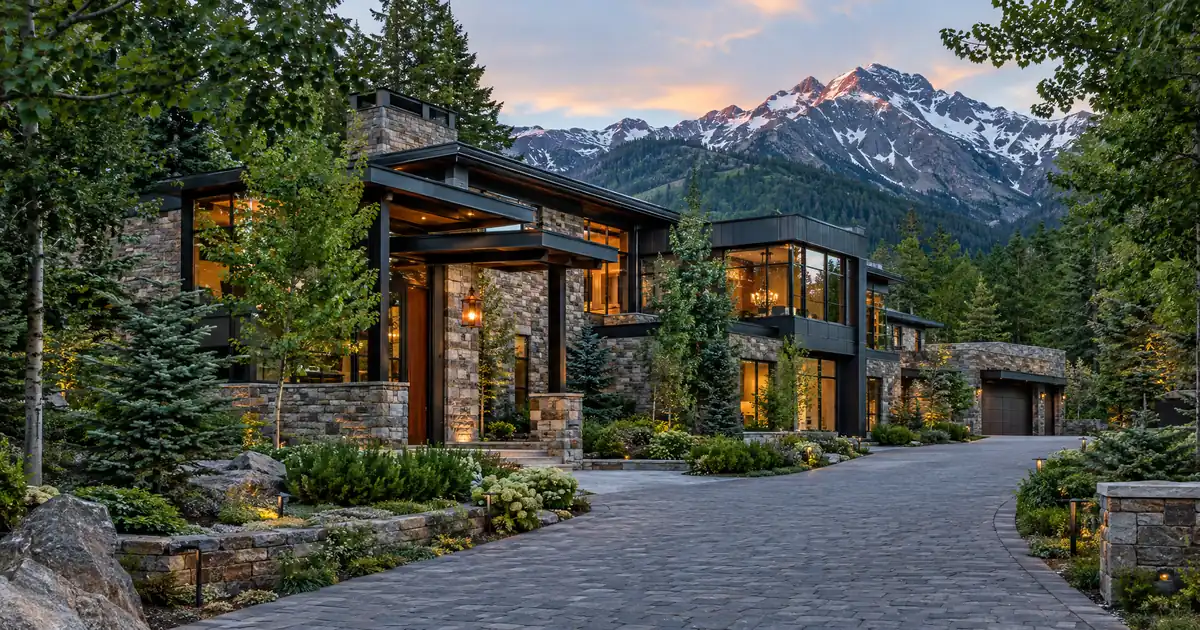
The Quick Read: Sometimes, but only inside a narrow window: a cash-out loan between roughly $2,000,000 and $3,000,000, on property that is not designated rural, with acreage inside program limits, subject to underwriting. Above $3,000,000 the answer is no, because cash-out disappears from the ladder and rural property is excluded. Rate-and-term is the usual substitute at that size.
- Cash-out on a rental runs 75% to $1,000,000, 70% to $1,500,000, and 60% from $1,500,000 to $3,000,000 on most files in the network.
- Above $3,000,000 there is no cash-out, no rural property, and no more than ten acres on a non-rural one.
- Excess land is usually carved out of the value used for leverage, so the real loan comes in smaller than the headline percentage suggests.
- Reserves are typically six months on the subject property, and cash-out proceeds never count toward them.
What Does “Super Jumbo” Actually Mean?
Super jumbo is a lender label, not a legal category. The only official line is the conforming loan limit, which FHFA set at a $832,750 baseline for the year’s conforming loans, per an Orrick summary. Anything above it is jumbo. Where “super” begins depends on who is lending.
DSCR loans are private, business-purpose products arranged for non-owner-occupied investment property. They are not agency loans. Each lender in a wholesale network sets its own overlays, and no government agency publishes an acreage or cash-out rule for them. That is why one lender’s decline says little about the next one’s answer.
Lendmire, a DSCR-focused mortgage broker arranging investor loans across 41 markets including Washington, D.C., sees this variation daily. The standard program stops at $3,000,000. The wider ladder reaches $10,000,000 through select wholesale programs, but the cash-out piece of that ladder is much shorter than the purchase piece.
Which Gate Trips First: Size, Rural Designation, or Acreage?
Most declines trace to one of three separate tests, and they run before rental income matters. Diagnose which one failed before changing the deal.
| Gate | What the lender checks | How it fails | Usual fix |
|---|---|---|---|
| Loan size | Loan amount against the cash-out ladder | Cash-out above $3,000,000 | Rate-and-term or smaller cash-out |
| Rural designation | Lender’s own population and location test | Rural tag on a loan above $3,000,000 | Different program or lower balance |
| Acreage | Total land versus program cap | Over 20 acres, or over 10 above $3,000,000 | Carve out land or split the parcel |
Loan size is the first gate. The bands are loan amounts, not purchase prices, so multiply value by leverage first and then read the band.
Is “Rural” the Same as Large?
No. A big parcel and a rural-designated property are different tests. A 15-acre parcel near a metro area may read as suburban to a lender. A 3-acre lot in a remote county may read as rural. “Rural” has no universal definition; lenders use their own population, metro-area and acreage tests, so the tag has to be checked program by program.
The distinction matters most at the top. On loans to $3,000,000, rural collateral of five acres or less can reach 75% leverage on most programs that allow it, and acreage up to twenty acres is possible. Above $3,000,000, the rule is one sentence: no rural property, and no more than ten acres on a non-rural one. Federal rural maps don’t decide this either. A property can read rural on a federal tool and still suit a DSCR lender.
What Does Excess Land Do to the Loan?
Excess land usually gets carved out of the value rather than killing the file. This is the point most investors miss. The lender values the house and the acreage it will count, and excludes the rest.
Think in index units. Say the full appraised value is 100, and the lender counts only 80 of it because the extra acres are excluded. A 60% cash-out ladder cell then applies to 80, not 100. The effective leverage on what you paid for or hold is 48%. That gap between headline and effective leverage is where most cash-out expectations break. Every figure here varies by lender and program — guidelines, property type, leverage, and credit profile all apply.
The same logic hurts buyers who bundled extra acres into the price. The land may appraise below what was paid, shrinking the loan. Two common workarounds are splitting off a separate parcel before the refinance or accepting a smaller cash-out.
How Does Cash-Out Change Coverage?
Cash-out raises the loan, so the monthly obligation rises while rent stays flat, and coverage falls. DSCR is monthly rent divided by principal, interest, taxes, insurance and any HOA dues. Trade press describes a ratio of 1.0 as break-even, with anything above it showing positive cash flow.
Picture an owner whose rental covers its current loan at about 1.4x. A cash-out that lifts the balance by a third pulls coverage toward 1.05x, and a larger pull can slip below 1.00. On a super jumbo file, 1.00 earns full leverage on most programs. Coverage from 0.75 to 0.99 is a real path through select programs to $2,000,000, but LTV and terms adjust, subject to underwriting. Above $2,000,000, plan on 1.00 or better.
Interest-only helps here. Select programs offer a 120-month interest-only period up to 75% leverage, qualified on interest, taxes and insurance, which lifts coverage versus a fully amortizing structure. Final terms depend on lender guidelines, property type, leverage, and the borrower’s complete credit picture.
Why Is the Appraisal Harder on Rural Land?
The appraisal does two jobs: value sets the leverage, and market rent sets the coverage. Rural land strains both. McKissock notes that limited comparable sales make it hard to find properties similar to the subject, and rural markets turn over more slowly. Appraisers often widen the comp search well beyond what is typical, and acreage adds adjustments.
On the rent side, the standard tool is the single-family rent schedule. Fannie Mae identifies Form 1007 as that schedule, and Freddie Mac’s matching Form 1000 says the appraiser prepares it. Those forms are named here only for contrast; DSCR loans are not agency products. The practical point: the form is built for monthly rents, not nightly ones.
Above $2,000,000, two appraisals apply on most programs, which doubles the exposure to thin rural comps. Expect more adjustments and a longer review than a suburban file.
What About a Rural Cabin or Vacation Rental?
Short-term rentals face a size wall: loan amounts stop at $2,000,000, below the cash-out super jumbo window. Income is documented on twelve months of operating history at a discount to gross rent, and the borrower needs recent experience owning income property. Short-term rental rules can vary by city, county, HOA, and property type, so investors should confirm local rules before relying on projected rental income.
Log and modular homes, working farms and agricultural or hobby operations are often out of scope entirely, though programs vary. If the property earns its money from crops or livestock, it likely belongs in an agricultural or portfolio lane, not DSCR.
Reserves, Proceeds, Credit and Entity Logistics
Reserves typically run six months of the monthly obligation on the subject property, twelve for first-time investors. Cash-out proceeds never satisfy them. You need liquid assets outside the refinance.
On cash-out, proceeds are unlimited at or below 60% leverage, with a $1,500,000 cap above 60%. Borrowers at 680 or below get no cash-out above $1,500,000. The program floor is 660 on loans to $3,000,000. Above $3,000,000 it moves to 700 with clean 24-month housing history and a 48-month wait after a credit event, which only matters for rate-and-term at that size. Citizens and permanent residents only at that tier. These specifics are subject to lender guidelines and a full review of property, leverage, and credit.
Entity vesting is welcome, with no layered entities, subject to lender program eligibility. Trade press notes that DSCR loans can close in an entity name, which the agencies don’t allow. Typical documents: lease, appraisal with rent schedule, entity papers, insurance, and title and ownership history. Recent purchases may face seasoning questions, so check ownership timing early.
What Do Brokers See on Files Like This?
Across the wholesale network, the pattern is consistent. Strong equity doesn’t waive credit floors, reserve rules or property eligibility. And files rarely fail on rent. They fail on a stacked overlay, such as a rural tag plus a balance above $3,000,000 that the investor didn’t know about until late. Running the three gates before ordering an appraisal saves the most time and money.
DSCR vs. conventional financing
There are two common ways to finance an investment property, and they qualify you differently — here’s how investors weigh them.
Why investors choose it
- Qualifies on the property’s rental income — no personal tax returns, W-2s, or pay stubs needed to document income.
- No personal debt-to-income ceiling to clear, so existing mortgages and obligations don’t cap your borrowing the same way.
- Can be closed in an LLC, keeping the property inside a business entity.
- Built for scaling — not held to the limit on number of financed properties that conventional financing applies.
- Underwriting centers on the deal: generally qualifies when the rent covers the payment, a 1.00x coverage ratio being a common baseline (confirmed in underwriting).
- Designed specifically for investment property, including long-term and, where the program allows, short-term rentals.
Where it’s strong
- Often the lowest ongoing financing cost for a buyer who fully qualifies on personal income — a fit for a first property or a cost-first purchase.
Trade-offs for investors
- Requires full personal income documentation and must fit within a debt-to-income limit — salary, existing debts, and other mortgages all count.
- Typically held in your personal name rather than a business entity.
- Caps how many financed properties you can carry, which can become a ceiling as a portfolio grows.
- Evaluates you as a borrower as much as the property, which usually means more paperwork.
How investors usually choose: a first or single property often optimizes for the lowest financing cost; portfolio builders often optimize for leverage, vesting in an LLC, and scaling past conventional caps. The right answer depends on your goals, the property, and current guidelines — both paths run through select lenders in Lendmire’s wholesale network, with eligibility and terms confirmed in underwriting.
Decision Table: Where Does Your File Land?
| Scenario | Likely outcome | Next move |
|---|---|---|
| Cash-out $2M-$3M, non-rural, within acreage | Possible at 60% on most programs | Confirm coverage at 1.00+ |
| Rural-designated, loan to $3M, 5 acres or less | Possible, up to 75% on small loans | Check cash-out ladder for balance |
| Over 20 acres, loan to $3M | Land likely excluded or declined | Carve out or split parcel |
| Cash-out above $3M | No cash-out available | Rate-and-term, or smaller cash-out |
| Rural-designated above $3M | Excluded | Other lane or lower balance |
| Short-term rental above $2M | Outside program | Long-term rent basis or smaller loan |
Structure around the cap. Options include a smaller cash-out, splitting off excess acreage, or a rate-and-term refinance followed by separate liquidity. Investors who use DSCR financing at jumbo sizes are not unusual; investor loans made up 28.5% of nonconforming originations, per Scotsman Guide.
Common Mistakes and a Pre-Application Checklist
- Treating a rural tag and a large parcel as the same thing.
- Assuming the headline leverage applies to the full price when land is carved out.
- Counting cash-out proceeds toward reserves.
- Skipping the coverage recheck after the loan grows.
- Assuming a short-term rental can ride the super jumbo ladder.
Before applying, confirm the rural designation, count total acres, estimate the value after excess land is removed, recheck coverage at the new balance, and line up reserves outside the deal. Lendmire’s complete DSCR loans guide covers the baseline program.
If you are buying or refinancing a high-balance rental property and want to see how the numbers work, Lendmire can help you compare super jumbo DSCR loan options based on the property income, the loan balance, credit profile, leverage, and investor goals. All parameters here are typical ranges, subject to underwriting, and not a commitment to lend.
Key Terms Defined
- Super jumbo: a lender-defined label for loans well above the conforming limit.
- DSCR: monthly rent divided by the full monthly obligation of principal, interest, taxes, insurance and dues.
- Cash-out proceeds: money received beyond paying off the existing loan and costs.
- Rural-designated: a lender’s own classification of a property’s location, separate from acreage.
- Excess acreage: land beyond what a program counts toward value.
Frequently Asked Questions
Can I take cash out on rural acreage above $3,000,000?
No. Above $3,000,000 the ladder offers no cash-out, and rural property is excluded. Those files are purchase or rate-and-term only. A smaller cash-out below that line, or a rate-and-term refinance, is the usual restructure.
Does the acreage cap apply to the whole parcel or just the house lot?
The whole parcel is reviewed, but excess land is typically excluded from the value used for leverage rather than causing a decline. Programs allow up to twenty acres on loans to $3,000,000, and ten acres above that on non-rural property, subject to underwriting.
Is a rural property the same as a large one?
No. Rural designation is a lender’s location test; acreage is a size test. A property can fail one and pass the other, and a federal rural map isn’t an investor DSCR test.
Can cash-out proceeds count toward my reserves?
No. Reserves must come from other liquid assets. Typical programs want six months on the subject property, and twelve for first-time investors.
What are my alternatives if the file doesn’t fit?
Take a smaller cash-out, split off excess land, do a rate-and-term refinance, or use a different lane such as agricultural or portfolio lending for working farms.
A deeper walk-through of investment-property equity extraction lives in Lendmire’s guide to cash-out refinance on an investment property.
Lendmire’s self-employed mortgages page presents both super jumbo programs, bank statement and DSCR, side by side.
About Lendmire
As a DSCR and non-QM mortgage broker, Lendmire — NMLS# 2371349 — connects investors with wholesale lending channels across 41 markets, including Washington, D.C. The property’s rental income, not the borrower’s tax returns, is central to lender review, which works for self-employed operators and portfolios beyond four financed properties.
Scotsman Guide named Lendmire a Top Mortgage Workplace in 2026.
Get Started
Ready to find the right loan for you?
See your offer in seconds. No credit pull, no obligation.
Informational only. Not a Loan Estimate, approval, or commitment to lend. Program availability and eligibility are subject to lender guidelines, credit approval, property review, and underwriting.
References
1. Orrick: FHFA announces conforming loan limit increases
2. Scotsman Guide: Invest in Your Future
3. McKissock: Appraising Rural Properties
4. Fannie Mae Appraiser Update, June 2024
6. Scotsman Guide: Reach real estate investors
7. Scotsman Guide: Investor-owned homes surge
This article is part of Lendmire’s super jumbo DSCR loan program — full qualification details, guidelines, and scenarios live on the program page.
Related reading: Super Jumbo DSCR Cash-Out Refinance Requirements With Twelve Months of Reserves · Super Jumbo DSCR Cash-Out Refinance Requirements Without an Escrow Account · Best Super Jumbo DSCR Cash-Out Refinance Program for an Out-of-State Investor
Brandon Miller
Founder & CEO, Mortgage Loan Originator, Lendmire LLC
- Mortgage Loan Originator · NMLS# 1129696 · Verify on NMLS Consumer Access
- North Carolina Real Estate Broker · License# 343312 · Verify on NCREC
- North Carolina Insurance Producer · License# 19053198 · Property, Casualty, Life, Health · Verify on NAIC SBS
- Lendmire LLC · Firm NMLS# 2371349 · Verify firm licensure
Compliance and disclosures. Lendmire (NMLS# 2371349) is a licensed mortgage broker and is not a direct lender, depository institution, financial advisor, or tax professional. Content in this article is general market analysis and educational information — not financial, legal, or tax advice for any specific situation. Lendmire does not guarantee loan approval; every transaction is subject to underwriting by the funding lender. Mortgage pricing and loan program guidelines are subject to change at any time without notice and vary by borrower characteristics, property type, and state regulations. Lendmire complies with Equal Housing Opportunity. Licensure verification: NMLS Consumer Access.