
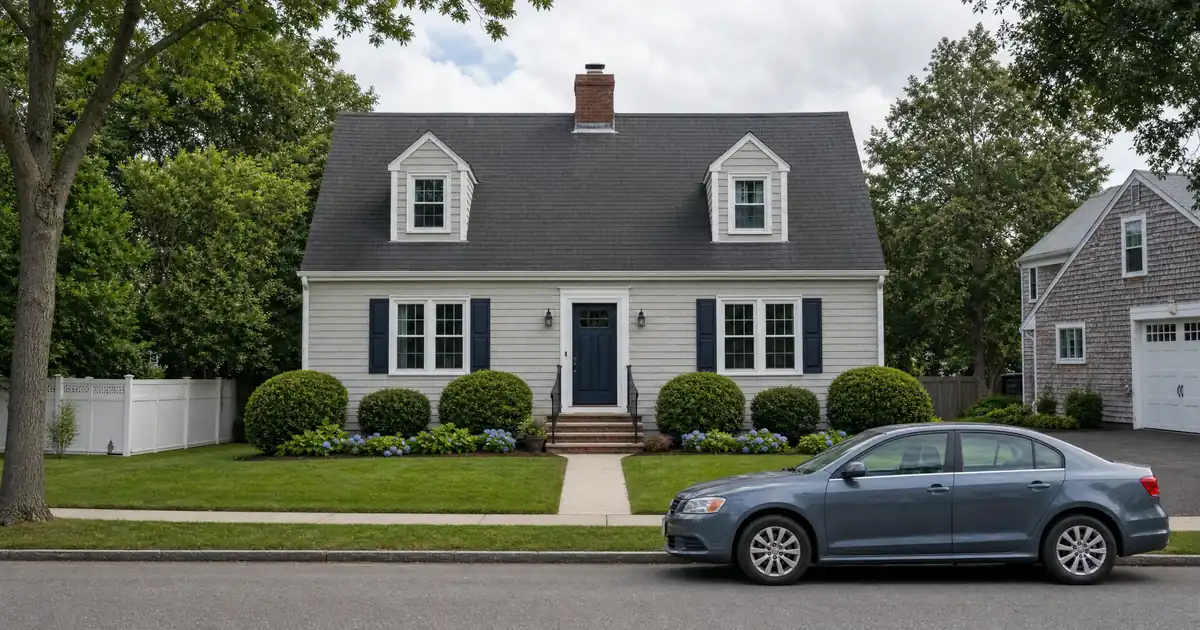
Complete Guide For A DSCR Loan On Single-Family Properties — The Quick Read: A DSCR loan looks at rent, not your paycheck. Lenders compare the property’s rent to its full monthly payment. They skip your pay stubs, personal income paperwork, and personal debt-to-income math. Divide the rent by the payment and you get the ratio. Clear that ratio, and the deal moves forward on the strength of the property itself. Leverage usually runs 75%-80% LTV on a purchase, with some high-leverage programs going up to 85%. Cash-out refinances cap around 75%. The property still has to make sense — credit, reserves, and the rent itself all get checked before a lender signs off.
Here are a few things to know before we get into the details:
DSCR Calculator
Run the numbers in your market
Rate source: Freddie Mac 30-yr average via FRED® — Federal Reserve Bank of St. Louis · effective Aug 27, 2026
Prefilled with local estimates — enter your own rent or nightly figures, taxes, insurance, and HOA for a more accurate picture.
Program parameters update from Lendmire’s centralized guideline source. Taxes and insurance are editable estimates.
As of Aug 27, 2026 · General Freddie Mac market benchmark, not a Lendmire loan offer. Rent, nightly rate, occupancy, taxes, and insurance are editable estimates. Short-term rental figures are estimates only and vary significantly by season, property type, management approach, and local short-term-rental rules — confirm local regulations before relying on them. Qualifying income for short-term rentals varies by program — some use appraisal market rent, others use documented STR history or projections — and is confirmed in underwriting. Not a Loan Estimate, approval, or commitment to lend. Program availability and eligibility are subject to lender guidelines, credit approval, property review, and underwriting.
- Rent drives approval, not your paycheck. Your credit score and reserves still matter, though.
- Standard purchase leverage runs 75%-80% LTV. A few programs push to 85% for stronger credit files.
- A 1.00 ratio is where some programs start. It’s not a universal floor — sub-1.00 files exist too, just with adjusted terms.
- Cash-out refinances top out lower than purchases, around 75% LTV, and usually want about six months of ownership first.
- Manufactured homes, log homes, and barndominiums fall outside these programs entirely, no matter how strong the rent looks.
Key Terms Defined
DSCR (Debt Service Coverage Ratio): Divide the property’s monthly rent by its full monthly payment. That gives you the DSCR. A ratio above 1.00 means rent covers the payment; below 1.00 means it doesn’t.
PITIA: This stands for principal, interest, taxes, insurance, and association dues if any. It’s the full monthly housing obligation, and it sits on the bottom of the DSCR formula.
LTV (loan-to-value): This is the loan amount shown as a percentage of the property’s value. A lower LTV means more equity or down payment in the deal.
Business-purpose loan: This is a mortgage made on a property the borrower will never call home. It’s issued for investment or rental use, which is why it gets underwritten differently than a mortgage on your own house.
No-ratio loan: This structure skips the DSCR number almost entirely. The lender qualifies the deal instead on credit, equity, reserves, and the borrower’s track record as an investor.
Seasoning: This is how long a lender wants you to own or hold title to a property before allowing a certain type of refinance. It matters most on cash-out deals.
How the Property’s Rent Actually Gets Underwritten
The formula is simple. Take the rent used for lender review and divide it by PITIA. That’s the DSCR. Everything else in underwriting exists to nail down those two numbers accurately, then decide what leverage and pricing they’ve earned.
Step 1 — the transaction gets defined. A purchase agreement, or on a refinance, existing title and a lease, establish what’s actually being financed.
Step 2 — rent gets verified. If a tenant already lives there, the signed lease sets the number. If the property sits vacant, an appraiser establishes market rent. Conventional lending uses Fannie Mae’s Single-Family Comparable Rent Schedule, Form 1007, which pulls at least three comparable rentals and adjusts for square footage and amenities to land on an estimated monthly rent. DSCR programs use this same appraisal-driven logic for vacant properties, though non-QM guidelines typically skip the rent haircut that agency lending applies — that’s a program-by-program detail worth confirming on any given file.
Step 3 — the ratio gets calculated. Rent divided by PITIA produces the DSCR. Across the wholesale network Lendmire places files with, 1.00 is where some programs start reviewing a deal — never treat it as a universal requirement, since some lenders want stronger coverage and others will work with weaker coverage under different terms. The stronger your ratio, the better leverage and pricing tier your file typically lands in.
Step 4 — credit, leverage, and reserves get reviewed together. These three factors move as a set. A 620 credit floor exists in parts of the network, most programs want closer to 660, and 700+ tends to unlock the strongest leverage tiers. Reserve requirements — usually expressed in months of PITIA sitting in the bank after closing — commonly run around six months, stepping up toward nine months on loans above $1,500,000. Conservative rate-and-term files at modest leverage under that threshold sometimes see reserves waived entirely. None of these numbers are fixed; they shift based on the specific lender, the property, and the rest of the file.
Step 5 — the entity closes on title. Most DSCR loans let the property close directly into an LLC or similar entity rather than the borrower’s personal name — a real advantage for investors thinking about liability separation. The borrower typically still signs a personal guaranty for credit purposes, subject to program eligibility, even though the entity holds the deed.
For a full walkthrough of how the ratio itself gets built and priced, Lendmire’s complete DSCR loans guide breaks the formula down in more depth than fits here.
Tenanted, Vacant, or Short-Term Rental: How Rent Gets Verified
How rent gets verified depends entirely on the property’s current condition — and this is where a lot of first-time DSCR borrowers get confused about what documentation they’ll actually need.
| Property Status | How Rent Is Verified | What to Expect |
|---|---|---|
| Currently leased | Signed lease agreement | In-place rent generally used as-is |
| Vacant at purchase | Appraiser’s market-rent schedule | Estimated rent from comparable rentals nearby |
| Documented short-term rental | Trailing rental history, often cross-checked against market data | Verified income, typically with a vacancy/seasonality discount applied |
| Short-term rental, no history | Third-party market data (commonly AirDNA-style sources) | Projected income, generally discounted for seasonality and platform fees |
Short-term rentals deserve their own note. Fannie Mae has said directly that its standard rent schedule form “was not designed for appraising single-family properties used as short-term rentals,” because the form calls for a monthly market rent figure that doesn’t map cleanly onto nightly bookings (Fannie Mae Appraiser Update). The industry’s workaround leans on the lender’s own review of traditional personal-income documentation, lease agreements, and nightly booking history to reconcile actual income against the form (McKissock). On the DSCR side specifically, purchases on documented short-term rentals typically run to 75% LTV, refinances closer to 70%, and cash-out closer to 70% — each with its own separate 1.00 coverage floor rather than one blended number, and generally wanting around 640+ credit and roughly 12 months of hosting history behind the property. Lendmire’s DSCR loan for Airbnb page goes deeper into how that math gets built.
Purchase, Refinance, and Cash-Out: The Leverage Ranges
Leverage isn’t one number — it moves by transaction type, and knowing which bucket a deal falls into changes what’s realistic before you ever run a search for a property.
On a purchase, most files across the network land at 75%-80% LTV, meaning 20%-25% down on most files. A smaller set of high-leverage programs reach 85% LTV, but that tier generally wants a 700+ credit score and a stronger overall file to offset the thinner equity cushion. On a cash-out refinance, leverage tops out lower — around 75% LTV across most of the network — and lenders commonly want roughly six months of ownership seasoning before releasing that equity. That seasoning requirement is exactly why investors running a buy-rehab-rent-refinance strategy need to plan their timeline around it rather than assuming cash-out is available the moment the paint dries; Lendmire’s investment property refinance playbook walks through that sequencing in more detail. If pulling equity through a HELOC instead of a full refinance is on the table, investment-property lines across the network cap at $500,000 total — there’s no higher tier above that for investor-owned property.
Loan sizes on standard single-family DSCR programs generally run up to $3,000,000, and above $2,500,000 the network typically holds to 30-year fixed structures rather than adjustable terms. Smaller loan balances still get placed, just through a narrower set of lenders in the network. A handful of states — Connecticut, Florida, Illinois, and New Jersey among them — carry overlays that generally cap purchase leverage near 75% LTV and loan amounts around $2,000,000, regardless of how strong the file otherwise looks.
Sub-1.00 Coverage, No-Ratio, and Other Structures Built on Top of the Standard Model
DSCR isn’t a single monolithic product — it’s a spine (rent versus payment) with several real variations built on top of it for deals that don’t fit the standard shape.
Sub-1.00 coverage. A property that doesn’t yet cash-flow at 1.00 isn’t automatically dead on arrival. Coverage below 1.00 is available through select lenders in the network, with leverage and terms adjusted to offset the weaker ratio — expect a lower maximum LTV and often a larger reserve requirement in exchange for the flexibility.
No-ratio qualification. A separate structure skips the DSCR gate almost entirely, qualifying instead on credit, equity, reserves, and investing experience. This path is available only through select lenders in the network, generally for borrowers who already own a primary residence — it’s not a workaround available to every file, and it isn’t priced or leveraged the same as a standard ratio-based loan.
Term structures. The default across the network is a 30-year fixed loan. Extended 40-year terms and interest-only payment periods are available through select lenders for investors chasing lower monthly obligations or better cash-flow ratios, and adjustable-rate structures exist for investors who specifically want them. If a single-family file is actually a small multifamily instead, Lendmire’s interest-only DSCR guide for 2-4 unit properties and its no-ratio DSCR guide for condo properties cover how those structures shift by property type.
DSCR loans are business-purpose products built for non-owner-occupied investment properties. Because the property will never be the borrower’s home, the file gets reviewed differently than a standard owner-occupied mortgage — that’s the whole reason rent-versus-payment math can stand in for personal income in the first place.
DSCR vs. conventional financing
Two common ways to finance an investment property in this market. They qualify you differently — here’s how investors weigh them.
Why investors choose it
- Qualifies on the property’s rental income — no personal tax returns, W-2s, or pay stubs needed to document income.
- No personal debt-to-income ceiling to clear, so existing mortgages and obligations don’t cap your borrowing the same way.
- Can be closed in an LLC, keeping the property inside a business entity.
- Built for scaling — not held to the limit on number of financed properties that conventional financing applies.
- Underwriting centers on the deal: generally qualifies when the rent covers the payment, a 1.00x coverage ratio being a common baseline (confirmed in underwriting).
- Designed specifically for investment property, including long-term and, where the program allows, short-term rentals.
Where it’s strong
- Often the lowest ongoing financing cost for a buyer who fully qualifies on personal income — a fit for a first property or a cost-first purchase.
Trade-offs for investors
- Requires full personal income documentation and must fit within a debt-to-income limit — salary, existing debts, and other mortgages all count.
- Typically held in your personal name rather than a business entity.
- Caps how many financed properties you can carry, which can become a ceiling as a portfolio grows.
- Evaluates you as a borrower as much as the property, which usually means more paperwork.
How investors usually choose: a first or single property often optimizes for the lowest financing cost; portfolio builders often optimize for leverage, vesting in an LLC, and scaling past conventional caps. The right answer depends on your goals, the property, and current guidelines — both paths run through select lenders in Lendmire’s wholesale network, with eligibility and terms confirmed in underwriting.
Where the General Rule Breaks
A few genuine edge cases sit outside the standard single-family DSCR framework, and investors moving up in scale or across property types run into them fast.
The commercial ceiling. DSCR is a residential-mortgage product. Office buildings, retail strip centers, and other commercial-use assets don’t qualify under these programs at all — they’re financed through commercial real estate loans that happen to use a similar coverage-ratio concept, but under an entirely different product bucket with different rules. If a single-family portfolio eventually grows into a 5+ unit apartment building, that’s also a separate lane; Lendmire’s DSCR loan guide for 5+ unit multifamily properties covers what changes at that size.
Property types that simply aren’t offered. Manufactured homes — both single- and double-wide — along with log homes and barndominiums are not offered through the network’s DSCR programs, no matter how strong the rental income looks on paper. This isn’t a “harder to finance” situation; these property types fall outside the programs entirely.
Prepayment penalty variation by state. Because DSCR loans are business-purpose, they aren’t bound by the same prepayment-penalty limits that apply to a consumer mortgage on a primary residence. State law still decides what’s enforceable, though, and treatment genuinely varies — a handful of states restrict or prohibit prepayment penalties on business-purpose 1-4 unit loans outright, while most permit the fuller range of structures. What’s written into the note isn’t always what holds up locally, which is exactly the kind of detail worth confirming file-by-file rather than assuming.
Tax treatment can depend on how loan proceeds are used and how the property is titled; investors should keep clear records and speak with a qualified tax professional before relying on any deduction.
What If Your Ratio Comes In Below 1.00?
A sub-1.00 result doesn’t end the deal — it changes which lever gets pulled next, and there’s usually more than one option on the table.
Putting more money down lowers the loan amount, which lowers the payment and can lift the ratio — but a bigger down payment never overrides a credit floor, a reserve requirement, or a property-eligibility issue on its own. The strongest files clear both tests at once: enough equity and enough rental coverage. Beyond adjusting the down payment, an investor with a weak ratio can look at the sub-1.00 program tier described above, review whether restructuring to interest-only lowers the monthly obligation enough to clear 1.00 outright, or — on a documented short-term rental — see whether nightly income comps produce a stronger number than a long-term lease assumption would. None of these are guarantees; they’re paths a lender reviews on the merits of the specific file, subject to credit approval and program guidelines.
Common Mistakes Investors Make on These Files
The most common misread is treating DSCR loans as “no-doc.” They’re not. Lenders still require common-sense documentation — entity paperwork, insurance, a full appraisal, title work — the difference is that traditional personal-income documentation and W-2s aren’t part of that pile. The property qualifies primarily on property-level rental income covering the payment, subject to lender guidelines — that’s a different thing than no documentation at all, and it’s genuinely no personal income documentation — qualification runs on the property’s income instead.
A second mistake: assuming clearing 1.00 means the property is profitable. DSCR only compares rent to PITIA. Repairs, vacancy, property management, utilities, and capital expenses sit entirely outside that formula. A property clearing 1.10x on paper can still lose money in a bad year if those outside costs run high — it’s a financing threshold, not a cash-flow guarantee.
A third: assuming this product is only for seasoned portfolio investors. Credit score, a rental property that cash-flows, and a reasonable plan matter far more than track record on most standard programs — first-time investors qualify on these all the time.
The Investor Decision
The core trade-off is straightforward. DSCR underwriting decouples growth from your personal debt-to-income math — a conventional lender counts every mortgage you already carry against your income, which can cap you out after a handful of properties even when each one cash-flows fine on its own. DSCR evaluates each property independently, which is the single biggest reason investors scaling past their first few doors migrate toward this product. What you give up in exchange is a different pricing model, not necessarily a looser one — reserve requirements, leverage caps, and prepayment structures on DSCR files tend to carry more discipline than a comparable conventional loan, in exchange for skipping the income paperwork entirely.
If you’re comparing DSCR against a conventional investment-property loan side by side, Lendmire’s DSCR vs. conventional breakdown lays out the qualification and documentation differences in full. If you’re buying or refinancing a single-family rental and want to see how the numbers actually line up, Lendmire can help compare DSCR loan options based on the property’s income, your credit profile, the leverage you’re after, and where the deal needs to land.
Frequently Asked Questions
Do I need to show traditional income documentation or W-2s for a DSCR loan on a single-family rental?
No — standard DSCR programs qualify primarily on the property’s rental income covering the payment, not your personal tax filings or employment history. Lenders still verify the property, credit, and reserves; they just skip the personal income documentation entirely.
Can I use a DSCR loan to buy a single-family home I plan to live in?
No. DSCR loans are strictly business-purpose products for non-owner-occupied investment properties — the borrower can’t occupy the property under any circumstances, even part-time.
What credit score do I need for a single-family DSCR loan?
A 620 floor exists in parts of the network, most programs want closer to 660, and 700+ tends to unlock the strongest leverage and pricing tiers. Exact minimums vary by lender, property, and the rest of the file.
Is there a minimum DSCR ratio I need to hit?
1.00 is where select programs start, not a universal requirement — some lenders review sub-1.00 files with adjusted leverage and terms, and a separate no-ratio structure skips the ratio test altogether for qualifying borrowers. Availability depends on lender guidelines and program eligibility.
Can I close a single-family DSCR loan in an LLC?
Generally yes, subject to lender program eligibility — most DSCR programs allow the property to close directly into an LLC or similar entity, with the borrower typically still providing a personal guaranty for credit purposes.
About Lendmire
Lendmire is a DSCR and non-QM mortgage broker — NMLS# 2371349. Lendmire connects investors with wholesale lending channels across 40 markets, including Washington, D.C. Lender review centers on the property’s rental income, not the borrower’s tax returns, which works well for self-employed operators and portfolios beyond four financed properties. Scotsman Guide named Lendmire a Top Mortgage Workplace in both 2025 and 2026.
Get Started
Ready to find the right loan for you?
In about 30 seconds you can review financing options available for your home or investment property. No commitment required.
Informational only. Not a Loan Estimate, approval, or commitment to lend. Program availability and eligibility are subject to lender guidelines, credit approval, property review, and underwriting.
References
1. Fannie Mae Selling Guide B3-3.1-08, Rental Income
2. Fannie Mae Appraiser Update, June 2024
3. McKissock — Form 1007 & Its Impact on Short-Term Rental Appraisals
Brandon Miller
Founder & CEO, Mortgage Loan Originator, Lendmire LLC
- Mortgage Loan Originator · NMLS# 1129696 · Verify on NMLS Consumer Access
- North Carolina Real Estate Broker · License# 343312 · Verify on NCREC
- North Carolina Insurance Producer · License# 19053198 · Property, Casualty, Life, Health · Verify on NAIC SBS
- Lendmire LLC · Firm NMLS# 2371349 · Verify firm licensure
Important disclosures. Lendmire (NMLS# 2371349) is a licensed mortgage brokerage. Lendmire is not a direct lender, depository institution, or financial advisor. All loan inquiries are subject to lender underwriting; this article does not constitute a commitment to lend. Rates, terms, and program guidelines are subject to change without notice and vary by borrower profile, property type, and state. Information in this article is general in nature and is not financial, legal, or tax advice. Equal Housing Opportunity. NMLS Consumer Access: nmlsconsumeraccess.org.


