
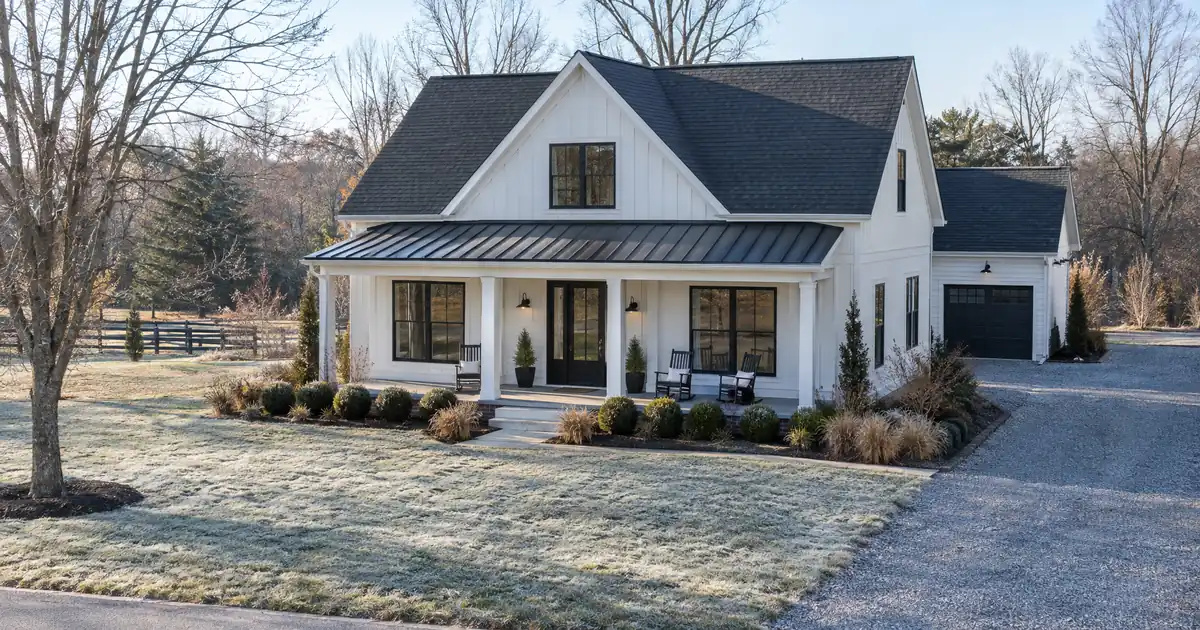
The Quick Read: A new roof never gets its own line in the loan. It changes the file through four channels: the appraiser’s condition rating, the value basis the lender uses, the insurance quote, and any repair condition attached to the loan.
- The lender’s own appraisal sets value. Your after-repair estimate does not.
- A new roof mainly protects you from a low condition rating or a repair condition. It rarely earns a dollar-for-dollar credit.
- Inside the seasoning window (about 6 months from title recording), the loan is often sized on documented cost. Past it, the appraisal governs.
- Insurance feeds PITIA, the full monthly payment of principal, interest, taxes, insurance, and any HOA dues. A higher premium raises PITIA and lowers the DSCR.
- Cash-out on a standard rental tops out at 75% LTV, subject to lender guidelines.
You replaced the roof. Now you want the refinance to reward you for it. Sometimes it does, just not in the way most investors expect.
DSCR Cash-Out Calculator
Run the cash-out numbers in your market
Rate source: Freddie Mac 30-yr average via FRED® — Federal Reserve Bank of St. Louis · effective Oct 29, 2026
Prefilled with starting assumptions — enter your property’s value, balance, taxes, and insurance for a more accurate picture.
Program parameters update from Lendmire’s centralized guideline source. Taxes and insurance are editable estimates.
As of Oct 29, 2026 · General Freddie Mac market benchmark, not a Lendmire loan offer. Property value, balance, taxes, and insurance are editable estimates. Maximum loan-to-value varies by lender, program, property type, and seasoning. Not a Loan Estimate, approval, or commitment to lend. Program availability and eligibility are subject to lender guidelines, credit approval, property review, and underwriting.
What the Lender Is Actually Reading
A lender reads a new roof in three places: condition, value, and insurance. The roof helps most with condition and insurance. It helps least with value, where it is one adjustment among many. Here is how each piece works.
| Item | What the lender sees | What a new roof changes | What it does not change |
|---|---|---|---|
| Condition | Appraiser’s rating | Lowers repair risk | The rating of the whole property |
| Value | Appraisal or cost basis | May support value | Leverage caps |
| Insurance | Quote and coverage type | Can restore standard coverage | Rent or reserves |
Two terms first. LTV is loan-to-value, the loan balance divided by the property value the lender uses. Cash-out refinance means replacing your loan with a larger one and keeping the difference.
DSCR is the debt service coverage ratio: monthly rent divided by PITIA. Select programs start at 1.00. A separate select-lender path goes below 1.00, with leverage and terms adjusted. Stronger ratios open better pricing and leverage.
How Does a New Roof Clear the Appraiser?
A new roof most often keeps the appraiser from flagging a problem. Appraisers rate condition on a six-step scale called C1 to C6, where C1 is best. That vocabulary comes from the agency appraisal forms. DSCR loans are not agency loans, so only the scale carries over.
Freddie Mac’s published definitions treat C2 as no deferred maintenance, or an older property recently and completely renovated. C4 means minor deferred maintenance from normal wear. C5 means obvious deferred maintenance needing significant repairs. C6 means damage severe enough to affect safety, soundness, or structure.
Roofs show up in those definitions directly. Freddie Mac’s condition and quality definitions cite a newer roof as one indicator of a C3 rating. Active roof leaks sit among the severe-condition indicators.
Here is the catch. The rating covers the whole property, not the roof alone. A new roof on a house with a failing furnace and water-stained ceilings will not earn a clean rating. Newer appraisal forms also capture exterior and interior condition separately, then an overall rating that has to be consistent with both, per McKissock’s explanation of the condition scale. A documented new roof feeds the exterior rating directly.
Condition tolerance on DSCR files is set by each lender. Across the wholesale network, some programs are stricter than others about C4 and C5 properties. Treat it as program-specific and ask before you order the appraisal.
The rent schedule is ordered with the appraisal. A roof rarely changes market rent, so the income side of the ratio usually stays put.
Value: Cost Basis Versus Appraisal
Seasoning decides which number sizes the loan. Seasoning is the waiting period between buying a property and refinancing it. On cash-out files, most programs in the network expect about 6 months of ownership, measured from title recording.
Picture an investor who buys a rental, replaces the roof, and applies two months later. Inside the window, the lender commonly sizes the loan on the lower of the appraisal or cost basis. Cost basis is the purchase price plus documented improvements. The roof invoice can raise that number. Undocumented spending counts for nothing.
| Item | Inside the seasoning window | Past the window |
|---|---|---|
| Value basis | Lower of appraisal or cost basis | Appraisal governs |
| Roof’s role | Adds documented cost | One condition factor in the appraisal |
| Proof needed | Invoice, proof of payment, permit | Same file, mostly for condition |
Past the window, the appraisal governs. The appraiser compares your property to recent sales. A new roof is a condition adjustment, not a bolt-on of what you paid.
The market data backs that up. Redfin, citing the 2025 Cost vs. Value Report, puts an asphalt-shingle replacement at about $31,871 nationally, with about $21,501 in added resale value. That is a recoup of about 67.5%. Metal costs more and recoups less, about 50% in the same report as summarized by The Roofing Brief. Plan your proceeds with that gap in mind.
One more edge case. Cash buyers sometimes use delayed-financing-style structures. Proceeds there sit near documented cost, not after-repair value. Availability is program-specific.
Insurance: How a New Roof Moves the Ratio
Insurance is where a new roof can quietly help the DSCR. Insurers watch roof age. An older roof may push coverage from replacement cost to actual cash value, which is replacement cost minus depreciation. Some carriers require an inspection or decline coverage on the oldest roofs, per Progressive’s explainer on roof type and insurance.
An insurance-agency summary from JMG puts the bands roughly like this: around 10 to 15 years, coverage may shift to actual cash value at renewal. Around 15 to 20, an inspection is often required. Around 20 to 25, coverage may be actual-cash-value only. Bands vary by carrier and state.
A new roof usually moves the property back toward standard replacement-cost coverage. That is an inference from those sources, not a promise from any carrier. Get a fresh quote after the work and before you apply.
Why it matters: DSCR divides rent by full PITIA. Say a duplex clears about 1.20x on the old premium. A jump in the insurance line can pull that toward 1.10x with no change in rent. Run it the other way and a lower premium nudges the ratio up. Hypothetical numbers, but the direction is real.
On a cash-out, the new loan is larger, so the payment is larger too. Check coverage at the new balance, not the old one.
Replace First or Refinance First?
Replace first when the roof is near the end of its life or the appraiser is likely to flag it. A leaking roof can lead to a repair condition, and a repair condition can mean a completion item, a re-inspection, or a hold-back. Handling is lender-specific.
Refinance first only when the roof is sound and you want the proceeds to fund other work. Spending proceeds on a roof the appraiser has already flagged invites trouble.
| Situation | Usual path |
|---|---|
| Roof old, leak or wear visible | Replace, document, then refinance |
| Roof sound, proceeds fund other work | Refinance, then spend |
| Inside seasoning, big rehab done | Expect cost-basis sizing |
| Past seasoning, roof done | Appraisal governs |
An active leak is the nastiest version. Appraisal standards generally treat active roof leaks and worn shingles as deficiencies an appraiser must report. A roof project half-finished at inspection can leave interior damage that drags the overall rating down. Finish the work first.
The Roof Document File
Documentation is your lever. Build the file before you apply:
- The contractor’s invoice, with the date, material, and scope
- Proof of payment
- The permit and final inspection
- The contractor’s name and contact details
- Any transferable warranty
- A new insurance declarations page
- Dated photos before, during, and after
Appraisal-prep guidance from ValuedAudit recommends listing every update with a date. Hand the appraiser that list.
Across the wholesale network, the files that run smoothest tend to arrive with the paper trail already assembled. The files that stall are the ones where the roof was paid in cash, with a handshake invoice and no permit.
What a New Roof Will Not Fix
A new roof will not override the 75% LTV ceiling on a cash-out. It will not lift a credit score. Most programs want around 660, a 620 floor exists in parts of the network, and 700 or higher opens the strongest leverage tiers. It will not waive reserves, which commonly run about 6 months of PITIA, stepping up to about 9 months above $1,500,000.
It also will not turn a DSCR pass into cash flow. DSCR compares rent to PITIA only. Repairs, vacancy, management, utilities, and capex all sit outside the calculation. Clearing 1.00 is not positive cash flow.
Equity available depends on rent used for lender review, PITIA, reserves, and the leverage ceiling. It is not a guaranteed cash figure. A small value miss on the appraisal can turn a cash-out into a payoff-only refinance. Reconsideration with comps and condition support is routine, and the ratio can still work with leverage adjusted.
Property type matters too. Manufactured homes, log homes, and barndominiums are not offered in the network’s DSCR programs, new roof or not.
For the full picture of how these programs fit together, see Lendmire’s complete DSCR loans guide.
Questions to Ask a Lender
Ask these in writing before you order the appraisal:
1. What seasoning period applies, and is it measured from title recording?
2. Inside the window, how does the lender count documented improvements in cost basis?
3. What condition ratings are acceptable on this program?
4. How are repair conditions handled: hold-back, completion item, or re-inspection?
5. Which collateral types carry lower leverage, such as short-term rentals or 2-4 unit properties?
6. Does the program take extended terms or interest-only periods? Select lenders in the network offer both.
A broker who shops several wholesale lenders can match the answers to your file. The best program for your situation depends on the property, credit profile, leverage need, and condition. If your cash-out is paying for other updates, Lendmire’s piece DSCR Cash-Out Refinance Requirements to Fund a Rental Property Renovation covers that angle.
DSCR vs. conventional financing
There are two common ways to finance an investment property, and they qualify you differently — here’s how investors weigh them.
Why investors choose it
- Qualifies on the property’s rental income — no personal tax returns, W-2s, or pay stubs needed to document income.
- No personal debt-to-income ceiling to clear, so existing mortgages and obligations don’t cap your borrowing the same way.
- Can be closed in an LLC, keeping the property inside a business entity.
- Built for scaling — not held to the limit on number of financed properties that conventional financing applies.
- Underwriting centers on the deal: generally qualifies when the rent covers the payment, a 1.00x coverage ratio being a common baseline (confirmed in underwriting).
- Designed specifically for investment property, including long-term and, where the program allows, short-term rentals.
Where it’s strong
- Often the lowest ongoing financing cost for a buyer who fully qualifies on personal income — a fit for a first property or a cost-first purchase.
Trade-offs for investors
- Requires full personal income documentation and must fit within a debt-to-income limit — salary, existing debts, and other mortgages all count.
- Typically held in your personal name rather than a business entity.
- Caps how many financed properties you can carry, which can become a ceiling as a portfolio grows.
- Evaluates you as a borrower as much as the property, which usually means more paperwork.
How investors usually choose: a first or single property often optimizes for the lowest financing cost; portfolio builders often optimize for leverage, vesting in an LLC, and scaling past conventional caps. The right answer depends on your goals, the property, and current guidelines — both paths run through select lenders in Lendmire’s wholesale network, with eligibility and terms confirmed in underwriting.
Key Terms Defined
C1–C6 scale: The six-step rating an appraiser uses to describe a property’s condition, with C1 the best.
Cost basis: The purchase price plus documented improvements, used to size loans inside the seasoning window.
Actual cash value (ACV): An insurance payout of replacement cost minus depreciation.
PITIA: Principal, interest, taxes, insurance, and any HOA dues; the monthly obligation in the DSCR formula.
Seasoning: The waiting period between buying a property and refinancing it.
Hold-back: Loan funds kept aside until required repairs are finished.
Frequently Asked Questions
Does a new roof raise my appraised value?
It may support a higher appraised value, depending on comps and underwriter review. The appraiser treats it as a condition adjustment against comparable sales, not a dollar-for-dollar credit.
Can I borrow against the cost of the roof?
Inside the seasoning window, documented improvement cost can raise the cost basis the loan is sized on. Only paid, documented spending counts. Past the window, the appraisal sets the number.
Will a new roof lower my insurance?
A new roof can often restore standard replacement-cost coverage and may lower the premium, though results vary by carrier. A lower premium lowers PITIA and can lift your coverage ratio.
What if the appraiser flags the old roof as needing repair?
Expect a completion item, a re-inspection, or a hold-back, depending on the lender. Replacing and documenting the roof before you apply usually avoids the problem.
Does clearing 1.00 mean the rental cash flows?
No. DSCR counts rent against PITIA only. Repairs, vacancy, management, and utilities sit outside it, so the ratio and your actual cash flow can differ.
If you are buying or refinancing a rental property and want to see how the numbers work, Lendmire can help you compare DSCR loan options based on the property income, credit profile, leverage, and investor goals. Reach the team at 828-256-2183 or request a quote. Lendmire is a mortgage broker arranging DSCR financing through select lenders in its wholesale network across 41 markets, including Washington, D.C.; qualification is subject to lender guidelines. This is not a commitment to lend.
For the mechanics of pulling equity out of a rental property, see Lendmire’s guide to cash-out refinance on an investment property.
About Lendmire
Lendmire, NMLS# 2371349, is a non-QM mortgage broker serving real estate investors in 41 markets, including Washington, D.C., through DSCR investor loan programs. Qualification is generally reviewed around the subject property’s rental income, not the borrower’s W-2 history — a practical fit for LLC-titled portfolios and self-employed investors. All scenarios remain subject to lender review and program guidelines. Two consecutive Scotsman Guide Top Mortgage Workplace recognitions (2025, 2026).
Get Started
Ready to find the right loan for you?
See your offer in seconds. No credit pull, no obligation.
Informational only. Not a Loan Estimate, approval, or commitment to lend. Program availability and eligibility are subject to lender guidelines, credit approval, property review, and underwriting.
References
1. Freddie Mac Seller/Servicer Guide, Exhibit 36
2. Freddie Mac UAD condition and quality definitions
3. McKissock’s explanation of the condition scale
4. Redfin, does a new roof increase home value
6. Progressive, how roof type impacts insurance
7. JMG, what roof age triggers a homeowners insurance review
8. ValuedAudit
This article is part of Lendmire’s investment property cash-out refinance program — full qualification details, guidelines, and scenarios live on the program page.
Related reading: How Lenders Underwrite a Super Jumbo DSCR Cash-Out Refinance With a 700 Credit Score · Can You Get Approved for a Super Jumbo DSCR Cash-Out Refinance With No Title Seasoning? · How to Plan and Use a Super Jumbo DSCR Cash-Out Refinance Instead of Selling the Rental
Brandon Miller
Founder & CEO, Mortgage Loan Originator, Lendmire LLC
- Mortgage Loan Originator · NMLS# 1129696 · Verify on NMLS Consumer Access
- North Carolina Real Estate Broker · License# 343312 · Verify on NCREC
- North Carolina Insurance Producer · License# 19053198 · Property, Casualty, Life, Health · Verify on NAIC SBS
- Lendmire LLC · Firm NMLS# 2371349 · Verify firm licensure
Legal disclosures. Lendmire (NMLS# 2371349) is a state-licensed mortgage brokerage that arranges financing through wholesale lender relationships. Lendmire is not a direct lender, depository institution, or registered financial advisor. The discussion above is general informational content about real estate financing — it is not financial, legal, or tax advice, and readers should consult licensed professionals for guidance on their individual circumstances. Loan inquiries are subject to lender underwriting; this article does not represent a commitment to lend. Loan terms, rates, and qualification standards vary by borrower, property, and state, and are subject to change at any time. Equal Housing Opportunity. NMLS Consumer Access: nmlsconsumeraccess.org.