
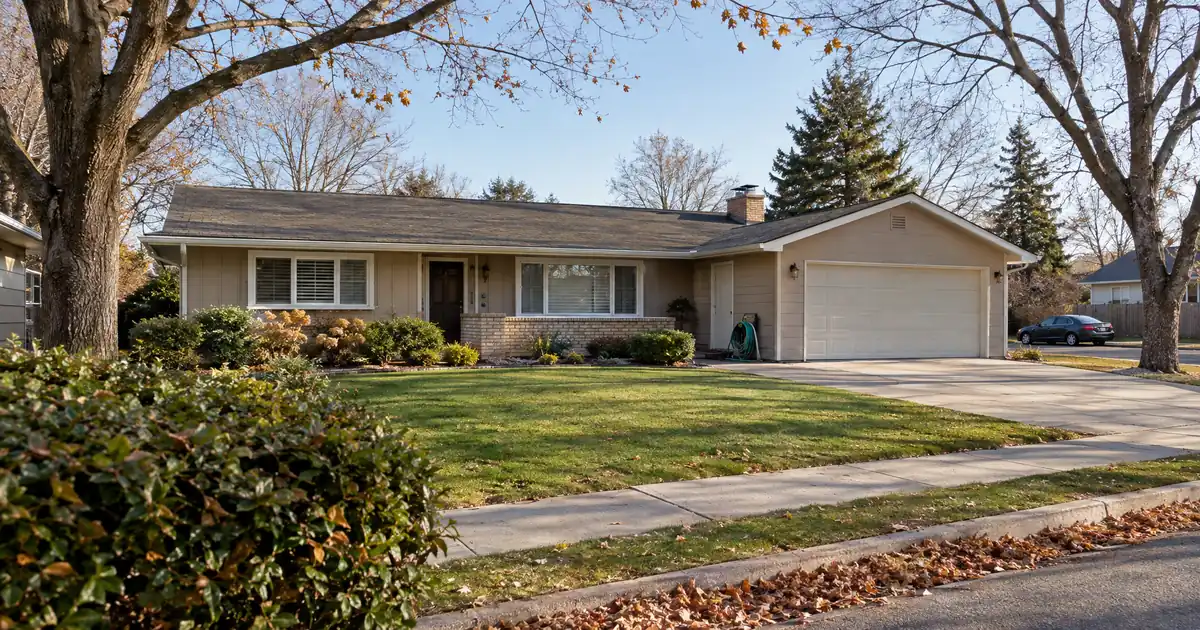
The Quick Read: Documenting a cash purchase means proving three things to the lender: no loan was used at purchase, the money came from the borrower’s own traceable funds, and title is clean. A file that proves all three gives the lender fewer gaps to question when it reviews a cash-out refinance, subject to lender guidelines.
- The final settlement statement is the anchor document. It shows no mortgage financing at purchase.
- Bank or brokerage statements must trace the purchase money back to its source.
- Borrowed money, gifts, and recorded liens are where cash-purchase files most often break.
- A cash-out refinance on a DSCR file typically tops out at 75% LTV on a standard rental, with about 6 months of seasoning measured from title recording.
- The cash-purchase proof sits next to normal DSCR underwriting. It does not replace the coverage test, reserves, or appraisal.
This piece covers the purchase file. It is not about tenant rent receipts or how a landlord records cash rent.
DSCR Cash-Out Calculator
Run the cash-out numbers in your market
Rate source: Freddie Mac 30-yr average via FRED® — Federal Reserve Bank of St. Louis · effective Oct 29, 2026
Prefilled with starting assumptions — enter your property’s value, balance, taxes, and insurance for a more accurate picture.
Program parameters update from Lendmire’s centralized guideline source. Taxes and insurance are editable estimates.
As of Oct 29, 2026 · General Freddie Mac market benchmark, not a Lendmire loan offer. Property value, balance, taxes, and insurance are editable estimates. Maximum loan-to-value varies by lender, program, property type, and seasoning. Not a Loan Estimate, approval, or commitment to lend. Program availability and eligibility are subject to lender guidelines, credit approval, property review, and underwriting.
What Does “Documenting a Cash Purchase” Mean?
It means building a paper trail that shows you bought the property with your own money, with no lien recorded against it at purchase. The lender uses that trail to decide how to treat the refinance. Without it, the file looks like any other recent purchase that has not yet seasoned.
Across Lendmire’s wholesale network, most DSCR programs want about 6 months of ownership before a cash-out refinance, counted from the date title recorded. A cash buyer who wants to recycle capital sooner is asking a lender to make an exception. Whether a given program offers one is a lender-by-lender call. That is the first question to settle, before anyone gathers a single statement.
The idea comes from the agency world. Fannie Mae’s Selling Guide lists a delayed financing exception inside its cash-out rules. Under it, the borrower still has to meet every other cash-out requirement, and cash-out pricing applies. The exception waives the title wait and nothing more. DSCR loans are non-agency, so those rules do not govern them. Each DSCR program writes its own version, or none at all.
Key Terms Defined
Delayed financing: a seasoning exception inside a cash-out refinance for a buyer who paid cash, not a separate loan product.
Source of funds: the account or event that produced the money used at purchase, such as savings, sale proceeds, or an earlier refinance.
Documented cost: the purchase price plus eligible closing costs, shown on the settlement statement. It is not appraised value.
Seasoning: the ownership period a lender wants before it will allow a cash-out refinance, counted from title recording.
Arm’s-length sale: a sale between unrelated parties at a market price.
The Three Proofs Every Cash-Purchase File Needs
Every lender that offers an early refinance on a cash purchase is testing the same three things. Build the file around them.
Proof one: no financing at purchase. The final settlement statement or title company closing statement is the document. It must show the buyer paid the full price from the buyer’s funds and no new loan funded the deal. A draft or estimated statement is a common file-killer. Get the final, signed version from the title or escrow company.
Proof two: where the money came from. Lenders ask for the source of funds. They usually want the statement from the time of purchase, with the withdrawal or wire visible. Acceptable sources are generally the borrower’s own accounts: savings, brokerage liquidation, proceeds from a sale, or an earlier refinance. Large deposits need a written explanation.
Proof three: clean title. The recorded deed should show the buyer as owner. A title search should show no mortgage or lien recorded since. A lien recorded after closing, even a small one, can change how the lender classifies the file.
Related-party sales are the usual disqualifier. Non-QM programs commonly mirror the arm’s-length expectation, though it varies by lender. Confirm it before you build the file around it.
Document Checklist
| Document | What it proves | Common problem |
|---|---|---|
| Final settlement statement | No financing; price and costs | Draft or unsigned copy |
| Purchase contract | Arm’s-length terms | Missing addenda |
| Recorded deed | Vesting in the buyer | Name differs from borrower |
| Bank/brokerage statements | Source of funds | Missing pages |
| Wire confirmations | Money reached title | No link to statements |
| Title or lien search | No recorded debt | Lien added after closing |
| Entity documents | Authority to own and borrow | Buyer and borrower mismatch |
| Lease and insurance | Rental-side evidence | Treated as purchase proof |
The settlement statement and the bank statements are the core pair. Everything else supports them.
How Do You Trace the Funds?
Tracing means a reviewer can follow the money from its origin to the title company without guessing. The standard is simple. Every dollar that reached closing should link to a statement.
Single account. The easy case. One statement shows the balance, the wire out, and the amount matching the settlement statement. Include every page, even pages that look blank.
Several accounts. Money often moves from savings to checking before the wire. Document each hop. Provide statements for both accounts covering the transfer, and mark the matching entries.
Asset sale or liquidation. If the cash came from selling stock or another property, add the sale confirmation or the prior settlement statement, then the deposit into the account that funded this purchase.
Large deposits. A deposit that does not match a paycheck or a known transfer needs a short written explanation and a paper source. Skip vague notes. Name the event and attach the proof.
Borrowed money is where files break. An investor who funded the purchase with a recorded private loan, a hard-money loan, or a bridge loan did not make a cash purchase. A lien existed from day one. Those files are generally treated as standard refinances with full seasoning, or as rate-and-term payoffs if the loan funded both purchase and rehab. Money borrowed against another asset, such as a credit line, gets scrutiny that varies by lender. Confirm treatment before you rely on it.
Gifts get the same scrutiny. A gift or borrowed money counting as cash is lender-specific, and a recorded loan generally defeats the cash-purchase condition.
How Is the Loan Sized After a Cash Purchase?
Under a delayed-financing style exception, proceeds are generally limited to documented cost, meaning price plus eligible closing costs. Appraised value does not set the amount. The loan is still underwritten as cash-out.
That is the tradeoff. You get your purchase money back sooner, but appreciation and rehab value stay locked in until the property seasons. If the property has gained value, a seasoned cash-out on a new appraisal may return more. Some investors use the early option first and refinance again later.
Rehab is the sharpest edge. Early-refinance exceptions do not return rehab spending or created value. If you plan to renovate, the cleaner path is often to wait out seasoning and refinance on the new appraisal. Another approach is to have the seller complete repairs as part of the price, so the cost sits on the settlement statement.
On the network’s standard programs, cash-out tops out around 75% LTV on a standard rental. Short-term-rental collateral generally runs lower, around 70% on cash-out. Credit starts at a 620 floor in parts of the network, with about 660 more common and 700+ opening the strongest tiers. Loan amounts run up to $3,000,000 on standard programs. Reserves commonly run about 6 months of PITIA, stepping up to about 9 months above $1,500,000. Reserves vary by lender, leverage, and loan size. All of this is subject to lender guidelines.
Does the Exception Waive the DSCR Test?
No. It waives time only. Coverage, reserves, appraisal, leverage caps, credit, and entity requirements all still apply. Fannie Mae’s guide says the same about agency loans: every other cash-out requirement must still be met. A file that proves the cash purchase and then fails coverage is still a failed file.
DSCR compares monthly rent to the full monthly obligation of principal, interest, taxes, insurance, and any HOA dues. Corporate Finance Institute’s explainer describes coverage as one underwriting test among several. Many select programs start at 1.00. Stronger ratios open better pricing and leverage. A separate select-lender path takes coverage below 1.00, with leverage and terms adjusted.
Clearing the ratio is not the same as positive cash flow. Repairs, vacancy, management, utilities, and capital expenses sit outside the calculation.
Here is how that plays out. Picture an investor who bought a duplex for cash, has the final settlement statement, and has two clean statements showing the wire. The rent comfortably covers the full monthly obligation on the new loan. On paper that file works. If the buyer’s LLC took title but the personal name is on the refinance application, the vesting mismatch stops it until entity documents or a documented transfer fix it. Subject to program eligibility, LLC-held rentals are common on DSCR files.
Where the General Rule Breaks
Hard-money or bridge purchase. A lien from day one. It generally fails the cash test.
Rehab-heavy deal. Costs beyond the purchase do not come back early. Plan for the appraisal route.
Entity purchase. The buyer on the settlement statement and the borrower on the refinance should match, or the transfer should be documented. Gather the operating agreement, formation documents, and any authority resolution before you apply.
Related-party sale. Usually disqualifying for an early exception.
Auction purchase. Cash is common at auction. The file still needs the final statement and source-of-funds trail, and title clearing can take extra work.
Line-of-credit funded purchase. Treatment varies. Freddie Mac’s guide treats a mortgage on a property owned free and clear as cash-out and carves out delayed financing as an exception, which shows how agency rules classify these loans. DSCR lenders set their own view of borrowed funds, so ask before you buy.
Common File-Killers and Fixes
- Draft settlement statement. Replace it with the final, signed copy.
- Missing statement pages. Resubmit every page of every account.
- Unexplained deposit. Add a written explanation and the source document.
- Lien recorded after closing. Clear it or document its payoff before the lender reviews title.
- Buyer and borrower mismatch. Match the names or record the transfer.
- Commingled funds. Show which dollars were the purchase money, with matching entries.
Keep the Rental Evidence on a Separate Track
The lease, the rent schedule, and the insurance declaration support the coverage test. They do not prove the purchase was cash. Keep them in a separate folder so a reviewer is not hunting for one in the other. A signed lease or an appraiser’s rent schedule goes to the DSCR side. The settlement statement and bank trail go to the cash-purchase side.
What the Investor Decision Looks Like
Cash buyers recycle capital to fund the next acquisition. That is the upside. The costs are cash-out pricing, refinance closing costs, and the value left behind until seasoning. Purchase costs, carry, and refinance fees all reduce net proceeds.
The decision usually comes down to four questions:
1. Was the purchase demonstrably all cash?
2. Do the funds trace cleanly?
3. Does the lender offer an early option at all?
4. Is documented cost or appraised value the better basis?
Buy cash with the exit in mind. Keep the funding trail and the final settlement statement from day one, and the file is already built if you refinance. For the full picture of how these programs fit together, see the complete DSCR loans guide. For the planning angle, Lendmire’s piece How to Time a Rental Cash-Out Refinance Around a Purchase Closing covers sequencing.
If you are buying or refinancing a rental property and want to see how the numbers work, Lendmire can help you compare DSCR loan options based on the property income, credit profile, leverage, and investor goals.
Frequently Asked Questions
Can I skip the 6-month wait after paying cash?
Only if the program offers an early option, and that is set lender by lender. Most programs in the network expect about 6 months of seasoning from title recording. Ask before you buy, not after.
What is the single most important document?
The final settlement statement. It shows no mortgage financing was used at purchase. Pair it with bank statements that trace the money.
Does a credit line on another property count as cash?
It varies by lender. A recorded loan against the subject property generally defeats the cash-purchase condition, and borrowed funds draw extra scrutiny. Confirm treatment first.
Will the lender lend on appraised value after a cash purchase?
Under an early-refinance exception, proceeds are generally limited to documented cost. After full seasoning, a cash-out is sized on the new appraisal, up to the program’s LTV cap, subject to lender guidelines.
Do I need to document the lease for the cash purchase?
No. The lease supports the coverage test, not the cash purchase. Keep it in a separate folder.
A deeper walk-through of investment-property equity extraction lives in Lendmire’s guide to cash-out refinance on an investment property.
About Lendmire
Lendmire — NMLS# 2371349 — is a mortgage brokerage specializing in DSCR investor loans, helping arrange financing across 41 markets, including Washington, D.C., through wholesale and investor-lending channels. The model centers on property-level rental income reviewed by the lender rather than W-2 documentation, subject to lender guidelines, suiting entity-owned and multi-property investors. Lendmire holds Scotsman Guide Top Mortgage Workplace recognition for 2025 and 2026.
Get Started
Ready to find the right loan for you?
See your offer in seconds. No credit pull, no obligation.
Informational only. Not a Loan Estimate, approval, or commitment to lend. Program availability and eligibility are subject to lender guidelines, credit approval, property review, and underwriting.
References
1. Fannie Mae Selling Guide B2-1.3-03
2. Corporate Finance Institute: Debt Service Coverage Ratio
3. Freddie Mac Seller/Servicer Guide: Section 4301.5
This article is part of Lendmire’s investment property cash-out refinance program — full qualification details, guidelines, and scenarios live on the program page.
Related reading: How to Plan and Use a Short-Term Rental Cash-Out Refinance for Repairs Without Contractor · DSCR vs. Conventional Cash-Out Refinance for a St. Charles MO Rental · How Lenders Underwrite a Short-Term Rental Cash-Out Refinance on a Two-to-Four Unit Rental
Brandon Miller
Founder & CEO, Mortgage Loan Originator, Lendmire LLC
- Mortgage Loan Originator · NMLS# 1129696 · Verify on NMLS Consumer Access
- North Carolina Real Estate Broker · License# 343312 · Verify on NCREC
- North Carolina Insurance Producer · License# 19053198 · Property, Casualty, Life, Health · Verify on NAIC SBS
- Lendmire LLC · Firm NMLS# 2371349 · Verify firm licensure
Required disclosures. Lendmire (NMLS# 2371349) operates as a licensed mortgage broker, not a direct lender or depository. The discussion in this article is general in nature and should not be relied upon as financial, legal, or tax advice — every investment scenario is unique and should be reviewed by a qualified professional. Any loan inquiry is subject to lender underwriting, and this article is not a commitment to lend or a guarantee of approval. Mortgage rates, loan terms, and program guidelines vary by borrower, property, and state, and may change without notice. Equal Housing Opportunity. Verify licensure at NMLS Consumer Access.