
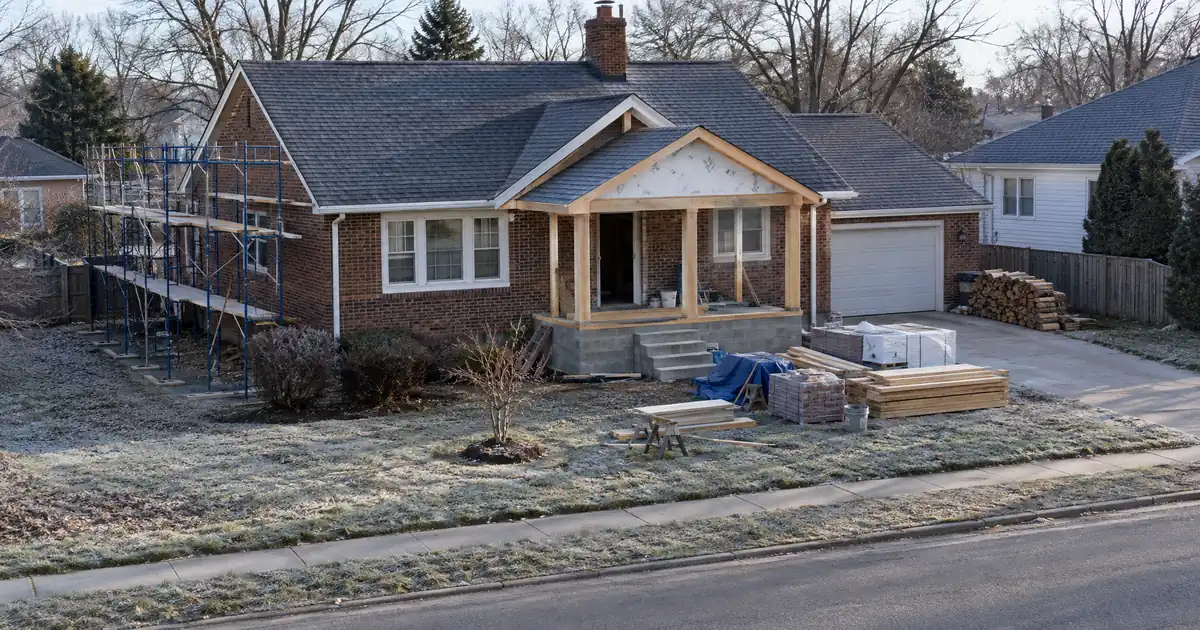
The Quick Read: The best program for scaling a short-term rental portfolio depends on where each property sits, but the pattern that works most often is a hard money loan to buy or rehab, followed by a long-term DSCR cash-out refinance that repays the bridge and returns equity for the next purchase. A cash-out taken directly on a hard money loan is a narrower tool. It fits when the property needs more time before it can show rental history.
- Hard money cash-out and rate/term refinances typically run up to 65% of value, with 6-18 month interest-only terms. These figures vary by lender, property, and experience.
- A DSCR cash-out on short-term-rental collateral typically tops out around 70% LTV. A standard long-term rental cash-out reaches about 75% LTV.
- Short-term-rental DSCR files usually want a 640+ score and about 12 months of hosting history.
- The appraisal proves value. It does not prove short-term rental income, so the income documents decide the loan size.
- Plan the exit before the first draw, because the hard money maturity date does not move while seasoning clears.
What Does “Hard Money Cash-Out Refinance” Mean for a Short-Term Rental Owner?
The phrase covers two different moves. The first is a refinance of a hard money loan into a new hard money loan with cash back. The second is the more common scaling move, where a long-term DSCR loan replaces the hard money and returns cash. Both are business-purpose loans on investment property, and both depend on the plan, the property, and the exit.
Hard money is asset-based. Across the wholesale network where Lendmire arranges these loans, the programs look at the property, the project plan, and the exit before they look at the borrower’s personal income. Terms run 6-18 months, interest-only, with no prepayment penalty. The programs have no multi-year options. An investor who needs a longer runway refinances into long-term rental financing.
Many investors know this pattern as BRRRR: buy, rehab, rent, refinance, repeat. Short-term rentals suit it because a renovation can lift both the property’s value and its income. The refinance step is where most plans stall. The reason is that a short-term rental has to prove its income on paper, and a nightly booking history is harder to document than a monthly lease.
For the full picture of how this loan type works, see Lendmire’s complete DSCR loans guide.
How Does Underwriting Treat the Refinance, Step by Step?
Underwriting runs two tests. One test sizes the loan on value. The other sizes it on income. The smaller number controls, which is why a strong appraisal alone does not produce a large check.
Step 1: Classify the refinance. A new loan that covers only the payoff and closing costs is a rate/term, or payoff-only, refinance. Any cash above that turns it into a cash-out. A cash-out carries its own seasoning period and a lower leverage cap. Investors often assume a little extra cash keeps the file in the easier category. It does not.
Step 2: Set the value basis. Inside the seasoning window, lenders commonly size the loan on documented cost. That means the purchase price plus receipted rehab. They do not size it on the finished value. Seasoning for a DSCR cash-out commonly runs about 6 months, though it varies by lender. An investor who plans around the after-repair value alone can find the loan sized well below that number.
Step 3: Order the appraisal. The appraiser reports value and a rent schedule. Form 1007 covers single-family homes and condos. Form 1025 covers 2-4 unit properties. A refinance appraiser may not reach the peak after-repair value without an itemized list of the capital improvements, so keep receipts and a scope of work.
Step 4: Document the short-term rental income. This is the step that separates short-term rentals from long-term ones. Programs in the network generally accept some mix of these:
- Trailing 12-month platform statements.
- A property-management statement.
- Bank deposits that match the booking history.
- A data-backed projection for a new listing.
- The appraiser’s short-term rental narrative.
- The long-term market rent from the rent schedule, as a conservative fallback.
Which of these a given program accepts varies. The most conservative programs use only the long-term rent. Others will use trailing history or a projection.
Step 5: Run the coverage test. DSCR is monthly rent divided by the full monthly obligation: principal, interest, taxes, insurance, and any HOA dues. A payoff plus cash-out makes that obligation larger, so cash taken out lowers the ratio. On short-term-rental collateral, 1.00 is where select programs start on both purchases and refinances. Stronger ratios open better pricing and leverage. A separate select-lender path takes coverage below 1.00, with leverage and terms adjusted.
Step 6: Pay off the bridge. Proceeds go first to the hard money principal, accrued interest, exit fees, and points. Cash to the borrower is whatever remains.
Why Doesn’t the Appraisal Prove Your Airbnb Income?
The appraisal supports value, not income. Fannie Mae’s appraiser update states that Form 1007 was not designed for single-family homes used as short-term rentals. The form asks for a monthly market rent, so the appraiser has to use comparables that lease by the month. The update also calls it incorrect to take a nightly rate and multiply it by 30, and it says the form cannot estimate a nightly fee.
McKissock, an appraiser-education publisher, adds that assessing business income is outside the form’s scope. Determining that income is the lender’s job. It also notes that not every loan goes through Fannie Mae.
DSCR loans are not agency loans, and their rules come from the lender’s own guidelines. The form names matter only because the appraisal feeds the rent schedule. The practical lesson is simple. Bring your own income evidence, and never expect the appraisal to carry it.
Which Structure Fits Which Investor?
The right path depends on the investor’s situation. This table sets out the main cases, using typical figures from select wholesale-network guidelines. Each file is underwritten individually, and nothing here is a commitment to lend.
| Situation | Typical best-fit path | Main tradeoff |
|---|---|---|
| Mid-rehab, no rental history | Stay in hard money, up to 65% of value on a cash-out or rate/term refinance | Short term, and no income yet to qualify |
| Newly stabilized, under 12 months of history | Payoff-only refinance now, cash-out later | Gives up cash today to avoid a maturity problem |
| Seasoned with 12+ months of hosting history | DSCR cash-out, about 70% LTV on short-term-rental collateral | Proceeds depend on how the income is documented |
| Thin or seasonal history | Projection or long-term rent fallback | The fallback can produce a lower coverage ratio |
| Several properties near maturity | Sequence the exits, one property at a time | Stacked maturity dates raise the risk |
Hard money leverage is a different measure from DSCR leverage, so keep the two apart. Fix-and-flip programs lend against cost, at 93% of project cost for investors with 5+ completed projects, 90% of project cost at 2+, and 85% of project cost below that. Every tier is capped at 75% of after-repair value. Up to 100% of the rehab budget can fund in draws as work is completed. The top tier is reserved for experienced investors, and first-time investors qualify at the lower tiers.
What Is the Math on a Cash-Out Check?
A cash-out check is smaller than most investors expect. The formula is the new loan amount, minus the bridge payoff, minus closing costs, minus any reserves the lender requires. The bridge payoff includes principal, accrued interest, exit fees, and points. Because of that stack, a property that looks like it has plenty of equity can return little cash.
Run through a modeled single-property case. Say a seasoned short-term rental has a full 12 months of platform statements. It is refinanced at 70% LTV on a cash-out, on short-term-rental collateral. Coverage on the documented income clears 1.00, so the value limit sets the loan. If the hard money loan already sat near the lender’s cash-out cap measured on after-repair value, the proceeds shrink a lot. In that case a payoff-only refinance may be the only workable fit until the property has seasoned.
Remember what DSCR does not measure. Clearing 1.00 is not the same as positive cash flow. The ratio compares rent to the housing payment only. Repairs, vacancy, management, utilities, and capital expenses sit outside it. Short-term rentals carry more of those costs than long-term rentals do, so run your own operating numbers before pulling cash.
A larger down payment lowers the monthly obligation and can lift the ratio. It never erases leverage caps, credit floors, reserve rules, or property eligibility. The strongest files clear both tests: enough equity and enough rental coverage.
How Do You Sequence a Portfolio?
Scaling means recycling capital, and the order of the refinances matters more than the headline leverage. A broker who sees many lenders’ guidelines notices a pattern here. Investors plan each purchase carefully and then let several bridge loans mature in the same quarter. A single low appraisal then forces choices on every property at once.
A few habits keep a portfolio from stacking risk:
- Stagger the maturities. Terms run 6-18 months, so choose terms that spread the exits apart.
- Plan backward from the maturity date. Seasoning can run past the date the hard money comes due. Leave a buffer for appraisal delays and income documentation.
- Treat reserves as a portfolio-level number. Reserves vary by lender, leverage, loan size, and transaction type. They commonly run around 6 months of PITIA. Conservative rate/term files at modest leverage under $1,500,000 can see reserves waived. Larger loans typically step up to about 9 months. Each new loan draws on the same pool of liquid assets.
- Match the entity to the lender. Entity-owned files are common, subject to lender program eligibility. Vesting should be settled before the appraisal is ordered.
- Keep the loan sizes in range. Standard DSCR loans run up to $3,000,000 on standard programs (smaller balances available through select lenders). Above $2,500,000 the network generally holds to 30-year fixed structures. Hard money runs up to $5,000,000, with larger by exception.
The spine of long-term DSCR financing is the 30-year fixed. Select lenders in the network also offer 40-year terms and interest-only periods, and ARM structures exist for investors who want them. Interest-only can improve coverage on the first pass, but it changes the payment later.
Investors weighing the next step can also read Lendmire’s piece Best Short-Term Rental Cash-Out Refinance Program to Pay Off a Hard Money Loan.
Where Does the General Rule Break?
The standard path works for most stabilized properties. These edge cases need a different plan.
Delayed financing does not apply to DSCR. Delayed financing is an agency concept that lets cash buyers refinance without a waiting period. A hard money lien generally defeats it, because the purchase was financed. Some DSCR programs borrow the idea and cap proceeds near documented cost. The usual workaround is a rate/term refinance now and a cash-out after seasoning.
Hard money already near the cap. Hard money on a cash-out or rate/term refinance runs up to 65% of value. A DSCR cash-out on short-term-rental collateral runs about 70%. The two are close, so an investor who borrowed heavily on the way in may find little room.
A new listing with no history. A new short-term rental has no 12 months of data. Programs fall back to a projection or the long-term rent, and the fallback can produce a lower coverage ratio. A property with only a few months of history may have to wait for a cash-out.
Seasonal income. Lenders want the full 12 months. Annualizing a peak season is a known pitfall, and it is the first thing a reviewer discounts.
Multi-unit properties. A 2-4 unit short-term rental uses Form 1025, and operating several units can raise more documentation questions.
Condotels and rental pools. Where management controls occupancy on a mandatory rental basis, the investor does not control the asset and generally cannot qualify. Non-warrantable condos and voluntary rental pools are reviewed case by case.
Property types that are not offered. The network does not offer DSCR financing on manufactured homes (single-wide or double-wide), log homes, or barndominiums.
Local rules. Short-term rental rules can vary by city, county, HOA, and property type, so investors should confirm local rules before relying on projected rental income.
Sub-1.00 coverage. This is available through select lenders in the network, with leverage and terms adjusted. It is a defensible choice when the property has an appreciation story. It is a poor choice when the investor is only reaching because the numbers do not clear anywhere else. In that case, the property or the submarket deserves a second look.
What Does the Decision Look Like in Practice?
Picture an investor with three short-term rentals at different stages. The first has a full year of platform statements. The second finished its rehab and has four months of bookings. The third is mid-renovation on a hard money draw schedule.
The first property is the clean candidate for a DSCR cash-out. The investor documents the trailing income, confirms the coverage ratio, and sizes the loan at no more than about 70% LTV on the short-term-rental collateral. The proceeds can fund the next deposit or pay down the third property’s bridge. Final terms depend on the lender’s guidelines, the property type, and the borrower’s complete credit picture.
The second property should wait. A payoff-only refinance protects against the maturity date, and the cash-out follows after seasoning and hosting history. The third property stays in hard money. The investor tracks the rehab budget closely, because draws fund completed work only.
This sequence recycles capital without stacking maturity dates. The investor uses the strongest file first and lets the others season. The tradeoff is time, which is where carrying costs on the bridge loans keep running.
What Should You Have Ready?
A short preparation list prevents most delays at the exit:
- Platform payout reports and booking history for the trailing 12 months.
- Property-management statements, if a manager runs the property.
- Bank statements that match the deposits.
- A receipted rehab list and the scope of work, for the appraiser.
- Entity documents and proof of insurance.
- Evidence of any local license or permit the property needs.
- Proof of liquid reserves, sized to the number of properties.
DSCR qualifies primarily on property-level rental income covering the payment, subject to lender guidelines. Credit and liquid assets still matter. Most programs want about a 660 score, and a 620 floor exists in parts of the network. A 700+ score unlocks the strongest leverage tiers. Short-term-rental files usually want 640+. Hard money starts at 620, with additional conditions below 660.
How Do You Choose a Program?
The right lender depends on the property type, credit profile, leverage need, documentation, and exit plan. No single lender writes every scenario well. Some accept trailing statements and projections. Others accept only the long-term rent. Some are stricter on reserves, and others are stricter on entity structure.
This is where a broker earns its place. Lendmire works with a network of wholesale lenders and matches each file to the program that fits it. That means a bridge loan and a long-term exit can be planned together, rather than discovered one after the other. Many investors refinance out of hard money into long-term DSCR financing once the property is stabilized, and Lendmire brokers that path.
Key Terms Defined
Seasoning: The waiting period after taking title before a lender will size a cash-out on current value.
Cash-out refinance: A new loan that pays off the old one and gives the borrower cash beyond the payoff and costs.
Rate/term refinance: A new loan that covers only the payoff and closing costs, with no cash back.
DSCR: Monthly rent divided by the full monthly housing obligation, used to size an investment loan on the property’s income.
Loan-to-cost: A hard money loan size measured against the project’s total cost rather than its finished value.
Form 1007: The appraisal form that reports the monthly market rent for single-family homes and condos.
Frequently Asked Questions
Can you do a cash-out refinance with a hard money loan?
Yes, within limits. Hard money cash-out and rate/term refinances typically run up to 65% of value, with 6-18 month interest-only terms. Availability varies by lender, property, and experience. Most investors use hard money to buy or rehab, then move to a long-term loan for the larger cash-out.
Is paying off a hard money loan a cash-out refinance?
Not by itself. A new loan that covers only the payoff and costs is a rate/term refinance. Any cash to the borrower above that makes it a cash-out. The two carry different seasoning periods and leverage caps, so confirm which category the file lands in before planning around the proceeds.
Can a short-term rental qualify for a DSCR cash-out?
Yes, with the right documentation. Typical short-term-rental guidelines call for a 640+ score and about 12 months of hosting history. Cash-out leverage generally tops out around 70% LTV on short-term-rental collateral. Eligibility depends on lender guidelines, the income method accepted, and property review.
How many short-term rentals can you scale this way?
There is no fixed number in the programs described here. The practical limit is reserves, liquidity, and how many maturity dates you can manage at once. Each new loan draws on the same pool of liquid assets, so sequence the exits instead of stacking them.
Does the appraisal count my nightly rates?
No. The rent schedule uses monthly comparables, and multiplying a nightly rate by 30 is not an accepted method. The lender decides how to treat short-term rental income from your platform statements and other documents.
Ready to See How Your Numbers Work?
If you are buying, rehabbing or refinancing an investment property on a short timeline and want to see how the numbers work, Lendmire can help you compare hard money options based on the project, the exit plan, leverage, and your goals. Investors can reach the team at 828-256-2183 or request a quote.
About Lendmire
Lendmire (NMLS# 2371349) is a mortgage broker that arranges DSCR and hard money financing through select lenders in its wholesale network, across 41 markets including Washington, D.C. It does not lend directly. Nothing here is a commitment to lend. Scotsman Guide named Lendmire a Top Mortgage Workplace in both 2025 and 2026.
Get Started
Ready to find the right loan for you?
See your offer in seconds. No credit pull, no obligation.
Informational only. Not a Loan Estimate, approval, or commitment to lend. Program availability and eligibility are subject to lender guidelines, credit approval, property review, and underwriting.
References
1. Fannie Mae appraiser update
2. McKissock: Form 1007 and short-term rental appraisals
This article is part of Lendmire’s hard money loan program — full qualification details, guidelines, and scenarios live on the program page.
Related reading: DSCR vs. Conventional Cash-Out Refinance for a St. Charles MO Rental · How a Lender Counts Reserves on a BRRRR Cash-Out Refinance · Short-Term Rental Cash-Out Refinance Requirements When Your Mortgage Is Almost Paid Off
Brandon Miller
Founder & CEO, Mortgage Loan Originator, Lendmire LLC
- Mortgage Loan Originator · NMLS# 1129696 · Verify on NMLS Consumer Access
- North Carolina Real Estate Broker · License# 343312 · Verify on NCREC
- North Carolina Insurance Producer · License# 19053198 · Property, Casualty, Life, Health · Verify on NAIC SBS
- Lendmire LLC · Firm NMLS# 2371349 · Verify firm licensure
Compliance and disclosures. Lendmire (NMLS# 2371349) is a licensed mortgage broker and is not a direct lender, depository institution, financial advisor, or tax professional. Content in this article is general market analysis and educational information — not financial, legal, or tax advice for any specific situation. Lendmire does not guarantee loan approval; every transaction is subject to underwriting by the funding lender. Mortgage pricing and loan program guidelines are subject to change at any time without notice and vary by borrower characteristics, property type, and state regulations. Lendmire complies with Equal Housing Opportunity. Licensure verification: NMLS Consumer Access.