
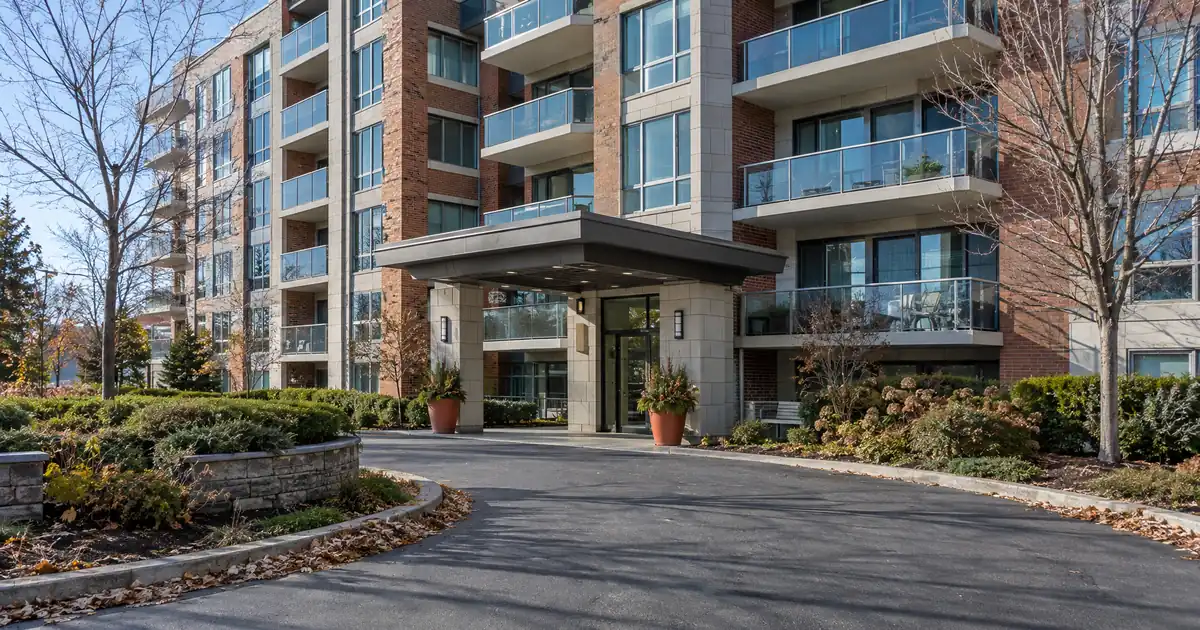
The Quick Read: A pending lawsuit does not automatically bar a home equity line on a rental condo, but it moves the review from your unit to the whole building, so lenders look hardest at what the suit is about, what insurance covers, and how much cash the association holds in reserve.
- Across Lendmire’s wholesale network, an investment-property line tops out at 70% combined loan-to-value (CLTV), requires a 700 minimum credit profile, and runs from $25,000 to $500,000, subject to lender guidelines.
- The condo can be non-warrantable (it falls short of standard project rules) and still be eligible for review. Condotels are not eligible.
- Title must sit with you personally or in a revocable living trust. A condo held in an LLC needs a vesting change or a different product.
- Litigation severity decides the outcome. Construction-defect claims weigh far more than a collections case.
- If the building fails review, you can wait for the suit to resolve, pursue a DSCR cash-out, or draw equity from a different property.
What Is an Investment Property HELOC on a Condo?
A HELOC (home equity line of credit) is a revolving line secured by a property you already own. On a rental condo, the lender takes a lien on the unit and lets you draw against the equity.
How large a line the equity supports.
An equity line is sized by combined loan-to-value, occupancy, and credit — not by rental coverage. Switch the occupancy or the credit band and the ceiling moves with it.
Investment-property lines require a 700 minimum credit score; second-home lines start at a 640 minimum and primary-residence lines at 600, and the combined-LTV ceiling steps down as the credit band drops on primary-residence and second-home lines and holds on investment-property lines; the line cap steps down on primary-residence lines and holds at every tier on investment-property and second-home lines.
A debt-to-income ratio above 45% requires 680+ credit. Profiles under 640 are limited to single-family homes. At least 75% of the approved line is drawn at closing. Ceilings, floors, and caps update from Lendmire’s centralized guideline source.
Line estimate
Illustrative estimate only — not a quote, Loan Estimate, approval, or commitment to lend. The rate is an editable assumption; equity-line pricing is variable through both the draw and repayment periods and never converts to fixed. Occupancy and credit drive the ceiling together: an investment property tops out at 70% combined LTV (minimum credit 700, line cap $500,000); a second home tops out at 90% combined LTV (minimum credit 640, line cap $500,000), with the ceiling stepping down as the credit band drops (the cap holds at every tier); a primary residence tops out at 90% combined LTV (minimum credit 600), and its $750,000 maximum line is available only at 75% combined LTV or below with a 700-or-better credit profile (720 on the longer-runway program) and a full appraisal. Lines above $500,000 require a full appraisal. Credit, debt-to-income, property type, and full underwriting review all affect the final line.
The line can sit in first or second lien position. That means you can often keep your existing mortgage and add the line behind it.
The product is harder to find than a line on your own home. NerdWallet reports that investment-property HELOCs are not offered by all lenders and carry strict qualification rules. Add a condo building in litigation, and the pool of lenders gets smaller again.
Availability is limited, too. Lendmire’s HELOC placements run in 16 full-service states, which is narrower than its DSCR footprint of 41 markets, including Washington, D.C.
Key Terms Defined
Warrantable condo: a building whose finances, ownership mix, insurance, and legal status meet standard project guidelines.
Non-warrantable condo: a building that falls short of those guidelines, often because of litigation, thin reserves, or heavy investor ownership. The label belongs to the project, not to your unit or your credit.
CLTV (combined loan-to-value): all loans against the property, added together, divided by its value.
Condo questionnaire: a form the association or its management company completes about litigation, finances, and the owner-occupied versus investor split.
Special assessment: a one-time charge the association levies on owners to cover a shortfall, such as legal costs or repairs.
DSCR (debt service coverage ratio): monthly rent divided by the full monthly payment on the property, including principal, interest, taxes, insurance, and any HOA dues.
The Two Gates: You and the Building
Every condo line has two gates. The borrower gate asks whether your credit, debt load, and title work. The building gate asks whether the project is a safe place to hold a lien.
Strong borrowers fail at the second gate all the time. Litigation lives entirely at the building gate.
Lenders do not treat the building gate as a formality. Scotsman Guide tells originators to read HOA documents closely for pending litigation and delinquent dues. It also names insufficient insurance, an open insurance claim, too many non-owner-occupied units, and too much commercial space as triggers that can cost a project its warrantable status.
Litigation rarely arrives alone. A building in a lawsuit often also has a reserve shortfall, an open claim, or a high investor share. Lenders add those problems together.
What the Network Requires of You and the Line
The borrower gate on Lendmire’s network is clear-cut for an investment property. These figures are typical guidelines from select wholesale lenders, and every file is reviewed individually.
| Factor | Investment-property line |
|---|---|
| Max combined LTV | 70% CLTV |
| Minimum credit | 700 |
| Line size | $25,000 to $500,000 |
| Structure | 5-year draw, 25-year repayment |
| Maximum DTI | 50% |
| Title | Individual or revocable trust |
Credit above 700 buys no extra leverage on an investment line. Both the 720 tier and the 700 tier reach 70% CLTV, so 700 is the floor that matters.
On this network, the investment-line ceiling is 70% CLTV.
During the draw period you pay interest only. The line then converts to a fully amortizing repayment, and it never becomes a fixed loan. At least 75% of the line is drawn at closing. The lender qualifies your debt ratio (DTI) on the interest-only payment at the maximum draw, so it measures you against the heaviest version of the line.
Because an investment line caps at $500,000, valuation almost always runs through an automated model. A traditional appraisal commonly is not part of the file, though you can request a full appraisal. On a condo, the appraisal form is the 1073.
Other borrower rules apply. A bankruptcy needs four years of seasoning from discharge or dismissal. On investment files, a foreclosure needs seven years, and a deed-in-lieu, pre-foreclosure, or short sale needs four. A borrower is limited to three lines in total and cannot own more than 15 financed properties.
How Condo Litigation Enters the File
The lender finds out about the suit through paperwork, not through you. The steps run in this order.
1. Property screen. The lender confirms the unit is a condo, confirms it is not a condotel, and checks how it is titled.
2. Questionnaire. The association or its manager answers questions about litigation, finances, and the owner-occupied versus investor split. Scotsman Guide notes that lenders often order a third-party analytics report on the HOA. That report flags outstanding litigation, reserve adequacy, and the owner-occupancy percentage.
3. Litigation documents. The lender asks for the complaint, an association attorney’s status letter, master insurance declarations, the budget and reserve study, special-assessment notices, and meeting minutes.
4. Judgment on severity. The underwriter weighs the type of claim, who is suing whom, and whether insurance is defending the case. It also weighs reserves against potential exposure, the chance of a special assessment, delinquent dues, and investor concentration.
5. Valuation. Litigation can depress or freeze values in a building. Even an automated valuation may carry more caution when comparable sales are thin.
6. Decision. The outcome is approval, approval with lower leverage or a more conservative structure, or a decline under that lender’s own project policy.
Conventional channels sit in a different place. They generally stop when the HOA is in litigation. A BiggerPockets thread on condo financing quotes the agency test as litigation relating to safety, structural soundness, functional use, or habitability. That test does not set the rules for a non-QM line. It does explain why so many lenders decline these buildings outright.
Scotsman Guide reports that private lenders offer non-warrantable condo loans and may dig into the details of litigation against a condo board instead of simply declining. That is the practical opening. A file with a clear, limited suit has somewhere to go.
Which Lawsuits Matter Most
Not all lawsuits weigh the same. Underwriters sort them by how much financial or structural damage they could do to the building.
| Suit type | Why a lender cares | Typical effect |
|---|---|---|
| Construction defect | Large exposure, long timeline | Hardest to place |
| Structural or safety claim | Threatens habitability and value | Hardest to place |
| Insurance dispute or open claim | Possible coverage gap | Heavy scrutiny |
| Collections against owners | Routine, small dollars | Often manageable |
| Vendor or contract dispute | Limited exposure | Case by case |
Construction-defect suits are the ones to worry about. A BiggerPockets discussion of a construction-defect suit shows these cases can drag on for years. A long suit means a long period of uncertainty about assessments.
A minor or unit-neutral suit may still work, but the lender has to read the actual complaint. Read it yourself before you apply, so you are not surprised.
The association’s role matters too. An HOA that is the plaintiff, suing a builder to recover costs, looks different from an HOA that is the defendant facing a damages claim. The second case carries the larger risk of a special assessment.
A Worked Example: Same Unit, With and Without a Suit
Take one unit and one borrower, with every input expressed as a share of the unit’s value. These are modeled assumptions, not market data.
Say the unit’s first mortgage sits at 50% of its value. Under a 70% CLTV ceiling, the room for a line is 20 points of the original value.
Now add a pending suit. Suppose the valuation comes back 10% lower because comparable sales in the building are thin and buyers are cautious. The unit is now worth 90% of the original figure. The 70% ceiling drops to 63% of the original value, and with the same first mortgage, the room shrinks to 13 points.
That is roughly a one-third cut in available equity, with no change to your credit or your mortgage. Litigation hit the collateral, not you.
Assessment exposure compounds it. If the association levies a special assessment, your carrying costs rise. Higher HOA dues also lift the monthly obligation that rent must cover. If the unit is also being tested on rental coverage elsewhere in your portfolio, that assessment can pull the ratio down. A line is qualified on your debt ratio, so the added costs matter there too.
In files like this, the strongest ones usually bring three things. They show a clearly described suit, evidence that insurance is defending it, and reserves that look adequate against the likely exposure. A file that cannot show those three tends to stall at the building gate.
The Document Checklist
Ask for documents early, because the association controls most of them. HOAs sometimes delay or refuse to answer lender questions, and that delay can stall the whole file.
| Item | Who supplies it |
|---|---|
| Condo questionnaire | Association or manager |
| Complaint and attorney status letter | HOA counsel |
| Master insurance declarations | Association insurer |
| Budget and reserve study | Association |
| Special-assessment notices and minutes | Association |
| Credit report and DTI documentation | You |
| Trust certificate, if titled in a trust | You |
Scotsman Guide advises calling the HOA early to learn whether the project meets basic criteria. Ask for the litigation disclosure and the budget before you apply. A blank or evasive answer on the questionnaire is a risk in itself, because the lender cannot underwrite what it cannot see.
Title and Vesting: Where LLC Condos Break the Line
Title is the sharpest structural difference between an equity line and a DSCR loan. An investment line requires the individual borrower or a revocable living trust on title. LLCs, corporations, partnerships, and irrevocable, blind, or land trusts cannot hold title.
A condo already deeded to an LLC therefore needs one of two fixes. You can change the vesting before applying, or you can use a DSCR cash-out, which can lend to LLC-titled properties subject to lender program eligibility.
Think about the vesting change carefully. Moving a property out of an LLC may have consequences for liability protection and for the original mortgage. Many investors decide the DSCR route is cleaner than the retitling.
What If the Building Fails Review?
A decline does not end the conversation. It tells you which path to try next.
| Path | How it works | Tradeoff |
|---|---|---|
| Wait | Reapply after settlement or dismissal | Time on the sidelines |
| Cure | Board resolves the underlying issue | You do not control it |
| Switch product | Try a DSCR cash-out on the same unit | Different review, different terms |
| Switch collateral | Draw equity from another property | Needs a property outside the building |
Waiting for a settlement or dismissal and then reapplying is a common path. It works best when the suit looks resolvable.
Switching collateral is the cleanest workaround. A line secured by a rental or home outside the litigated building avoids the building gate entirely. The unit in litigation stays untouched.
Switching products can also change the answer. Scotsman Guide notes that many DSCR programs only accept warrantable condos, while some lenders do lend on non-warrantable projects, depending on how they source capital. So a DSCR cash-out and a HELOC on the same building can get different answers. Lender policy decides, not a universal rule.
Lendmire’s piece Best Investment Property HELOC Program on a Condo When the Building Is in Litigation walks through how to compare programs when the building is the sticking point.
HELOC or DSCR Cash-Out?
The choice often comes down to which lender will underwrite the building, and whether you want revolving access or one lump sum.
| Factor | Investment HELOC | DSCR cash-out |
|---|---|---|
| Reviewed on | Your credit and DTI | Property rental income |
| Max leverage | 70% CLTV | Around 75% LTV, standard rental |
| Title | Individual or revocable trust | LLC allowed per program terms |
| Structure | Revolving, draw then repay | One-time loan |
| Seasoning | Varies by file | About 6 months common |
A DSCR cash-out qualifies primarily on property-level rental income covering the payment, subject to lender guidelines. Most programs are built around a coverage ratio, and 1.00 is where select programs start. A separate select-lender path goes below 1.00, with leverage and terms adjusted.
Clearing that ratio does not mean positive cash flow. DSCR compares rent to the payment only, so repairs, vacancy, management, and utilities sit outside it. In a litigated building, special assessments can also sit outside it. You still have to budget for them.
The complete DSCR loans guide covers how coverage, leverage, and credit fit together across the network.
Where Investors Slip Up
Several patterns recur on condo files.
- Assuming any lawsuit kills the loan. Banks and conventional channels often stop. Non-QM and portfolio lenders review case by case.
- Treating the label as a verdict on you. Non-warrantable describes the project. It says nothing about your credit.
- Assuming a HELOC is sized like a DSCR loan. A line runs on your credit and debt ratio. A DSCR loan sizes on rent.
- Ignoring the exit. A BiggerPockets discussion notes that non-warrantable status can limit buyer financing and slow a sale. The same limits that complicate your line can complicate your resale.
- Applying before reading the complaint. You cannot judge your odds without knowing what the suit claims.
- Forgetting building-level rental rules. HOA rental caps, minimum lease lengths, and short-term rental limits can change your income. Short-term rental rules can vary by city, county, HOA, and property type, so confirm local rules before relying on projected rental income.
Frequently Asked Questions
Can I get an investment property HELOC if my condo building has a pending lawsuit?
It can be possible, depending on the suit. Litigation does not automatically bar the line, but it triggers a building-level review. The lender reads the complaint, the attorney letter, and the insurance and reserve picture. The result may be an approval, a lower-leverage structure, or a decline under that lender’s own project policy.
Is a condo with litigation the same as a non-warrantable condo?
Not always, but litigation is a common reason a building becomes non-warrantable. Insufficient insurance, an open claim, thin reserves, and heavy investor ownership can do the same. Non-warrantable condos are eligible for review on Lendmire’s investment line. Condotels are not eligible at all.
What credit score and leverage do I need?
On Lendmire’s network, an investment-property line requires a minimum 700 credit profile and caps at 70% CLTV. The line runs from $25,000 to $500,000. A score above 700 does not raise the investment ceiling. All figures are subject to lender guidelines and full file review.
Can my LLC-owned condo qualify for a HELOC?
No, not while it stays in the LLC. The line requires title in your name or a revocable living trust. You can change the vesting, or you can pursue a DSCR cash-out, which can lend to LLC-titled properties subject to lender program eligibility.
What can I do if my building is declined?
Wait for the suit to settle and reapply, or ask whether the board can cure the issue. You can also try a DSCR cash-out, which gets a separate review, or draw equity from a property outside the building. Each route depends on the lender’s project policy.
Next Steps
If you are considering a home equity line and want to see how the numbers work, Lendmire can help you compare HELOC options based on the property, the equity available, credit profile, combined leverage, and your goals. Lendmire is a broker that arranges financing through select lenders in its wholesale network. It is not a commitment to lend, and every file is underwritten individually. Request a quote through Lendmire’s mortgage quote page or call 828-256-2183.
A building in litigation rarely stays that way forever, so keep the HOA documents current and revisit the file as the suit moves toward settlement.
About Lendmire
Lendmire is a mortgage brokerage (NMLS# 2371349) arranging home equity lines of credit — primary-residence, second-home and investment-property lines — through a wholesale lending network in its 16 full-service states. Eligibility is determined by the lender on each file. Scotsman Guide named Lendmire a Top Mortgage Workplace in both 2025 and 2026.
Get Started
Ready to find the right loan for you?
See your offer in seconds. No credit pull, no obligation.
Informational only. Not a Loan Estimate, approval, or commitment to lend. Program availability and eligibility are subject to lender guidelines, credit approval, property review, and underwriting.
References
1. NerdWallet – HELOC on an Investment Property
2. Scotsman Guide – Condominium Expertise Can Pay Dividends
3. Scotsman Guide – Get in the Game
4. BiggerPockets – Financing pitfall of a Condo
5. Scotsman Guide – Deadly Tower Collapse Complicates Condo Lending
6. BiggerPockets – First investment condo; HOA construction lawsuit
7. BiggerPockets – Question for investors who flip condos
This article is part of Lendmire’s investment property HELOC program — full qualification details, guidelines, and scenarios live on the program page.
Related reading: How to Qualify for an Investment Property HELOC on One Income · Can You Get an Investment Property HELOC If the Home Will Be Listed Soon?
Brandon Miller
Founder & CEO, Mortgage Loan Originator, Lendmire LLC
- Mortgage Loan Originator · NMLS# 1129696 · Verify on NMLS Consumer Access
- North Carolina Real Estate Broker · License# 343312 · Verify on NCREC
- North Carolina Insurance Producer · License# 19053198 · Property, Casualty, Life, Health · Verify on NAIC SBS
- Lendmire LLC · Firm NMLS# 2371349 · Verify firm licensure
Disclosure information. Lendmire is a state-licensed mortgage brokerage under NMLS# 2371349. Lendmire is not a depository institution, direct lender, or financial advisor — all loans referenced are placed through wholesale lender partners and are subject to each lender's underwriting standards. This article is provided for general informational purposes and is not a commitment to lend, nor does it constitute financial, legal, or tax advice. Loan programs, terms, rates, and qualification standards change without notice and depend on borrower profile, property type, and the state in which the subject property is located. Equal Housing Opportunity provider. NMLS Consumer Access: nmlsconsumeraccess.org.