
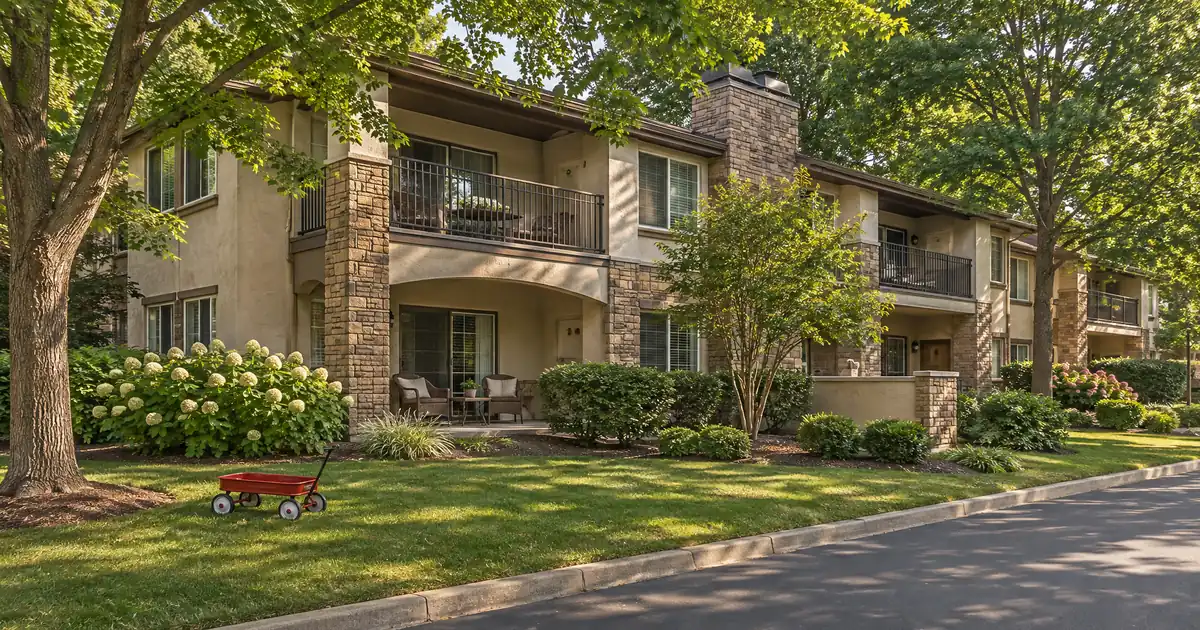
The Quick Read: A home equity line suits a condo owner with strong personal credit, the property in their own name, and a first mortgage worth keeping. A DSCR cash-out refinance suits the owner whose condo is titled in an LLC, whose personal income looks messy on paper, or who wants one lump sum from a loan that qualifies primarily on property-level rental income.
- A bank denial often means the bank doesn’t fit the product, not that the condo is unfinanceable.
- On an investment property, the network’s equity line tops out at 70% CLTV (combined loan-to-value, meaning all loans against the property added together) and $500,000.
- A DSCR cash-out refinance on a standard rental generally tops out around 75% LTV across most of the network.
- LLC title usually rules out the equity line. It is commonly workable on the DSCR side, subject to program terms.
- Either way, the condo project itself gets reviewed, and HOA dues count against you.
Why the Bank Said No
Many banks simply don’t write lines on rentals. NerdWallet notes that not all lenders offer a HELOC on an investment property, that requirements run strict, and that lenders see higher default risk than on a primary home.
How large a line the equity supports.
An equity line is sized by combined loan-to-value, occupancy, and credit — not by rental coverage. Switch the occupancy or the credit band and the ceiling moves with it.
Investment-property lines require a 700 minimum credit score; second-home lines start at a 640 minimum and primary-residence lines at 600, and the combined-LTV ceiling steps down as the credit band drops on primary-residence and second-home lines and holds on investment-property lines; the line cap steps down on primary-residence lines and holds at every tier on investment-property and second-home lines.
A debt-to-income ratio above 45% requires 680+ credit. Profiles under 640 are limited to single-family homes. At least 75% of the approved line is drawn at closing. Ceilings, floors, and caps update from Lendmire’s centralized guideline source.
Line estimate
Illustrative estimate only — not a quote, Loan Estimate, approval, or commitment to lend. The rate is an editable assumption; equity-line pricing is variable through both the draw and repayment periods and never converts to fixed. Occupancy and credit drive the ceiling together: an investment property tops out at 70% combined LTV (minimum credit 700, line cap $500,000); a second home tops out at 90% combined LTV (minimum credit 640, line cap $500,000), with the ceiling stepping down as the credit band drops (the cap holds at every tier); a primary residence tops out at 90% combined LTV (minimum credit 600), and its $750,000 maximum line is available only at 75% combined LTV or below with a 700-or-better credit profile (720 on the longer-runway program) and a full appraisal. Lines above $500,000 require a full appraisal. Credit, debt-to-income, property type, and full underwriting review all affect the final line.
So read the denial letter for the stated reason. It usually lands in one of three buckets:
- Product menu: the bank doesn’t lend against non-owner-occupied property at all. Switching lenders or products fixes this.
- Personal file: debt-to-income, credit, or reserves fell short. Fixing the file or switching to a loan that doesn’t lean on your personal income can help.
- Property or title: the condo project, the appraisal, or an LLC on the deed caused the problem. This calls for a product built for it.
A denial is not a verdict on you or the unit. It tells you which door was wrong.
Side-by-Side
| Factor | Investment HELOC | DSCR Cash-Out |
|---|---|---|
| Review basis | Borrower: credit, DTI, equity | Rent vs. full payment, plus credit |
| Documentation | Personal income and debt file | Lease or rent schedule, appraisal |
| Credit | 700 minimum on investment | 620 floor in parts; most want ~660 |
| Leverage | Up to 70% CLTV | Up to ~75% LTV, standard rentals |
| Amount | $25,000 to $500,000 | Up to $3,000,000 on standard programs |
| Condo types | Includes non-warrantable | Varies by program and project |
| Title | Individual or revocable trust | LLC vesting often allowed |
| Existing first mortgage | Stays in place | Paid off by the new loan |
| Cash delivery | Line; 75%+ drawn at closing | One lump sum at closing |
| Reserves | Varies by lender | Commonly ~6 months of PITIA |
| Timeline | Varies by valuation and file review | Varies by appraisal and file review |
The HELOC column shows the terms on lines Lendmire’s wholesale network places, and the line is not available in every state. Bank-issued lines vary widely. The DSCR column shows typical network ranges, subject to lender guidelines. PITIA means principal, interest, taxes, insurance, and association dues, which is the full monthly housing obligation.
Both products require full file review, and neither is a commitment to lend. Two table rows deserve a closer look.
Existing first mortgage. An equity line can sit in first or second position. A cash-out refinance replaces your first loan, so you give up whatever structure you have now.
Reserves. Reserves are cash left over after closing. DSCR reserves vary by lender, leverage, loan size, and transaction type. Around six months of PITIA is common, and larger loans often step up from there.
When the HELOC Is the Better Fit
An equity line makes sense when you want to keep what you have and pull a moderate amount.
You hold a first mortgage you’d rather not touch. A refinance retires it. A line sits beside it. If your existing loan structure has real value to you, the line protects it.
You want flexibility. On an investment property, the network’s line runs a five-year interest-only draw period, then a 25-year repayment period. The catch is that at least 75% of the line is drawn at closing. The line is variable and never converts to fixed. So this is not a mostly undrawn safety net, and you should size it to cash you will actually use.
Your personal file is strong and the title is clean. Credit of 700 or better is the hard floor on investment lines. Because 720 and 700 both reach 70% CLTV, a higher score buys eligibility rather than extra leverage. Debt-to-income can run to 50%, tested on the interest-only payment at the maximum draw.
The numbers fit the cap. A $500,000 ceiling and 70% CLTV mean a condo with a large existing balance may leave little room. A line above $500,000 is for primary residences only, so it doesn’t help here. Because the line is capped at $500,000, it is commonly valued by automated valuation, often with no traditional appraisal.
Your portfolio is modest. A borrower with more than 15 financed properties is not eligible, and a borrower is limited to three lines in total.
Read the title row carefully. The line requires the property to be held by you individually or by a revocable living trust. LLCs, corporations, partnerships, and land trusts cannot hold title. If your condo already sits in an LLC, the line is off the table unless you change vesting. Moving title can raise due-on-sale questions with your existing lender, so talk to your broker before you deed anything.
For a related decision made in a different life situation, see Lendmire’s piece on choosing a line or a DSCR cash-out after a final decree.
When the DSCR Cash-Out Refinance Is the Better Fit
DSCR means debt service coverage ratio. The lender divides the property’s monthly rent by its full monthly payment. A cash-out refinance replaces your current loan with a larger one and hands you the difference.
DSCR loans are built for non-owner-occupied investment properties. Because they are business-purpose loans, they are treated differently from a standard owner-occupied mortgage. The CFPB’s Regulation Z page lists the business-purpose exemption, which applies even when someone personally guarantees the credit.
This is the stronger route in several situations:
- Personal income that looks thin on paper. Heavy write-offs, many financed properties, or high personal debt can sink a bank file. A DSCR file qualifies primarily on property-level rental income covering the payment, subject to lender guidelines. Credit and guarantor review still apply, and DSCR is not a no-questions loan.
- An LLC on title. Vesting in an entity is commonly workable, subject to program terms. DSCR loans generally carry a personal guarantee anyway, so the LLC doesn’t remove your personal exposure.
- A non-warrantable condo. Trade press reports that investors adding rental condos often turn to DSCR loans for non-warrantable units. That same coverage notes DSCR has no cap on how many financed properties you own. Eligibility still varies by program and by project. Non-warrantable status is not an automatic yes.
- You want a single lump sum and a fresh structure. The network’s standard loan is a 30-year fixed. Extended 40-year terms and interest-only periods are available through select lenders, and adjustable structures exist for investors who want them.
Know the constraints. Cash-out refinances need about six months of seasoning, meaning you’ve held the property that long. The new loan resets your whole first-lien position, so you lose any favorable structure on the old one. Many DSCR loans also carry prepayment penalties, so confirm the terms in the program documents.
Where the condo is run as a short-term rental, leverage drops. Cash-out on short-term-rental collateral tops out at 70%, versus 75% on standard rentals. Expect a 640 or better score and about 12 months of hosting history. Short-term rental rules can vary by city, county, HOA, and property type, so confirm local rules before relying on projected rental income.
Lendmire’s complete DSCR loans guide covers the full program mechanics.
The Condo Factors That Decide Both
Condos add a layer neither product can skip.
HOA dues sit inside the payment. A DSCR lender counts association dues in PITIA. A condo with high dues needs more rent to hit the same coverage as a house.
The project gets reviewed. Lenders look at the building, not just your unit. On the DSCR side, a few lenders in the network will work with non-warrantable projects and others won’t. One trade source holds that DSCR lenders typically work only with warrantable condos, while another says the opposite. The honest answer is that it varies by program and project. Pending litigation, a low owner-occupancy count, or one entity owning too many units can all complicate a file.
Condotels are out. On the HELOC side, condotels are not eligible. Co-ops are excluded as well.
Rental restrictions matter. A building that caps rentals or minimum lease terms can undercut the rent figure your coverage depends on.
Appraisal differs by product. A DSCR cash-out uses a full appraisal that includes a market-rent opinion. The equity line, at $500,000 or less, usually relies on automated valuation, though a borrower may request a full appraisal.
A Worked Condo Example
These are modeled assumptions, not market data. Say a condo currently runs about 1.35x coverage on its existing loan, with HOA dues included in the payment. You take a DSCR cash-out to pull equity for the next purchase.
The new loan is larger, so the payment rises and coverage falls. Suppose it lands near 1.10x. That clears a 1.00 floor, which is where many select programs start. A separate select-lender path accepts coverage below 1.00, with leverage and terms adjusted.
Clearing 1.00 does not mean the unit cash-flows. DSCR compares rent to PITIA and nothing else. Repairs, vacancy, management, utilities, and capital reserves sit outside the ratio. A condo at 1.10x can still run negative after a vacancy and a special assessment.
Now run the same condo through an equity line. The first mortgage stays untouched, and only the line’s payment is added. Whether it works depends on your personal debt-to-income and on the 70% CLTV ceiling. The line may leave the existing loan’s coverage intact, but the added line payment still counts against your personal ratios.
A bigger down payment or lower leverage can lift coverage on either path. It never erases leverage caps, credit floors, reserve rules, or property eligibility. The strongest files clear both tests: enough equity and enough rental coverage.
First Steps After the Denial
1. Read the adverse action notice. It states the reasons. Match each reason to the buckets above.
2. Check your title. If an LLC holds the deed, skip further bank-line applications.
3. Gather the condo paperwork. You’ll need the lease or rent schedule, HOA dues, and project information, plus entity documents if vested in an LLC.
4. Be selective about shopping. Each application can add a hard credit inquiry. A broker who places files across multiple wholesale lenders can screen programs before you apply.
5. Decide whether to fix or switch. If the reason was a correctable credit item, fixing may beat switching. If the reason was product or title, fixing won’t help.
The same decision on a different kind of property is covered in Lendmire’s article DSCR HELOC vs DSCR Cash-Out Refinance on a Paid-Off Home After a Bank Denial.
Mistakes to Avoid
- Applying to more banks that don’t write rental lines.
- Retitling the condo into an LLC before talking to your existing lender.
- Sizing a line larger than the cash you’ll use, since 75% or more is drawn at closing.
- Ignoring HOA special assessments when stress-testing coverage.
- Chaining cash-outs without checking that rent still covers the larger payment.
- Treating a coverage ratio above 1.00 as proof the property makes money.
The Verdict
Pick the line if your title is personal or in a revocable trust, your credit is 700 or better, your debt-to-income is manageable, and you want to keep your first mortgage while borrowing a moderate amount up to $500,000. The line ceiling is 70% CLTV on an investment property.
Pick the DSCR cash-out if the condo sits in an LLC, your personal income file is the obstacle, the project is non-warrantable, or you want a lump sum on a new structure. Expect up to about 75% LTV on a standard rental, six months of seasoning, and reserves. Final terms depend on lender guidelines, property type, leverage, and the borrower’s complete credit picture.
Neither is better in every case. The first mortgage you’d lose and the title you can’t change usually settle it. If you are weighing a home equity line against a cash-out refinance and want to see how the numbers work, Lendmire can help you compare options based on the property, the equity available, credit profile, combined leverage, and your goals.
Frequently Asked Questions
Does a bank denial hurt a DSCR application?
A denial doesn’t disqualify you. A DSCR lender looks at the property’s rent, your credit, and your reserves. Shopping widely can add credit inquiries, so screen programs through a broker first.
Can I get an equity line if my condo is in an LLC?
Not on the network’s line. It requires title held by an individual or a revocable living trust. LLCs, corporations, and partnerships cannot hold title. A DSCR cash-out is generally the alternative, subject to program terms.
Do non-warrantable condos qualify for either option?
Possibly. The network’s equity line accepts condominiums including non-warrantable ones. DSCR eligibility varies by program and project, so the building gets reviewed before anyone can say yes.
Is the HELOC always the cheaper or easier route?
No. Availability and title are the usual obstacles, not convenience. Many banks don’t write lines on rentals, and an LLC on title can end the application. Pricing is outside this comparison, so use the calculator for an illustrative estimate.
Does clearing 1.00 coverage mean my condo makes money?
No. The DSCR ratio compares rent to the payment only. Vacancy, repairs, management, utilities, and capital costs are not in it.
For how equity extraction works on an investment property, see Lendmire’s guide to cash-out refinance on an investment property.
About Lendmire
As a mortgage broker (NMLS# 2371349), Lendmire helps homeowners and real estate investors in its 16 full-service states open home equity lines of credit arranged through wholesale lenders. Lendmire is never the lender; line amounts, ceilings and terms are set by the lender under its guidelines. Scotsman Guide named Lendmire a Top Mortgage Workplace in both 2025 and 2026.
Get Started
Ready to find the right loan for you?
See your offer in seconds. No credit pull, no obligation.
Informational only. Not a Loan Estimate, approval, or commitment to lend. Program availability and eligibility are subject to lender guidelines, credit approval, property review, and underwriting.
References
1. NerdWallet – Can You Get a HELOC on an Investment Property
2. CFPB – Regulation Z § 1026.3 Exempt transactions
3. Scotsman Guide – Invest in Your Future
4. Scotsman Guide – Get in the Game
This article is part of Lendmire’s investment property HELOC program — full qualification details, guidelines, and scenarios live on the program page.
Related reading: Investment Property HELOC Requirements on a Rental Using DSCR · Investment Property HELOC Requirements When Your First Lien Is Also DSCR · Investment Property HELOC vs DSCR Cash-Out Refinance on Their Rental
Brandon Miller
Founder & CEO, Mortgage Loan Originator, Lendmire LLC
- Mortgage Loan Originator · NMLS# 1129696 · Verify on NMLS Consumer Access
- North Carolina Real Estate Broker · License# 343312 · Verify on NCREC
- North Carolina Insurance Producer · License# 19053198 · Property, Casualty, Life, Health · Verify on NAIC SBS
- Lendmire LLC · Firm NMLS# 2371349 · Verify firm licensure
Compliance and disclosures. Lendmire (NMLS# 2371349) is a licensed mortgage broker and is not a direct lender, depository institution, financial advisor, or tax professional. Content in this article is general market analysis and educational information — not financial, legal, or tax advice for any specific situation. Lendmire does not guarantee loan approval; every transaction is subject to underwriting by the funding lender. Mortgage pricing and loan program guidelines are subject to change at any time without notice and vary by borrower characteristics, property type, and state regulations. Lendmire complies with Equal Housing Opportunity. Licensure verification: NMLS Consumer Access.