
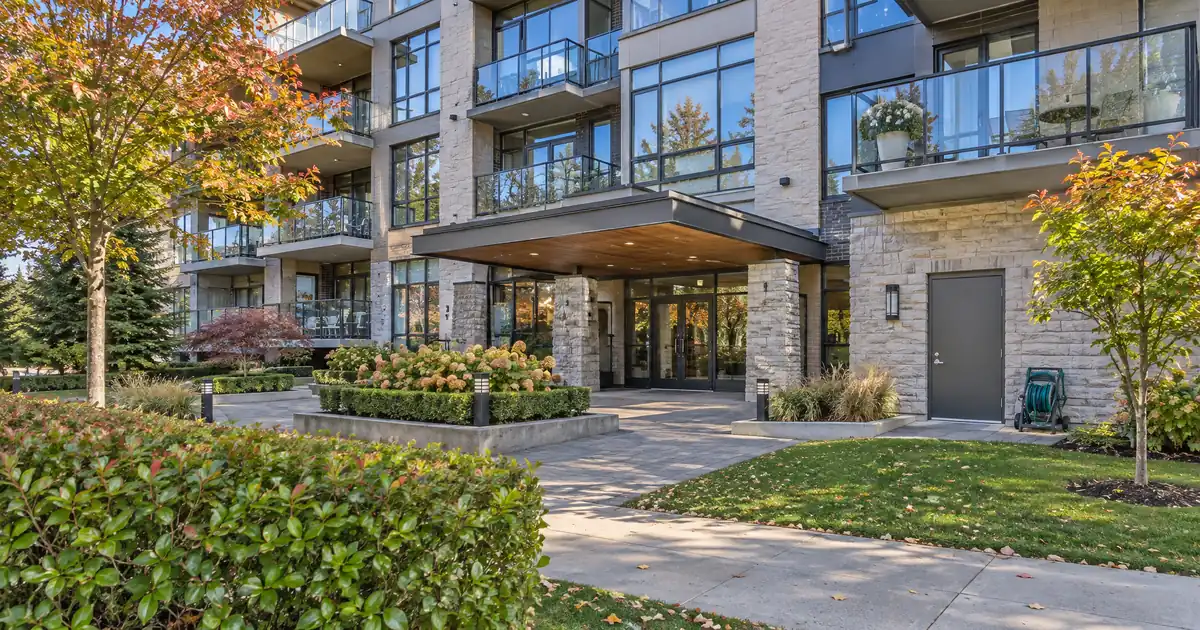
The Quick Read: Usually, the non-warrantable label does not change the borrowing formula; it decides whether the file is eligible and how hard the value is to support. On the network Lendmire places files with, an investment-property line is capped at 70% combined loan-to-value (CLTV), minus existing liens, up to a $500,000 maximum line, subject to lender guidelines.
- Line size: the minimum line is $25,000.
- Credit: 700 minimum. A 720 score reaches the same 70% ceiling, so a higher score buys no extra leverage.
- Title: the individual borrower or a revocable living trust. An LLC cannot hold title on this product.
- Qualification: personal credit and debt-to-income (DTI, 50% maximum), not rent.
- Building: non-warrantable condos are eligible for review, and a review can still end in a decline.
This is a general summary, not a commitment to lend. Every file is reviewed individually.
How large a line the equity supports.
An equity line is sized by combined loan-to-value, occupancy, and credit — not by rental coverage. Switch the occupancy or the credit band and the ceiling moves with it.
Investment-property lines require a 700 minimum credit score; second-home lines start at a 640 minimum and primary-residence lines at 600, and the combined-LTV ceiling steps down as the credit band drops on primary-residence and second-home lines and holds on investment-property lines; the line cap steps down on primary-residence lines and holds at every tier on investment-property and second-home lines.
A debt-to-income ratio above 45% requires 680+ credit. Profiles under 640 are limited to single-family homes. At least 75% of the approved line is drawn at closing. Ceilings, floors, and caps update from Lendmire’s centralized guideline source.
Line estimate
Illustrative estimate only — not a quote, Loan Estimate, approval, or commitment to lend. The rate is an editable assumption; equity-line pricing is variable through both the draw and repayment periods and never converts to fixed. Occupancy and credit drive the ceiling together: an investment property tops out at 70% combined LTV (minimum credit 700, line cap $500,000); a second home tops out at 90% combined LTV (minimum credit 640, line cap $500,000), with the ceiling stepping down as the credit band drops (the cap holds at every tier); a primary residence tops out at 90% combined LTV (minimum credit 600), and its $750,000 maximum line is available only at 75% combined LTV or below with a 700-or-better credit profile (720 on the longer-runway program) and a full appraisal. Lines above $500,000 require a full appraisal. Credit, debt-to-income, property type, and full underwriting review all affect the final line.
The Formula: Value, Ceiling, Liens, Cap
Take the property value and multiply by 70%. Subtract the first-mortgage balance. What is left is the most the line can be. Then check that figure against the $500,000 cap.
Run the numbers on a condo worth $400,000. At 70%, total debt can reach $280,000. A $150,000 first mortgage leaves $130,000 of room. Those are round illustrative figures, not market data.
Three conditions change the result:
- High first mortgage. If the existing lien already sits at or above 70% of value, the room is zero.
- High value, low debt. If 70% of value exceeds $500,000, the dollar cap binds and extra equity adds nothing.
- Thin valuation confidence. A non-warrantable unit can come back with a lower or less certain value, which shrinks the equity base before the percentage applies.
The percentage itself does not drop because the building is non-warrantable. The inputs to the formula move.
Why Investment Lines Run Lower Than Primary-Residence Lines
On a primary residence or second home, the network’s ceiling reaches 90% CLTV, and only at a 720-or-better credit profile. On an investment property, nothing sits above 70%. That gap is the first thing to expect when sizing a rental condo line.
The wider market looks similar. NerdWallet says a HELOC on an investment property is possible, but the lender pool is smaller and borrowing limits are lower than against a primary home, because lenders see higher default risk on rentals. Many large retail lenders do not offer these lines at all, which is why availability, not just the percentage, is often the real constraint.
Keep one more limit in view. Lendmire’s HELOC availability covers its 16 full-service states, which is narrower than the 41-market DSCR footprint.
What Does Non-Warrantable Actually Mean?
It is a market label, not a regulatory one. Homebuyer.com notes the term is not formally defined in mortgage guidelines. In practice it means the condo project fails agency condo standards.
Fannie Mae’s Condo Status Finder lists the usual reasons a project is ineligible: critical repairs and significant deferred maintenance, inadequate insurance, pending significant litigation, and hotel or short-term rental operations. The same page puts insufficient master insurance and critical repairs at the top. It reports 3.6% of projects were ineligible as of August 2025. Freddie Mac’s guide adds excessive single-investor concentration, evacuation orders, and projects in insolvency or termination.
That is contrast only. A HELOC network applies its own project overlays, and agency rules do not set the line terms. Also, the label is not a public blacklist. Ineligible status sits inside lender tools, not a published list of buildings.
Does Non-Warrantable Status Block the Line?
No, not automatically. Non-warrantable condos are eligible for review on this network. Review means the building gets a second look on top of the borrower. It does not mean approval.
Across a wholesale network, the lender pool for these buildings is narrower than for a warrantable condo. Some lenders cut leverage on a troubled project. Others decline it outright. No verified haircut figure exists, so treat any specific number you see quoted as unconfirmed.
The building review typically looks at:
| Building issue | Why it matters | Document to gather |
|---|---|---|
| Investor concentration | Too many rentals raise project risk | HOA ownership breakdown |
| Pending litigation | Lenders weigh legal exposure | Litigation disclosure |
| Reserves and deferred repairs | Signals future special assessments | HOA budget, reserve study |
| Master insurance | Gaps are a leading ineligibility cause | Master policy certificate |
| Rental restrictions | Limits on leasing affect eligibility | Condo declaration, rules |
| Hotel-style use | Excluded outright | Operating and rental-pool terms |
The project-document list reflects general practice. Gather these before applying so the file has fewer gaps to review.
How the deal works Through Review
1. Eligibility screen. The lender checks occupancy (non-owner-occupied), title vesting, and property type before looking at equity.
2. Project review. The condo documents get a second review for concentration, litigation, reserves, and rental rules. Project checks stack on top of borrower checks.
3. Valuation. Because an investment line caps at $500,000 and full appraisals are required only above that amount, an investment HELOC runs in the automated-valuation lane and commonly closes with no traditional appraisal. A borrower may request a full appraisal. Non-warrantable condos can carry lower valuation confidence.
4. CLTV room. Value times 70%, minus the first lien, up to the cap.
5. Qualification. The payment is tested on the maximum draw, so the entire line counts against DTI even though only part of it may be drawn.
6. Draw requirement. At least 75% of the line is drawn at closing. This is not a standby line.
7. Documents. Title or vesting documents, the first-mortgage statement, income or bank-statement documentation, and the condo project documents.
The structure is a 5-year interest-only draw followed by a 25-year fully amortizing repayment. Pricing floats and does not convert to fixed. Investment lines use this structure only.
Who Qualifies: Credit, DTI, and Title
The line is underwritten on the borrower, not the rent. A lease or tenant does not help the qualification. That suits investors with strong personal income and a clean credit file, and it fits poorly for investors holding property in LLCs.
- Credit: 700 minimum on an investment property. Both 700 and 720 reach 70% CLTV.
- DTI: 50% maximum, qualified on the interest-only payment at the maximum draw. Bank-statement income is never the binding limit on an investment line, because the 700 credit floor sits above the 680 minimum for business bank-account analysis.
- Exposure: a borrower is limited to three lines. Anyone owning more than 15 financed properties is not eligible.
- Property types: condos, including non-warrantable, single-family, 2-4 units, PUDs, and townhomes. Condotels, co-ops, manufactured homes, log homes, and commercial, mixed-use, or agricultural-zoned property are not offered.
Because the full line counts toward DTI, any undrawn portion still reduces future borrowing capacity. Plan for that before stacking other financing.
Edge Cases That Change the Number
LLC-titled condo. An LLC, corporation, partnership, or land trust cannot hold title. The HELOC route stays closed until title moves to the individual or a revocable living trust. A DSCR cash-out refinance is the alternative for entity-held rentals, subject to program terms.
Paid-off condo. A line is possible, but the 70% cap, the $500,000 limit, and the title rules still apply.
Condotel or rental-pool operations. Excluded on this network. Fannie Mae also treats hotel-style operation as ineligible.
Collateral swap. The line can be secured by another property, such as a primary residence, and the funds spent on the condo. That file is underwritten as primary-residence collateral with its own tiers.
Low or declined valuation. The borrower can request a full appraisal. If the building is the problem, curing it (for example, fixing an insurance gap) matters more than reconsidering the value.
The Alternative: DSCR Cash-Out on the Same Condo
When the HELOC math is thin or the title sits in an LLC, a DSCR cash-out refinance tests rent against the property’s debt payment instead of your personal DTI. The complete DSCR loans guide covers how that works.
Cash-out tops out around 75% LTV on standard rentals across most of the network, with about 6 months of seasoning as the common expectation. Credit floors vary, with a 620 floor in parts of the network, most programs wanting around 660, and 700+ unlocking the strongest leverage. Whether a given program accepts a non-warrantable condo, and at what leverage, depends on the program and was not verified here. Clearing 1.00 coverage is also not the same as positive cash flow. DSCR compares rent to the payment only, and repairs, vacancy, and management sit outside it.
| Factor | Investment HELOC | DSCR cash-out |
|---|---|---|
| Underwritten on | Personal credit and DTI | Rent vs. payment |
| Investment ceiling | 70% CLTV | About 75% LTV, standard rentals |
| Title | Individual or revocable trust | LLC possible, per program terms |
| Maximum | $500,000 line | Loan sizes up to $3,000,000 on standard programs |
| Structure | 5-yr draw, 25-yr repay | 30-year fixed spine |
Where Most Investors Get It Wrong
- Assuming non-warrantable means no. It means review. A review can still end in a decline.
- Expecting a higher score to widen the line. On an investment property it does not.
- Counting on the lease. The line is underwritten on credit and DTI.
- Thinking they can borrow all their equity. The 70% ceiling leaves 30% of value untouched.
- Forgetting the LLC problem. Title has to move first.
- Ignoring the full-line DTI hit. An undrawn line still counts.
Interest deductibility depends on how the funds are used. Tax treatment varies; consult a qualified professional.
What to Do After a Decline
Start with the reason. A building issue, a title issue, and a DTI issue each point to a different fix. Cure what can be cured, such as a master insurance gap or missing HOA documents. If the building is the obstacle, consider collateral on another property, or move to a DSCR cash-out where the program accepts the project.
If you want to see how the numbers work, Lendmire can help you compare HELOC options based on the property, the equity available, credit profile, combined leverage, and your goals. Call 828-256-2183 or request a quote. Lendmire is a mortgage broker arranging financing through select lenders in its wholesale network.
Frequently Asked Questions
Can you get a HELOC on a non-warrantable investment condo?
Yes, it can go to review. Non-warrantable condos are eligible on this network, but a review can still end in a decline, and the lender pool is narrower than for a warrantable building. Subject to lender guidelines.
Does non-warrantable status lower the percentage I can borrow?
Not by itself. The ceiling stays at 70% CLTV on an investment property. What changes is eligibility and valuation confidence, which can shrink the equity base. Some lenders may also cut leverage or decline, and no verified haircut figure exists.
Can my LLC take out the line?
No. Title must sit with the individual or a revocable living trust. A property already in an LLC needs a vesting change, or a DSCR cash-out refinance instead.
Will a higher credit score raise the line?
No. A 700 score and a 720 score both reach 70% CLTV on an investment property, and 700 is a hard floor.
Does the undrawn part of the line still count against me?
Yes. The full line limit counts toward CLTV and DTI, including any portion you leave undrawn, and at least 75% is drawn at closing anyway.
About Lendmire
Lendmire, NMLS# 2371349, is a mortgage brokerage that arranges home equity lines of credit through wholesale lending partners in its 16 full-service states. Lines on primary residences, second homes and investment properties are each reviewed individually by the lender under the program’s occupancy, credit and combined-loan-to-value guidelines. Scotsman Guide named Lendmire a Top Mortgage Workplace in both 2025 and 2026.
Get Started
Ready to find the right loan for you?
See your offer in seconds. No credit pull, no obligation.
Informational only. Not a Loan Estimate, approval, or commitment to lend. Program availability and eligibility are subject to lender guidelines, credit approval, property review, and underwriting.
References
1. NerdWallet
2. Homebuyer.com: Non-Warrantable Condominium
3. Fannie Mae Condo Status Finder
4. Freddie Mac Seller/Servicer Guide §5701.3
This article is part of Lendmire’s investment property HELOC program — full qualification details, guidelines, and scenarios live on the program page.
Related reading: How Much Can You Borrow on a DSCR HELOC on That Property? · Can You Get an Investment Property HELOC After a Denial on Returns? · Can You Get an Investment Property HELOC After a Quitclaim From a Parent?
Brandon Miller
Founder & CEO, Mortgage Loan Originator, Lendmire LLC
- Mortgage Loan Originator · NMLS# 1129696 · Verify on NMLS Consumer Access
- North Carolina Real Estate Broker · License# 343312 · Verify on NCREC
- North Carolina Insurance Producer · License# 19053198 · Property, Casualty, Life, Health · Verify on NAIC SBS
- Lendmire LLC · Firm NMLS# 2371349 · Verify firm licensure
Important disclosures. Lendmire (NMLS# 2371349) is a licensed mortgage brokerage. Lendmire is not a direct lender, depository institution, or financial advisor. All loan inquiries are subject to lender underwriting; this article does not constitute a commitment to lend. Rates, terms, and program guidelines are subject to change without notice and vary by borrower profile, property type, and state. Information in this article is general in nature and is not financial, legal, or tax advice. Equal Housing Opportunity. NMLS Consumer Access: nmlsconsumeraccess.org.