
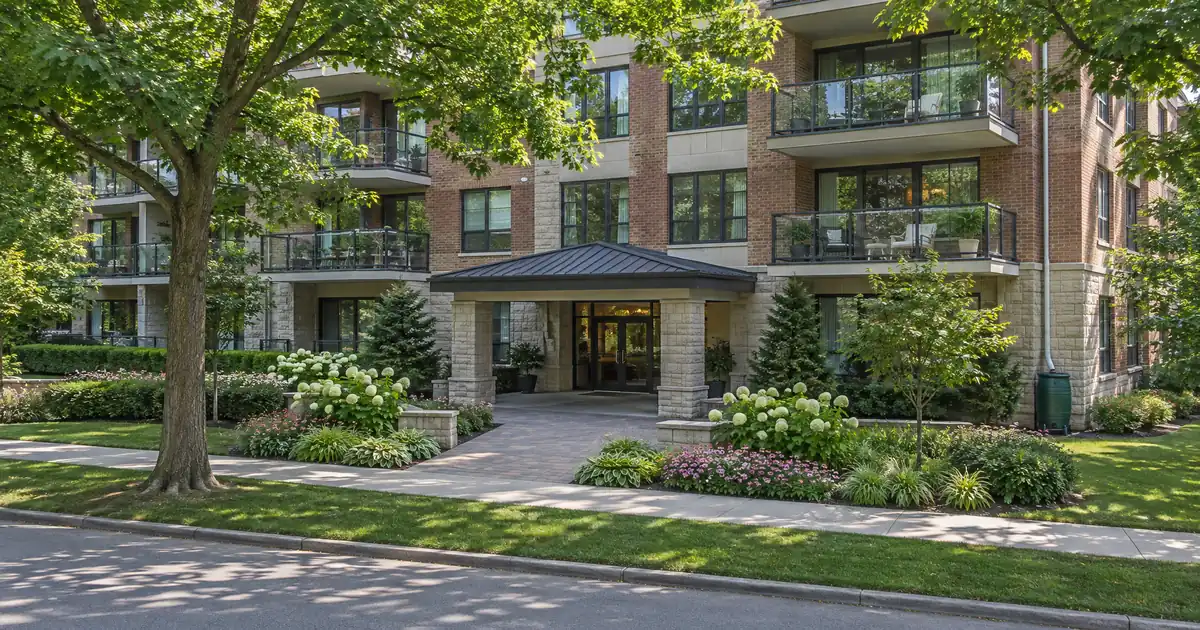
The Quick Read: Nothing, if the condotel itself is the collateral: condotels are not eligible for an investment-property HELOC in Lendmire’s wholesale network, so the borrowing amount against that unit is $0. The line is not “smaller” on a condotel. It is unavailable, and the real decision is which other route fits.
- Condotels are excluded from the investment line, while ordinary condominiums, including non-warrantable ones, are eligible. Every condotel is non-warrantable, but plenty of non-warrantable condos are not condotels.
- An investment-property line on this network tops out at 70% CLTV, with a 700 minimum credit score and a line size of $25,000 to $500,000.
- Title must sit with an individual or a revocable living trust, not an LLC.
- Equity in a different, eligible property can still fund a line, and a DSCR cash-out through a condotel-capable lender is the other practical path.
- Lines are available only in Lendmire’s 16 full-service states, subject to lender guidelines and full file review.
Condotel owners ask this question because the unit is deeded real estate with real equity. That equity is just harder to reach than equity in a standard rental. This article explains why, how borrowing room is calculated on an eligible property, and what to do instead.
How large a line the equity supports.
An equity line is sized by combined loan-to-value, occupancy, and credit — not by rental coverage. Switch the occupancy or the credit band and the ceiling moves with it.
Investment-property lines require a 700 minimum credit score; second-home lines start at a 640 minimum and primary-residence lines at 600, and the combined-LTV ceiling steps down as the credit band drops on primary-residence and second-home lines and holds on investment-property lines; the line cap steps down on primary-residence lines and holds at every tier on investment-property and second-home lines.
A debt-to-income ratio above 45% requires 680+ credit. Profiles under 640 are limited to single-family homes. At least 75% of the approved line is drawn at closing. Ceilings, floors, and caps update from Lendmire’s centralized guideline source.
Line estimate
Illustrative estimate only — not a quote, Loan Estimate, approval, or commitment to lend. The rate is an editable assumption; equity-line pricing is variable through both the draw and repayment periods and never converts to fixed. Occupancy and credit drive the ceiling together: an investment property tops out at 70% combined LTV (minimum credit 700, line cap $500,000); a second home tops out at 90% combined LTV (minimum credit 640, line cap $500,000), with the ceiling stepping down as the credit band drops (the cap holds at every tier); a primary residence tops out at 90% combined LTV (minimum credit 600), and its $750,000 maximum line is available only at 75% combined LTV or below with a 700-or-better credit profile (720 on the longer-runway program) and a full appraisal. Lines above $500,000 require a full appraisal. Credit, debt-to-income, property type, and full underwriting review all affect the final line.
Why a Condotel Stops the File at Step One
The property-type screen comes before credit, equity, or income. A condotel is a deeded condo unit in a building run like a hotel, often with a rental pool or front desk that handles nightly bookings. Across the select lenders Lendmire places files with, the investment HELOC program lists condotels as ineligible alongside manufactured homes, co-ops, log homes, commercial and mixed-use property, and agricultural zoning. No credit score or equity cushion changes that.
This is a different question from whether a building is merely “non-warrantable.” Every condotel is non-warrantable, but plenty of non-warrantable condos are not condotels. A condo with a pending lawsuit or a high investor concentration can still qualify for the investment line. A hotel-style building with a rental pool cannot.
Here is the catch for short-term-rental-friendly buildings. A condo that allows nightly rentals is not automatically a condotel, but heavy nightly rental activity combined with a rental pool can lead a lender to treat the building as one. The building’s operating structure decides, not the marketing name on the lobby sign.
For context, NerdWallet notes that investment-property HELOCs exist but come with fewer lenders and smaller borrowing amounts than lines on a primary home, because lenders view default risk on rentals as higher. A condotel sits at the far end of that caution.
How Borrowing Room Is Calculated on an Eligible Property
The formula is simple. Take the property value, multiply by the allowed combined loan-to-value (CLTV), subtract every existing lien, then apply the dollar cap. On an investment property in this network, the allowed CLTV is 70% and the line cannot exceed $500,000.
CLTV counts the full credit limit, not just the amount drawn. The test is existing mortgage balance plus the entire line limit, divided by property value. An investor who wants a small initial draw still has the whole limit counted against leverage.
Three scenarios show the shape of the result for a single eligible property valued at $400,000. These are modeled assumptions, not market data. In each row, the room for a line is the 70% ceiling minus the existing mortgage share of value:
| Existing mortgage | Equity position | Result under a 70% CLTV test |
|---|---|---|
| Low balance (about 30% of value) | Strong | Room for a line near 40% of value |
| Mid balance (about 55% of value) | Moderate | Room for a line near 15% of value |
| High balance (70% of value or more) | Thin | No room, since the 70% ceiling is already used |
Two details matter. Credit above 700 buys eligibility, not leverage: the 720 and 700 tiers both reach 70% CLTV on investment property. And because the line caps at $500,000, valuation ordinarily runs on an automated model with no traditional appraisal, though a borrower may request a full appraisal. An automated value will not capture a recent renovation, so a fresh rehab may justify asking for one.
Investment lines run a single draw structure: a 5-year interest-only draw followed by a 25-year fully amortizing repayment. At least 75% of the line is drawn at closing, and pricing floats across both periods. That is a meaningful commitment, so size the line to a real use of funds.
Does a Condotel Qualify Under Any HELOC Structure?
No. The standard investment line excludes it, and the DSCR-based home equity variant excludes condotels as well, along with rural-designated property and age-restricted communities. Mixed-use buildings with commercial floors are also ineligible, so a residential unit above a ground-floor retail space raises a separate project question.
Lenders also review the building, not only the borrower. Scotsman Guide describes condo project reviews that look at HOA litigation, the adequacy of HOA reserves, and the split between owner-occupied and non-owner-occupied units. Older investor discussions on BiggerPockets list similar red flags, such as heavy investor concentration, one owner holding a large share of units, delinquent dues, and thin reserves. Treat that thread as a concept guide, since it is several years old and thresholds change.
A short checklist helps classify a building before applying:
- Does the building have a rental pool or a rental desk that splits income with the owner?
- Does a front desk operate the building like a hotel?
- Is the share of nightly rentals unusually high?
- Are there commercial floors in the same project?
- Is the HOA in litigation, or are reserves thin?
A yes to the first three points toward condotel treatment. A yes to the fourth means commercial floors, which make a project ineligible. A yes to the fifth points toward a non-warrantable project, which remains eligible for the investment line but is a separate problem.
What to Do Instead
The condotel’s equity is not trapped, but it requires a different tool. Here is how the options compare.
| Route | Collateral | Reviewed on | Condotel eligible? |
|---|---|---|---|
| Investment HELOC | Another eligible property | Borrower credit, DTI, equity | Not as collateral |
| DSCR cash-out refinance | The condotel | Rental income vs. payment | Through select lenders |
| DSCR purchase or refinance | The condotel | Rental income vs. payment | Through select lenders |
Route one: borrow against a different property. If you own a primary residence, second home, or standard rental with equity, a line on that property can supply the cash. The condotel plays no role in the loan. A primary residence follows a different tier table than an investment property, so the occupancy of the collateral sets the ceiling. Lines above $500,000 are available on primary residences only, require full appraisals, and cap at 75% CLTV.
Route two: a DSCR cash-out on the condotel. DSCR financing on a condotel is usually possible but only through select lenders in the network. It qualifies primarily on property-level rental income covering the payment, subject to lender guidelines, and the reviewer looks at the building’s hotel-style operation first. Where a rental pool exists, the operator’s share comes off the income before the coverage ratio is run. Cash-out refinances top out around 75% LTV across most of the network, with about six months of seasoning commonly expected. Condotels typically face tighter leverage than a standard condo, so expect the lender to adjust terms. Lendmire’s complete DSCR loans guide lays out how coverage, leverage, and credit interact.
Route three: use a line elsewhere to fund a condotel purchase. A HELOC borrows against equity you already own, so it cannot buy the condotel on its own. But the cash drawn from a line on another property can serve as the down payment. The investment-line cap is the ceiling on what that route can supply.
An honest tradeoff sits between routes one and two. A HELOC underwrites the borrower, so DTI matters and the line is variable and secured by the property, which means a missed payment puts that property at risk. A DSCR loan underwrites the rent, so it suits an investor whose personal income is hard to document or whose debt-to-income is stretched. If your income is strong and you hold clean equity in a standard property, route one often fits. If the condotel is the asset with the equity and its rent is solid, route two is the one that actually touches it.
Remember too that clearing 1.00 coverage on a DSCR file is not the same as positive cash flow. The ratio compares rent to the full payment only. Repairs, vacancy, management, utilities, and capital expenses sit outside the calculation, and a condotel’s operator share and HOA dues make that gap worth stress-testing.
Who Can Hold Title, and Who Qualifies
An investment line is underwritten on the person, not the property’s rent. Title must be held by an individual or an inter vivos revocable living trust. LLCs, corporations, partnerships, and irrevocable, blind, or land trusts cannot hold title. A property already deeded to an LLC needs a vesting change first, or a DSCR cash-out instead.
Other qualifying points for an investment line include:
- A 700 minimum credit score, with no tier beneath it.
- A maximum 50% DTI, qualified on the interest-only payment calculated on the maximum draw.
- Eligible property types that include single-family, 2-4 units, PUD, townhome, and condominium, including non-warrantable condos.
- A limit of three lines per borrower, and no eligibility for a borrower owning more than 15 financed properties.
- Availability in Lendmire’s 16 full-service states only, which is narrower than the 41-market DSCR footprint.
Lendmire’s wholesale lenders apply these terms program by program, so figures can differ between them, and every file is reviewed individually. Some lenders reject the word HELOC while offering the product under another name, so asking about a line of credit secured by investment property sometimes opens doors.
Mistakes Investors Make With Condotel Equity
Assuming a higher score buys more leverage. On an investment line it does not. The ceiling stays at 70% CLTV.
Treating any short-term-rental condo as a condotel, or the reverse. The distinction drives eligibility, so confirm how the building is run before choosing a product.
Planning to use a HELOC as a purchase tool. It draws on equity already owned.
Quoting market numbers as network numbers. The network ceiling for an investment property is 70% CLTV, and nothing higher is available through this network.
Ignoring use of funds. Tax treatment can depend on how the funds are used and how the property is held. The White Coat Investor discusses this for investment HELOCs, and borrowers should keep clear records and speak with a qualified tax professional before relying on any deduction.
Frequently Asked Questions
Can I get a HELOC on a condotel if I own it free and clear?
No, not through this network. Condotels are ineligible as collateral for the investment line whether or not a mortgage exists, so unencumbered equity does not change the property-type screen. A DSCR cash-out through a select condotel-capable lender is the realistic way to access that equity.
Is a non-warrantable condo treated the same as a condotel?
No. Non-warrantable condos, including ones with litigation or high investor concentration, are eligible for the investment line, though they may narrow the lender pool or affect leverage. Condotels are excluded outright. The deciding factor is whether the building operates like a hotel with a rental pool or desk.
What is the maximum I can borrow on an investment property line?
The ceiling is 70% CLTV and $500,000 on an investment property, with a 700 minimum credit score and a $25,000 minimum line. Existing liens come out of the CLTV calculation first, so the available room is often smaller than the cap. Figures are subject to lender guidelines and file review.
Can an LLC borrow on an investment HELOC?
Not as title holder. Only an individual or a revocable living trust can hold title on the property securing the line. An LLC-owned property would need a vesting change or a DSCR cash-out instead, subject to lender program eligibility.
Does DSCR work on any condo?
No. DSCR on condotels goes through select lenders only, and standard condos and non-warrantable condos are generally easier to place. Practice varies by lender, so older published claims that DSCR lenders only accept warrantable condos describe one era and one lender mix rather than the whole network.
If you are considering a home equity line and want to see how the numbers work, Lendmire can help you compare HELOC options based on the property, the equity available, credit profile, combined leverage, and your goals. For investors weighing line structures further, Lendmire’s guide to investment property HELOC rules for LLC-titled borrowers covers the sizing and titling questions in more depth.
About Lendmire
Lendmire is a mortgage brokerage (NMLS# 2371349) arranging home equity lines of credit — primary-residence, second-home and investment-property lines — through a wholesale lending network in its 16 full-service states. Eligibility is determined by the lender on each file. Scotsman Guide named Lendmire a Top Mortgage Workplace in both 2025 and 2026.
Get Started
Ready to find the right loan for you?
See your offer in seconds. No credit pull, no obligation.
Informational only. Not a Loan Estimate, approval, or commitment to lend. Program availability and eligibility are subject to lender guidelines, credit approval, property review, and underwriting.
References
1. NerdWallet
2. Scotsman Guide – Get in the Game
3. BiggerPockets – Financing pitfall of a condo
4. The White Coat Investor – HELOC on investment property
This article is part of Lendmire’s investment property HELOC program — full qualification details, guidelines, and scenarios live on the program page.
Related reading: Can You Get an Investment Property HELOC After a Quitclaim From a Parent? · How Much Can You Borrow on a DSCR HELOC on That Property? · Can You Get an Investment Property HELOC After a Denial on Returns?
Brandon Miller
Founder & CEO, Mortgage Loan Originator, Lendmire LLC
- Mortgage Loan Originator · NMLS# 1129696 · Verify on NMLS Consumer Access
- North Carolina Real Estate Broker · License# 343312 · Verify on NCREC
- North Carolina Insurance Producer · License# 19053198 · Property, Casualty, Life, Health · Verify on NAIC SBS
- Lendmire LLC · Firm NMLS# 2371349 · Verify firm licensure
Required disclosures. Lendmire (NMLS# 2371349) operates as a licensed mortgage broker, not a direct lender or depository. The discussion in this article is general in nature and should not be relied upon as financial, legal, or tax advice — every investment scenario is unique and should be reviewed by a qualified professional. Any loan inquiry is subject to lender underwriting, and this article is not a commitment to lend or a guarantee of approval. Mortgage rates, loan terms, and program guidelines vary by borrower, property, and state, and may change without notice. Equal Housing Opportunity. Verify licensure at NMLS Consumer Access.