
The Quick Read: A DSCR cash-out refinance fits an investor who wants to keep a rental that still earns its keep and needs cash for a parent’s care, while waiting to sell fits an investor whose property has weak coverage, thin equity, or a basis that makes holding unattractive. The two paths answer different questions: one asks what the property can carry as debt, the other asks what you net after payoff, costs, and tax.
- On most files in the network, a cash-out refinance tops out around 75% LTV on a standard rental, with about 6 months of ownership expected first.
- The loan is reviewed primarily on property-level rental income covering the payment, subject to lender guidelines.
- Pulling cash raises the payment, which lowers coverage. The cash then goes to care, which produces no income.
- A sale ends the income stream and can trigger tax on gain and depreciation.
- Care costs can be open-ended, while a larger loan payment stays fixed and must be met regardless.
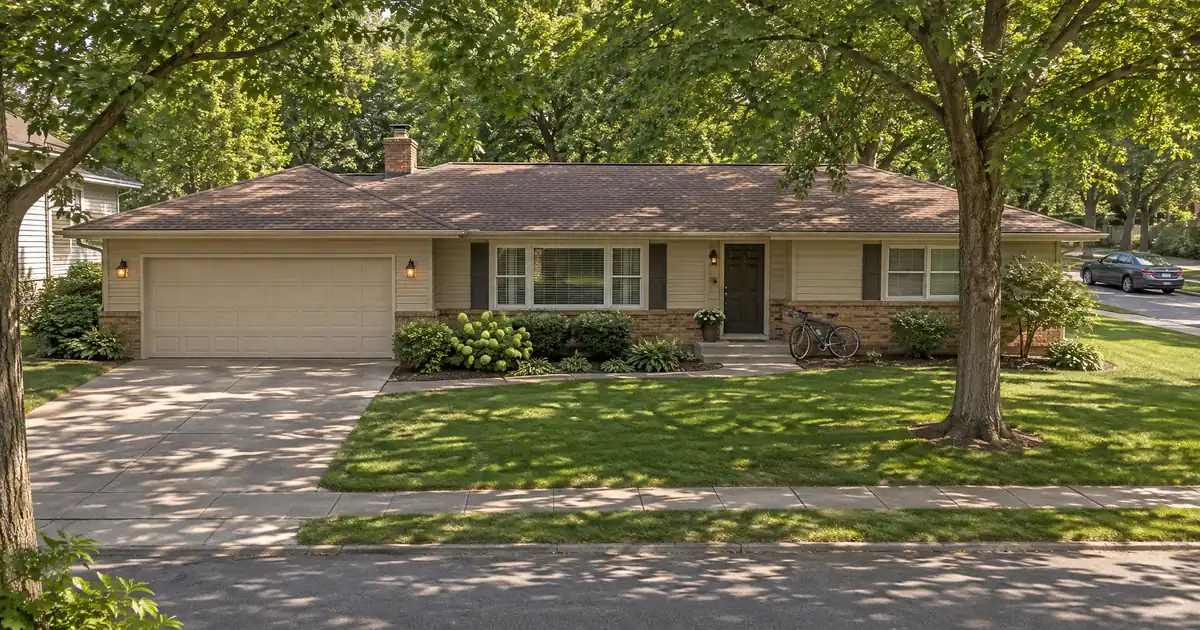
Picture an investor whose father needs help now and whose rental sits at healthy coverage with real equity built up. That investor has two honest options, and neither is free. This piece referees them for the reader who is choosing, not the reader being sold. The property may be your own rental or your father’s. Ownership and signing authority change the picture, and that part belongs with an elder-law attorney.
DSCR Cash-Out Calculator
Run the cash-out numbers in your market
Rate source: Freddie Mac 30-yr average via FRED® — Federal Reserve Bank of St. Louis · effective Nov 5, 2026
Prefilled with starting assumptions — enter your property’s value, balance, taxes, and insurance for a more accurate picture.
Program parameters update from Lendmire’s centralized guideline source. Taxes and insurance are editable estimates.
As of Nov 5, 2026 · General Freddie Mac market benchmark, not a Lendmire loan offer. Property value, balance, taxes, and insurance are editable estimates. Maximum loan-to-value varies by lender, program, property type, and seasoning. Not a Loan Estimate, approval, or commitment to lend. Program availability and eligibility are subject to lender guidelines, credit approval, property review, and underwriting.
Side-by-Side
The refinance column reflects the select-lender network Lendmire places files with. The sale column reflects published industry and tax norms. Both vary by borrower, property, and lender.
| Factor | DSCR Cash-Out Refinance | Waiting to Sell |
|---|---|---|
| Review basis | Property rent vs. full PITIA | Buyer’s financing and market demand |
| Documentation | Entity papers, lease or rent roll, insurance, guarantor credit and assets | Listing, title, payoff, buyer contract |
| Property types | Standard rentals; manufactured, log, barndominium not offered | Any saleable property |
| Entity vesting | LLC can stay on title, with a guarantor | Entity or owner conveys title |
| Leverage limit | About 75% LTV on standard rentals | Not applicable |
| Seasoning | About 6 months of ownership | None |
| Reserves | Commonly around 6 months PITIA; about 9 above $1,500,000 | None required |
| Tax event | Loan proceeds; no sale realized | Gain and depreciation recapture |
| Income afterward | Rental continues, with higher debt | Income stops |
| Timeline | Depends on appraisal and title steps | Depends on listing and buyer closing |
Reserves vary by lender, leverage, loan size, and transaction type, so treat that row as a range. Qualification is subject to lender guidelines and credit approval. This is not a commitment to lend.
When a DSCR Cash-Out Refinance Is the Better Fit
A cash-out refinance is the stronger path when the rental has real equity, healthy coverage even after a bigger loan, and a care need you can fund without selling the asset. It keeps the income stream and avoids a taxable sale.
Three tests decide it. Value comes first: the new loan has to stay at or under roughly 75% of appraised value on a standard rental. Rent coverage comes second: rent divided by full PITIA, meaning principal, interest, taxes, insurance, and any HOA dues, has to clear the program’s floor. Many select programs start at 1.00. A separate select-lender path takes coverage below 1.00, with leverage and terms adjusted. Guarantor strength comes third: most programs want credit around 660, a floor of 620 exists in parts of the network, and 700+ opens the strongest leverage tiers.
The sizing is two-sided. Cash comes out only if the new loan clears both the value limit and the rent-coverage test. A property with plenty of equity but soft rent may produce little cash. A property with strong rent but thin equity does the same. Remember too that a larger loan raises PITIA, so coverage on the new loan will be lower than it is today.
Self-employed and caregiving investors get a practical benefit here. Personal income documents are generally not part of a DSCR file, so a caregiver who has cut back work hours is reviewed on the property, though entity documents, insurance, and guarantor credit and asset checks still apply. Lendmire’s complete DSCR loans guide walks through that document set.
Tax treatment is the other half of the comparison. A sale can trigger tax on gain and on depreciation taken over the years, while a refinance does not by itself create a taxable sale. Tax treatment varies; consult a qualified professional.
One more point. A DSCR ratio compares rent to PITIA only. Clearing the floor is not the same as positive cash flow. Repairs, vacancy, management, utilities, and capex sit outside the calculation. If the rental barely covers itself, adding debt for care costs can leave a gap you fill from your own pocket.
When Waiting to Sell Is the Better Fit
Waiting to sell is the better call when the property can’t comfortably carry more debt, when you want out of landlording anyway, or when your basis makes a sale cleaner than it looks. It’s also right when the care need is long-term and you’d rather not add a fixed obligation.
Start with the tax math. Pricing and available terms vary by lender, borrower profile, property type, and full underwriting review. Depreciation taken on a rental reduces basis, so the gain on a long-held rental can be larger than owners expect. A sale is a taxable event. A cash-out refinance, being loan proceeds, is generally not. Confirm either with a CPA.
A 1031 exchange does not solve a care-funding problem. It defers tax only when proceeds roll into like-kind property. Cash you take out is taxed, and property held primarily for sale isn’t eligible. If the goal is cash for a parent, an exchange pushes the wrong direction.
Inherited property is a separate case. Basis generally steps up to fair market value at death, which can remove recapture on a later sale. That is a reason some families wait, though waiting on an inheritance is not a plan for a care need that starts now.
Selling also suits the investor whose coverage is already thin. Properties near the floor, with heavy deferred repairs, or with a vacancy problem rarely support a large new loan. In that case the refinance may produce little cash, and the sale is the honest answer. Honestly, this is where many investors reach for a cash-out because it feels less final. If the rental doesn’t cover itself, the loan only delays the decision and adds debt to it.
Timing is the weak spot. A sale depends on listing, buyer financing, and closing. A refinance depends on appraisal, rent opinion, and title steps. Neither timeline is guaranteed, so if the care date is fixed, plan a bridge from other funds for the gap.
The Ownership and Medicaid Question
If the rental is your father’s, who signs matters more than which loan you pick. Power of attorney, a trust, or guardianship decide who can borrow or sell. Those are title questions for an elder-law attorney, not a broker.
Medicaid adds a second layer if the plan involves moving property. Medicaid reviews transfers made in the 60 months before a long-term-care application, and Nolo notes California uses a shorter 30-month window. Selling a property below market value, or deeding it to a child, can create a penalty period. Medicaid is state-administered, so rules vary.
The practical distinction: borrowing against a rental and spending the proceeds on care is a different act from deeding the property to family. Don’t assume either is safe without advice. Gift tax and the Medicaid look-back are also separate systems.
If the parent moves into the rental, or it stops being a rental, the loan’s character changes. Owner-occupancy changes how consumer-credit rules apply, and the CFPB’s commentary on those rules is the place to see where the lines fall. DSCR loans are designed for non-owner-occupied investment properties, so a plan that includes your father living in the unit should be raised with the broker before an application.
Key Terms Defined
DSCR (debt service coverage ratio): Monthly rent used for lender review divided by the full monthly obligation of principal, interest, taxes, insurance, and any HOA dues.
Seasoning: The ownership period a lender expects before it will size a cash-out loan, about 6 months across most of the network, measured from title recording.
Cash-out refinance: A new, larger loan that pays off the old lien and returns the difference to the borrower after costs.
Depreciation recapture: The part of a sale gain tied to depreciation previously taken, taxed at up to 25%.
Guarantor: The individual who signs personally when an LLC holds title and signs the note.
DSCR vs. conventional financing
There are two common ways to finance an investment property, and they qualify you differently — here’s how investors weigh them.
Why investors choose it
- Qualifies on the property’s rental income — no personal tax returns, W-2s, or pay stubs needed to document income.
- No personal debt-to-income ceiling to clear, so existing mortgages and obligations don’t cap your borrowing the same way.
- Can be closed in an LLC, keeping the property inside a business entity.
- Built for scaling — not held to the limit on number of financed properties that conventional financing applies.
- Underwriting centers on the deal: generally qualifies when the rent covers the payment, a 1.00x coverage ratio being a common baseline (confirmed in underwriting).
- Designed specifically for investment property, including long-term and, where the program allows, short-term rentals.
Where it’s strong
- Often the lowest ongoing financing cost for a buyer who fully qualifies on personal income — a fit for a first property or a cost-first purchase.
Trade-offs for investors
- Requires full personal income documentation and must fit within a debt-to-income limit — salary, existing debts, and other mortgages all count.
- Typically held in your personal name rather than a business entity.
- Caps how many financed properties you can carry, which can become a ceiling as a portfolio grows.
- Evaluates you as a borrower as much as the property, which usually means more paperwork.
How investors usually choose: a first or single property often optimizes for the lowest financing cost; portfolio builders often optimize for leverage, vesting in an LLC, and scaling past conventional caps. The right answer depends on your goals, the property, and current guidelines — both paths run through select lenders in Lendmire’s wholesale network, with eligibility and terms confirmed in underwriting.
Which Path Fits? A Decision Frame
Run three questions in order.
1. Does the rental cover itself after a larger loan? If coverage stays comfortably above the program floor, the refinance stays on the table. If it falls near or below, either a sub-1.00 path through select lenders (with leverage and terms adjusted) or a sale becomes the realistic route. Pulling cash at high leverage lowers coverage, which leaves less room for a vacancy.
2. Is there enough equity at roughly 75% LTV? If the existing lien already sits near that line, no meaningful cash comes out.
3. How long might the care need run? Open-ended costs paired with a fixed, bigger payment is the real risk. If the horizon is uncertain, a sale’s clean break may beat a loan you must service for years. Terms depend on the lender’s guidelines, the property type, the leverage, and a full review of the credit profile.
Two flip points are worth naming. If your basis is low and coverage is strong, the refinance usually wins. If your coverage is thin and you’d sell within a few years anyway, waiting to sell usually wins. Mixed files, such as strong rent with thin equity, are real toss-ups.
Across the wholesale network, the strongest files clear both tests: enough equity and enough rental coverage. A larger equity cushion in a cash-out refinance lowers the loan balance and can lift coverage, but it never erases leverage caps, credit floors, reserve rules, or property eligibility.
A Balanced Verdict
Choose the cash-out refinance if the rental earns its place, the equity is real, and the care need justifies carrying more debt. Choose the sale if coverage is thin, the loan would stretch you, or you were ready to exit anyway. Choose neither until you’ve spoken with an elder-law attorney if property is changing hands or Medicaid is in play, and a CPA before any sale.
If you are buying or refinancing a rental property and want to see how the numbers work, Lendmire can help you compare DSCR loan options based on the property income, credit profile, leverage, and investor goals. Reach the team at 828-256-2183 or through the quote form.
Frequently Asked Questions
Can I use DSCR cash-out proceeds to pay for my father’s care?
Use depends on the program and on what the borrower attests to at application. DSCR loans are business-purpose loans on rental property, and how proceeds are used is a program question to settle with your broker before applying. Your own counsel should weigh in too, since a cash-out used for personal purposes can raise classification questions.
How much cash can a DSCR cash-out refinance produce?
It depends on appraised value, rent used for lender review, and your existing payoff. On most files the new loan tops out around 75% LTV on a standard rental, and it must also clear the coverage test. Reserves, commonly around 6 months of PITIA, come out of your own assets. Equity is not a guaranteed cash figure.
Does strong rent shorten the seasoning period?
No. Rent coverage and seasoning are separate tests. About 6 months of ownership, measured from title recording, is the common expectation, and inside that window lenders often size on the lower of cost or appraised value. A recent deed into an LLC can affect the clock depending on the program.
Is a cash-out refinance taxable like a sale?
Proceeds from a refinance are loan proceeds, so you generally don’t realize a sale. A sale can trigger gain and depreciation recapture, with the unrecaptured portion taxed at up to 25%.
Can a 1031 exchange fund a parent’s care?
No. An exchange defers tax only when proceeds are reinvested in like-kind property. Cash you take out is taxed, so it can’t double as a care fund.
For how equity extraction works on an investment property, see Lendmire’s guide to cash-out refinance on an investment property.
For current guidelines and terms, see Lendmire’s DSCR loan programs page.
About Lendmire
Lendmire (NMLS# 2371349) is a mortgage brokerage focused on DSCR investor financing, helping arrange programs through wholesale and investor-lending channels in 41 markets, including Washington, D.C. DSCR loans are evaluated by the lender on property cash flow rather than personal income, subject to lender guidelines, supporting LLC closings and accommodating investors with four or more financed properties. Scotsman Guide Top Mortgage Workplace in both 2025 and 2026.
Get Started
Ready to find the right loan for you?
See your offer in seconds. No credit pull, no obligation.
Informational only. Not a Loan Estimate, approval, or commitment to lend. Program availability and eligibility are subject to lender guidelines, credit approval, property review, and underwriting.
References
1. Nolo, Transferring Assets to Qualify for Medicaid
2. CFPB, Regulation Z 1026.3 Commentary
This article is part of Lendmire’s investment property cash-out refinance program — full qualification details, guidelines, and scenarios live on the program page.
Related reading: How to Qualify and Apply for a DSCR Cash-Out Refinance on a Rental With a Section 8 Tenant · How Soon Can a DSCR Cash-Out Refinance Fund While You’re Under Contract? · How to Qualify and Apply for a DSCR Cash-Out Refinance Without Bringing Cash to Closing
Brandon Miller
Founder & CEO, Mortgage Loan Originator, Lendmire LLC
- Mortgage Loan Originator · NMLS# 1129696 · Verify on NMLS Consumer Access
- North Carolina Real Estate Broker · License# 343312 · Verify on NCREC
- North Carolina Insurance Producer · License# 19053198 · Property, Casualty, Life, Health · Verify on NAIC SBS
- Lendmire LLC · Firm NMLS# 2371349 · Verify firm licensure
Legal disclosures. Lendmire (NMLS# 2371349) is a state-licensed mortgage brokerage that arranges financing through wholesale lender relationships. Lendmire is not a direct lender, depository institution, or registered financial advisor. The discussion above is general informational content about real estate financing — it is not financial, legal, or tax advice, and readers should consult licensed professionals for guidance on their individual circumstances. Loan inquiries are subject to lender underwriting; this article does not represent a commitment to lend. Loan terms, rates, and qualification standards vary by borrower, property, and state, and are subject to change at any time. Equal Housing Opportunity. NMLS Consumer Access: nmlsconsumeraccess.org.