
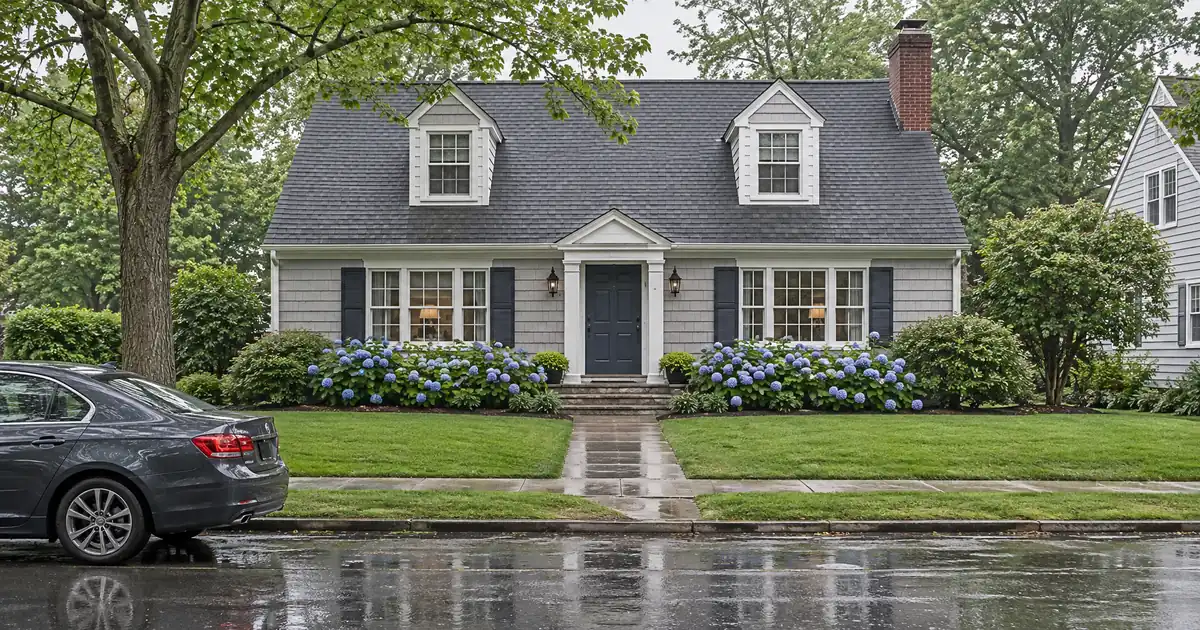
The Quick Read: Yes, in most cases, an unmarried co-owner can stay on title, either as a co-borrower or as a title holder who is not on the loan, subject to lender guidelines. The one setup that stalls a file is a title holder who will not sign at closing. A DSCR cash-out qualifies primarily on property-level rental income covering the payment, so a co-owner adds credit and shared liability, not income.
- A co-owner can be a co-borrower, a non-borrowing title holder, or an LLC member who guarantees the loan.
- Every record owner generally signs something at closing, even if only the lien.
- On a standard rental, cash-out leverage is capped at 75% LTV, and the property generally needs about 6 months of ownership first.
- Moving a partner off title before the old loan is paid off can trigger a due-on-sale problem.
- A first-lien cash-out refinance pays off the old note, which is what releases a departing owner from that debt.
What Does an Unmarried Co-Owner Change on the File?
Not much on the income side, and a lot on the signature side. DSCR compares the property’s rent to its full payment: principal, interest, taxes, insurance, and any HOA dues. A co-owner’s paycheck does not raise that ratio, and a strong co-borrower does not rescue weak property coverage. Lendmire’s piece DSCR Cash-Out Refinance Requirements on a Co-Owned Property covers the same point from the borrower side.
DSCR Cash-Out Calculator
Run the cash-out numbers in your market
Rate source: Freddie Mac 30-yr average via FRED® — Federal Reserve Bank of St. Louis · effective Nov 5, 2026
Prefilled with starting assumptions — enter your property’s value, balance, taxes, and insurance for a more accurate picture.
Program parameters update from Lendmire’s centralized guideline source. Taxes and insurance are editable estimates.
As of Nov 5, 2026 · General Freddie Mac market benchmark, not a Lendmire loan offer. Property value, balance, taxes, and insurance are editable estimates. Maximum loan-to-value varies by lender, program, property type, and seasoning. Not a Loan Estimate, approval, or commitment to lend. Program availability and eligibility are subject to lender guidelines, credit approval, property review, and underwriting.
What the co-owner does add is a credit pull and shared liability on the note. Credit is reviewed for each borrower or guarantor. Program credit tiers run 620, 660, 680, and 700, with 620 as the floor, and higher scores open stronger leverage tiers, though cash-out still tops out at 75% LTV. No personal debt-to-income test runs on a DSCR file. Each figure is subject to lender guidelines and a complete review of property type, leverage, and credit.
Marital status itself is not a variable. Title, the borrower structure, and the signing requirements drive the file.
Key Terms Defined
Title: the record of who legally owns the property, shown on the deed.
Note: the promise to repay the loan. Only borrowers sign it.
Security instrument (mortgage or deed of trust): the document that puts a lien on the property as collateral. Record owners generally sign it.
Guaranty: a separate signed promise by a person to back an LLC borrower’s loan.
Seasoning: the ownership period a lender expects before cash-out is available, about 6 months from title recording.
Who Signs What? The Role Matrix
The cleanest way to see the options is by role. This table shows how an unmarried co-owner typically fits each structure, subject to program terms.
| Co-owner role | Signs note | Signs lien | Credit reviewed | On title |
|---|---|---|---|---|
| Co-borrower | Yes | Yes | Yes | Yes |
| Non-borrowing title holder | No | Yes | Usually not | Yes |
| LLC member and guarantor | Guaranty | Via LLC | Yes | Via LLC |
| Not on title | No | No | No | No |
The non-borrowing row deserves a flag, because that title holder signs the lien but not the note. Whether a given cash-out program accepts the same setup depends on its terms, so confirm it at the start of the file.
Can the Lender Make My Co-Owner Sign?
Partly. The federal credit-discrimination rule limits who a creditor can force onto a loan. Under Regulation B at the CFPB, a creditor may not require the signature of an applicant’s spouse or other person on a credit instrument when the applicant is creditworthy alone.
There is a carve-out for secured loans. Under the eCFR text of 12 CFR 1002.7, a creditor may require signatures needed under state law to make the property available to satisfy the debt. That covers creating a valid lien and passing clear title.
In plain terms: an unmarried co-owner can usually be required to sign the lien. They generally cannot be forced onto the note as a borrower if the other owner qualifies alone. Whether a specific business-purpose DSCR file falls under every part of that rule is a compliance question for the lender and its counsel.
How a Cash-Out Handles the Old Loan
A first-lien cash-out replaces the whole existing loan. Every record owner is therefore part of one new transaction, and the old note is paid off at closing. With unmarried co-owners, one or both may borrow, and all record owners sign.
The payoff matters if someone is leaving. A deed alone never releases a departing co-borrower from the old debt, but paying off the old note does. A second-lien equity product leaves the old first mortgage in place, so it does not do that job.
Choosing the Borrower Structure
Borrower structures usually fall into one of three setups.
1. Individual co-borrowers. Both owners sign the note, both are credit-reviewed, and both carry liability. Simple, and the least friction when both are cooperative.
2. One borrower, one non-borrowing title holder. The borrower qualifies the file. The other owner signs the lien and any acknowledgment. This keeps the second owner’s credit and liability off the loan, if the program allows it.
3. LLC borrower with guarantors. When an LLC holds title, the refinance pays off the old loan and title stays put. The LLC signs the note and mortgage through an authorized member, and a person signs a separate guaranty. A multi-member LLC may need more than one guarantor, depending on the program. Entity borrowers are subject to lender program eligibility.
Some lenders restrict cash-out on an evenly split LLC. The network position is broader, but ownership splits are a real overlay to ask about on a 50/50 entity.
How the Property Gets Underwritten
The loan is sized on the lower of the value limit and the coverage limit. Cash-out refinance tops out around 75% LTV on a standard rental across most of the network. Short-term rental collateral steps down to 70% on cash-out. About 6 months of seasoning is the common expectation, measured from title recording. Final terms depend on the lender’s guidelines, the property type, and the borrower’s complete credit picture.
Reserves vary by lender, leverage, loan size, and transaction type. Around 6 months of PITIA is common, and loans above $1,500,000 typically step up to about 9 months. Standard programs go up to $3,000,000. Coverage of 1.00 is where select programs start, and stronger ratios open better pricing and leverage. A separate select-lender path takes coverage below 1.00, with leverage and terms adjusted.
One caution on the ratio. Clearing 1.00 is not the same as positive cash flow. Repairs, vacancy, management, utilities, and capex sit outside the calculation.
Manufactured homes, log homes, and barndominiums fall outside the network’s DSCR programs. If one owner lives in the property, a DSCR loan is generally not the path, because these are non-owner-occupied investor programs.
What If the Co-Owner Won’t Sign?
Then the cash-out stalls. Title cooperation is required, because a new lien cannot attach cleanly without every record owner’s signature. The realistic fixes:
- Buyout. Pay the partner out. A payout counts as cash-out, so the 75% LTV cap applies and the rent must cover the larger new payment.
- Retitle. Restructure ownership by agreement, then refinance, subject to seasoning from the new recording.
- Different property or product. Pull equity elsewhere instead.
- Partition. A court-ordered sale or split is the last resort when negotiation fails. Leverage, reserves, and pricing vary by lender and program; the final terms follow the full file review.
The Due-on-Sale Trap
Moving a partner off title before the old loan is paid off is the mistake that creates the most damage. A transfer can trigger the existing lender’s due-on-sale clause, and the departing owner stays liable on the note.
Federal protection is narrow. The exceptions in 12 CFR 191.5 cover a transfer to a relative on the borrower’s death, a transfer where a spouse or child becomes an owner, and a divorce-related transfer to a spouse. Unmarried co-owners and unrelated partners are not on that list.
Transfers into an LLC are a separate gray area. Practitioner legal commentary from Wealth Counsel says the federal protection does not cover moving mortgaged property into an LLC and that written lender approval is the safe route. Treat the safe sequence as: refinance first, record the new title at closing. Do not promise yourself protection from a statute that may not apply.
Where Investors Go Wrong
Assuming the co-owner’s income helps. It does not. Property rent drives the file.
Assuming every title holder must be a borrower. Not necessarily. A title holder can sign only the lien, where the program allows it.
Quitclaiming a partner off title and calling it done. The old debt stays. Only payoff or an assumption releases them.
Assuming marriage rules apply. Community-property signature rules in Regulation B concern spouses relying on a spouse’s separate income. They do not extend to unmarried co-owners, who also lack homestead protections spouses may have. A written co-ownership agreement fills that gap. Adding or removing an owner can also carry gift, tax, or estate consequences, so involve counsel and the title company on those.
DSCR vs. conventional financing
There are two common ways to finance an investment property, and they qualify you differently — here’s how investors weigh them.
Why investors choose it
- Qualifies on the property’s rental income — no personal tax returns, W-2s, or pay stubs needed to document income.
- No personal debt-to-income ceiling to clear, so existing mortgages and obligations don’t cap your borrowing the same way.
- Can be closed in an LLC, keeping the property inside a business entity.
- Built for scaling — not held to the limit on number of financed properties that conventional financing applies.
- Underwriting centers on the deal: generally qualifies when the rent covers the payment, a 1.00x coverage ratio being a common baseline (confirmed in underwriting).
- Designed specifically for investment property, including long-term and, where the program allows, short-term rentals.
Where it’s strong
- Often the lowest ongoing financing cost for a buyer who fully qualifies on personal income — a fit for a first property or a cost-first purchase.
Trade-offs for investors
- Requires full personal income documentation and must fit within a debt-to-income limit — salary, existing debts, and other mortgages all count.
- Typically held in your personal name rather than a business entity.
- Caps how many financed properties you can carry, which can become a ceiling as a portfolio grows.
- Evaluates you as a borrower as much as the property, which usually means more paperwork.
How investors usually choose: a first or single property often optimizes for the lowest financing cost; portfolio builders often optimize for leverage, vesting in an LLC, and scaling past conventional caps. The right answer depends on your goals, the property, and current guidelines — both paths run through select lenders in Lendmire’s wholesale network, with eligibility and terms confirmed in underwriting.
A Worked Scenario
Two friends co-own a duplex that they rent out. One wants cash out to fund the next purchase. The other wants to stay in the deal and keep their credit out of it.
Rent against the full payment on the new, larger loan comes out near 1.2x, which clears the 1.00 starting point for select programs with room to spare. The borrowing friend runs credit at the 700+ tier, so leverage up to the 75% cap is on the table. The property has been owned well past the 6-month seasoning mark.
The structure: one borrower, one non-borrowing title holder, if the program permits it. The second friend signs the lien at closing. If the program requires both on the note, the fallback is co-borrowers or an LLC with guarantors. The old loan is paid off at closing, and the title company confirms what state law requires for signing.
Before You Apply
1. Pull a title report and confirm exactly who holds title and how.
2. Put the co-ownership terms in writing, including what happens on a sale or exit.
3. Ask the lender whether non-borrowing title holders and 50/50 entities are accepted.
4. Gather lease evidence and entity documents, if an LLC holds title.
5. Confirm reserves documentation against the loan size.
6. Sequence the closing so payoff and recording happen together, with no title change beforehand.
Lendmire’s complete DSCR loans guide covers the baseline mechanics. Tax treatment varies; consult a qualified professional.
Frequently Asked Questions
Can my unmarried partner be on title but not on the loan?
Often yes, if the program allows a non-borrowing title holder. That person typically signs the security instrument and an acknowledgment, not the note. Program terms differ, so confirm it before the file goes in.
Does a co-borrower’s income help me qualify for a DSCR cash-out?
No. The file qualifies primarily on property-level rental income covering the payment, subject to lender guidelines. A co-borrower adds credit and shared liability. It will not offset weak coverage.
Can I use a cash-out refinance to buy out my co-owner?
Yes, in many cases. The payout counts as cash-out, so the 75% LTV cap on a standard rental applies, and rent must cover the larger payment. The payoff also releases the departing owner from the old debt. Terms vary by lender guidelines, property type, leverage, credit profile, and full file review.
Will deeding my partner off title first trigger a due-on-sale clause?
Yes, it can. The federal exceptions cover specific family and divorce transfers, not unmarried partners. Refinancing first and recording title at closing avoids the issue.
Can I keep the property in an LLC with my co-owner as a member?
Generally yes, subject to program terms. The LLC signs the note, and one or more members sign a guaranty. Some lenders ask about ownership splits, so ask early.
If you are buying or refinancing a rental property and want to see how the numbers work, Lendmire can help you compare DSCR loan options based on the property income, credit profile, leverage, and investor goals. Lendmire is a mortgage broker arranging financing through select lenders in its wholesale network across 41 markets, including Washington, D.C. Call 828-256-2183. This is informational, not a commitment to lend.
For the mechanics of pulling equity out of a rental property, see Lendmire’s guide to cash-out refinance on an investment property.
About Lendmire
As a DSCR and non-QM mortgage broker, Lendmire — NMLS# 2371349 — connects investors with wholesale lending channels across 41 markets, including Washington, D.C. The property’s rental income, not the borrower’s tax returns, is central to lender review, which works for self-employed operators and portfolios beyond four financed properties. Scotsman Guide named Lendmire a Top Mortgage Workplace in both 2025 and 2026.
Get Started
Ready to find the right loan for you?
See your offer in seconds. No credit pull, no obligation.
Informational only. Not a Loan Estimate, approval, or commitment to lend. Program availability and eligibility are subject to lender guidelines, credit approval, property review, and underwriting.
References
4. Wealth Counsel, transferring title of mortgaged real property
This article is part of Lendmire’s investment property cash-out refinance program — full qualification details, guidelines, and scenarios live on the program page.
Related reading: How to Unfreeze Your Credit in Time for a DSCR Cash-Out Refinance · What a DSCR Cash-Out Refinance Lender Needs From a New Spouse Not on Title? · Can a DSCR Cash-Out Refinance Remove an Ex From the Rental’s Loan?
Brandon Miller
Founder & CEO, Mortgage Loan Originator, Lendmire LLC
- Mortgage Loan Originator · NMLS# 1129696 · Verify on NMLS Consumer Access
- North Carolina Real Estate Broker · License# 343312 · Verify on NCREC
- North Carolina Insurance Producer · License# 19053198 · Property, Casualty, Life, Health · Verify on NAIC SBS
- Lendmire LLC · Firm NMLS# 2371349 · Verify firm licensure
Legal disclosures. Lendmire (NMLS# 2371349) is a state-licensed mortgage brokerage that arranges financing through wholesale lender relationships. Lendmire is not a direct lender, depository institution, or registered financial advisor. The discussion above is general informational content about real estate financing — it is not financial, legal, or tax advice, and readers should consult licensed professionals for guidance on their individual circumstances. Loan inquiries are subject to lender underwriting; this article does not represent a commitment to lend. Loan terms, rates, and qualification standards vary by borrower, property, and state, and are subject to change at any time. Equal Housing Opportunity. NMLS Consumer Access: nmlsconsumeraccess.org.