
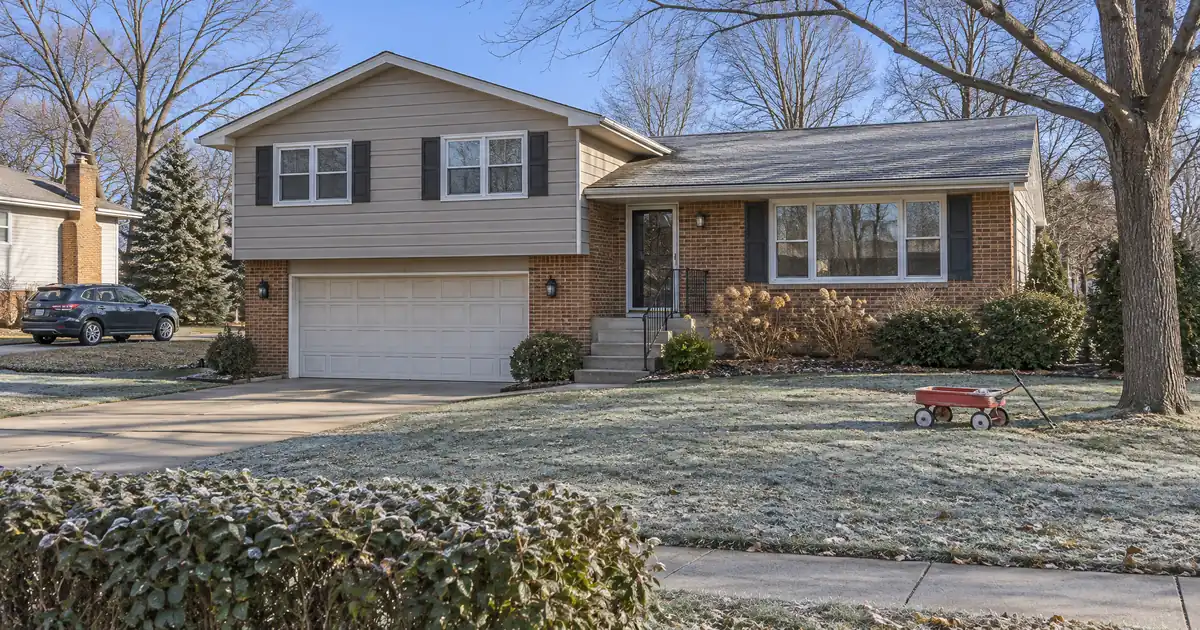
The Quick Read: It depends on the lender’s instructions, but the appraiser usually reports unpermitted work, may leave the space out of living area and legal rent, and the lender can then size the loan on a lower value and a lower rent. No national rule makes the space worthless, and no rule makes it count. Each lender sets its own treatment.
- The appraiser measures what is physically there and comments on quality and market impact.
- Space that fails the measuring standard is usually reported outside gross living area.
- Rent from an extra bedroom or unit can fall back to the legal configuration, which lowers coverage.
- A lower appraised value shrinks cash-out proceeds, since the loan is capped at about 75% LTV on a cash-out of a standard rental.
- Fixes include permitting the work after the fact, removing it, or sizing the deal without it.
Picture a duplex owner who converted a garage into a bedroom, priced it into a refinance plan, and then sees an appraisal that treats the garage as a garage. That one sentence in the report can change the value, the rent, and the cash back.
DSCR Cash-Out Calculator
Run the cash-out numbers in your market
Rate source: Freddie Mac 30-yr average via FRED® — Federal Reserve Bank of St. Louis · effective Nov 5, 2026
Prefilled with starting assumptions — enter your property’s value, balance, taxes, and insurance for a more accurate picture.
Program parameters update from Lendmire’s centralized guideline source. Taxes and insurance are editable estimates.
As of Nov 5, 2026 · General Freddie Mac market benchmark, not a Lendmire loan offer. Property value, balance, taxes, and insurance are editable estimates. Maximum loan-to-value varies by lender, program, property type, and seasoning. Not a Loan Estimate, approval, or commitment to lend. Program availability and eligibility are subject to lender guidelines, credit approval, property review, and underwriting.
This guide walks through what the appraiser does, where the exceptions sit, and how to plan before you order. For the wider picture on how these loans work, see Lendmire’s complete DSCR loans guide.
Key Terms Defined
Unpermitted work is construction or a conversion done without the building permit the local authority required.
Gross living area (GLA) is the finished, heated, above-grade space an appraiser counts toward a home’s size.
Rent schedule is the appraiser’s opinion of market rent for the property as it legally exists.
DSCR (debt service coverage ratio) is monthly rent divided by the full monthly payment, meaning principal, interest, taxes, insurance, and any HOA dues (PITIA).
Seasoning is the ownership period a lender wants before it allows a cash-out. About 6 months is the common expectation across the network, measured from title recording.
Extraordinary assumption is an appraiser’s presumption that an uncertain fact is true, which the report must disclose.
Does the Appraiser Count Unpermitted Space in Value?
Sometimes, partly, or not at all. The answer comes from three layers: the appraiser’s professional standards, the lender’s instructions to the appraiser, and the lender’s own guidelines.
DSCR is a non-agency product, so no single government rulebook governs it. For contrast only, the Fannie Mae Selling Guide tells appraisers to comment on the quality, appearance, and market-value impact of an addition that lacks a permit. That is a reporting duty. It is not an instruction to assign zero value. A practitioner reading of the same section makes the same point: the guide does not tell the appraiser to zero out the space.
DSCR lenders in the network set their own rules, and many instruct the appraiser up front to exclude unpermitted space from living area. A few will give it partial credit when the work looks workmanlike. The strictest overlays want a legal, permitted configuration or no credit at all.
How Does the Appraiser Measure It?
Appraisers measure to a standard called ANSI Z765. Fannie Mae has required it for appraisals with an effective date on or after April 1, 2022, according to Wisconsin REALTORS® Magazine and the Fannie Mae ANSI fact sheet.
The standard tests physical traits. Is the space finished, above grade, heated, and reachable from inside the home? Appraiser education material notes it does not list permit status as a criterion. In practice, unpermitted space usually loses because it fails ceiling height or sits below grade, per the same practitioner explainer.
Two consequences follow:
- A permitted basement can still fail the measuring test.
- A well-built unpermitted room that passes the test may still be disclosed and flagged.
The county record or the MLS square footage does not control. The appraiser measures, then reports.
What Does the Appraiser Do, Step by Step?
On a cash-out, the lender orders a full appraisal with a market rent opinion. The forms come from the agency world: Form 1007 is the single-family rent schedule, and Form 1025 covers small 2-4 unit income properties. Here is the usual sequence.
1. The appraiser sees the work. Common tells are a square-footage mismatch against county records, mismatched finishes, and visible safety issues, as this contractor explainer describes. Appraisers are not required to prove the work was unpermitted.
2. The appraiser measures and classifies. Space that fails the test is reported outside gross living area. It can still be disclosed and sometimes adjusted separately.
3. The appraiser comments on quality and marketability. One appraiser-written explainer says flexibility often depends on workmanlike construction, whether the work is common for the area, market data in the report, and insurability. The post is older, so treat it as context.
4. The report may carry assumptions. An appraiser can use an extraordinary assumption or a hypothetical condition. The Appraisal Institute says the report must clearly disclose them and state that they might have affected the conclusions.
5. The lender decides. Options are to exclude the area, accept a discounted value, require legalization, or decline.
6. Value feeds the loan size, and rent feeds coverage. Both numbers come out of the same appraisal.
That last step is where investors get hurt. One appraisal hits two tests at once.
How Does It Change the Loan and the Cash Out?
A cash-out on a standard rental tops out around 75% LTV across most of the network. LTV is the loan balance divided by appraised value. The cap applies to the appraiser’s value, not your after-repair estimate. Final terms depend on lender guidelines, property type, leverage, and the borrower’s complete credit picture.
Leverage magnifies a value miss. Say you plan around a value that includes the converted space, and the appraiser excludes it. The loan cap drops, your existing payoff stays the same, and the gap comes out of your cash. Because the cap is a percentage of value, every dollar of value the appraiser removes lowers the maximum loan by about 75 cents, and the whole reduction comes out of the cash you would have received.
Then the rent test runs. If a bedroom or a unit is not legal, the market rent opinion can fall back to the legal bedroom or unit count. Rent drops while the payment on the new loan does not, so the coverage ratio slips. Most select programs start at 1.00 coverage. A separate select-lender path takes coverage below 1.00, with leverage and terms adjusted. Either way, a lower rent opinion works against the file.
One more point: clearing 1.00 does not mean positive cash flow. DSCR compares rent to PITIA only. Repairs, vacancy, management, and utilities sit outside it.
Equity available also depends on reserves, which commonly run around 6 months of PITIA and step up to about 9 months on balances above $1,500,000. Your proceeds are not a guaranteed figure.
What Decides the Outcome? A Severity Ladder
Not all unpermitted work is equal. The table shows the usual pattern. Treatment varies by appraiser and lender.
| Type of work | Typical appraiser handling | Effect on value and rent |
|---|---|---|
| Cosmetic (paint, flooring) | Reflected in condition | Usually minimal |
| Systems (electrical, plumbing, roofing) | Flagged, may raise safety questions | Repair or legalization condition possible |
| Added bedroom or bath | Often outside GLA if it fails ANSI | Value and room count can drop |
| Garage conversion | Common case; often reported as a garage | Rent may fall back to legal count |
| Extra unit (ADU, extra kitchen) | Unit count follows legal use | Its rent is generally excluded |
What pushes a file toward the harsh end:
- The space is a whole separate unit, not an extra room.
- Visible safety issues or poor construction.
- Failure on ceiling height or below-grade status.
- No comparable sales that support value for similar space.
- Trouble getting the space insured.
- A lender overlay that requires permits.
Can the Work Sink the Whole Loan Even if You Don’t Need Its Rent?
Yes, it can. The appraiser reports what is on the property. If the lender’s guidelines require a legal, safe configuration, an unpermitted unit or major system change can trigger a condition or a decline even when the rest of the property covers the payment on its own. Some lenders only note it and move on. The rule is the lender’s, so ask before you order.
Some select lenders may look at an unpermitted unit with strong documentation and a strong borrower. That is the exception, not a general rule, and it varies by program.
What Are the Cures?
Four paths exist, and each has a tradeoff.
| Cure | What it means | Tradeoff |
|---|---|---|
| Permit after the fact | Apply for a retroactive permit | Creates a code-compliance record, but may mean opening walls and fixing deficiencies, per appraiser education material |
| Remove or restore | Undo the conversion | Gives up the added space or rent |
| Lower the ask | Size the loan on legal value and rent | Smaller cash-out, cleaner file |
| Document | Show grandfathering or permit history | Works only where records exist |
Cost and timing vary widely by jurisdiction, and the research supports no reliable number, so get a local quote.
Some files carry a “subject to” condition, meaning the lender wants the fix finished before closing. That is different from an “as-is” value, which accepts the property as it stands, usually at a lower number.
DSCR vs. conventional financing
There are two common ways to finance an investment property, and they qualify you differently — here’s how investors weigh them.
Why investors choose it
- Qualifies on the property’s rental income — no personal tax returns, W-2s, or pay stubs needed to document income.
- No personal debt-to-income ceiling to clear, so existing mortgages and obligations don’t cap your borrowing the same way.
- Can be closed in an LLC, keeping the property inside a business entity.
- Built for scaling — not held to the limit on number of financed properties that conventional financing applies.
- Underwriting centers on the deal: generally qualifies when the rent covers the payment, a 1.00x coverage ratio being a common baseline (confirmed in underwriting).
- Designed specifically for investment property, including long-term and, where the program allows, short-term rentals.
Where it’s strong
- Often the lowest ongoing financing cost for a buyer who fully qualifies on personal income — a fit for a first property or a cost-first purchase.
Trade-offs for investors
- Requires full personal income documentation and must fit within a debt-to-income limit — salary, existing debts, and other mortgages all count.
- Typically held in your personal name rather than a business entity.
- Caps how many financed properties you can carry, which can become a ceiling as a portfolio grows.
- Evaluates you as a borrower as much as the property, which usually means more paperwork.
How investors usually choose: a first or single property often optimizes for the lowest financing cost; portfolio builders often optimize for leverage, vesting in an LLC, and scaling past conventional caps. The right answer depends on your goals, the property, and current guidelines — both paths run through select lenders in Lendmire’s wholesale network, with eligibility and terms confirmed in underwriting.
What Should You Do Before You Order the Appraisal?
Appraisal fees are spent up front, so a pre-check is cheap insurance.
1. Pull the permit history. Checking permits first avoids surprises.
2. Compare records to reality. Does the county square footage match what you can actually measure?
3. Underwrite the deal as legal-only. Run the numbers as if the converted garage were still a garage. If the deal still works at the permitted size and legal rent, the downside is limited.
4. Ask your broker what the lender instructs. Lenders differ on exclusion, discounts, and legalization.
5. Budget for the haircut. The research gives no reliable typical percentage cut, so plan for zero credit on the space.
6. Check insurance. Insurability can matter as much as the appraisal.
Planning a buy, rehab, then refinance? Pull permits during construction. It costs less than doing it later.
A Worked Comparison
Take a small rental with one converted room. Run the file twice.
With the room counted: rent covers the full payment at roughly 1.25x, and the value supports the full 75% LTV cap on a cash-out. These specifics are subject to lender guidelines and a full review of property, leverage, and credit.
With the room excluded: the market rent opinion drops to the legal bedroom count and the value drops with it. Coverage slides toward 1.05x, still above 1.00, but the loan cap shrinks and the cash back falls.
The first version can leave you planning around cash that never arrives. The second looks leaner but is honest about what the property supports. These ratios are modeled assumptions for illustration, not market data.
Common Misconceptions
- “It always gets zero value.” Not by rule. The Fannie Mae wording is “impact, if any.” Outcomes vary by appraiser and lender.
- “If the appraiser doesn’t mention it, it’s fine.” Appraisers are not required to verify permit status. Underwriting, title, or insurance may still raise it.
- “Tenants already pay rent on it, so it counts.” Lenders tie income to the legal configuration. Tenant payments do not override that.
- “Fannie Mae’s rule is the DSCR rule.” It is not. The agency guide is a reference point only.
- “A DSCR loan skips the appraisal.” A cash-out generally needs one.
What About Short-Term Rentals?
The same logic applies, with tighter terms. Short-term rental cash-outs run at 70% LTV on STR collateral, versus 75% on standard rentals, with a 640+ score and about 12 months of hosting history typical. An unpermitted extra sleeping room that inflates your listing is exactly the kind of thing that does not carry into the legal rent opinion. Short-term rental rules can vary by city, county, HOA, and property type, so investors should confirm local rules before relying on projected rental income. Terms depend on the lender’s guidelines, the property type, the leverage, and a full review of the credit profile.
Frequently Asked Questions
Will the appraiser definitely report unpermitted work?
Not necessarily. Appraisers are not required to prove permit status, but they report what they see and measure. Mismatched square footage, odd finishes, and visible safety issues are the usual tells.
Does unpermitted rent count toward the coverage ratio?
Generally not for an unpermitted extra unit. The appraiser and lender treat the property by its legal unit and bedroom count, so rent may fall back to that. Some select lenders may review documented exceptions, and that varies by program.
Can I dispute the appraisal?
You can ask your broker about a reconsideration request, usually with comparable sales or permit records that support your case. Whether a lender accepts one is the lender’s call, so ask before you pay for a second look.
Does cosmetic work without a permit matter?
Usually little. Paint and flooring inside existing space are generally reflected in the condition. Structural and systems work creates more uncertainty.
What if the prior owner did the work?
It can still show up. The appraiser reports what is on the property, whoever built it. Permit history and a retroactive permit are the practical paths.
If you are buying or refinancing a rental property and want to see how the numbers work, Lendmire can help you compare DSCR loan options based on the property income, credit profile, leverage, and investor goals. Qualification is subject to lender guidelines. This is not a commitment to lend.
For the mechanics of pulling equity out of a rental property, see Lendmire’s guide to cash-out refinance on an investment property.
About Lendmire
Lendmire, NMLS# 2371349, is a non-QM mortgage broker serving real estate investors in 41 markets, including Washington, D.C., through DSCR investor loan programs. Qualification is generally reviewed around the subject property’s rental income, not the borrower’s W-2 history — a practical fit for LLC-titled portfolios and self-employed investors. All scenarios remain subject to lender review and program guidelines. Two consecutive Scotsman Guide Top Mortgage Workplace recognitions (2025, 2026).
Get Started
Ready to find the right loan for you?
See your offer in seconds. No credit pull, no obligation.
Informational only. Not a Loan Estimate, approval, or commitment to lend. Program availability and eligibility are subject to lender guidelines, credit approval, property review, and underwriting.
References
1. Fannie Mae Selling Guide B4-1.3-05
3. Wisconsin REALTORS® Magazine, ANSI
This article is part of Lendmire’s investment property cash-out refinance program — full qualification details, guidelines, and scenarios live on the program page.
Related reading: Super Jumbo DSCR Cash-Out Refinance Requirements When the Appraisal Comes in Low · Can You Use a DSCR Cash-Out Refinance to Fund a Private Lending Deal? · How to Qualify and Apply for a DSCR Cash-Out Refinance When the Appraisal Comes in Low
Brandon Miller
Founder & CEO, Mortgage Loan Originator, Lendmire LLC
- Mortgage Loan Originator · NMLS# 1129696 · Verify on NMLS Consumer Access
- North Carolina Real Estate Broker · License# 343312 · Verify on NCREC
- North Carolina Insurance Producer · License# 19053198 · Property, Casualty, Life, Health · Verify on NAIC SBS
- Lendmire LLC · Firm NMLS# 2371349 · Verify firm licensure
Disclosures. The information presented in this article is general market commentary, not financial, legal, or tax advice. Lendmire is a mortgage brokerage (NMLS# 2371349) — not a direct lender or depository institution — and loan placement is subject to lender underwriting. Nothing in this content represents a commitment to lend. Loan terms, pricing, and program availability vary based on borrower qualifications, property characteristics, and state of subject property, and are subject to change at any time. Lendmire complies with Equal Housing Opportunity requirements. Consumer access: nmlsconsumeraccess.org.