
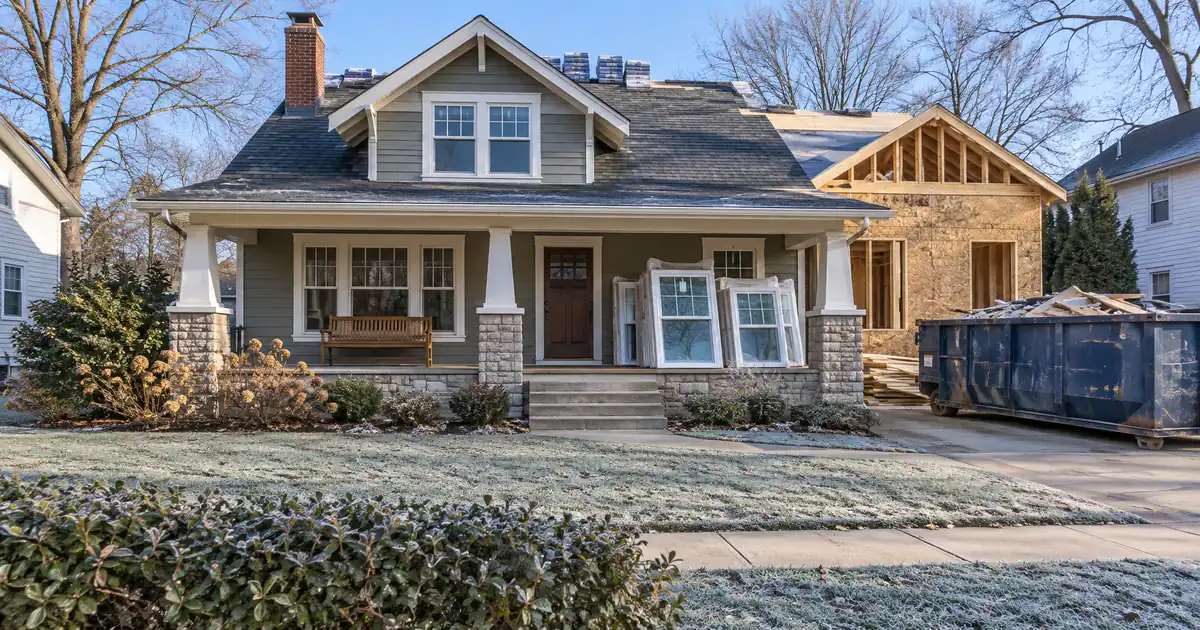
The Quick Read: Unpermitted work does not automatically block the long-term loan that pays off hard money. The exit lender’s appraiser can strip out value and rent that the work created, though, so the new loan may come in too small to repay the bridge.
- The usual exit is a DSCR loan, which qualifies primarily on property-level rental income covering the payment, subject to lender guidelines.
- An appraiser may leave unpermitted space out of the home’s official living area, which lowers value and can lower the rent the lender credits.
- Lower value raises your leverage ratio. On a standard rental, the DSCR cash-out refinance ceiling is 75% LTV, and a rate-and-term refinance on an investment property goes up to 85%.
- Hard money terms run 6-18 months, so permit cleanup competes with a maturity date that keeps moving closer.
- Size the bridge from the exit backward, not from the rehab budget forward.
Key Terms Defined
Six terms come up repeatedly below.
- Exit refinance: a long-term loan that pays off a short-term hard money loan.
- DSCR: debt service coverage ratio, meaning the property’s rent used for lender review divided by its full monthly obligation.
- PITIA: principal, interest, taxes, insurance, and any association dues, which together make up that monthly obligation.
- LTV: loan-to-value, the loan balance as a percentage of the value the lender accepts.
- GLA: gross living area, the finished, legal square footage an appraiser counts toward value.
- Retroactive permit: a permit a city issues after the work is already built, usually after an inspection. Some jurisdictions do not issue them at all.
Two more terms matter. Seasoning is the ownership period a lender wants before it allows a cash-out refinance. ARV, or after-repair value, is the projected value once the rehab is finished.
DSCR Cash-Out Calculator
Run the cash-out numbers in your market
Rate source: Freddie Mac 30-yr average via FRED® — Federal Reserve Bank of St. Louis · effective Nov 5, 2026
Prefilled with starting assumptions — enter your property’s value, balance, taxes, and insurance for a more accurate picture.
Program parameters update from Lendmire’s centralized guideline source. Taxes and insurance are editable estimates.
As of Nov 5, 2026 · General Freddie Mac market benchmark, not a Lendmire loan offer. Property value, balance, taxes, and insurance are editable estimates. Maximum loan-to-value varies by lender, program, property type, and seasoning. Not a Loan Estimate, approval, or commitment to lend. Program availability and eligibility are subject to lender guidelines, credit approval, property review, and underwriting.
How Underwriting Treats Unpermitted Work, Step by Step
The exit lender sizes the new loan from its own appraisal and rent schedule. It does not size it from your rehab budget. That is the single idea that explains everything else here.
Step 1: The bridge funds the work. The common sequence is simple. You buy a distressed rental on hard money, finish the property, then refinance into long-term financing to pay the bridge off and, in some cases, pull equity out. You pay closing costs twice.
Step 2: The exit lender orders its own appraisal. On a rental, that appraisal includes a market rent estimate. The report for a single-family rental uses the 1007 rent schedule form. A small multifamily uses the 1025 form. The appraiser reviews permit history, compares it with assessor and county records, and reports what is legally part of the dwelling.
Step 3: The appraiser tests the space. Appraisers measure under a national measurement standard. Homeowner-built attic conversions and finished basements often fail ceiling-height or below-grade rules, and the space then lands on a separate line instead of in GLA, according to Local Real Estate Online. HomeStimulus describes a three-part test for counting a conversion: interior access, a permanent heat source, and quality consistent with the main dwelling.
HomeLight notes that appraisers may exclude unpermitted additions from GLA and may flag other concerns that affect value. The impact depends on the type of work, the appraiser’s findings, and the lender’s requirements. Appraisers also comment on quality and market impact, as Appraisers Blogs points out. Many appraisal management companies add blanket conditions that go beyond what the agency guides ask.
Step 4: Underwriting sizes the loan. The new loan is the lower of two numbers. One is the LTV limit applied to the lender’s accepted value. The other is the amount the credited rent can carry. If unpermitted space drops out, value falls and your leverage ratio rises. If rent from that space drops out too, coverage falls. Both pressures land on the same payoff.
Step 5: Conditions may follow. Common responses include these:
- Remediation or retroactive permits.
- An escrow holdback until work is legalized.
- A smaller loan amount.
- A re-appraisal once permits are closed and inspections pass.
Step 6: The payoff. It covers principal, accrued interest, any extension fees, and any exit fee, with closing costs on top. If the appraisal comes in short, you bring cash, take a smaller loan, or ask the bridge lender for more time.
Skipping the appraisal is not a close call. A waived appraisal is not realistic on a post-rehab exit, because the lender needs an independent read on a property that just changed.
What Decides the Outcome
Five things carry most of the weight.
1. How much of your rehab value rests on the unpermitted portion.
2. Whether the work looks safe and workmanlike.
3. Whether the city will issue a retroactive permit.
4. What comparable sales show for the same feature.
5. How much room the payoff leaves under the exit lender’s LTV limit.
The fifth point is the one investors skip. A bridge that consumed nearly all available leverage has no cushion if the appraiser trims value. The lender’s own guidelines define the limits, so the numbers below describe what the DSCR network allows, not a promise.
A Worked Example in Ratios
Run the numbers on a modeled duplex in which the unpermitted space is a converted attic. These are assumptions for illustration, not market data.
Assume the hard money payoff equals 70% of the value you expected at refinance. Assume the investor planned a payoff-only refinance, and that rent covers the full monthly obligation at roughly 1.25x.
Outcome one: the plan counts the attic. The appraiser excludes the unpermitted converted attic, and the appraised value comes in 20% below the plan. Value is now 80% of what you expected. The same payoff is 70 divided by 80, or 87.5% of the new value.
On an investment-property rate-and-term refinance, DSCR loan programs in the network go up to an 85% LTV ceiling. That payoff now sits just over the ceiling, so you would need a paydown or a smaller loan. A cash-out refinance was never realistic here, because the DSCR loan cash-out ceiling on a standard rental is 75% LTV. Terms depend on the lender’s guidelines, the property type, the leverage, and a full review of the credit profile.
Rent drops too. Suppose the attic produced a fifth of the rent, and the lender credits none of it. DSCR coverage falls from about 1.25x to about 1.0x, which is only just at the 1.00 minimum DSCR for the DSCR loan. Lender guidelines, credit review, and property review decide whether the loan still qualifies.
Outcome two: the plan leaves the attic out. Had the investor excluded the attic from the start, the target loan would have been smaller and the bridge sized to match. The payoff would then sit against a value the appraiser had no reason to cut, and the rent used for coverage would not include income the lender refuses to credit.
Which Kinds of Work Cause the Most Trouble
Not all unpermitted work lands the same way. This table summarizes the usual pattern, though each appraiser and lender decides for itself.
| Type of work | Likely treatment | Common cure |
|---|---|---|
| Cosmetic finish work | Often little effect | Document scope and photos |
| Converted garage or attic | Space may be excluded from GLA | Retroactive permit or underwrite without it |
| Added bedroom or bath | Value credit may be cut | Permit, inspection, re-appraisal |
| Electrical, structural, egress | Remediation condition likely | Licensed fix, then inspection |
| Unpermitted second unit | Value and rent may both be dropped | Legalize first, or exclude the unit |
Safety-related work draws the strictest response, because it raises health and liability questions beyond value. Cosmetic finish work often passes. A conditional appraisal tied to resolving the work is a common middle ground.
Comparables matter as well. If similar unpermitted features are common in the area, an appraiser may find comps that support some contributory value. The credit could also be close to zero, or no higher than the cost of the work. The call is the appraiser’s.
Structures and Variations
You have several ways to shape the exit. Each changes the math.
Payoff-only versus cash-out. A payoff-only exit asks the new loan to cover the bridge and nothing more. A cash-out exit tries to return equity as well. With unpermitted work in the picture, payoff-only is the safer plan, because the DSCR cash-out ceiling on a standard rental is 75% LTV while rate-and-term is higher. Cash-out on a DSCR loan also typically expects about 6 months of seasoning, measured from title recording.
Permit first, then refinance. If the city issues retroactive permits, closing them before the exit appraisal can turn excluded space back into counted space. The cost and the outcome vary by jurisdiction. Permit cleanup also costs less when it happens during the work than after.
Underwrite the legal property only. If permits are unavailable, run the exit as if the unpermitted space does not exist. Count only the legal units and legal square footage. If that version still pays off the bridge with room to spare, you have an exit. If it does not, you have a problem to solve before the bridge matures.
Pick the exit program early. The long-term exit in most cases is a DSCR loan, and Lendmire arranges that path through select lenders in its wholesale network. The hard money exit refinance page covers the program. The standard credit floor in parts of the network is 620, and most programs want around 660. A score of 700 or higher unlocks the strongest leverage tiers. Reserves are commonly around 6 months of PITIA and step up to about 9 months above $1,500,000. Loan sizes on standard programs go up to $3,000,000.
Use the extra runway tools. Within the DSCR network, select lenders offer 40-year terms and interest-only periods. ARM structures exist too. These can lower the monthly obligation and lift coverage, but they never erase leverage caps, credit floors, or reserve rules.
Coverage also differs from cash flow. DSCR compares rent to PITIA only. Repairs, vacancy, management, and utilities sit outside the ratio, so clearing 1.00 does not mean the property pays you.
Where the General Rule Breaks
The pattern above has exceptions worth knowing.
- Retroactive permits are not always available. Some cities do not issue permits after the fact. In that case the space stays unpermitted, and you underwrite as if it were still a garage.
- An unpermitted second unit can break the plan. If the unit does not appear on tax or permit records, the appraiser and the lender may treat the property as a single-unit home. The rent from the extra unit may then not count at all.
- Open liens block refinancing. Deeds.com notes that unpaid contractor liens must be cleared to refinance. It adds that title companies and lenders may treat market value as including only the compliant parts of the house.
- Insurance can complicate things. HomeLight says an insurer may raise premiums or cancel after discovering unpermitted work. It also says standard title insurance generally does not cover unpermitted renovations. Coverage can depend on the policy type and endorsements, so ask your insurance agent before the exit appraisal.
- The rehab is unfinished. An exit is not ready if the property cannot appraise as complete. Seasoning, the bridge maturity date, and rent evidence all gate the exit too.
- Ineligible property types stay ineligible. Manufactured homes, log homes, and barndominiums are not offered in the network’s DSCR programs, permitted or not.
Working Backward From the Maturity Date
The hard money clock keeps running while you chase permits. The order of events matters more than any single date, so build the plan backward.
1. The bridge maturity date is fixed. Everything else fits inside it.
2. Before that sits the payoff, and before the payoff sits underwriting with the final appraisal.
3. Before the appraisal comes re-inspection, if permits are being closed.
4. Before that come the permit application and any city review.
5. At the start sits the decision: legalize, exclude, or sell.
If the order does not fit, you have three fallbacks. One is an extension from the bridge lender. Another is a smaller payoff-only loan with cash from you. The last is a sale. Lendmire’s piece Hard Money Loan Exit Options and Rules for a Sale or DSCR Refinance covers those paths in more depth.
Hard money programs in the network run 6-18 months, interest-only, with no prepayment penalty, though terms vary by lender, property, and experience. That flexibility helps. It does not stretch past the maturity date.
What to Ask the Exit Lender Before the Bridge Closes
Ask these questions before you commit to the rehab scope.
- Does the lender credit rent from an unpermitted unit or space?
- Will it order an appraisal condition tied to permit status?
- What does it want to see: scope of work, receipts, photos, and a rent roll?
- Does it accept a retroactive permit, or must inspections be closed out?
- What is the maximum LTV for this property type and occupancy?
- How much seasoning does it expect before a cash-out refinance?
You can also bring a checklist: the scope of work, contractor invoices, before-and-after photos, permit records, a signed lease on the legal units, and proof of insurance. A clean file reduces conditions. It does not guarantee an outcome, because every file is underwritten individually.
The complete DSCR loans guide walks through coverage, leverage, and reserves in more depth if you want the full picture behind the numbers above.
Common Misreadings
Unpermitted work automatically kills the refinance. It does not. The agency guide asks appraisers to comment on missing permits, but it does not assign zero value or tell the lender to decline, according to Local Real Estate Online.
Good-looking work counts as value. Quality matters, but legality and measurement decide whether space counts as GLA.
The rehab budget sets my new loan. The new lender’s appraised value and rent set it. The rehab has to be finished far enough that the property will appraise as complete.
Title insurance covers it. Generally it does not, as HomeLight explains above.
Frequently Asked Questions
Can I refinance out of hard money if the property has unpermitted work?
Often yes, but the amount may shrink. The exit lender decides how much value and rent to credit after its own appraisal. If the unpermitted portion is small or cosmetic, the effect can be minor. If the work is large or safety-related, expect conditions such as remediation, a holdback, or a smaller loan.
Will a DSCR lender count rent from an unpermitted unit?
Often not. Coverage is tested on rent the lender will credit, and rent tied to space that is not legally part of the dwelling may be dropped. Plan the payoff so the legal units alone can carry it. Sub-1.00 coverage is available through select lenders in the network, with leverage and terms adjusted, but that is a separate path from the standard coverage test.
Should I get permits before I refinance?
When the city allows it, permitting before the exit appraisal can turn excluded space into counted space. Permits pulled during the work usually cost less than permits chased afterward. Rules and outcomes vary by jurisdiction, so check with the local building department early.
What if the bridge matures before the permits close?
You have three practical options. Ask the hard money lender for an extension, accept a smaller payoff-only loan with cash from you, or sell. Work backward from the maturity date so you know early which fallback applies.
Can I take cash out on the exit if there is unpermitted work?
It is harder. The DSCR cash-out ceiling on a standard rental is 75% LTV, and value cuts shrink the available equity fast. Cash-out also commonly expects about 6 months of seasoning. Treat equity as an outcome of the appraisal, not a planning number.
Next Step
If you are buying, rehabbing or refinancing an investment property on a short timeline and want to see how the numbers work, Lendmire can help you compare hard money options based on the project, the exit plan, leverage, and your goals. Reach the team at 828-256-2183 or request a quote. Programs, leverage, and eligibility vary by lender, property, and borrower, and nothing here is a commitment to lend.
About Lendmire
Lendmire is a DSCR-focused mortgage brokerage, NMLS# 2371349, placing investor loans across 41 markets, including Washington, D.C. DSCR eligibility is generally reviewed by the lender around a property’s rental income rather than personal income documentation, which fits LLC-held rentals, self-employed investors, and portfolios scaling past conventional financed-property limits. Scotsman Guide named Lendmire a Top Mortgage Workplace in both 2025 and 2026.
Get Started
Ready to find the right loan for you?
See your offer in seconds. No credit pull, no obligation.
Informational only. Not a Loan Estimate, approval, or commitment to lend. Program availability and eligibility are subject to lender guidelines, credit approval, property review, and underwriting.
References
1. Local Real Estate Online – Why Unpermitted Square Footage Wrecks Your Appraisal
2. HomeStimulus – Selling a House With Unpermitted Work
3. HomeLight – Selling a House with Unpermitted Work
4. Appraisers Blogs – Unpermitted Additions and the Zombie Assignment Condition
5. Deeds.com
This article is part of Lendmire’s hard money loan program — full qualification details, guidelines, and scenarios live on the program page.
Related reading: How to Qualify and Apply for a Super Jumbo DSCR Cash-Out Refinance After Ninety Days
Brandon Miller
Founder & CEO, Mortgage Loan Originator, Lendmire LLC
- Mortgage Loan Originator · NMLS# 1129696 · Verify on NMLS Consumer Access
- North Carolina Real Estate Broker · License# 343312 · Verify on NCREC
- North Carolina Insurance Producer · License# 19053198 · Property, Casualty, Life, Health · Verify on NAIC SBS
- Lendmire LLC · Firm NMLS# 2371349 · Verify firm licensure
Compliance and disclosures. Lendmire (NMLS# 2371349) is a licensed mortgage broker and is not a direct lender, depository institution, financial advisor, or tax professional. Content in this article is general market analysis and educational information — not financial, legal, or tax advice for any specific situation. Lendmire does not guarantee loan approval; every transaction is subject to underwriting by the funding lender. Mortgage pricing and loan program guidelines are subject to change at any time without notice and vary by borrower characteristics, property type, and state regulations. Lendmire complies with Equal Housing Opportunity. Licensure verification: NMLS Consumer Access.