
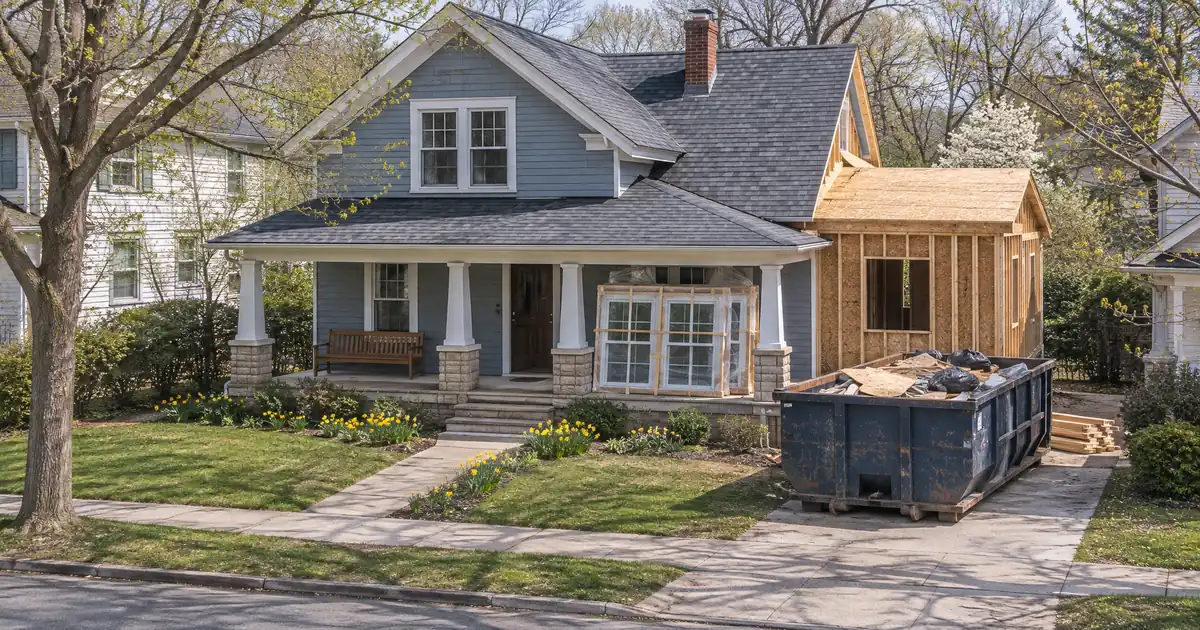
The Quick Read: Usually yes, if the property is finished and rent-ready and the program underwrites on the appraiser’s market-rent opinion instead of a signed lease. Some refinance programs still want a lease or an operating history first, so the answer depends on the program you land in. An unfinished property rarely clears either path.
- A finished, vacant 1-4 unit rental can work when the lender uses appraised market rent as the income figure.
- A refinance is stricter than a purchase on this point, because some programs ask for a lease before they will pay off a hard money loan.
- Open draws, unfinished rehab, or missing permits stall the file no matter how strong the rent looks.
- The same appraisal tests value and rent, so one low number can hurt two gates at once.
- Insurance has to be in force on an empty property at closing, and many landlord policies restrict vacant coverage.
How a Vacant Property Gets Underwritten
A DSCR loan is reviewed primarily on property-level rental income covering the payment, subject to lender guidelines. DSCR stands for debt service coverage ratio: monthly rent divided by the full monthly obligation (principal, interest, taxes, insurance, and any HOA dues). A vacant property has no lease, so the lender needs another way to measure rent. That way is the appraisal.
DSCR Cash-Out Calculator
Run the cash-out numbers in your market
Rate source: Freddie Mac 30-yr average via FRED® — Federal Reserve Bank of St. Louis · effective Nov 5, 2026
Prefilled with starting assumptions — enter your property’s value, balance, taxes, and insurance for a more accurate picture.
Program parameters update from Lendmire’s centralized guideline source. Taxes and insurance are editable estimates.
As of Nov 5, 2026 · General Freddie Mac market benchmark, not a Lendmire loan offer. Property value, balance, taxes, and insurance are editable estimates. Maximum loan-to-value varies by lender, program, property type, and seasoning. Not a Loan Estimate, approval, or commitment to lend. Program availability and eligibility are subject to lender guidelines, credit approval, property review, and underwriting.
On a refinance, the new lender orders a full appraisal with a rent schedule. For a one-unit home, the rent schedule is Form 1007. Fannie Mae’s Selling Guide lists it as the Single-Family Comparable Rent Schedule, and 2-4 unit properties use the small income property form, Form 1025. These are appraisal form names only. Agency lending rules do not govern DSCR loans.
The form is built on rental comparables. Freddie Mac’s copy of the form shows the appraiser estimating market rent from comparable rentals, along with a vacancy estimate and any rent concessions.
That appraiser figure becomes your income. Nothing else on a vacant file carries it.
Here is the part that surprises people. If a lease does exist, most programs in the wholesale network use the lower of the lease and the market rent. A lease signed above market does not lift your ratio, and a lease at market only adds support for the appraiser’s number.
What Has to Be True Before It Works
Three gates decide a vacant exit. Miss one and the file stalls.
Gate one: the rent basis. Across the network, programs split on refinances. Some select lenders accept a finished vacant property on appraised market rent. Others want a signed lease or some operating history before they pay off the hard money loan. A purchase is more forgiving than a refinance here, and that gap is where the general answer breaks down.
Gate two: condition. The property must be finished and rentable. Hard money lenders fund rehab in draws. A DSCR lender wants those draws closed out, the work complete, and permits in order. A property that still needs work belongs in a bridge conversation, not an exit refinance.
Gate three: value and leverage. The new appraisal governs value. Your after-repair value estimate from the flip budget does not. On a DSCR rate-and-term refinance of an investment property, leverage on most programs runs up to 85% LTV, with no cash back at closing. On a DSCR cash-out refinance of an investment property, the ceiling is 75% LTV. Those are program ranges that vary by lender, credit, and property, not promises.
The DSCR loan is also a separate approval from the hard money loan. Your hard money lender’s comfort with the deal does not carry over. Credit tiers on the DSCR side start with a 620 floor in parts of the network, and most programs want around 660. A score of 700 or higher unlocks the strongest leverage.
Where Does Your Property Stand?
| Situation | Likely path | First action |
|---|---|---|
| Finished, vacant, rent-ready | Market-rent DSCR file, if program allows | Confirm vacant treatment in writing |
| Finished, newly leased | Lease plus market rent, lower figure governs | Gather lease and deposit proof |
| Rehab unfinished | Not ready for an exit refinance | Close out draws; ask about extension |
| Term nearly matured, vacant | Vacant-eligible program or short extension | Request appraisal and term sheet now |
| Short-term rental plan | Needs platform history, not Form 1007 alone | Document hosting history |
Run the Numbers on Vacant vs. Leased
These are illustrative ratios, not market data or a quote. Picture a finished duplex that sits empty. The appraiser’s rent schedule supports market rent that covers the full monthly obligation on the new DSCR loan at roughly 1.15x. That clears a 1.00 coverage floor, which is where many select programs start.
Now say you sign a tenant at a rent above the appraiser’s figure. Your ratio does not climb to 1.3x. Underwriting uses the lower number, so the file still reads about 1.15x. The lease helps you answer a lender who wants one. It does not improve the math.
Flip the picture. Say the market rent covers only about 0.95x on the new loan. A separate select-lender path takes coverage below 1.00, with leverage and terms adjusted, and it is reviewed subject to lender guidelines, credit, and property review. Some owners instead raise coverage by lowering the loan amount. A larger down payment or paydown lowers the monthly obligation and can lift the ratio. It never erases leverage caps, credit floors, reserve rules, or property eligibility. The strongest files clear both tests: enough equity and enough rental coverage.
One more distinction matters. Clearing 1.00 is not positive cash flow. The ratio compares rent to the payment only. Repairs, vacancy, management, utilities, and capital expenses all sit outside it. A vacant property is the clearest example, since it earns nothing until a tenant moves in.
The Insurance Gap Nobody Mentions
Closing on an empty property raises a practical issue that has nothing to do with the DSCR ratio. Triple-I, the insurance industry’s education arm, says most homeowners policies limit or exclude coverage after a typical 30 to 60 consecutive days of vacancy. It also notes that vacancy endorsements and vacant-home policies exist. That is an insurance-industry figure, not a lending one, and exact triggers vary by carrier.
Your hard money loan may have sat vacant through the whole rehab. Your landlord policy may not cover that the same way. Read the vacancy clause before closing, and get the new loan’s insurance requirement in writing from the lender. If you need an endorsement, set it up before the closing date.
Two Seasoning Clocks
Seasoning is the waiting period a lender wants between two events. Two different clocks run on an exit refinance, and mixing them up causes bad surprises.
Ownership seasoning counts from the date the deed records. On a DSCR cash-out refinance, about six months of ownership is the common expectation across the network. Rent seasoning counts from the lease start, and it only applies if a program wants an operating history. A vacant file has no rent clock at all, which is the whole appeal.
Seasoning rules differ by program and by whether you take cash out. A payoff-only refinance, which repays the hard money loan and returns no cash, can be treated differently from a cash-out. Ask which clock a program uses before you plan the exit.
Delayed financing is not a shortcut around this. It is an agency exception for cash purchases, and a hard money lien generally disqualifies it. It is not a DSCR feature.
Edge Cases Worth Checking
Short-term rental plans. Form 1007 measures monthly long-term rent. Short-term rental income needs separate platform or history documentation, and STR programs typically expect about 12 months of hosting history. Short-term rental rules can vary by city, county, HOA, and property type, so investors should confirm local rules before relying on projected rental income.
Condos. Rent coverage, the building review, and refinance rules are separate gates. Passing one tells you nothing about the others.
Rent-regulated units. Ask how the lender treats a legal rent cap. The appraiser’s market rent may sit above what you can charge.
Portfolio or blanket loans. Coverage may be measured across the pool, with a vacant unit counted at market rent.
Property types. Manufactured homes (single- and double-wide), log homes, and barndominiums are not offered through the network’s DSCR programs, vacant or not.
Borrower entity. If the borrower is an LLC, entity documents are part of the file, subject to lender program eligibility.
Documents to Gather
- The payoff letter from your hard money lender.
- The note and draw history.
- Rehab invoices and proof the work is complete.
- The recorded deed and settlement statement.
- Evidence of insurance, including vacancy terms.
- Entity documents, if an LLC holds title.
- A lease, deposit proof, and first-rent proof, only if the property is leased.
Confirm These in Writing
Programs differ, so ask each lender these questions before you count on a vacant exit:
1. Does this program accept a vacant, finished property on a refinance, or is a lease required? 2. Which rent figure governs: appraised market rent, the lease, or the lower of the two? 3. What ownership seasoning applies, and from which date? 4. What condition standard must the property meet? 5. What coverage floor and leverage apply to my credit tier? 6. Which reserves do you need? Reserves commonly run around six months of PITIA, which is principal, interest, taxes, insurance, and HOA dues. They vary by lender, leverage, loan size, and transaction type, and loans above $1,500,000 typically step up to about nine months.
Plan the Exit Against the Maturity Date
Hard money terms run 6-18 months, interest-only, and they vary by lender, property, and experience. The loan has to outlast rehab completion, any lease-up a program requires, seasoning, the appraisal, and underwriting.
Work backward from maturity. Decide your target program while you are still buying. Finish the rehab with room to spare, since an unfinished property stalls everything after it. Then order the appraisal and request a term sheet while the hard money loan still has real runway. Waiting for the maturity notice is the expensive way to learn what a program requires.
If a program wants a lease, you carry hard money interest through lease-up and seasoning. A vacant-eligible program removes that delay. That carry difference is the real tradeoff between leasing first and closing vacant.
When the property is ready, a hard money exit refinance through Lendmire’s program page is one route. Many investors refinance out of hard money into long-term DSCR financing once the property is stable, and Lendmire brokers that path. For a related option, see Lendmire’s piece How to Use a Conventional Cash-Out Refinance to Exit Hard Money. For the full picture of how these loans work, start with the complete DSCR loans guide.
What If It Doesn’t Work?
Four fallbacks exist, and each has a cost.
- Extend the hard money loan. This is a conversation with your current lender, and terms vary. It buys time but adds carry.
- Use a bridge loan. A property needing work may need a bridge loan first, then a refinance once it is stabilized.
- Lease it up. If your target program wants a lease, sign a tenant at market and meet the seasoning requirement.
- Sell. If the exit math does not clear, selling beats paying carry on a stalled file.
Key Terms Defined
Market rent schedule: The appraiser’s estimate of what the property would rent for, built from comparable rentals. It is the income figure on a vacant file.
Seasoning: The waiting period a lender wants after an event, such as buying the property or signing a lease.
Payoff-only refinance: A rate-and-term refinance that repays the hard money loan and returns no cash at closing.
Vacancy clause: An insurance policy provision that limits or excludes coverage after a property sits empty for a set stretch.
Draw: A portion of a hard money rehab budget released after completed work is verified.
Frequently Asked Questions
Do I need a tenant to refinance out of hard money?
No, not by DSCR logic. Many programs underwrite on the appraiser’s market rent when the property is finished and rent-ready. Some refinance programs still ask for a lease or operating history, so confirm the specific program before you rely on a vacant exit.
Does a signed lease raise my coverage ratio?
Not if the rent is above market. Most programs use the lower of the lease and the appraised market rent, so the lease can only support the figure, never exceed it.
Can I use my after-repair value to size the new loan?
No. The new appraisal governs both value and rent. Your original after-repair estimate helped size the hard money loan, but the DSCR lender relies on its own appraiser’s opinion.
What if the rehab isn’t finished when the term ends?
Expect the DSCR exit to wait. A property that still needs work typically needs an extension or a bridge loan first, then a refinance once it is finished and rentable.
Does the vacant answer change for short-term rentals?
Yes. Form 1007 measures monthly long-term rent and cannot estimate a nightly fee. Short-term rental files need hosting history and platform documentation, and the leverage and seasoning rules differ from a standard rental.
Next Step
If you are buying, rehabbing or refinancing an investment property on a short timeline and want to see how the numbers work, Lendmire can help you compare hard money options based on the project, the exit plan, leverage, and your goals. Lendmire is a broker arranging financing through select lenders in its wholesale network across 41 markets, including Washington, D.C. Nothing here is a commitment to lend, and every file is underwritten individually.
Vacant or leased, the exit gets decided by one appraiser’s rent opinion, so confirm the program’s rent basis before you buy the property, not when the hard money clock is running down.
About Lendmire
As a DSCR and non-QM mortgage broker, Lendmire — NMLS# 2371349 — connects investors with wholesale lending channels across 41 markets, including Washington, D.C. The property’s rental income, not the borrower’s tax returns, is central to lender review, which works for self-employed operators and portfolios beyond four financed properties. Scotsman Guide named Lendmire a Top Mortgage Workplace in both 2025 and 2026.
Get Started
Ready to find the right loan for you?
See your offer in seconds. No credit pull, no obligation.
Informational only. Not a Loan Estimate, approval, or commitment to lend. Program availability and eligibility are subject to lender guidelines, credit approval, property review, and underwriting.
References
2. Freddie Mac comparable rent schedule form
3. Triple-I, When No One’s Home: vacancy and insurance
This article is part of Lendmire’s hard money loan program — full qualification details, guidelines, and scenarios live on the program page.
Related reading: How to Replace Private Money With a Conventional Cash-Out Refinance · Best Portfolio DSCR Cash-Out Refinance Program on a Free-and-Clear Rental Property · How Soon Can a Hard Money Cash-Out Refinance Close Before Your Balloon Date?
Brandon Miller
Founder & CEO, Mortgage Loan Originator, Lendmire LLC
- Mortgage Loan Originator · NMLS# 1129696 · Verify on NMLS Consumer Access
- North Carolina Real Estate Broker · License# 343312 · Verify on NCREC
- North Carolina Insurance Producer · License# 19053198 · Property, Casualty, Life, Health · Verify on NAIC SBS
- Lendmire LLC · Firm NMLS# 2371349 · Verify firm licensure
Legal disclosures. Lendmire (NMLS# 2371349) is a state-licensed mortgage brokerage that arranges financing through wholesale lender relationships. Lendmire is not a direct lender, depository institution, or registered financial advisor. The discussion above is general informational content about real estate financing — it is not financial, legal, or tax advice, and readers should consult licensed professionals for guidance on their individual circumstances. Loan inquiries are subject to lender underwriting; this article does not represent a commitment to lend. Loan terms, rates, and qualification standards vary by borrower, property, and state, and are subject to change at any time. Equal Housing Opportunity. NMLS Consumer Access: nmlsconsumeraccess.org.