
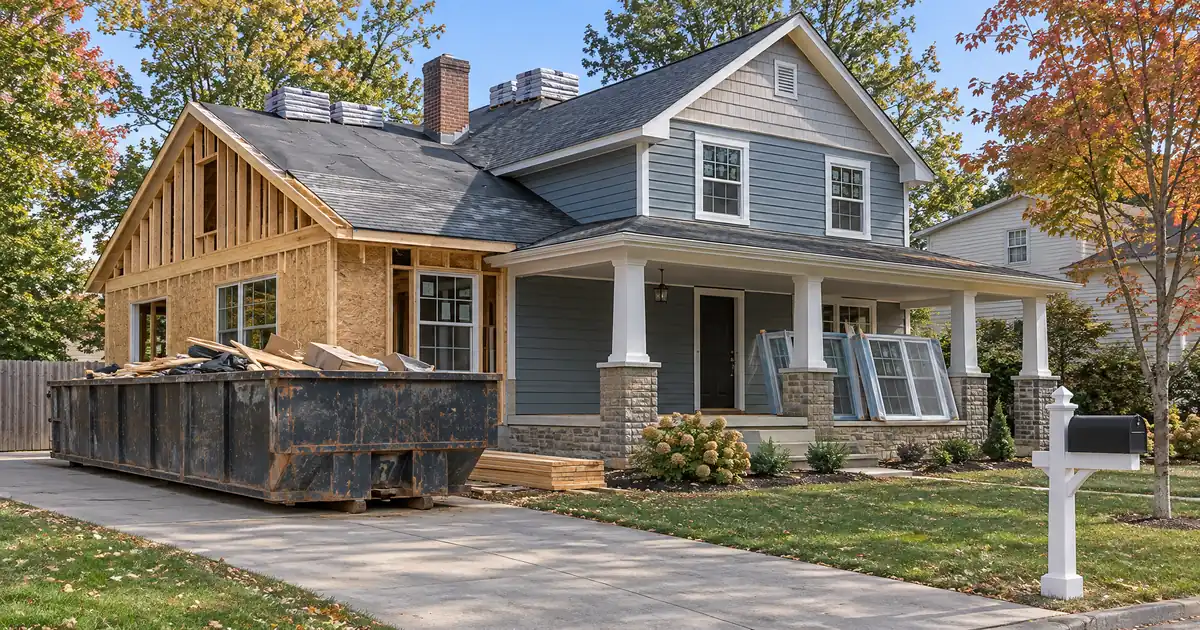
The Quick Read: Usually, the property has to be finished, or close enough to rentable, before a DSCR loan can pay off the bridge. A DSCR loan is a long-term rental loan that qualifies primarily on property-level rental income covering the payment, subject to lender guidelines. The lender wants a rentable property, a lender-ordered appraisal, and proof that the work is done.
- Most DSCR lenders want a finished, rentable property, so a half-done rehab usually has to be finished first.
- Your own after-repair value estimate is a planning number. The lender’s appraisal sets the value.
- Seasoning is the ownership waiting period. It runs from the recorded deed, not from the day the work ends.
- If maturity arrives first, the real options are an extension, a new bridge, a cash payoff, or a sale.
- Clearing the coverage test is not the same as positive cash flow.
Why Do DSCR Lenders Want a Finished Property?
A DSCR loan is underwritten to the rent a property earns. A property with no kitchen, open permits, or no lease has no reliable rent to underwrite. Across the wholesale network of lenders Lendmire works with, most programs expect a rentable, habitable property before they will fund.
DSCR Cash-Out Calculator
Run the cash-out numbers in your market
Rate source: Freddie Mac 30-yr average via FRED® — Federal Reserve Bank of St. Louis · effective Nov 5, 2026
Prefilled with starting assumptions — enter your property’s value, balance, taxes, and insurance for a more accurate picture.
Program parameters update from Lendmire’s centralized guideline source. Taxes and insurance are editable estimates.
As of Nov 5, 2026 · General Freddie Mac market benchmark, not a Lendmire loan offer. Property value, balance, taxes, and insurance are editable estimates. Maximum loan-to-value varies by lender, program, property type, and seasoning. Not a Loan Estimate, approval, or commitment to lend. Program availability and eligibility are subject to lender guidelines, credit approval, property review, and underwriting.
The DSCR itself is simple. It is gross monthly rent divided by PITIA, which is principal, interest, taxes, insurance, and any HOA dues. A DSCR loan checks that the rent covers that full payment. The coverage line is only part of the file, though. Four tests sit side by side: seasoning, appraised value, rent coverage, and credit, leverage, and reserves. Fail one and the refinance stalls.
A lender-ordered appraisal is also part of the DSCR exit. “No personal income documentation” never means “no appraisal.” That appraisal sets the value that caps your loan. It also produces the market-rent opinion used in the coverage test.
One more point on timing. Hard money terms typically run 6 to 18 months, interest-only, and vary by lender, property, and experience. The note has to outlast the rehab, the lease-up, the seasoning wait, the appraisal, and underwriting. A short note on a big rehab leaves little room for any of those steps to slip.
Key Terms Defined
- Draw: money the bridge lender releases against completed work, usually after an inspection.
- Holdback: the part of the rehab budget the lender has approved but not yet released.
- As-is value: what the property is worth in its current condition on the appraisal date.
- Subject-to (as-repaired) value: what it would be worth if specified work were finished. Authority Appraisals lays out the difference between the two.
- Seasoning: the ownership time before a lender will size a loan on appraised value instead of what you invested.
- Payoff-only refinance: a new loan that repays the bridge and returns no cash. Any cash back makes it a cash-out refinance.
- Cost basis: purchase price plus documented rehab spending.
How Does the Appraisal Treat Unfinished Work?
Expect an as-is value, and expect it to be low. An appraiser looking at open walls and missing fixtures values what is there. A DSCR lender sizing off that number leaves a gap against your payoff.
The words “subject to completion” come from the wider appraisal world. In FHA-style practice, McKissock describes that wording as a value that depends on repairs being finished. Treat that as contrast only. DSCR programs set their own rules, and most are built around a finished property.
Seasoning adds a second limit. Inside the seasoning window, a DSCR loan is typically sized on the lower of cost basis or appraised value. That is why draw history matters. It proves what you spent. BiggerPockets calls the appraisal a central risk of the BRRRR strategy, because a miss traps capital in the property.
What Does the Exit File Need?
Build it before you need it. A typical exit file holds these items:
- The hard money note and a payoff statement showing the drawn balance, accrued interest, and any extension or exit fees.
- The rehab scope, invoices, and draw history.
- Evidence the work is complete, including closed permits and a certificate of occupancy where your jurisdiction requires one.
- A signed lease, the security deposit record, and proof of first-month rent.
- Proof of reserves. A DSCR loan commonly asks for about 6 months of PITIA, and about 9 months above $1,500,000, varying by lender and file.
- Entity documents if the property sits in an LLC, subject to lender program eligibility.
The property must be non-owner-occupied, 1-4 units. Manufactured homes, log homes, and barndominiums are not offered in the network’s DSCR programs, so there is no exit for them.
For a leased unit plus a vacant one, lenders often combine documented rent on the leased unit with a market rent schedule for the vacant unit. A fully unleased property usually needs rent evidence from the appraisal or lender-accepted documents.
Which Path Fits Your Rehab Status?
Match your situation to the path. Every row is subject to lender guidelines and program terms.
| Status | Best path | What the lender needs | Main risk |
|---|---|---|---|
| Nearly done | Finish, then exit | Completion proof, lease | Lease gap before appraisal |
| Mid-rehab | Hold the bridge | Draw history, scope | Maturity arrives first |
| Stalled | Extend or re-bridge | Revised scope, budget | Added carry cost |
| Over budget | Bring cash to finish | Updated cost basis | Equity thinner than planned |
| Finished, vacant | Lease, then appraise | Lease, rent evidence | Weak rent opinion |
Extend, Bridge, Finish, or Sell?
This one is a genuine judgment call, and the answer turns on cost of delay. Every extra month on the bridge adds carry and trims your return.
Finish first works when the remaining work is modest and maturity still leaves room for lease-up, seasoning, and appraisal. It protects the equity the rehab created, since that equity is reachable only when the work is complete, documented, and appraised.
Ask for an extension when you are close. Ask early, because extensions cost money and are not automatic. Terms vary by lender, and there are no multi-year hard money options on the current program.
Re-bridge or pay down with cash fits a stalled job. A forced refinance at the wrong moment is how created equity gets left on the table.
Sell is the honest answer when the budget has outrun the numbers. Don’t count on your hard money lender as the takeout either. Some pause or change their long-term programs, so line up the DSCR exit separately. Many investors refinance out of hard money into long-term DSCR financing once the property is stabilized, and Lendmire brokers that path through its hard money exit refinance program.
Worked Example: When the Payoff Outruns the Loan Cap
The break-even math is short. Divide payoff plus exit costs by the LTV cap. The result is the minimum appraisal you need.
Say payoff plus exit costs equal 80% of the appraised value. A DSCR cash-out refinance on an investment property tops out at 75% LTV. You would be about 5% of value short, and that gap has to come from your pocket. Final terms depend on the lender’s guidelines, the property type, and the borrower’s complete credit picture.
Now flip it. If the new loan only repays the bridge and returns no cash, it is a rate-and-term refinance. A DSCR rate-and-term loan on an investment property may allow up to 85% LTV on that structure, depending on lender guidelines. Any cash back at closing makes it cash-out, and the 75% ceiling applies. Short-term-rental rules can vary by city, county, HOA, and property type, so investors should confirm local rules before relying on projected rental income.
Coverage runs on the new, larger payment. A bigger loan means higher PITIA and a lower DSCR. The DSCR minimum is 1.00 on select programs, and stronger ratios open better terms. A separate select-lender path takes coverage below 1.00, with leverage and terms adjusted.
Keep one thing straight. DSCR compares rent to PITIA only. Repairs, vacancy, management, utilities, and capex sit outside it, so clearing 1.00 does not mean the property cash flows.
Work Backward From Maturity
Plan the calendar in reverse. Start at the maturity date. Subtract the appraisal and underwriting window. Subtract lease-up. Subtract the work still to finish. Whatever is left must still cover the seasoning wait.
Seasoning is about 6 months for a DSCR cash-out, measured from title recording. Rehab completion, move-in, and lease signing do not move that clock. That creates a trap on short notes. A 6-month hard money term can expire right as seasoning clears, with no room for delay.
Start the refinance process well before the balloon date. Size the bridge backward from the exit loan, not forward from the purchase price.
If the work finishes inside the seasoning window, a payoff-only DSCR refinance can retire the bridge, with a cash-out closing possible later. The second closing adds cost, and any prepayment penalty on the first DSCR loan adds to the expense of going twice.
What About a Low Appraisal?
First find which number missed. A low value shrinks the loan. A low market rent weakens coverage. Different misses call for different fixes.
Then build a packet: closed comps, an itemized rehab scope, and rent comps. Send it through your broker or lender, never straight to the appraiser. A second appraisal is at the lender’s discretion, and appraisal fees are typically non-refundable. A signed lease before the appraisal gives the appraiser something concrete.
Mistakes That Sink the Exit
- Treating your after-repair value as the lender’s number.
- Assuming finished work starts the seasoning clock.
- Waiting until the final months to talk to an exit lender.
- Skipping draw records, which prove cost basis.
- Assuming a strong DSCR waives seasoning. The two are separate tests.
- Leaving the lease and deposit paperwork until after the appraisal.
For the program basics, the complete DSCR loans guide walks through how these loans are structured. Credit also matters. A 620 floor exists in parts of the network, most DSCR programs want around 660, and 700+ unlocks the strongest leverage tiers.
Frequently Asked Questions
Can I refinance a hard money loan before the rehab is finished?
Rarely. Most DSCR lenders want a finished, rentable property with a lender-ordered appraisal. If you are mid-rehab, your realistic options are finishing first, extending, re-bridging, or paying down with cash. Every path is subject to lender guidelines.
Does the property need a tenant?
It helps a great deal. A lease, deposit record, and first-month rent proof give the lender and appraiser concrete evidence. A vacant property usually needs rent evidence from the appraisal or lender-accepted documents, and a multi-unit can combine leased-unit rent with a market schedule for vacant units.
What happens to unspent holdback at payoff?
Unspent holdback is money never drawn, so the payoff generally covers the drawn balance, accrued interest, and any fees. Your loan documents control the details. Ask the bridge lender for a payoff statement that separates drawn from undrawn funds.
Can a hard money loan roll into a DSCR loan before 6 months of ownership?
Possibly, as a payoff-only refinance sized on the lower of cost basis or appraisal. Cash-out typically waits for about 6 months of seasoning from title recording. Eligibility depends on the lender and the file.
What if the refinance fails?
Fall back on an extension, a new bridge, a cash payoff, or a sale. Which one costs least depends on how much work remains and how far the maturity date is. Line up the fallback before you need it.
Next Steps
If you are buying, rehabbing, or refinancing an investment property on a short timeline and want to see how the numbers work, Lendmire can help you compare hard money options based on the project, the exit plan, leverage, and your goals. Lendmire is a mortgage broker that arranges financing through select lenders in its wholesale network across 41 markets, including Washington, D.C. Nothing here is a commitment to lend, and every file is underwritten individually.
About Lendmire
Lendmire (NMLS# 2371349), a non-QM mortgage broker serving investors in 41 markets including Washington, D.C., helps structure DSCR scenarios commonly evaluated around a property’s rental income rather than personal income paperwork, subject to lender guidelines. A Scotsman Guide Top Mortgage Workplace in 2025 and 2026, Lendmire places loans through wholesale investor lenders and is not a direct lender.
Get Started
Ready to find the right loan for you?
See your offer in seconds. No credit pull, no obligation.
Informational only. Not a Loan Estimate, approval, or commitment to lend. Program availability and eligibility are subject to lender guidelines, credit approval, property review, and underwriting.
References
1. Authority Appraisals: As-Is vs. As-Repaired Appraisals
2. McKissock Appraisal: Cosmetic vs. MPR Repairs
This article is part of Lendmire’s hard money loan program — full qualification details, guidelines, and scenarios live on the program page.
Related reading: How to Do a DSCR Cash-Out Refinance When Your Ex Still Owns Half · Can You Still Do a Hard Money Cash-Out Refinance If the Appraisal Comes in Low? · Should an Investor Do a Cash-Out Refinance Before Buying a Rental?
Brandon Miller
Founder & CEO, Mortgage Loan Originator, Lendmire LLC
- Mortgage Loan Originator · NMLS# 1129696 · Verify on NMLS Consumer Access
- North Carolina Real Estate Broker · License# 343312 · Verify on NCREC
- North Carolina Insurance Producer · License# 19053198 · Property, Casualty, Life, Health · Verify on NAIC SBS
- Lendmire LLC · Firm NMLS# 2371349 · Verify firm licensure
Legal disclosures. Lendmire (NMLS# 2371349) is a state-licensed mortgage brokerage that arranges financing through wholesale lender relationships. Lendmire is not a direct lender, depository institution, or registered financial advisor. The discussion above is general informational content about real estate financing — it is not financial, legal, or tax advice, and readers should consult licensed professionals for guidance on their individual circumstances. Loan inquiries are subject to lender underwriting; this article does not represent a commitment to lend. Loan terms, rates, and qualification standards vary by borrower, property, and state, and are subject to change at any time. Equal Housing Opportunity. NMLS Consumer Access: nmlsconsumeraccess.org.