
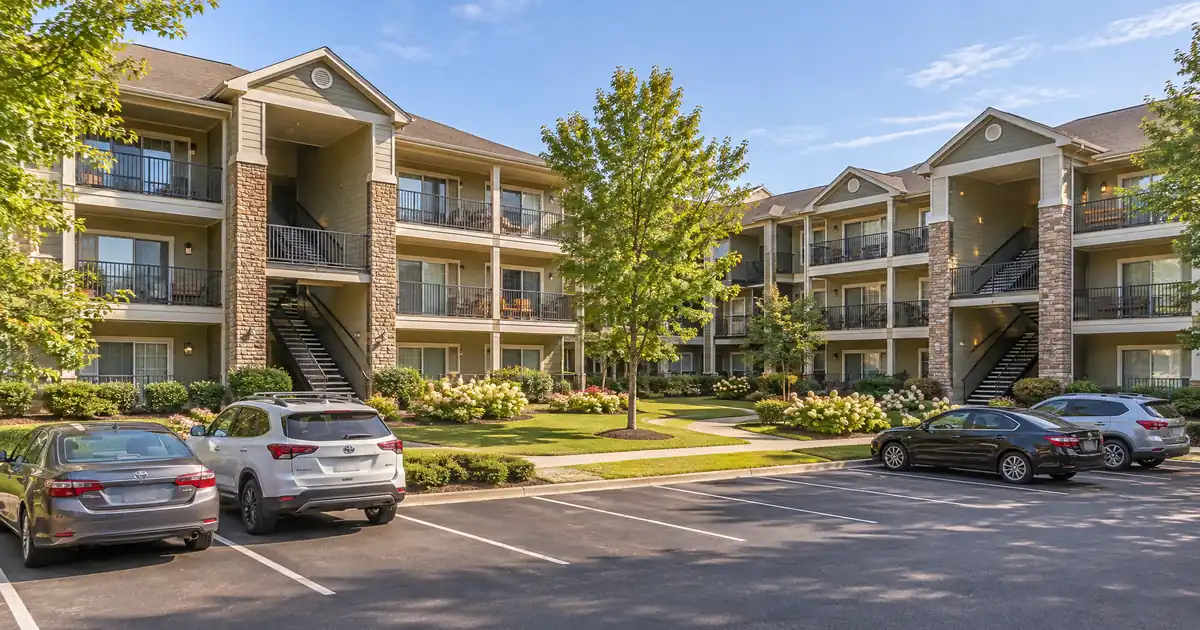
The Quick Read: A lender counts basement rent only when the unit is legal and the appraisal can support the rent with comparable rentals. The cash you actually collect does not override that. Legal status, the appraiser’s market-rent opinion, and the property type decide whether the rent lands in the coverage math.
- Legal use comes first. An unpermitted unit is usually left out of both rent and value.
- The appraiser’s rent opinion, not the owner’s rent roll, is typically what the lender relies on.
- Rent feeds the top of the DSCR fraction. Drop it, and the main unit may have to carry the loan alone.
- A cash-out refinance typically tops out around 75% LTV on an investment property, so value matters as much as rent.
- A finished basement that is not a legal unit may still add some value. It rarely adds rent that counts.
What Does a Lender Actually Do With Basement Rent?
The lender converts rent into a “counted” number, then compares it to the full monthly obligation. That obligation is PITIA: principal, interest, taxes, insurance, and any association dues. The result is the DSCR, or debt service coverage ratio. It answers one question: does the property’s rent cover its own payment?
DSCR Cash-Out Calculator
Run the cash-out numbers in your market
Rate source: Freddie Mac 30-yr average via FRED® — Federal Reserve Bank of St. Louis · effective Nov 5, 2026
Prefilled with starting assumptions — enter your property’s value, balance, taxes, and insurance for a more accurate picture.
Program parameters update from Lendmire’s centralized guideline source. Taxes and insurance are editable estimates.
As of Nov 5, 2026 · General Freddie Mac market benchmark, not a Lendmire loan offer. Property value, balance, taxes, and insurance are editable estimates. Maximum loan-to-value varies by lender, program, property type, and seasoning. Not a Loan Estimate, approval, or commitment to lend. Program availability and eligibility are subject to lender guidelines, credit approval, property review, and underwriting.
The rent that goes in the numerator is not a bank deposit total. It is rent supported by a lease, by the appraisal, or both. Where the two differ, many lenders use the lower figure. Programs vary, so treat that as common practice, not a universal rule.
Across the wholesale network Lendmire places files with, a minimum DSCR of 1.00 is the standard program line. A separate select-lender path takes coverage below 1.00, with leverage and terms adjusted. Stronger ratios generally open better pricing and leverage. None of this is a commitment to lend, and every file is subject to lender guidelines.
One caution: clearing 1.00 is not the same as positive cash flow. DSCR compares rent to PITIA only. Repairs, vacancy, management, utilities, and capital expenses sit outside the calculation.
If you want the full framework behind these numbers, the complete DSCR loans guide walks through it.
Key Terms Defined
DSCR (debt service coverage ratio): Qualifying monthly rent divided by the full monthly payment on the loan, including taxes and insurance.
PITIA: Principal, interest, taxes, insurance, and association dues. It is the full monthly cost of holding the loan.
Cash-out refinance: A new loan that pays off the old one and returns the extra equity to you as cash.
LTV (loan-to-value): The loan balance as a percentage of the appraised value.
Seasoning: The waiting period after you buy before a lender will do a cash-out refinance. About six months from title recording is the common expectation.
Egress: A legal way out of a room in an emergency, usually a door or a window of a required size.
GLA (gross living area): The above-grade finished space an appraiser counts as living area. Below-grade rooms are generally excluded.
Rent schedule: The appraiser’s written opinion of what the unit would rent for, built from comparable rentals.
Step One: How Is the Property Classified?
Property type decides which appraisal form gets used. That in turn shapes how the basement is read.
A one-unit house with a basement apartment is typically appraised on a standard single-family report with a rent schedule attached. Per the Fannie Mae Selling Guide, Form 1007 is the Single-Family Comparable Rent Schedule. Form 1025 is the Small Residential Income Property Appraisal Report for two-to-four-unit properties. The Fannie Mae appraiser forms page lists both.
Those are agency form names, not agency rules for your loan. DSCR programs often borrow the same forms to document rent, but each program sets its own treatment.
The practical split looks like this:
- One-unit house with a basement apartment. The appraiser decides whether the space reads as a separate unit or as part of one dwelling. That call drives everything after it.
- Legal two-to-four-unit property. The basement is simply one of the units. Its rent is supported on the income-property report like any other unit.
Step Two: Is the Unit Legal?
Legal use is the gate. The appraiser looks at permit and zoning status, a separate entrance, a kitchen, and a compliant exit. Without a full kitchen or separate heating, a lender may treat the space as a bonus room or rental room, not a unit.
An unpermitted unit is where files go sideways. Lenders generally lean on the appraisal’s determination. If the unit is flagged as unpermitted, it will most likely be excluded from both value and rental income. The appraiser also has no basis for a rent schedule, so the lender has nothing third-party to rely on.
The risk can be wider than the missing rent. In some cases an unpermitted unit raises questions about the whole property, even if its rent was never needed to qualify. That varies by lender, so settle the status before you apply.
Egress is the most common sticking point. The model building code the International Code Council publishes requires an emergency escape and rescue opening in basements with habitable space and in every basement sleeping room. Local governments adopt and amend that code, so the exact window size and sill height depend on where the property sits. A room without compliant egress usually does not count as a bedroom.
A document set that supports legality typically includes:
1. A permit, certificate of occupancy, or other legal-use paperwork.
2. Photos of the kitchen, the separate entrance, and the egress openings.
3. Any local rental registration, where the locality requires one.
Step Three: How Does the Appraiser Treat Value Versus Rent?
These are two separate questions, and a basement can pass one and fail the other.
Rent. The appraiser supports a market-rent opinion with comparable rentals. If good comps exist for legal basement units in the area, the rent schedule can stand. If not, the figure gets thin.
Value. Finished space below grade is generally not counted in gross living area. It can still support a higher appraised value as a finished basement, depending on comps and underwriter review. A below-grade room is compared as basement space, not as a bedroom.
That distinction matters in a cash-out refinance because leverage applies to appraised value. Run through what happens with an unpermitted unit:
- Coverage falls, because the rent drops out of the numerator.
- Leverage tightens, because the unit adds little or no value while you still want the same loan size.
The unit hurts you twice. Cash-out proceeds depend on value, so basement renovations are among the less certain value-adds. If you are considering finishing a basement for the appraisal, ask a local appraiser first what it would do to value. If the answer is not much, skip it.
Step Four: Lease Rent Versus Market Rent
An executed lease and proof of deposits help. They do not automatically set the qualifying figure.
Many lenders compare the lease with the appraiser’s market rent and use the lower number. Programs differ, so confirm the rule on your specific file. The common logic is simple: lenders must project how the property performs if they ever have to take it back and operate it.
This also answers a common misunderstanding. “I collect the rent, so it counts” is not how it works. Collected rent supports your story, but the appraisal and the legal status still decide what the lender counts.
For a vacant or newly created unit, market rent from the appraisal usually governs until a lease exists. Having a signed lease in place before the appraisal gives the file a second leg to stand on.
Same Property, Two Outcomes
Here is a side-by-side for one modeled property. The inputs are assumptions, not market data. Picture a house whose main unit covers its payment thinly, plus a basement apartment that adds meaningful rent. The coverage numbers below are illustrative ratios.
| Factor | Basement counted | Basement excluded |
|---|---|---|
| Rent in the numerator | Main unit plus basement | Main unit only |
| Coverage ratio | Roughly 1.2x | Below 1.00 |
| Value credit for the unit | Supported by comps | Little or none |
| Cash-out LTV ceiling | Up to 75% | Up to 75%, on lower value |
| Likely path | Standard-coverage program | Sub-1.00 path through select lenders, with leverage and terms adjusted |
The LTV ceiling does not change. The value it applies to does. A lower value shrinks the loan the same percentage can support.
Not every file lands below 1.00 without the basement. If the main unit’s rent alone covers PITIA, the loan can stand without the unit’s rent. The coverage just comes in tighter.
Where the General Rule Breaks
The pattern above holds most of the time. These cases bend it.
Unpermitted or “bootleg” unit. Generally excluded from rent and given little or no value credit. Insurance may also not respond the way you expect to an unpermitted unit, which is a separate risk from the loan.
Legal unit in a two-to-four-unit property. Rent is supported on the income-property appraisal and counts like any other unit. This is the cleanest case.
Bedroom versus bonus room. Without compliant egress, the space may be treated as a bonus room, which changes how it is described and compared.
Short-term rental in a basement. Short-term rental programs carry their own limits. Across the network, short-term-rental collateral tops out at 70% LTV on a cash-out. Standard long-term rental cash-out reaches 75%. Short-term programs may ask for a credit score and a hosting history of their own, which differ from the standard credit tiers of 620, 660, 680, and 700, so confirm both before you plan around them. Coverage floors apply on both purchase and refinance. If the unit cannot legally be rented short-term, the short-term income comes out, but long-term rent may still apply. Every figure here varies by lender and program — guidelines, property type, leverage, and credit profile all apply.
Recently created unit. Without rental history, the appraiser’s market rent carries the weight. A certificate of occupancy and a signed lease strengthen the file.
Rent allocation. If one lease covers the whole house, or the basement is rented informally, the lender has no clean basement number to work with. A separate written lease for the unit solves most of that.
More than one accessory unit. Some lenders will only credit a single accessory unit. Ask before you count on several.
What Else Has to Clear Besides Rent?
Rent coverage is one test. Equity and file strength are the other.
- Leverage. Cash-out tops out around 75% LTV on an investment property across most of the network. A larger down payment at purchase does not lift that cap later.
- Seasoning. About six months of ownership, measured from title recording, is the common expectation.
- Credit. A 620 floor exists in parts of the network. Most programs want around 660. A 700 score or better unlocks the strongest leverage tiers.
- Reserves. Commonly around six months of PITIA, stepping up to about nine months on loans above $1,500,000. Reserves vary by lender, leverage, loan size, and transaction type.
- Loan size. Standard programs reach up to $3,000,000. Above $2,500,000 the network generally holds to 30-year fixed structures.
- Property type. Manufactured homes, log homes, and barndominiums are not offered in the network’s DSCR programs. That includes a basement unit inside one of them.
The strongest files clear both tests: enough equity and enough rental coverage. Program details are guidance and change over time, and every file is underwritten individually.
Structure options exist too. The 30-year fixed is the spine. Extended terms and interest-only periods are available through select lenders in the network, and ARM structures exist for investors who want them. Those can change how the coverage reads on a thin file.
For related reading, Lendmire’s piece How a DSCR Lender Reads Rent and Value in a Cash-Out Refinance covers the general case.
The Decision in Practice
Work through the questions in this order before you apply:
1. Is the unit legal and documented? If not, assume the lender excludes it. Test whether the main unit qualifies alone.
2. Does the main unit cover PITIA on its own? If yes, the basement is upside. If not, the basement is the whole case.
3. Can an appraiser support the rent with comps? If the comps are thin, expect a conservative number.
4. Is a written lease in place? Get one before the appraisal, at a rent consistent with the market.
5. What does value look like with or without the unit? Cash-out proceeds follow value, and they are not a guaranteed figure.
6. Are you buying for the basement income? If so, treat permit status as a condition of the purchase and settle it before your loan contingency lapses. If the appraisal later removes the income, the underwriting numbers change, and the deal may no longer work.
If the unit is not legal and the numbers do not work without it, the options are to legalize it first, refinance on the main unit alone, or look at a sub-1.00 path through select lenders with leverage and terms adjusted. A broker that shops multiple wholesale lenders can match the scenario to the program that treats it best. The right fit depends on your property type, credit profile, leverage need, and documentation.
If you are buying or refinancing a rental property and want to see how the numbers work, Lendmire can help you compare DSCR loan options based on the property income, credit profile, leverage, and investor goals. Reach the team at 828-256-2183 or request a quote.
Frequently Asked Questions
Does a lender count basement rent if I already have a tenant paying me?
Only if the unit is legal and the appraisal supports the rent. Collected rent helps tell the story, but it does not override the appraiser’s market-rent opinion. Many lenders use the lower of the lease and market rent.
Is a finished basement the same as a second unit?
No. A finished basement is extra space. A second unit generally needs its own entrance, a full kitchen, compliant egress, and permit or legal-use status. A finished room can add some value without adding any rent a lender will count.
What happens to my cash-out if the basement is unpermitted?
The rent usually drops out and the unit adds little value. Coverage falls and the loan size the 75% LTV ceiling supports shrinks. If the main unit covers PITIA alone, the loan may still work at a smaller size.
Can a basement room count as a bedroom?
Generally not. Below-grade finished area is not counted in above-grade living area, and a bedroom needs compliant egress. Local amendments to the model code decide the exact window requirements.
Which documents should I gather first?
Start with the permit or certificate of occupancy, an executed lease with proof of deposits, and photos of the kitchen, entrance, and egress. Add any local rental registration. The appraisal then supplies the rent schedule.
For how equity extraction works on an investment property, see Lendmire’s guide to cash-out refinance on an investment property.
For current guidelines and terms, see Lendmire’s DSCR loan programs page.
About Lendmire
Lendmire — NMLS# 2371349 — is a mortgage brokerage specializing in DSCR investor loans, helping arrange financing across 41 markets, including Washington, D.C., through wholesale and investor-lending channels. The model centers on property-level rental income reviewed by the lender rather than W-2 documentation, subject to lender guidelines, suiting entity-owned and multi-property investors. Lendmire holds Scotsman Guide Top Mortgage Workplace recognition for 2025 and 2026.
Get Started
Ready to find the right loan for you?
See your offer in seconds. No credit pull, no obligation.
Informational only. Not a Loan Estimate, approval, or commitment to lend. Program availability and eligibility are subject to lender guidelines, credit approval, property review, and underwriting.
References
2. Fannie Mae, Appraisers and Property Underwriting
3. International Code Council, IRC R310 Emergency Escape and Rescue Openings
This article is part of Lendmire’s investment property cash-out refinance program — full qualification details, guidelines, and scenarios live on the program page.
Related reading: Should an Investor Do a Cash-Out Refinance Before Buying a Rental? · Can You Do a DSCR Cash-Out Refinance While Unemployed With No Paystubs?
Brandon Miller
Founder & CEO, Mortgage Loan Originator, Lendmire LLC
- Mortgage Loan Originator · NMLS# 1129696 · Verify on NMLS Consumer Access
- North Carolina Real Estate Broker · License# 343312 · Verify on NCREC
- North Carolina Insurance Producer · License# 19053198 · Property, Casualty, Life, Health · Verify on NAIC SBS
- Lendmire LLC · Firm NMLS# 2371349 · Verify firm licensure
Legal disclosures. Lendmire (NMLS# 2371349) is a state-licensed mortgage brokerage that arranges financing through wholesale lender relationships. Lendmire is not a direct lender, depository institution, or registered financial advisor. The discussion above is general informational content about real estate financing — it is not financial, legal, or tax advice, and readers should consult licensed professionals for guidance on their individual circumstances. Loan inquiries are subject to lender underwriting; this article does not represent a commitment to lend. Loan terms, rates, and qualification standards vary by borrower, property, and state, and are subject to change at any time. Equal Housing Opportunity. NMLS Consumer Access: nmlsconsumeraccess.org.