
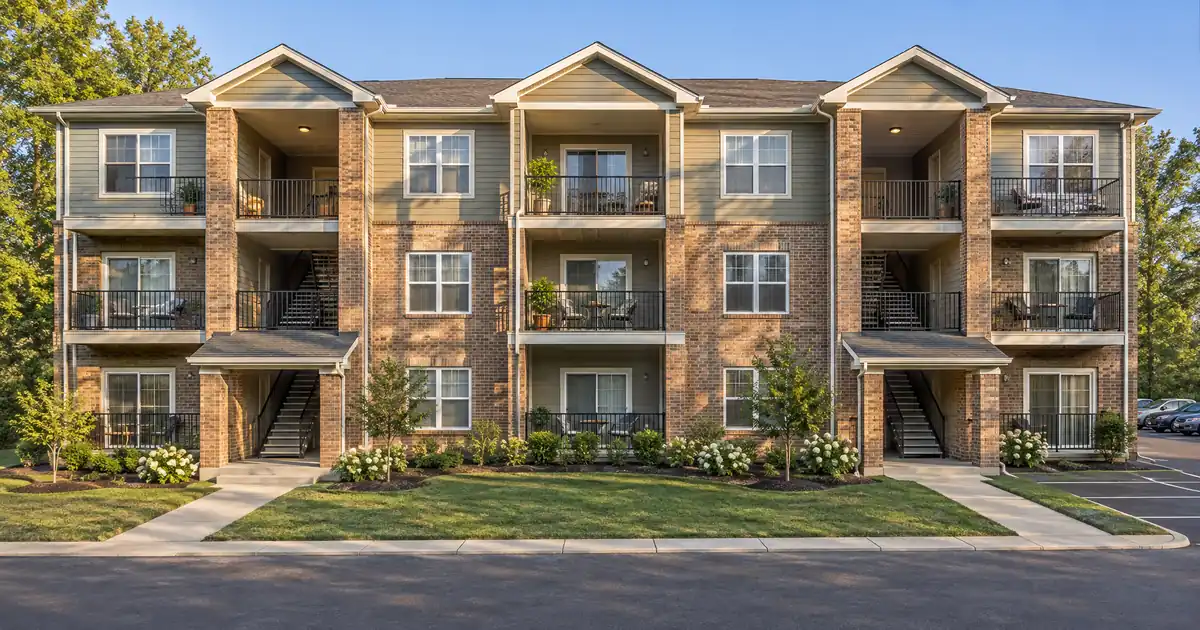
The Quick Read: The cash you receive is the smaller of two loan sizes, minus your old payoff and closing costs. One loan size comes from the appraised value at a leverage cap. The other comes from the rent your units produce against the new payment. Whichever limit binds first sets your check.
- On a standard rental, cash-out leverage tops out around 75% LTV on most files in the network, subject to lender guidelines.
- A 75% cap never means 75% of the value in cash. The payoff and costs come out first.
- Rent from every unit is pooled, so a duplex, triplex, or fourplex can support a bigger loan than a single unit.
- Bigger cash-out raises the payment, which lowers coverage. The rent test can cap the loan before LTV does.
- Plan around three separate tests: LTV, seasoning, and rental coverage.
Key Terms Defined
Cash-out refinance: a new, larger loan that pays off the old one and returns the difference to you as cash.
LTV (loan-to-value): the loan balance divided by the property’s appraised value.
DSCR (debt service coverage ratio): the property’s rent divided by its full monthly payment. A ratio above 1.0 means income covers the debt, as the general definition of the ratio puts it.
PITIA: principal, interest, taxes, insurance, and any association dues. This is the payment the rent gets compared against.
Seasoning: the waiting period after you take title before a lender will treat the property as a cash-out candidate. It runs about 6 months from title recording on most files.
Rate-and-term refinance: a refinance that changes the loan’s rate or length but returns no cash at closing.
DSCR Cash-Out Calculator
Run the cash-out numbers in your market
Rate source: Freddie Mac 30-yr average via FRED® — Federal Reserve Bank of St. Louis · effective Nov 5, 2026
Prefilled with starting assumptions — enter your property’s value, balance, taxes, and insurance for a more accurate picture.
Program parameters update from Lendmire’s centralized guideline source. Taxes and insurance are editable estimates.
As of Nov 5, 2026 · General Freddie Mac market benchmark, not a Lendmire loan offer. Property value, balance, taxes, and insurance are editable estimates. Maximum loan-to-value varies by lender, program, property type, and seasoning. Not a Loan Estimate, approval, or commitment to lend. Program availability and eligibility are subject to lender guidelines, credit approval, property review, and underwriting.
How Much Does the Check Actually Come To?
The check is the lower of the equity-based loan and the income-based loan, less your payoff and closing costs. You raise it by lifting whichever limit binds first. Across the wholesale network of DSCR lenders Lendmire works with, cash-out on a standard rental generally tops out around 75% LTV.
Here is the first test in plain math. Appraised value times the cash-out cap gives the maximum loan. Subtract what you owe. That is the most cash the equity allows.
Picture a fourplex that appraises at 100 units of value, with a payoff equal to 55% of that value. At a 75% cap, the maximum loan is 75 units, so the equity test leaves 20 units of room above the payoff. Closing costs come off those 20 units. What remains is your check.
Now the second test. The new loan is bigger, so the new payment is bigger. If rent divided by that payment falls below the program’s coverage floor, the lender shrinks the loan until it clears. In that case the rent sets the check, not the appraisal.
The Step-by-Step Underwriting Path
1. Value. An appraiser opines on what the property is worth. For 2-4 unit properties, the standard residential income-property report is Form 1025. Fannie Mae’s Selling Guide lists it for that property type, and it is named here only as the form, not as a rule for these loans. It is often paired with a rent schedule, Form 1007, according to Realvals’ appraisal forms overview.
2. Equity test. Value times the cash-out cap, minus the payoff.
3. Income test. Rent from all units, compared with the full new payment. Most select programs start at a 1.00 floor, and stronger ratios open better pricing and leverage.
4. Seasoning and value basis. About 6 months from title recording is the common expectation. Seasoning also shapes which value the lender will use. A recently bought property may be sized off the purchase price instead of a new appraisal, depending on the lender.
5. Costs. Closing costs can be paid from proceeds, rolled into the loan, or offset by a lender credit. Paid from proceeds, they shrink your check. Rolled in, they eat LTV room. A lender credit moves the cost into pricing instead.
6. Reserves. Reserves are cash you must still hold after closing. They vary by lender, leverage, loan size, and transaction. Commonly they run about 6 months of PITIA, and loans above $1,500,000 typically step up to about 9 months.
Which Test Binds First?
The binding test depends on the property, not on the borrower’s wishes. This table shows how the three tests differ.
| Test | What it measures | What sets the limit |
|---|---|---|
| LTV | Equity in the property | Appraised value and the cash-out cap |
| Seasoning | Time since you took title | About 6 months from title recording |
| Coverage | Rent versus full payment | The program’s DSCR floor |
A property with fat equity but thin rents hits the coverage wall first. The strongest files clear both. A larger loan balance lifts the payment and pulls coverage down, so you cannot fix a thin ratio by borrowing more.
Credit also moves the leverage you can use. A 620 score is the floor in parts of the network. Most programs want around 660. A score of 700 or higher unlocks the strongest tiers. Standard loan sizes run up to $3,000,000, and above $2,500,000 the network generally holds to 30-year fixed structures. Every figure here is a typical range, and each file is underwritten individually.
Why Multi-Family Math Differs From a Single Unit
A 2-4 unit property pools its rent across every door. One vacant unit reduces the pool, but the other units still feed the coverage ratio. That pooling is why a fourplex often supports a larger loan than a single-family rental at the same price.
The same pooling can hide risk. Coverage counts rent against PITIA only. Repairs, vacancy, management, utilities, and capital expenses sit outside the calculation. A fourplex that clears 1.00 is not automatically throwing off positive cash flow. Treat the ratio as a lender’s test, not a profit forecast.
Once a file moves to five or more units, it generally leaves this lane. Those buildings run through commercial or multifamily lending, with their own appraisal forms (the same Realvals overview lists Forms 71A and 71B for them). The mechanics here are built around 2-4 unit rentals.
Where the General Rule Breaks
A paid-off rental is still cash-out. If you own the building free and clear, a loan that returns cash is a cash-out refinance, not a rate-and-term. The cash-out leverage cap applies.
Short-term rental collateral. Cash-out on a short-term rental is capped at 70% LTV, versus 75% on a standard long-term rental. Expect a 640+ score and about 12 months of hosting history. Short-term rental rules can vary by city, county, HOA, and property type, so investors should confirm local rules before relying on projected rental income. These specifics are subject to lender guidelines and a full review of property, leverage, and credit.
Partner buyouts. Cash used to buy out a co-owner counts as cash-out.
Coverage below 1.00. Here is the distinction that matters. 1.00 is where many select programs start. A separate path takes coverage below 1.00 through select lenders in the network, with leverage and terms adjusted. A no-ratio structure also exists, available only through select lenders, generally for borrowers who already own a primary residence.
Rehab and value-add properties. A property you just bought and renovated often has an appraised value far above its purchase price. Whether the lender sizes off the new value or the old cost depends on seasoning and lender policy. Investors who plan a buy-rehab-refinance sequence should confirm the value basis before counting on the post-rehab number.
Ineligible property types. Manufactured homes (single- and double-wide), log homes, and barndominiums are not offered in the network’s DSCR programs, regardless of equity.
A payoff that gets bigger. If you plan to clear another lien at the same closing, that lien becomes part of the payoff.
What the Decision Looks Like in Practice
Start from the end. Decide how much cash you need, then work backward through the three tests.
Say you want the largest check possible from a triplex. Raise the appraised value if you can, since that moves the equity test. Strengthen the rent side with leases that document every unit. Then check whether the bigger loan still clears the coverage floor. If it does not, a smaller loan is the realistic path, and the check shrinks with it.
A few practical points follow from the mechanics:
- The appraisal sets the proceeds. A low value opinion cuts the equity test dollar for dollar, so a gap in value flows straight into a smaller check.
- Higher leverage trades against carry. More cash out means a bigger payment, a thinner coverage ratio, and a lower cash-on-cash return on what stays in the deal.
- Net, not gross, is the number. Costs and reserves come out. Plan on the net figure.
- Reinvestment has to beat the carry. Cash pulled out only helps if what you buy with it earns more than the added payment costs.
No single strength rescues a weak test: strong equity cannot rescue weak rent coverage, and strong rent cannot rescue thin equity. Leverage caps, credit floors, reserve rules, and property eligibility stay in force either way.
Conventional bank programs work differently. They assess your personal income as part of qualification, while a DSCR loan is reviewed primarily on property-level rental income covering the payment, subject to lender guidelines. Lendmire’s complete DSCR loans guide covers that contrast in full.
Some myths are worth clearing up. A 75% cap does not put 75% of the value in your pocket. And an old appraisal or the original purchase price does not automatically serve as the value basis.
Frequently Asked Questions
Does a 75% LTV mean I receive 75% of the value in cash?
No. The maximum loan is value times the cap, and your payoff, closing costs, and any required reserves come out of that amount. On a standard rental the cash-out cap is around 75% LTV on most files in the network. What reaches you is the remainder after those items.
Can rent limit my cash-out even when I have plenty of equity?
Yes. A larger loan raises the full monthly payment, which lowers the coverage ratio. If the ratio falls below the program floor, the loan gets sized down until it clears. Many select programs start at 1.00, and stronger ratios open better terms.
How long do I have to own the property first?
About 6 months from title recording is the common expectation across the network. Seasoning also influences whether the lender uses a fresh appraisal or the purchase price as the value basis.
Do all units count toward the rent test?
Yes, on a 2-4 unit property the rent from all units is pooled and compared with the full new payment. Buildings with five or more units generally fall under commercial lending rather than this lane.
Are closing costs taken from my cash?
They can be, depending on the structure. Costs can be paid from proceeds, rolled into the loan balance, or offset by a lender credit that shifts the cost into pricing. Each option changes either your net check, your LTV room, or both.
Next Step
If you are buying or refinancing a rental property and want to see how the numbers work, Lendmire can help you compare DSCR loan options based on the property income, credit profile, leverage, and investor goals. As a mortgage broker, Lendmire arranges financing through select lenders in its wholesale network, covering 41 markets, including Washington, D.C. Call 828-256-2183 or request a quote. Qualification is subject to lender guidelines and is not a commitment to lend.
For how equity extraction works on an investment property, see Lendmire’s guide to cash-out refinance on an investment property.
For current guidelines and terms, see Lendmire’s DSCR loan programs page.
About Lendmire
A DSCR-focused mortgage broker, Lendmire (NMLS# 2371349) places investor financing across 41 markets — 40 states plus Washington, D.C. — with DSCR eligibility generally reviewed by the lender on property cash flow instead of tax returns, subject to lender guidelines. Scotsman Guide named Lendmire a Top Mortgage Workplace in 2025 and 2026.
Get Started
Ready to find the right loan for you?
See your offer in seconds. No credit pull, no obligation.
Informational only. Not a Loan Estimate, approval, or commitment to lend. Program availability and eligibility are subject to lender guidelines, credit approval, property review, and underwriting.
References
1. Wikipedia: Debt service coverage ratio
3. Realvals: Real Estate Appraisal Forms
This article is part of Lendmire’s investment property cash-out refinance program — full qualification details, guidelines, and scenarios live on the program page.
Related reading: How to Get a DSCR Cash-Out Refinance When a Conservator Manages the Rental · How Much Down Payment a Rental Cash-Out Refinance Can Cover · How Much Cash Comes Out of a Short-Term Rental Cash-Out Refinance to Buy Out an Ex-Spouse?
Brandon Miller
Founder & CEO, Mortgage Loan Originator, Lendmire LLC
- Mortgage Loan Originator · NMLS# 1129696 · Verify on NMLS Consumer Access
- North Carolina Real Estate Broker · License# 343312 · Verify on NCREC
- North Carolina Insurance Producer · License# 19053198 · Property, Casualty, Life, Health · Verify on NAIC SBS
- Lendmire LLC · Firm NMLS# 2371349 · Verify firm licensure
Compliance and disclosures. Lendmire (NMLS# 2371349) is a licensed mortgage broker and is not a direct lender, depository institution, financial advisor, or tax professional. Content in this article is general market analysis and educational information — not financial, legal, or tax advice for any specific situation. Lendmire does not guarantee loan approval; every transaction is subject to underwriting by the funding lender. Mortgage pricing and loan program guidelines are subject to change at any time without notice and vary by borrower characteristics, property type, and state regulations. Lendmire complies with Equal Housing Opportunity. Licensure verification: NMLS Consumer Access.