
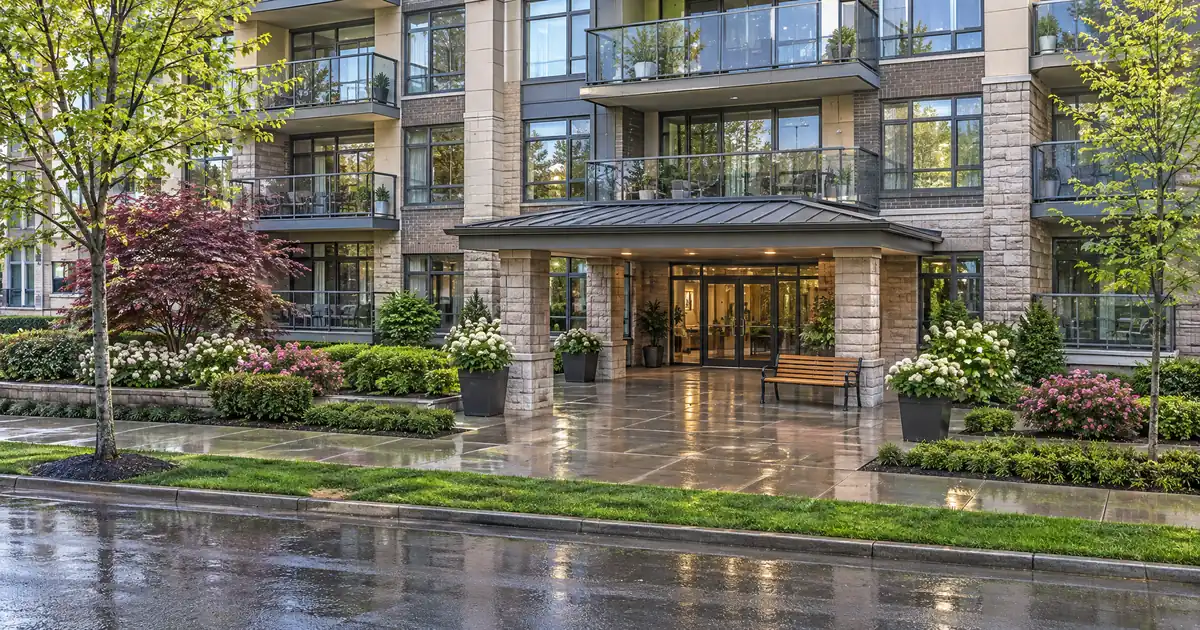
The Quick Read: It depends on the smallest of three limits: the cash-out leverage cap on appraised value, the loan-size cap, and the loan your rent can support. The cash in your hand is that new loan minus your existing payoff, closing costs, and any escrows or holdbacks. On a non-warrantable condo, the building’s condition and the appraisal often decide where the file lands.
- Cash-out leverage tops out around 75% LTV across most of the network, and non-warrantable condos are typically held at or below that line.
- The rent test often binds before the LTV cap does, because HOA dues sit inside the payment.
- About 6 months of ownership is the common seasoning expectation, measured from title recording.
- A weak appraisal can shrink the check sharply or erase it.
- Building problems such as litigation or weak reserves can lower leverage, cap the loan size, or end the file.
This guide breaks down how the number is built, which limit usually wins, and what you can do to move it. Every file is reviewed individually and subject to lender guidelines.
DSCR Cash-Out Calculator
Run the cash-out numbers in your market
Rate source: Freddie Mac 30-yr average via FRED® — Federal Reserve Bank of St. Louis · effective Nov 5, 2026
Prefilled with starting assumptions — enter your property’s value, balance, taxes, and insurance for a more accurate picture.
Program parameters update from Lendmire’s centralized guideline source. Taxes and insurance are editable estimates.
As of Nov 5, 2026 · General Freddie Mac market benchmark, not a Lendmire loan offer. Property value, balance, taxes, and insurance are editable estimates. Maximum loan-to-value varies by lender, program, property type, and seasoning. Not a Loan Estimate, approval, or commitment to lend. Program availability and eligibility are subject to lender guidelines, credit approval, property review, and underwriting.
What “Non-Warrantable” Actually Means
A non-warrantable condo is a unit in a building that fails a lender’s project-level checks. The problem lives in the building, not in your unit. A beautifully renovated unit can still sit inside a non-warrantable project.
Common triggers include:
- Too much commercial or mixed-use space in the building.
- One owner holding too many units.
- Active litigation against the association.
- Thin HOA reserves or dues that owners are not paying.
- Hotel-style operations, such as a condotel.
- Large deferred maintenance.
The term originates with agency lending. Fannie Mae’s Selling Guide says commercial space may not exceed 35% of a project, and it caps single-entity ownership at 2 units in a 5–20 unit project or 20% in a project of 21 or more units. That guide governs agency loans, not DSCR loans. DSCR is a non-QM product, which means lenders write their own condo overlays instead of following agency tests.
That gives you room. A DSCR lender can finance a project an agency lender would reject. In exchange, it adjusts leverage and terms for the added building risk.
The Formula: Three Tests, and the Tighter One Wins
Net cash equals the new loan minus the payoff of your existing loan, minus closing costs and escrows. The new loan is the lowest result of three checks:
1. The leverage test. Cash-out refinances on investment property top out at 75% LTV across most of the network. Non-warrantable condos generally sit at or below that ceiling, and condotels often sit lower. Treat 75% as a cap, not a promise.
2. The loan-size test. Standard programs run up to $3,000,000. Non-warrantable condo files often carry a lower loan-size cap than that, depending on the lender.
3. The rent test. The lender divides monthly rent by the full monthly obligation. That obligation is PITIA: principal, interest, taxes, insurance, and HOA dues. The result is your DSCR, short for debt service coverage ratio.
Most files in the network are built around 1.00 or better, and stronger ratios open better pricing and leverage. To be precise, 1.00 is where many select programs start. A separate select-lender path accepts coverage below 1.00, with leverage and terms adjusted.
Here is the catch. Taking cash out raises the new loan, so the payment rises and the ratio falls. You can have the equity and still not have the coverage.
Worked Examples in Percentages of Value
These scenarios are modeled assumptions, not market data. They are expressed as a share of appraised value, so there are no dollar figures to misread. Gross cash is before closing costs and escrows.
| Scenario | Payoff (% of value) | Binding limit | Gross cash (% of value) |
|---|---|---|---|
| Strong equity, strong rent | 50% | 75% LTV cap | 25% |
| Moderate equity | 60% | 75% LTV cap | 15% |
| Rent test binds | 50% | Coverage supports 60% | 10% |
| Low appraisal | 70% (of new value) | 75% LTV cap | 5% |
The first two rows are simple subtraction. The loan reaches the 75% cap, and the payoff comes out of it. The third row shows the trap. The leverage cap would allow 75%, but the rent only supports a loan at 60% of value, so the check shrinks to 10%, which is 60% minus the 50% payoff.
The fourth row is the appraisal problem. Your payoff is a fixed number. If the appraised value comes in lower than you expected, the same payoff becomes a bigger share of value, and the cap leaves less room above it. Here the 70% payoff against the 75% cap leaves 5%, and closing costs and any escrows then come out of whatever is left.
Which Binds First: Leverage or Coverage?
Coverage binds first more often than investors expect, mostly because of HOA dues. Dues sit in the denominator of the DSCR calculation, so a condo with high dues carries less loan per dollar of rent than a comparable house.
Special assessments and rising dues make this worse. The rent stays the same while the payment grows, and the supportable loan shrinks. Before you model proceeds, get the current budget and any assessment notices from the association.
One point deserves plain language. Clearing 1.00 does not mean you have positive cash flow. DSCR compares rent to PITIA only. Repairs, vacancy, management, utilities, and capital expenses sit outside the calculation. A file can clear coverage and still leave you thin once real operating costs hit.
The strongest files pass both tests: enough equity and enough rental coverage. On a refinance you are working with the equity you already have, so coverage is the lever you can check before you apply. Leverage caps, credit floors, reserve rules, and property eligibility still apply either way.
How Building Problems Change the Check
Each building issue hits the file in a different way. Some lower leverage, some cap the loan, and some end the file. The right-hand column shows the typical pattern, though each lender sets its own overlays.
| Building issue | Typical effect on cash |
|---|---|
| Commercial space above limits | Lower leverage or smaller loan cap |
| One owner holds many units | Review by lender overlay |
| Dues arrears at the association | Lower leverage; review of the budget |
| Litigation | Case-by-case; may be declined |
| Hotel-style operation (condotel) | Tighter cap than ordinary condos |
| Large special assessment | Higher PITIA, smaller supportable loan |
Litigation deserves a closer look. Some lenders decline when the case involves structural or safety defects. Others review the claim and its likely cost before deciding. Because lenders differ, the same building can be a quick decline at one desk and a workable file at another.
Condotels get the tightest treatment. Lenders view hotel-style operations as closer to commercial use, so expect a lower leverage cap and extra cash-in-hand requirements on that property type.
Short-Term Rentals Inside a Non-Warrantable Building
Short-term rental cash-out runs lower than long-term. Cash-out tops out at 70% LTV on short-term-rental collateral, versus 75% on standard long-term rentals. Expect a 640+ credit score and about 12 months of hosting history. Final terms depend on lender guidelines, property type, leverage, and the borrower’s complete credit picture.
The rent opinion also changes. A long-term lease schedule does not fit hosting income, so lenders ask for hosting records instead. Short-term rental rules can vary by city, county, HOA, and property type, so confirm local rules before relying on projected rental income. In a condo, the HOA’s own rental restrictions matter as much as the city’s.
Seasoning: Which Value Counts?
Most programs in the network want about 6 months of ownership before a cash-out refinance, measured from title recording. Inside that window, lenders commonly size the loan off your cost basis instead of the appraised value. After it, the appraised value usually takes over.
This matters on a recent renovation. Say you bought a dated unit, updated it, and want to pull the money back out. An improvement may support a higher appraised value, depending on comps and underwriter review. Before the seasoning period passes, the check may still be sized off what you paid.
Levers That Can Raise Your Cash
You cannot change the building, but several things are in your hands:
- Reduce the payoff. Paying down the existing loan before applying leaves more room under the cap.
- Support the rent. A well-documented market rent, or a signed lease in line with it, strengthens the coverage test.
- Check the dues. A lower assessment or a settled special assessment improves PITIA.
- Fix mislabeled status. Sometimes a building is flagged non-warrantable on stale or incorrect questionnaire answers. A corrected questionnaire can change the project review.
- Raise your credit tier. Credit floors vary by program. A 620 floor exists in parts of the network, most programs want about 660, and 700+ unlocks the strongest leverage tiers.
- Compare lenders. Different lenders in the network treat the same building differently, and a broker can place the file where the overlays fit.
Reserves also affect the net result. They vary by lender, leverage, loan size, and transaction type, and about 6 months of PITIA is common. Above $1,500,000, the requirement typically steps up to about 9 months. Some lenders may let you count proceeds toward reserves, while others require reserves from separate funds. Ask before you assume.
What Shrinks the Check
A few things catch investors off guard:
- A low appraisal. The condo appraisal compares your unit to similar sales. If sales in your building are thin or dated, expect a conservative value.
- Rent opinion shortfalls. If market rent comes in below your lease, the lender uses the lower number.
- Closing costs and escrows. These come out of gross proceeds, so net cash is always smaller than the headline math.
- Cash-in-hand rules. Some property types, such as condotels, carry minimum cash-in-hand requirements.
- Late-stage building surprises. A building’s status can drift as units sell or rent. A project that passed last year can fail this year.
- Missing HOA documents. The lender cannot finish the project review until the questionnaire, budget, and reserve information arrive. Ask the management company early.
One agency change is worth knowing for contrast. The Community Associations Institute reports that the agencies retired the 50% investor-concentration limit for established projects under full review. Canner Law describes the same change. Some buildings that were non-warrantable only because of rental concentration may now qualify for agency loans. Individual DSCR lenders can still apply their own concentration overlays, so check your building against the lender, not the headline.
DSCR vs. conventional financing
There are two common ways to finance an investment property, and they qualify you differently — here’s how investors weigh them.
Why investors choose it
- Qualifies on the property’s rental income — no personal tax returns, W-2s, or pay stubs needed to document income.
- No personal debt-to-income ceiling to clear, so existing mortgages and obligations don’t cap your borrowing the same way.
- Can be closed in an LLC, keeping the property inside a business entity.
- Built for scaling — not held to the limit on number of financed properties that conventional financing applies.
- Underwriting centers on the deal: generally qualifies when the rent covers the payment, a 1.00x coverage ratio being a common baseline (confirmed in underwriting).
- Designed specifically for investment property, including long-term and, where the program allows, short-term rentals.
Where it’s strong
- Often the lowest ongoing financing cost for a buyer who fully qualifies on personal income — a fit for a first property or a cost-first purchase.
Trade-offs for investors
- Requires full personal income documentation and must fit within a debt-to-income limit — salary, existing debts, and other mortgages all count.
- Typically held in your personal name rather than a business entity.
- Caps how many financed properties you can carry, which can become a ceiling as a portfolio grows.
- Evaluates you as a borrower as much as the property, which usually means more paperwork.
How investors usually choose: a first or single property often optimizes for the lowest financing cost; portfolio builders often optimize for leverage, vesting in an LLC, and scaling past conventional caps. The right answer depends on your goals, the property, and current guidelines — both paths run through select lenders in Lendmire’s wholesale network, with eligibility and terms confirmed in underwriting.
Cash-Out vs. the Alternatives
Cash-out is not always the right move. Compare it to the other options.
| Option | Cash to you | Best when |
|---|---|---|
| DSCR cash-out refinance | Yes, after payoff and costs | You have equity and strong coverage |
| Rate-and-term refinance | None | You want better terms, not cash |
| Keep the existing loan | None | Your loan terms already work |
| Sell | Equity after sale costs | You want out, and the buyer pool exists |
Selling has a wrinkle on non-warrantable units. Buyers cannot use agency financing, so the pool of buyers narrows. That affects exit planning as much as the refinance does.
Pre-Application Checklist
Gather these before you request a quote:
- Your current payoff statement and loan terms.
- The lease, or evidence of market rent.
- The HOA budget, reserve study, and any special-assessment notices.
- The condo questionnaire, or the management contact who can complete it.
- Insurance details for the unit and the building.
- Proof of ownership date, so seasoning can be measured.
- Reserve statements showing liquid funds.
- Your credit profile and entity paperwork, if the property sits in an LLC (subject to lender program eligibility).
For the full qualification picture, see Lendmire’s guide to DSCR loan requirements for a cash-out refinance. For the broader foundation, the complete DSCR loans guide covers how coverage, leverage, and credit fit together. DSCR loans are designed for non-owner-occupied investment properties, and because they are business-purpose investor loans, they are reviewed differently from a standard owner-occupied mortgage.
Key Terms Defined
Non-warrantable condo: a unit in a building that fails a lender’s project-level checks, such as commercial space, litigation, or weak reserves.
DSCR (debt service coverage ratio): monthly rent divided by the full monthly obligation, which is PITIA.
PITIA: principal, interest, taxes, insurance, and association dues, added together.
LTV (loan-to-value): the loan amount as a share of the property’s appraised value.
Seasoning: the waiting period between buying a property and refinancing it for cash.
Condotel: a condo in a building run like a hotel, which lenders typically treat with a tighter leverage cap.
Cash-out refinance: a new loan that pays off the old one and returns the leftover equity to you as cash.
Frequently Asked Questions
Is the cash I receive the same as 75% of the value?
No. The 75% LTV cap is the ceiling on the new loan, not on your cash. You subtract your existing payoff, closing costs, and any escrows. The rent test may also hold the loan below 75% LTV on a cash-out, and a lender may set the cap lower for a non-warrantable condo or a condotel. These specifics are subject to lender guidelines and a full review of property, leverage, and credit.
Can a short-term rental strategy work in a non-warrantable condo?
Sometimes. Lenders typically expect about 12 months of hosting history and a 640+ score. Your HOA’s own rental rules also matter, and leverage on this kind of collateral is usually set below the long-term rental line.
Do I need 6 months of ownership before I can pull cash out?
Most programs in the network expect about 6 months of ownership, measured from title recording. Inside that window, lenders commonly size the loan from your cost basis. After it, the appraised value usually drives the number. Confirm the exact seasoning rule with the lender your file is placed with.
Can I refinance a conventional loan on a non-warrantable condo into a DSCR loan?
Yes, in many cases, subject to lender guidelines. A DSCR lender does not use agency building tests, so a project that blocked a conventional loan may still be reviewed. The lender will still check the building’s questionnaire, the appraisal, and your rent coverage. Expect leverage and terms to reflect the building’s risk.
Which building problems end the file entirely?
It varies by lender. Active litigation over structural or safety issues, severe dues delinquency, and heavy hotel-style operation are the problems most likely to put a file at risk. Other issues usually lower leverage or cap the loan size instead of ending the file. A broker who works with many lenders can often find an overlay that fits.
Next Step
If you are buying or refinancing a rental property and want to see how the numbers work, Lendmire can help you compare DSCR loan options based on the property income, credit profile, leverage, and investor goals. Lendmire arranges DSCR investor loans through select lenders in its wholesale network across 41 markets, including Washington, D.C. Reach the team at 828-256-2183 or request a quote. Programs change, every file is underwritten individually, and nothing here is a commitment to lend.
If your check comes in smaller than you hoped for, the cause is usually the building, the appraisal, or the rent test, and it is worth finding out which one before you commit to a refinance.
A deeper walk-through of investment-property equity extraction lives in Lendmire’s guide to cash-out refinance on an investment property.
For current guidelines and terms, see Lendmire’s DSCR loan programs page.
About Lendmire
As a DSCR and non-QM mortgage broker, Lendmire — NMLS# 2371349 — connects investors with wholesale lending channels across 41 markets, including Washington, D.C. The property’s rental income, not the borrower’s tax returns, is central to lender review, which works for self-employed operators and portfolios beyond four financed properties. Scotsman Guide named Lendmire a Top Mortgage Workplace in both 2025 and 2026.
Get Started
Ready to find the right loan for you?
See your offer in seconds. No credit pull, no obligation.
Informational only. Not a Loan Estimate, approval, or commitment to lend. Program availability and eligibility are subject to lender guidelines, credit approval, property review, and underwriting.
References
1. Fannie Mae Selling Guide, Ineligible Projects (B4-2.1-03)
2. advocacy.caionline.org: Fannie Freddie Update031826
3. Canner Law
This article is part of Lendmire’s investment property cash-out refinance program — full qualification details, guidelines, and scenarios live on the program page.
Related reading: Short-Term Rental Cash-Out Refinance vs Long-Term Rental Loan on a Non-Warrantable Condo · DSCR Loan Refinance Condo LLC Cash Out · DSCR Cash-Out Refinance Requirements on a Non-Warrantable Condo · Best DSCR Cash-Out Refinance Program on a Non-Warrantable Condo · Banks That Offer a DSCR Cash-Out Refinance on a Non-Warrantable Condo
Brandon Miller
Founder & CEO, Mortgage Loan Originator, Lendmire LLC
- Mortgage Loan Originator · NMLS# 1129696 · Verify on NMLS Consumer Access
- North Carolina Real Estate Broker · License# 343312 · Verify on NCREC
- North Carolina Insurance Producer · License# 19053198 · Property, Casualty, Life, Health · Verify on NAIC SBS
- Lendmire LLC · Firm NMLS# 2371349 · Verify firm licensure
Disclosure information. Lendmire is a state-licensed mortgage brokerage under NMLS# 2371349. Lendmire is not a depository institution, direct lender, or financial advisor — all loans referenced are placed through wholesale lender partners and are subject to each lender's underwriting standards. This article is provided for general informational purposes and is not a commitment to lend, nor does it constitute financial, legal, or tax advice. Loan programs, terms, rates, and qualification standards change without notice and depend on borrower profile, property type, and the state in which the subject property is located. Equal Housing Opportunity provider. NMLS Consumer Access: nmlsconsumeraccess.org.