
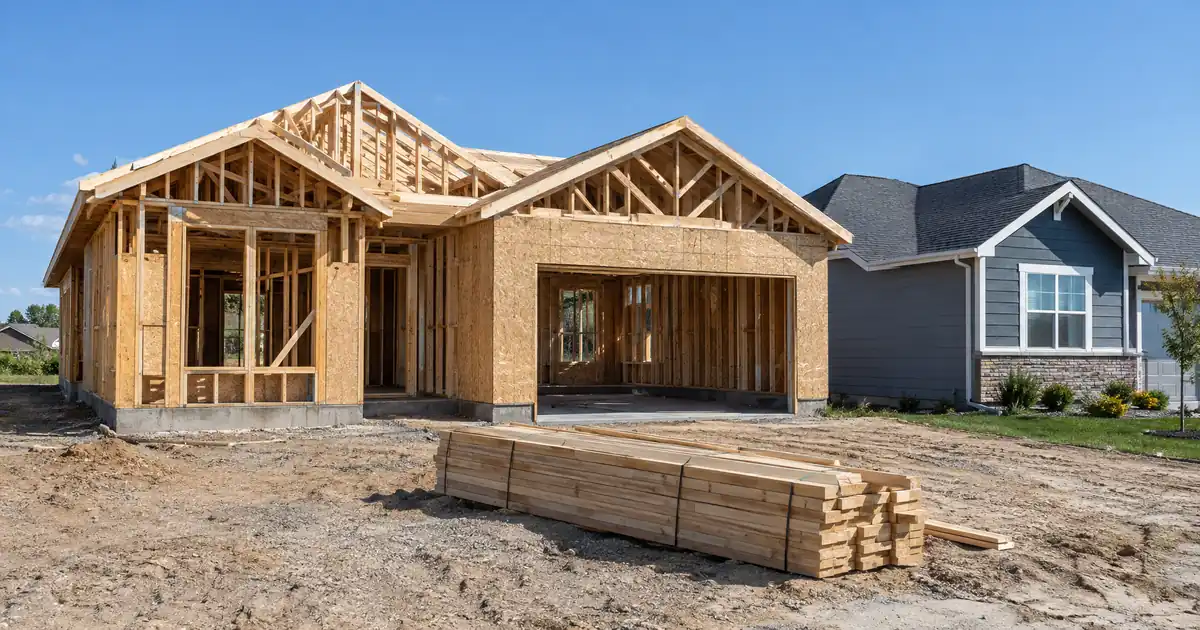
The Quick Read: The warm, layered, lived-in look is the direction of the moment, and owners have more equity than ever to pay for it. The cost of borrowing against that equity is moving the wrong way. The Fed raised its target range on September 16, and the weekly mortgage surveys have climbed since. Plan your renovation budget for a rising-rate backdrop, not the one the design lists were written in.
This column is written as of September 28, 2026. Where a figure arrived after that date, I say so and name the source.
Key takeaways
- The Fed’s September 16 hike was its first since 2023, and the 30-year mortgage rate was already climbing before it.
- Refinance and purchase applications are far below last year. Owners with cheap first mortgages are staying put.
- Record equity is real, but “tappable” is not “spendable.” Some owners are underwater, and everyone else keeps a cushion.
- A floating-rate credit line costs more to carry when the Fed raises its target. Budget for the next quarter-point, not the last one.
- Design trends this year reward patient, phased spending on materials that last. That suits a rising-rate year.
What changed: the dated facts
The Fed moved. The FOMC raised its target range by a quarter point to 3-3/4 to 4 percent in its statement of September 16, 2026, on a 12–0 vote. Advisor Perspectives called it the first increase since 2023. J.P. Morgan Asset Management’s read of the meeting, dated September 17, notes that the median participant sees the policy rate ending 2026 slightly above the top of the new range. That implies one more quarter-point hike.
Mortgage rates were already rising. Don’t tell the story as “the Fed hiked, so mortgages jumped.” The order matters. Freddie Mac’s survey put the 30-year fixed at 6.76% for the week of September 10. The figure for the week of September 17, the first after the hike, was 6.95%. The week of September 24 came in at 7.03%, against 6.30% a year earlier, per Freddie Mac’s release. Fox Business, relaying Freddie Mac, reported 7.28% for the week of October 1, the highest since November 2023. I haven’t seen Freddie’s own release for that last week, so treat it as a secondary report.
Mortgage rates follow the 10-year Treasury yield more than they follow the Fed directly. Mortgage News Daily’s index hit 7.58% on September 29, also the highest since November 2023. That index is a daily read. Freddie’s is a weekly average. They measure different things, so I name the publisher each time.
Applications are weak. The Mortgage Bankers Association’s survey for the week ending September 25 showed applications down 6.0%, with its 30-year rate at 7.3%, up for a sixth straight week. Adjustable-rate loans were 10.3% of applications, the highest share since October 2025. The prior week’s survey, for the week ending September 18, showed the refinance index 62% lower than a year earlier. Real Estate News reported purchase applications down 14% year over year in the latest week.
Sales are soft, inventory is not. NAR’s report on August existing-home sales, dated September 10, showed a 3.98 million annual pace, down 2.0% from July. Inventory was 1.62 million units, a 4.9-month supply that NAR called the highest in over a decade. The median price still rose 1.6% from a year earlier. Pending sales for August, reported September 17, were down 4.7% year over year. Census data dated September 24 put new-home sales at a 684,000 pace for August, down 2.0% from a year earlier, within a wide margin of error.
Equity keeps piling up. ICE’s August Mortgage Monitor, as reported by KQ2 on September 15, put second-quarter equity at a record $18 trillion. Tappable equity, meaning what an owner can borrow against while keeping a cushion, was $11.7 trillion across 47.5 million mortgage holders. About 813,000 borrowers were underwater, up 44% from a year earlier.
Why are owners remodeling instead of moving?
Because moving now costs more than staying, and the data fit that story. I can’t prove it with remodeling-spending numbers. I found none from the past 45 days. What the data do show is an owner with three facts in front of them.
First, existing-home sales are running under four million a year. Second, refinance applications are down well over half from a year ago. Third, many owners hold a first mortgage below today’s market. ICE reported in June that owners are keeping low-rate first mortgages and borrowing through second liens instead. A move or a cash-out refinance means giving up that first loan. A second lien does not.
So the logical response is to stay and improve. That is my read, not a measured trend. Harvard’s Joint Center for Housing Studies expected remodeling growth to “downshift” late in 2026, with financing costs and further tightening as the main risks, per coverage from March. Those risks have now shown up.
Which design trends fit a rising-rate year?
The warm, layered, tactile look has replaced the cold white-and-gray minimalism of a few years ago. Warm earth tones, natural materials, vintage pieces and handcrafted details lead the trend lists. Rooms are getting more defined and less open. Accessibility features for aging in place are moving from afterthought to baseline.
Here is what I like about that list for this rate environment: most of it can be done in phases.
- Color and finish work. Paint, plaster, textiles and lighting change a room’s feel without touching the structure. These are more affordable steps, and the ones you can pay for from savings.
- Natural materials. Wood, stone and leather cost more up front. They also age well, which matters when you may be carrying the debt longer than you planned.
- Vintage and handmade pieces. These are bought one at a time. That gives you a natural pause point if rates keep rising.
- Aging-in-place work. Wider doorways, better lighting and step-free entries are practical. They are also less exposed to trend risk than a paint color.
The expensive, structural items (re-walling an open plan into defined rooms, a full kitchen gut) are where a financing decision does real damage. Those are the projects to plan with the most care.
How does a rising Fed target change the math on a HELOC?
A home equity line of credit, or HELOC, is a revolving credit line secured by your house. Most carry a variable rate. When the Fed raises its target, floating-rate borrowing generally gets more expensive to carry. Fixed-rate home equity loans work differently, and that is a choice worth weighing before you sign.
I can’t give you a HELOC rate. I found no dated HELOC or prime-rate figure in my research for this column, and Lendmire doesn’t publish pricing in a column like this one. What I can reason from is the sourced part: the Fed’s target range is a quarter point higher than it was, and the median projection implies another. Here is a plain hypothetical. If a floating rate moves from 8% to 9%, the difference is a full point on every dollar you’ve drawn. Draw more, and the exposure grows with it.
Our HELOC programs page carries the current guidelines. Eligibility depends on the borrower, the property and the lender’s review. Qualification is subject to lender guidelines.
Two other points on equity. The headline number is not a spending limit. The $11.7 trillion in tappable equity is what’s left after a cushion, and ICE counts it only for borrowers who qualify. And some owners can’t tap anything. Those 813,000 underwater borrowers were concentrated among FHA and VA borrowers and 2022–2025 buyers, per the ICE report.
One more shift to watch. HousingWire reported, around mid-September, that nonbank lenders grew HELOC originations about 140% from 2023 to 2025, against 7% to 20% at depositories. That is a broker’s market now, with more places to compare. I’m not saying that makes any one offer good. Comparing is the point. I covered the equity side of this in record home equity meets rising rates.
My take
Plan the renovation against a rising-rate backdrop, not the backdrop that existed when most design lists were written. That is the whole column in a sentence.
Here is my reasoning. The 30-year mortgage rate has risen noticeably in three weeks by Freddie Mac’s own survey. The Fed has signaled it isn’t done. The 10-year Treasury touched its highest level in decades this week. Rate moves like this don’t reverse on a schedule. Anyone who budgets a renovation assuming relief by spring is making a bet, not a plan.
This one’s a genuine toss-up on one question: borrow now or wait. Waiting avoids the risk of borrowing at a peak. Borrowing now locks in a project cost before materials and labor move. I lean toward the owner who only borrows for the part that has to happen, and pays for the rest from cash flow. But a leaking roof doesn’t wait for a better rate environment.
And I’d push back on the idea that record equity makes everyone rich enough to renovate. Existing sales are below four million. Pending sales are down. The equity is on paper. A remodel turns paper into a bill, and the bill is variable.
What I’d do now
Split the project into phases and fund them differently. Put the cheap, finish-level work first. Pay for it from savings. Hold the structural work until you’ve priced it with a margin for another rate move.
Draw only what the current phase needs. A credit line you haven’t drawn costs you nothing in interest. A balance you drew early to “have it ready” does.
Compare a floating line against a fixed structure. If you can’t absorb a higher variable rate, a fixed option may sit better with your budget, subject to lender guidelines. Ask each lender how the rate adjusts, how often, and what the cap is.
Gather quotes on the same day. Quotes pulled on different days are not comparable when rates are moving this fast. A quote from the week of September 10 and one from the week of September 24 reflect different markets.
If you like a number, lock it. A rate lock holds a quoted rate for a set period, and it matters most when the trend is up. Floating is a bet that the trend turns. I wouldn’t make that bet with a renovation budget.
Check your equity honestly. Get a realistic read on your home’s value. NAR reports a median price up 1.6% year over year, but that is a national median, and your house isn’t the median. If your purchase was recent, your cushion may be thinner than you think. If investing rather than remodeling is on your mind, I walk through related questions about using home equity to buy a rental.
Leave contingency room. Renovation costs run over. Rates are moving too. Those two risks compound, so build a buffer for both.
If you’re weighing a purchase or a refinance this fall, Lendmire can walk you through how the current programs fit your file. You can reach us at 828-256-2183 or request a quote.
For the end-to-end picture of how these loans work — qualification, structures, and the full process — see Lendmire’s complete DSCR loans guide.
Frequently Asked Questions
Did the Fed hike push mortgage rates up?
Only partly. Mortgage rates were already climbing in late August, before the Fed’s September 16 decision. They track the 10-year Treasury yield more closely than the Fed’s target. The hike added to the pressure, but it wasn’t the starting point. Freddie Mac’s survey rose from 6.76% for the week of September 10 to 7.03% for the week of September 24.
Is $11.7 trillion in tappable equity money I can spend?
No. ICE’s figure is the equity left after a cushion is held back, and it counts only borrowers who qualify. Some owners are underwater and can’t tap anything. Your own number depends on your home’s value, your balance and the lender’s review.
Will a HELOC cost more now than a few months ago?
A floating-rate line generally costs more to carry after the Fed raises its target, and it did on September 16. I can’t state a current HELOC rate, because I found no dated source for one. Ask any lender how the rate adjusts and what the cap is before you draw.
Are rates at an all-time high?
No. The MBA said its 30-year rate was the highest since November 2023, a nearly three-year high. The 10-year Treasury yield is at a multi-decade high, per CNN on October 1, 2026, but the mortgage rate is not at a record.
Should I renovate now or wait for rates to fall?
It depends on the project. Needed repairs shouldn’t wait. Cosmetic work can be phased and paid from savings. The Fed’s median projection implies another hike this year, so I wouldn’t count on relief arriving by a date you’ve put on a calendar.
About Lendmire
Lendmire — NMLS# 2371349 — is a mortgage brokerage whose founder writes this column. DSCR investor programs reach 41 markets, including Washington, D.C.; consumer programs such as bank statement, HELOC and down payment assistance loans are arranged in 16 states; every loan is placed with, and underwritten by, a wholesale lender under that lender’s guidelines. Scotsman Guide named Lendmire a Top Mortgage Workplace in both 2025 and 2026.
Get Started
Ready to find the right loan for you?
In about 30 seconds you can review financing options available for your home or investment property. No commitment required.
Informational only. Not a Loan Estimate, approval, or commitment to lend. Program availability and eligibility are subject to lender guidelines, credit approval, property review, and underwriting.
References
1. Federal Reserve FOMC statement, September 16, 2026
2. Advisor Perspectives, Fed decision of September 16, 2026
3. J.P. Morgan Asset Management, FOMC statement summary, September 17, 2026
4. Yahoo Finance on Mortgage News Daily, September 29, 2026
5. MBA Weekly Applications Survey, September 30, 2026
6. MBA Weekly Applications Survey, September 23, 2026
7. NAR, August existing-home sales, September 10, 2026
8. Census Bureau, new residential sales, September 24, 2026
9. KQ2 / Stacker on ICE’s August Mortgage Monitor, September 15, 2026
This article is part of Lendmire’s Mortgage News series — every loan program’s qualification details, guidelines, and scenarios live on the loan options page.
Related reading: Why A Local Real Estate Broker Matters As Buyers Gain Leverage, September 2026? · September 2026: Buyers Need A Real Estate Agent As Supply Grows, Rates Climb · Listing Your Home For Sale This Fall As Inventory Climbs And Rates Rise
Brandon Miller
Founder & CEO, Mortgage Loan Originator, Lendmire LLC
- Mortgage Loan Originator · NMLS# 1129696 · Verify on NMLS Consumer Access
- North Carolina Real Estate Broker · License# 343312 · Verify on NCREC
- North Carolina Insurance Producer · License# 19053198 · Property, Casualty, Life, Health · Verify on NAIC SBS
- Lendmire LLC · Firm NMLS# 2371349 · Verify firm licensure
Disclosure information. Lendmire is a state-licensed mortgage brokerage under NMLS# 2371349. Lendmire is not a depository institution, direct lender, or financial advisor — all loans referenced are placed through wholesale lender partners and are subject to each lender's underwriting standards. This article is provided for general informational purposes and is not a commitment to lend, nor does it constitute financial, legal, or tax advice. Loan programs, terms, rates, and qualification standards change without notice and depend on borrower profile, property type, and the state in which the subject property is located. Equal Housing Opportunity provider. NMLS Consumer Access: nmlsconsumeraccess.org.