
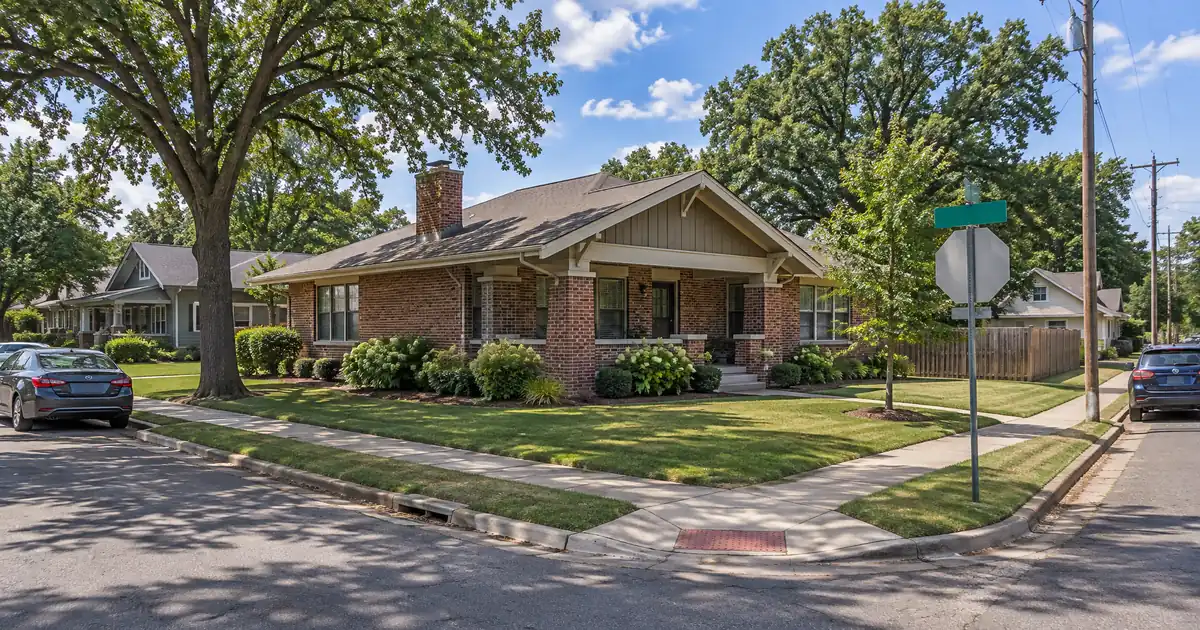
The Quick Read: To close a cash-out refinance on a rental, you confirm the property is non-owner-occupied, pass the ownership clock, order an appraisal that sets both value and market rent, and size the loan to the lower of the equity limit and the rent-coverage limit. Then the old lien is paid off, the new one is recorded, and the net proceeds are disbursed.
- Cash-out on a standard rental tops out around 75% LTV across most of the network.
- About 6 months of ownership, measured from title recording, is the common expectation.
- Coverage of 1.00 is where select programs start, and stronger ratios open better terms.
- Payoff, costs, and reserves come out of the proceeds first, so the net can be smaller than expected.
“Midwest City” here is a city in Oklahoma County, not the Midwest region. The mechanics below are national, and the city serves only as an occasional illustration. Program details are typical ranges from select lenders in Lendmire’s wholesale network, subject to lender guidelines and not a commitment to lend.
DSCR Cash-Out Calculator
Run the cash-out numbers in your market
Rate source: Freddie Mac 30-yr average via FRED® — Federal Reserve Bank of St. Louis · effective Nov 5, 2026
Prefilled with starting assumptions — enter your property’s value, balance, taxes, and insurance for a more accurate picture.
Program parameters update from Lendmire’s centralized guideline source. Taxes and insurance are editable estimates.
As of Nov 5, 2026 · General Freddie Mac market benchmark, not a Lendmire loan offer. Property value, balance, taxes, and insurance are editable estimates. Maximum loan-to-value varies by lender, program, property type, and seasoning. Not a Loan Estimate, approval, or commitment to lend. Program availability and eligibility are subject to lender guidelines, credit approval, property review, and underwriting.
What Is a Rental Cash-Out Refinance?
A cash-out refinance replaces your current mortgage with a larger one and hands you the difference in cash. You pay off the old balance, pay the closing costs, and keep what remains.
A rate-and-term refinance is different. It changes the loan’s terms without returning cash. On a rate-and-term file, leverage can run higher, up to 85% LTV on an investment property. Once a refinance puts cash in your hands, it is a cash-out file and the 75% ceiling applies.
DSCR stands for debt service coverage ratio. It divides the property’s monthly rent by its monthly housing payment: principal, interest, taxes, insurance, and any HOA dues. LTV, or loan-to-value, is the loan balance as a percentage of appraised value. The lender qualifies you primarily on property-level rental income covering the payment, subject to lender guidelines. That is the core idea behind the complete DSCR loans guide.
Before You Start: The Eligibility Checklist
1. Equity. The new loan generally cannot exceed 75% of appraised value on a standard rental.
2. Ownership clock. About 6 months of seasoning is the common expectation. Seasoning is the waiting period between buying a property and refinancing it, counted from the date title was recorded.
3. Credit. A 620 floor exists in parts of the network. Most programs want around 660, and 700+ unlocks the strongest leverage tiers.
4. Reserves. Reserves are liquid funds left after closing. They commonly run about 6 months of PITIA, the full monthly payment including taxes and insurance. Balances above $1,500,000 typically step up to about 9 months.
5. Property type. Manufactured homes (single- and double-wide), log homes, and barndominiums are not offered in the network’s DSCR programs.
Loan sizes run up to $3,000,000 on standard programs. Above $2,500,000 the network generally holds to 30-year fixed structures.
The Closing Roadmap
| Stage | What happens | What you do |
|---|---|---|
| Application | Lender reviews credit, entity, property | Submit docs and lease |
| Appraisal | Value and market rent set | Give access, share lease |
| Underwriting | Coverage and reserves tested | Respond to conditions |
| Title and payoff | Old lien verified, new lien prepared | Confirm vesting |
| Signing | Loan documents executed | Sign yourself or as LLC signer |
| Funding | Old loan paid, net cash disbursed | Receive proceeds |
How Underwriting Actually Treats the File
Underwriting runs in a fixed order, and each step can shrink the loan.
Step 1: Business-purpose and occupancy confirmation. DSCR loans are designed for non-owner-occupied investment properties. Because they are business-purpose investor loans, they are reviewed differently from a standard owner-occupied mortgage. You sign a declaration that you will not live in the property. Title can be held individually or in an LLC, subject to program terms.
Step 2: Seasoning check. The lender looks at the recording date of your deed. Lender policy sets this clock, and no statute does.
Step 3: The appraisal does two jobs. It sets value for the LTV cap. It also sets market rent for the coverage test. A single-family home typically gets a full interior appraisal plus a rent schedule. A 2-4 unit property gets an operating-income-style rent analysis. The lender usually leans on appraiser-supported market rent, not just what your lease says.
A rent listing figure shows why this matters. Zumper’s Midwest City research reports a median rent of $1,200, with house listings averaging $1,297 and apartments $900. Those are listing-based numbers. The appraiser’s rent conclusion for your specific unit is what the lender uses.
Step 4: Coverage on the new, larger payment. More cash out means a bigger loan, a bigger payment, and a lower coverage ratio. A refinance that looked comfortable at the old balance can look thin at the new one.
Step 5: Two-limit sizing. Your proceeds are capped by the lower of two limits:
- The value limit: appraised value times the 75% cash-out cap.
- The coverage limit: the largest loan the rent can support at the required ratio.
Whichever is lower wins. Terms depend on the lender’s guidelines, the property type, the leverage, and a full review of the credit profile. Then the payoff, closing costs, required reserves, and any prepayment charge come out. A prepayment penalty is a fee for paying off a loan early, so check whether your old loan carries one before you commit.
Title, Payoff, and Liens
A title company orders a commitment, which lists every lien and claim on the property. The existing lender issues a payoff statement showing the exact amount owed through the closing date. Any other lien, such as a second mortgage or a judgment, must be paid or subordinated.
The new loan is secured by a recorded mortgage or deed of trust in the county where the property sits. Oklahoma has statutes governing mortgages and deeds of trust, including foreclosure procedures, collected in Title 46 of the Oklahoma statutes. You do not need to read them to close, but they explain why title work is not optional.
If the property sits in an LLC, the title company will want the entity documents and proof of who has authority to sign.
What Closing Day Looks Like
Closing is mostly signing and verification.
- Vesting. Confirm the name on the new loan matches how title is held.
- Signer authority. An LLC signs through an authorized member or manager.
- Costs. Closing costs are paid from proceeds or in cash, depending on the file structure.
- Funding. The old lien is paid off, the new lien is recorded, and net proceeds are disbursed by wire or check.
Because DSCR loans are business-purpose and exempt from the consumer mortgage disclosure rules, do not expect the same disclosure package an owner-occupant gets. Read every figure on your settlement statement anyway. Confirm the payoff amount, the fees, and the cash to you.
A Worked Proceeds Example
Run the numbers on a rental appraised at $400,000 with a $200,000 payoff. These are modeled assumptions, not market data.
| Line | Treatment |
|---|---|
| Value limit | 75% of $400,000 appraised value |
| Coverage limit | Loan the rent supports at 1.00 or better |
| Loan amount | The lower of the two limits |
| Net proceeds | Loan, minus payoff, costs, reserves |
If the value limit is the lower one, the loan lands at 75% LTV. If rent is the weaker leg, the loan shrinks until coverage clears. Either way, the net can come in below what the headline equity suggests. Lendmire’s piece How Much a Cash-Out Refinance Can Lend on a Midwest City OK Rental goes deeper on sizing. Final terms depend on the lender’s guidelines, the property type, and the borrower’s complete credit picture.
Where the General Rule Breaks
Owner-occupied or “might occupy” files. A DSCR product is built for non-owner-occupied use. The CFPB’s Regulation Z page treats credit for non-owner-occupied rental property as business purpose. It handles owner-occupied rentals separately, with unit-count thresholds. Intent to occupy therefore changes the analysis, and a file with any plan to live in the property should be reviewed before it is submitted.
Low appraisal. If value comes in under your projection, the value limit shrinks and so does your cash. A documented reconsideration of value is the usual response, with no guarantee of a changed number.
Coverage below 1.00. The minimum DSCR on standard programs is 1.00, meaning qualifying rent equals the full payment of principal, interest, taxes, insurance, and any HOA dues. A separate select-lender path takes coverage below 1.00 with leverage and terms adjusted.
Recently purchased properties. The standard route needs about 6 months of seasoning. A BRRRR investor (buy, rehab, rent, refinance, repeat) who wants cash out sooner should have the file reviewed first, because seasoning and value basis can differ for a recent purchase.
Short-term rentals. Cash-out on a short-term rental sits at 70% LTV, not 75%. Expect a 640+ score and about 12 months of hosting history. Short-term rental rules can vary by city, county, HOA, and property type, so investors should confirm local rules before relying on projected rental income. Each figure is subject to lender guidelines and a complete review of property type, leverage, and credit.
Agency contrast. Agency-style financing underwrites personal income and uses different forms and rules. A DSCR file does not rely on personal income in that way, because the property’s rent carries the qualification.
Key Terms Defined
Seasoning: the waiting period between buying a property and refinancing it, counted from title recording.
PITIA: principal, interest, taxes, insurance, and any association dues, which together form the monthly payment.
Reserves: liquid funds you must hold after closing, usually counted in months of PITIA.
Vesting: the legal name or entity in which title is held.
Payoff statement: the old lender’s written balance due through a specific closing date.
Prepayment penalty: a fee charged for paying a loan off early.
What Can Go Wrong, and the Fix
| Problem | Typical fix |
|---|---|
| Appraisal low | Request reconsideration; borrow less |
| Coverage too thin | Take less cash out |
| Title issue or extra lien | Clear or subordinate before signing |
| Rent not supported | Provide lease and rent history |
| Insurance mismatch | Align policy with the new loan |
| Reserves short | Document liquid funds |
Passing the coverage test is not the same as positive cash flow. DSCR compares rent to PITIA only. Repairs, vacancy, management, utilities, and capex all sit outside it.
Pros, Cons, and the Investor Decision
The upside is straightforward. You pull capital out of a property you already own to fund the next one, and the file qualifies primarily on rental income instead of personal income documents. That suits self-employed investors and those holding property in an LLC, subject to program terms.
The downsides are just as plain. You restart the loan term, carry a larger balance, and pay closing costs again. A bigger payment also thins your coverage.
Tax treatment can depend on how the funds are used and how the property is held; investors should keep clear records and speak with a qualified tax professional before relying on any deduction.
If you are buying or refinancing a rental property and want to see how the numbers work, Lendmire can help you compare DSCR loan options based on the property income, credit profile, leverage, and investor goals. Lendmire is a broker arranging financing through select lenders in its wholesale network, across 41 markets including Washington, D.C.
Frequently Asked Questions
Can I close a rental cash-out refinance in an LLC?
Often yes, subject to program terms. The title company will want the entity documents and proof of who can sign. Match the vesting on the new loan to the entity.
Do I need traditional personal-income documentation?
Not for a typical DSCR file. It qualifies primarily on property-level rental income covering the payment, subject to lender guidelines. You still provide credit, title, and appraisal work.
Is there a rescission period on a rental?
Rescission is a consumer-credit feature, and business-purpose DSCR loans are generally outside it. That is one reason a stated non-owner-occupied purpose matters. Confirm the specifics for your file with the lender.
How much cash will I actually receive?
Less than your equity suggests. The loan is capped at 75% LTV on a standard rental and by rent coverage, then payoff, costs, and reserves come out. Leverage, reserves, and pricing vary by lender and program; the final terms follow the full file review.
Can I refinance a rental I bought with cash?
Possibly. Seasoning and value basis can differ for a recent purchase, so have the file reviewed with the specific dates and purchase price in hand.
Investors weighing their equity options can start with Lendmire’s guide to cash-out refinance on an investment property.
About Lendmire
A non-QM mortgage broker (NMLS# 2371349), Lendmire arranges DSCR financing for real estate investors in 41 markets — 40 states plus Washington, D.C. Because deals are underwritten primarily on property cash flow rather than personal income documentation, the structure suits self-employed buyers and entity-owned portfolios. Lendmire places loans through wholesale investor lenders; it is not a direct lender. Scotsman Guide named Lendmire a Top Mortgage Workplace in both 2025 and 2026.
Get Started
Ready to find the right loan for you?
See your offer in seconds. No credit pull, no obligation.
Informational only. Not a Loan Estimate, approval, or commitment to lend. Program availability and eligibility are subject to lender guidelines, credit approval, property review, and underwriting.
References
1. Zumper, Midwest City rent research
2. Oklahoma Senate, Title 46 Mortgages
This article is part of Lendmire’s investment property cash-out refinance program — full qualification details, guidelines, and scenarios live on the program page.
Related reading: When a DSCR Cash-Out Refinance Makes Sense If FHA Is Not an Option for a Rental · Can You Get a DSCR Cash-Out Refinance to Pull Cash Out of a Paid-Down Rental? · DSCR Cash-Out Refinance Checklist When Choosing Between DSCR and Conventional on a Rental
Guides: Investment Property Cash-Out Refinance in Midwest City, OK · Investment Property Cash-Out Refinance in Oklahoma
Brandon Miller
Founder & CEO, Mortgage Loan Originator, Lendmire LLC
- Mortgage Loan Originator · NMLS# 1129696 · Verify on NMLS Consumer Access
- North Carolina Real Estate Broker · License# 343312 · Verify on NCREC
- North Carolina Insurance Producer · License# 19053198 · Property, Casualty, Life, Health · Verify on NAIC SBS
- Lendmire LLC · Firm NMLS# 2371349 · Verify firm licensure
Legal disclosures. Lendmire (NMLS# 2371349) is a state-licensed mortgage brokerage that arranges financing through wholesale lender relationships. Lendmire is not a direct lender, depository institution, or registered financial advisor. The discussion above is general informational content about real estate financing — it is not financial, legal, or tax advice, and readers should consult licensed professionals for guidance on their individual circumstances. Loan inquiries are subject to lender underwriting; this article does not represent a commitment to lend. Loan terms, rates, and qualification standards vary by borrower, property, and state, and are subject to change at any time. Equal Housing Opportunity. NMLS Consumer Access: nmlsconsumeraccess.org.