
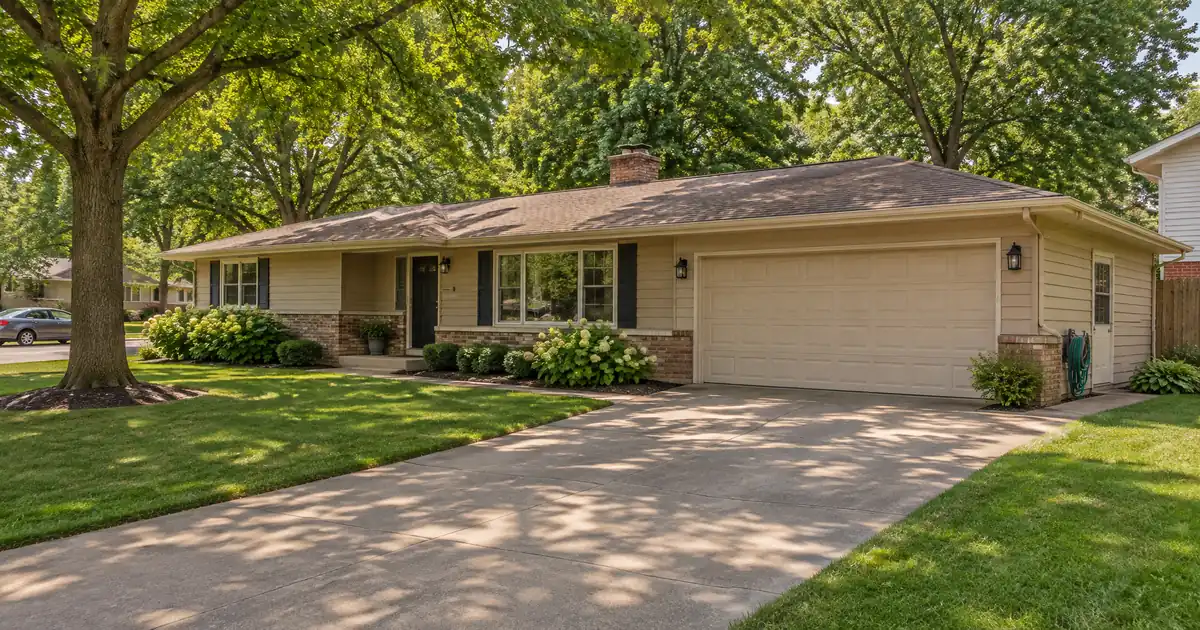
The Quick Read: No, PCS orders alone do not let a lender freeze, cut, or call your home equity line; only two things typically change, an optional interest cap on pre-service balances and the occupancy basis if you move out and rent the home. The line stays open on its existing terms unless a permitted reason and the loan contract both allow the lender to act.
- Orders are not a listed ground for freezing or reducing a line. Lenders need a permitted reason, and the agreement must reserve that right.
- A federal military-relief law lets you request a 6 percent interest cap on balances that predate active duty. The request is in writing and is not automatic.
- Moving out to rent the home can collide with the occupancy language in your line agreement, so read it before you sign a lease.
- Once the home is a rental, a rent-qualified DSCR cash-out refinance is usually the cleaner way to pull equity, since a bank line leans on personal income.
Can a Lender Freeze the Line After Orders?
A lender can freeze or reduce a HELOC only for reasons the federal HELOC rules allow, and only if your agreement reserves that right. Those reasons include a significant drop in home value and a material change in your finances that makes repayment doubtful. A transfer order is not on the list.
How large a line the equity supports.
An equity line is sized by combined loan-to-value, occupancy, and credit — not by rental coverage. Switch the occupancy or the credit band and the ceiling moves with it.
Investment-property lines require a 700 minimum credit score; second-home lines start at a 640 minimum and primary-residence lines at 600, and the combined-LTV ceiling steps down as the credit band drops on primary-residence and second-home lines and holds on investment-property lines; the line cap steps down on primary-residence lines and holds at every tier on investment-property and second-home lines.
A debt-to-income ratio above 45% requires 680+ credit. Profiles under 640 are limited to single-family homes. At least 75% of the approved line is drawn at closing. Ceilings, floors, and caps update from Lendmire’s centralized guideline source.
Line estimate
Illustrative estimate only — not a quote, Loan Estimate, approval, or commitment to lend. The rate is an editable assumption; equity-line pricing is variable through both the draw and repayment periods and never converts to fixed. Occupancy and credit drive the ceiling together: an investment property tops out at 70% combined LTV (minimum credit 700, line cap $500,000); a second home tops out at 90% combined LTV (minimum credit 640, line cap $500,000), with the ceiling stepping down as the credit band drops (the cap holds at every tier); a primary residence tops out at 90% combined LTV (minimum credit 600), and its $750,000 maximum line is available only at 75% combined LTV or below with a 700-or-better credit profile (720 on the longer-runway program) and a full appraisal. Lines above $500,000 require a full appraisal. Credit, debt-to-income, property type, and full underwriting review all affect the final line.
The financial-change ground is the one to watch. A PCS move can come with a pay change, a spouse’s job loss, or a period of double housing costs. A lender could try to argue that one of those makes repayment doubtful. That argument is harder when the payments are current and the income is documented.
If a lender does freeze or cut the line, it owes you written notice with specific reasons. It must also restore your credit privileges once the condition ends. Keep every statement and notice, because a dispute over a freeze turns on the paper trail.
Draws continue as normal while the line stays open. If you expect to need the money, the sequence matters more than the orders. That point comes up again in the investor decision below.
What If You Move Out and Rent the Home?
Renting the home may change the occupancy basis your line was written on, so read the agreement before you list it. A HELOC is underwritten by occupancy type: primary residence, second home, or investment property. Each gets different limits.
Look in your agreement for an occupancy clause, a change-of-use clause, or a duty to notify the servicer. Some lines require notice when the home stops being your primary residence. Others are silent, and the lender relies on you to follow the original certification.
A landlord insurance policy is the practical trigger. Investors in a BiggerPockets forum thread on converting a primary residence to a rental describe switching to a landlord policy as a must. They also say the insurer’s notice often reaches the lender. That is anecdotal, but the lesson is sound: do not plan around the lender never finding out.
The honest route is simpler. Tell the servicer what the agreement requires, move the insurance, and keep the lease and rent schedule ready. Misstating occupancy on any application is the one shortcut that is never worth it.
A spouse who stays in the home changes the picture, because the property may remain a primary residence in practice. Check the agreement language on that point instead of assuming.
How the 6 Percent Cap Works and Where It Stops
The Servicemembers Civil Relief Act (SCRA) caps interest at 6 percent on debts you took on before active duty, but only if you ask for it. Ask CFPB says you must be on active duty and must have taken the loan before service. You must also notify the lender in writing and include a copy of your orders.
For mortgages, the reduction lasts one year past your last day of active duty. Reservists get the reduction starting on the date they receive orders, not on the date they report.
The OCC’s SCRA handbook adds two details that matter for carrying costs. The capped amount includes fees and service charges, and excess interest must be forgiven rather than deferred. That makes the cap a real cost reduction, not a payment holiday. Your balance does not shrink, and your required payments do not stop.
Here is where a HELOC differs from a standard mortgage. America’s Credit Unions notes that the cap does not reach new advances on a credit card or HELOC made while on active duty. It does cover obligations you hold jointly with a spouse.
Two points remain open, and you should settle both with your servicer in writing.
- New draws on an old line. The cap applies to the pre-service balance. How a lender treats draws taken after orders on a pre-service line varies, so confirm before you draw.
- The one-year tail. The extension applies to mortgage-type debt. Whether your HELOC counts depends on whether it is secured by the property in the nature of a mortgage. Ask the servicer how it classifies the line.
A person holding a valid power of attorney can generally act for you if you are deployed or overseas. Check what your servicer accepts, and set that up before you leave.
Your HELOC When You Get PCS Orders: The First 30 Days
Work these steps in order, because the early moves protect the most options.
1. Read the line agreement. Find the occupancy clause, the notice duties, and the draw end date.
2. Decide whether you need cash. If you want equity out while the home is still your primary residence, that decision comes before the occupancy change, and every answer on an application must be truthful.
3. Send the written cap request. Do this if the line predates active duty. Include a copy of your orders, or a substitute your servicer accepts.
4. Settle the occupancy path. Keep the home, rent it, or sell it. The table below shows how each path touches the line.
5. Line up insurance and paperwork. Move to a landlord policy if you rent, and keep the lease handy.
6. Set up account access. Arrange statements, online access, and any power of attorney before you leave the country or the state.
| Path | Effect on the HELOC | Main task |
|---|---|---|
| Keep as primary | Line continues as written | Confirm occupancy language |
| Rent the home | Occupancy basis may change | Notify servicer; landlord policy |
| Sell the home | Line is paid off at sale | Get a payoff figure early |
| Rent, then refinance | Bank line replaced by rent-based loan | Plan the cash-out first |
The draw period matters too. If your interest-only draw ends while you are stationed elsewhere, the line moves into repayment, and the payment steps up. Mark that date now so it does not surprise you mid-assignment.
A VA first mortgage is a separate matter. PCS orders are widely treated as a recognized exception to VA occupancy expectations, so renting is allowed on that loan. That governs the first lien only. A HELOC behind it carries its own occupancy terms.
When the Home Becomes a Rental: The Investor Decision
Once the home is a rental, a bank HELOC and a DSCR cash-out refinance answer different questions. A bank line qualifies mostly on your personal income and debt load. A DSCR loan is reviewed primarily on property-level rental income covering the payment, subject to lender guidelines. You can read the full mechanics in Lendmire’s complete DSCR loans guide.
Across Lendmire’s wholesale network, home equity lines are sorted by occupancy, and the limits are very different:
- On a primary residence, combined loan-to-value tiers reach 90% CLTV, but only at a 720-or-better credit profile.
- On an investment property, the ceiling is 70% CLTV, the minimum credit score is 700, and the maximum line is $500,000. Investment lines use a 5-year interest-only draw followed by a 25-year repayment period.
- Debt-to-income tops out at 50% on these lines, and the lender reviews your file on the interest-only payment at the maximum draw.
- Title must be held by you individually or in a revocable living trust. An LLC cannot hold title on a HELOC. A home already deeded to an LLC needs a vesting change first, or a DSCR cash-out refinance instead.
- Availability is limited to 16 states, narrower than the DSCR footprint.
All of this is subject to lender guidelines and full file review. It is not a commitment to lend.
Timing matters here. The same home can carry a 90% CLTV ceiling (at a 720-or-better credit profile) while it is your primary residence, and only a 70% CLTV ceiling once it is a rental. If you want that equity and the plan is real, do it truthfully while the home is your primary residence. If you have already decided to rent, the line is an investment line, and the 70% CLTV ceiling applies.
DSCR cash-out is the other lane. It replaces your first lien, so you give up the existing first-mortgage terms. That matters most if those terms are favorable, and it is the main reason to hesitate. Typical cash-out refinance parameters across most of the network are:
- Leverage tops out around 75% LTV on a standard rental, and about 6 months of seasoning is the common expectation.
- Coverage of 1.00 is where select programs start. A separate select-lender path takes coverage below 1.00 with leverage and terms adjusted.
- Most programs want a credit score around 660, a 620 floor exists in parts of the network, and 700+ unlocks the strongest leverage tiers.
- Reserves commonly run around 6 months of PITIA, though they vary by lender, leverage, loan size, and transaction type.
Run a modeled scenario. Assume a freshly converted home whose lease rent covers the full PITIA at roughly 1.15x, taken at 75% LTV on a cash-out. That clears a 1.00 start with some margin. Clearing 1.00 is not the same as positive cash flow, though. DSCR compares rent to PITIA only, and repairs, vacancy, management, utilities, and capex sit outside the number. A freshly converted home with no lease history also gives a rent-based program less to work with, so line up the lease first. Terms depend on the lender’s guidelines, the property type, the leverage, and a full review of the credit profile.
The flip point is simple. If you will sell within a year or two and the balance is small, leave the HELOC alone and request the cap. If you plan to hold the home and buy more rentals, the DSCR path scales better, because it does not depend on your personal DTI.
Adding a HELOC draw as the down payment on the next property adds debt, and it belongs in your coverage and reserve planning from the start. If a spouse is on title, the article What Happens to a DSCR HELOC When a Co-Owner Won’t Sign? covers the signature issue.
Key Terms Defined
PCS: A permanent change of station is a military move to a new duty location, usually with orders.
SCRA: The Servicemembers Civil Relief Act is a federal law that includes a 6 percent interest cap on certain pre-service debts.
CLTV: Combined loan-to-value adds every lien on the home and divides the total by its value.
DSCR: Debt service coverage ratio compares monthly rent to the full monthly housing payment: principal, interest, taxes, insurance, and any HOA dues.
Draw period: The stretch when you can borrow from the line, usually paying interest only, before repayment begins.
Frequently Asked Questions
Can my lender close my HELOC because I moved out?
Not on orders alone, but the occupancy clause in your agreement can be a separate issue. If the line was written for a primary residence and the home becomes a rental, the lender may treat that as a change of use. Read the agreement and notify the servicer if it requires notice.
Does the 6 percent cap cover money I draw after I get orders?
Generally no. The cap covers obligations you took on before active duty, and new advances on a HELOC during service are not covered. How a servicer treats draws on a pre-service line can vary, so get its position in writing before drawing.
Does the cap end the day I leave active duty?
For mortgage debt, it runs one year past your last day of service. Whether a HELOC counts as mortgage-type debt depends on how it is secured, so confirm the end date with your servicer. Excess interest is forgiven, not deferred.
Do I need landlord insurance if I rent the home?
Yes, plan on it. A standard owner-occupant policy is not written for a tenant-occupied home, and the switch can alert your lender. Move the coverage when the lease starts.
Can I get a new HELOC after the home becomes a rental?
Possibly, within narrow limits. On an investment property in Lendmire’s network, lines run up to 70% CLTV with a 700 minimum credit score and a $500,000 maximum, held in your own name or a revocable trust. Availability is limited to 16 states and subject to lender guidelines.
If you are considering a home equity line and want to see how the numbers work, Lendmire can help you compare HELOC options based on the property, the equity available, credit profile, combined leverage, and your goals. Lendmire is a broker that arranges financing through select lenders in its wholesale network, with DSCR programs across 41 markets, including Washington, D.C. Home equity lines are offered in a narrower set of 16 states. You can reach the team at 828-256-2183 or request a quote, and the site’s illustrative calculator gives an editable estimate only.
Orders change where you live, but the equity in the house stays where it was, and the best decisions are made before the move date rather than after.
About Lendmire
Lendmire (NMLS# 2371349) is a mortgage broker. Home equity lines of credit — on a primary residence, a second home or an investment property — are arranged through wholesale lenders in Lendmire’s 16 full-service states, and every line is underwritten by the lender under its program guidelines. Scotsman Guide named Lendmire a Top Mortgage Workplace in both 2025 and 2026.
Get Started
Ready to find the right loan for you?
See your offer in seconds. No credit pull, no obligation.
Informational only. Not a Loan Estimate, approval, or commitment to lend. Program availability and eligibility are subject to lender guidelines, credit approval, property review, and underwriting.
References
1. BiggerPockets forum: Converting primary residence to rental
2. Ask CFPB: Military loan interest limits
3. OCC Comptroller’s Handbook: Servicemembers Civil Relief
4. America’s Credit Unions: Six Percent Cap and the SCRA
This article is part of Lendmire’s HELOC & home equity loan program — full qualification details, guidelines, and scenarios live on the program page.
Related reading: Portfolio DSCR Cash-Out Refinance With Multiple Financed Rental Properties: The 2026 Guide · Where to Get a DSCR HELOC on a Short-Term Vacation Rental · DSCR Cash-Out Refinance Checklist When Choosing Between DSCR and Conventional on a Rental
Brandon Miller
Founder & CEO, Mortgage Loan Originator, Lendmire LLC
- Mortgage Loan Originator · NMLS# 1129696 · Verify on NMLS Consumer Access
- North Carolina Real Estate Broker · License# 343312 · Verify on NCREC
- North Carolina Insurance Producer · License# 19053198 · Property, Casualty, Life, Health · Verify on NAIC SBS
- Lendmire LLC · Firm NMLS# 2371349 · Verify firm licensure
Legal disclosures. Lendmire (NMLS# 2371349) is a state-licensed mortgage brokerage that arranges financing through wholesale lender relationships. Lendmire is not a direct lender, depository institution, or registered financial advisor. The discussion above is general informational content about real estate financing — it is not financial, legal, or tax advice, and readers should consult licensed professionals for guidance on their individual circumstances. Loan inquiries are subject to lender underwriting; this article does not represent a commitment to lend. Loan terms, rates, and qualification standards vary by borrower, property, and state, and are subject to change at any time. Equal Housing Opportunity. NMLS Consumer Access: nmlsconsumeraccess.org.