
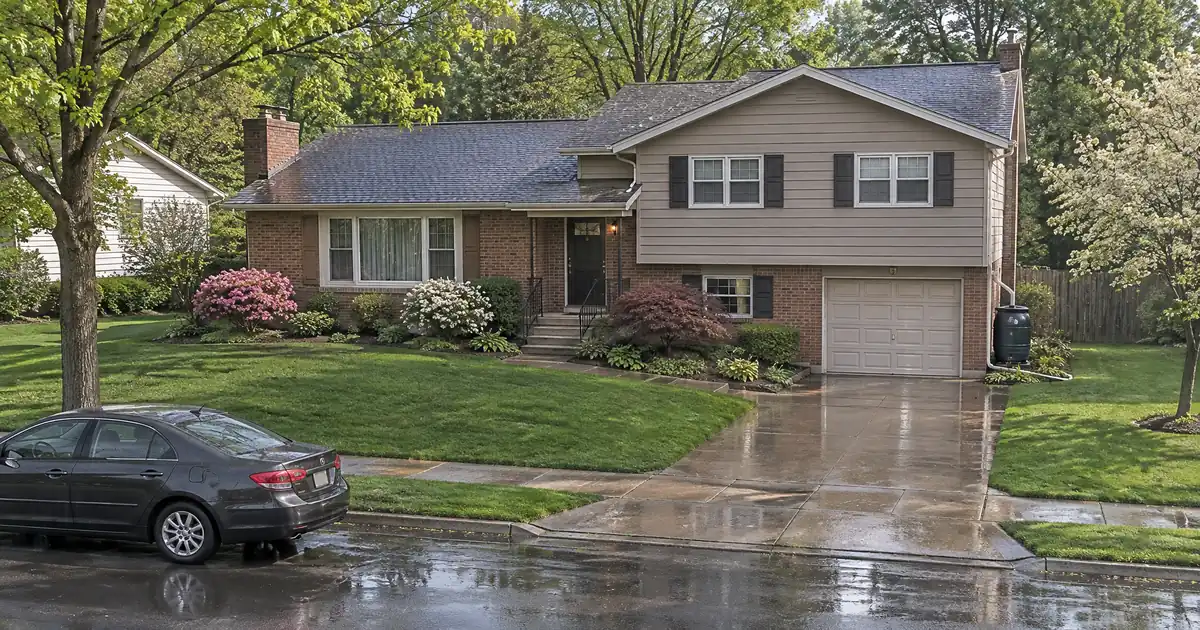
The Quick Read: Usually the surviving owner faces the same tests as any DSCR cash-out refinance: rent that covers the full monthly obligation, leverage at or below the 75% cash-out ceiling on a standard rental, and a qualifying credit score. The death adds three more: clean, recorded title, a survivor who can qualify alone, and replacement of anything the deceased borrower supplied. Everything is subject to lender guidelines.
- Title comes first. The lender needs a recorded, insurable owner who can sign.
- The survivor carries the file. The deceased borrower’s credit score, reserves, and track record drop out, so the survivor’s own profile has to meet the program requirements.
- Rent still decides the loan. The property qualifies primarily on rental income covering the payment, not on the survivor’s paychecks.
- Seasoning needs a direct question. The roughly 6-month ownership clock runs from title recording, so a survivorship transfer may or may not restart it, and lenders treat that differently.
- Some properties fall outside the program. Manufactured homes, log homes, and barndominiums are not offered.
Who Can Apply After a Co-Borrower Dies?
The person who legally owns the property now can apply. That is the survivor, the estate, or a trust, depending on how title was held. A lender cannot close a loan until someone with clear authority can sign the new mortgage.
DSCR Cash-Out Calculator
Run the cash-out numbers in your market
Rate source: Freddie Mac 30-yr average via FRED® — Federal Reserve Bank of St. Louis · effective Nov 5, 2026
Prefilled with starting assumptions — enter your property’s value, balance, taxes, and insurance for a more accurate picture.
Program parameters update from Lendmire’s centralized guideline source. Taxes and insurance are editable estimates.
As of Nov 5, 2026 · General Freddie Mac market benchmark, not a Lendmire loan offer. Property value, balance, taxes, and insurance are editable estimates. Maximum loan-to-value varies by lender, program, property type, and seasoning. Not a Loan Estimate, approval, or commitment to lend. Program availability and eligibility are subject to lender guidelines, credit approval, property review, and underwriting.
Here is how the common setups play out:
| How title was held | Who applies | What the lender needs |
|---|---|---|
| Joint tenancy with survivorship | The surviving owner | Recorded death certificate and survivorship affidavit |
| Tenancy in common | The estate or the heir | Court authority, then a recorded deed or order |
| Owned by an LLC | The entity, with the survivor as guarantor | Updated entity documents |
| Held in a trust | The successor trustee | Trust certification and a death certificate |
Joint tenancy is the simple case. Property held this way passes automatically to the surviving owners without probate, and the usual paperwork is a death certificate plus an affidavit of survivorship filed with the county recorder.
Tenancy in common is slower. There is no automatic survivorship, so the deceased owner’s share runs through the estate. The lender will generally wait until the heir is the recorded owner.
Why Recording the Death Matters
Survivorship happens by operation of law, but a lender and a title insurer still need to see it on the public record. The California Lawyers Association explains that once the affidavit is recorded, title insurers and other third parties can rely on it as evidence of ownership. Until then, marketability suffers.
Requirements differ by state. Some states prescribe what the affidavit must say, and others leave the form open. Your title company or attorney will know the local version.
Start here, before you talk to any lender. Ordering an appraisal on a property with an unrecorded death wastes effort, because the file cannot move forward without a clean vesting.
Does Death Make the Old Loan Due?
Usually not, for small residential properties. Federal law limits a lender’s ability to call a loan when certain transfers happen. The statute covers loans on residential property with fewer than five dwelling units. Two protected transfers matter here: a transfer to a surviving joint tenant on a death, and a transfer to a relative resulting from a borrower’s death.
The protection is narrower for investors than many assume:
- Five or more units. The statute does not apply, so the loan contract controls.
- LLC-held property. The statute gives no protection to a transfer into an LLC, so the note and deed of trust control.
- Occupancy. Practitioners disagree on whether a successor must intend to live in the property. Do not assume either answer, and ask an attorney.
- Servicing help. The CFPB’s compliance guide for mortgage servicing says early-intervention and loss-mitigation protections for a confirmed successor in interest apply only when the property is that successor’s principal residence.
A rental owner therefore gets less servicing help than a homeowner heir. That is a strong reason to plan the refinance rather than lean on the old servicer’s goodwill.
What the Lender Still Checks
Everything a normal cash-out file needs still applies. Across the wholesale network, the main items look like this:
| Requirement | Typical program range | What changes after a death |
|---|---|---|
| Cash-out LTV, standard rental | Up to 75% | Nothing |
| Seasoning | About 6 months from title recording | Lender-specific treatment of survivorship |
| Rent coverage | 1.00 is where select programs start | Rent history must stand on its own |
| Credit score | 620 floor in parts of the network | Survivor’s score only |
| Reserves | Often about 6 months of PITIA | Deceased’s accounts no longer count |
| Loan size | Up to $3,000,000 standard | Nothing |
PITIA is principal, interest, taxes, insurance, and any association dues. Reserves are the cash you hold after closing to cover those payments.
Credit varies more than the table suggests. The program tiers run at 620, 660, 680, and 700, with 620 as the floor, and higher scores generally open stronger leverage and pricing. Reserves can step up to about 9 months on loans above $1,500,000. Each lender sets its own details, and the file is reviewed individually.
Coverage deserves a plain explanation. The lender divides the property’s qualifying monthly rent by the full monthly housing payment. At 1.00, rent equals the payment. Stronger ratios open better pricing and leverage. A separate select-lender path takes coverage below 1.00, with leverage and terms adjusted. Clearing 1.00 does not mean the property produces positive cash flow, because repairs, vacancy, management, and utilities sit outside the calculation.
Whose Credit and Reserves Count Now?
Only the survivor’s. The deceased co-borrower’s credit score, bank balances, and track record leave the file. If the deceased partner had the stronger score, the survivor must clear the program floor alone. A lender that priced the old loan on a combined profile will price the new one on the survivor’s.
The same goes for the lease and rent history. If the deceased handled the tenant relationship, the survivor needs to show a current lease or market rent supported by the appraisal’s rent schedule. The appraiser typically uses a rent schedule form for a single-unit rental and an operating income form for small multifamily.
If the survivor wants to hold the property in an LLC after the refinance, the new loan is reviewed with the survivor as guarantor, subject to lender program eligibility. A guarantor is an individual who personally backs a loan made to an entity.
A large cash-out also needs reserves on top of the closing costs. If the deceased owner held the savings, the survivor may need to rebuild that cushion before applying.
The Documents You Will Need
Expect the lender and title company to ask for:
- A certified death certificate.
- The recorded survivorship affidavit, or letters of authority and the recorded deed from the estate.
- Trust certification and successor trustee identification, if a trust holds title.
- Updated LLC documents, if an entity holds title.
- A current lease or the appraisal’s rent schedule.
- A payoff statement from the existing servicer.
- Government ID and proof of reserves for the survivor.
- Proof of hazard insurance with the right named insured.
Servicers often ask for a death certificate, probate papers, or trust certificates before they confirm who they will talk to. A confirmed successor in interest is an heir or transferee the servicer has verified. Confirmation gives you servicing rights and a payoff statement. It does not qualify you for a new loan.
A Worked Example
Run the numbers on a modeled duplex with two owners who held title as joint tenants. One dies. The survivor records the death certificate and affidavit, then applies for a cash-out refinance at 75% LTV on a standard rental. Terms vary by lender guidelines, property type, leverage, credit profile, and full file review.
Assume the existing loan has rent coverage near 1.4x. The cash-out loan is larger, so the monthly obligation rises. Say coverage compresses to about 1.15x. That clears 1.00 on the programs that start there, with room to spare.
Now change one assumption. Suppose the survivor takes out as much equity as the ceiling allows and coverage lands near 1.0x. The file may still fit, but pricing and leverage can shift. A smaller cash-out can lift the ratio. This is a modeled illustration, not a quote or a prediction for any property.
The point: a bigger cash-out means a bigger payment against the same rent, so the equity a survivor wants and the coverage the lender needs can pull in opposite directions. Lendmire’s piece How Much Cash Comes Out of a Cash-Out Refinance After Adding a Co-Borrower? covers that tradeoff in more detail.
DSCR vs. conventional financing
There are two common ways to finance an investment property, and they qualify you differently — here’s how investors weigh them.
Why investors choose it
- Qualifies on the property’s rental income — no personal tax returns, W-2s, or pay stubs needed to document income.
- No personal debt-to-income ceiling to clear, so existing mortgages and obligations don’t cap your borrowing the same way.
- Can be closed in an LLC, keeping the property inside a business entity.
- Built for scaling — not held to the limit on number of financed properties that conventional financing applies.
- Underwriting centers on the deal: generally qualifies when the rent covers the payment, a 1.00x coverage ratio being a common baseline (confirmed in underwriting).
- Designed specifically for investment property, including long-term and, where the program allows, short-term rentals.
Where it’s strong
- Often the lowest ongoing financing cost for a buyer who fully qualifies on personal income — a fit for a first property or a cost-first purchase.
Trade-offs for investors
- Requires full personal income documentation and must fit within a debt-to-income limit — salary, existing debts, and other mortgages all count.
- Typically held in your personal name rather than a business entity.
- Caps how many financed properties you can carry, which can become a ceiling as a portfolio grows.
- Evaluates you as a borrower as much as the property, which usually means more paperwork.
How investors usually choose: a first or single property often optimizes for the lowest financing cost; portfolio builders often optimize for leverage, vesting in an LLC, and scaling past conventional caps. The right answer depends on your goals, the property, and current guidelines — both paths run through select lenders in Lendmire’s wholesale network, with eligibility and terms confirmed in underwriting.
Edge Cases That Change the Plan
- On the note but not on title. The survivor may owe the debt without owning the property, or own it without being liable. Counsel and the title company must untangle this before any lender can proceed.
- Multiple heirs. Every owner must sign or be conveyed out. Buyouts are normally recorded by deed before or at closing, and the payout comes from loan proceeds, within the 75% ceiling.
- Open probate. While the estate holds title, the file generally stays on hold until probate names the heir as owner.
- LLC borrower. If the LLC holds title and the loan, a member’s death is generally not a transfer of the mortgaged property. The operating agreement and the guarantor provisions then control.
- Quick-deed fixes. Moving title into an LLC or trust after a death can itself trigger a due-on-sale clause, according to one law firm’s warning. Ask first.
- Reverse mortgages. These come due after the last borrower dies. They are the exception to the rule that death does not automatically call a loan.
- Paid-off property. A new loan against a lien-free property is generally treated as cash-out, so expect the same leverage cap and seasoning questions.
Keep the Old Loan or Refinance?
If the old loan can stay in place, keeping it preserves its terms and avoids new closing costs. That may be the best answer when the survivor does not need cash.
A refinance makes sense when the survivor wants to:
- Remove the deceased borrower from the debt and loan documents.
- Pull equity or buy out heirs.
- Give lenders and title companies one clear signer.
DSCR underwriting helps here because the survivor does not need to re-document personal income after a loss. The loan is reviewed primarily on property-level rental income covering the payment, subject to lender guidelines.
Waiting has a cost. A rental owner has thinner servicing protection, so delay can be costlier for a landlord than for an owner-occupant.
If the File Does Not Fit
Some files will not clear on the first pass. Here are the usual fixes:
- Coverage too thin. Reduce the cash-out amount, or ask about the select-lender path below 1.00, where leverage and terms adjust.
- Credit short. Parts of the network start at 620, but most programs want about 660.
- Reserves short. Rebuild them or reduce the loan amount.
- Seasoning questions. Ask lenders how they count a survivorship transfer, since guidelines differ.
- Property type. Manufactured homes, log homes, and barndominiums are not offered.
For a deeper walkthrough of how these programs fit together, see Lendmire’s complete DSCR loans guide.
Key Terms Defined
- DSCR (debt service coverage ratio): Qualifying monthly rent divided by the full monthly housing payment.
- Cash-out refinance: A new, larger loan that pays off the old one and returns the difference as cash.
- Seasoning: The ownership period a lender wants before it will allow a cash-out.
- Survivorship: The legal rule that passes a deceased joint owner’s share to the surviving owners.
- Affidavit of survivorship: A sworn statement, recorded with the county, that documents the death and the survivor’s ownership.
- Guarantor: An individual who personally backs a loan made to an entity.
- Successor in interest: An heir or transferee who takes over a property after an owner dies.
Frequently Asked Questions
Does the survivor have to pay off the old loan right away?
Usually not on a residential property with fewer than five units, because federal law limits due-on-sale actions on certain death-related transfers. Loans on five or more units and loans held in an LLC fall back on the note and deed of trust. An attorney should read yours before you decide.
Can the estate apply for a DSCR cash-out refinance?
Only once someone with legal authority can sign and title is in order. Lenders typically want letters of authority and a recorded deed or order before they will move forward. Open probate usually means waiting.
Does an inherited or survivorship transfer restart the seasoning clock?
It depends on the lender. The common expectation is about 6 months of ownership measured from title recording, and guidelines differ on how a survivorship transfer counts. Ask before you order an appraisal.
What if the deceased co-borrower had the better credit score?
The survivor’s score stands alone. Parts of the network start at 620, most programs want around 660, and 700 or higher opens the strongest leverage tiers. A weaker survivor score can mean lower leverage or fewer program options.
Is a confirmed successor in interest personally liable for the old loan?
Not necessarily. Liability is a matter of state law and the loan contract. Servicing status and loan liability are separate questions, so get legal advice before signing anything.
Next Step
If you are buying or refinancing a rental property and want to see how the numbers work, Lendmire can help you compare DSCR loan options based on the property income, credit profile, leverage, and investor goals. Lendmire is a mortgage broker that arranges DSCR financing through select lenders in its wholesale network, across 41 markets including Washington, D.C. Not a commitment to lend. Call 828-256-2183 or request a quote.
A deeper walk-through of investment-property equity extraction lives in Lendmire’s guide to cash-out refinance on an investment property.
About Lendmire
A non-QM mortgage broker (NMLS# 2371349), Lendmire arranges DSCR financing for real estate investors in 41 markets — 40 states plus Washington, D.C. Because deals are underwritten primarily on property cash flow rather than personal income documentation, the structure suits self-employed buyers and entity-owned portfolios. Lendmire places loans through wholesale investor lenders; it is not a direct lender. Scotsman Guide named Lendmire a Top Mortgage Workplace in both 2025 and 2026.
Get Started
Ready to find the right loan for you?
See your offer in seconds. No credit pull, no obligation.
Informational only. Not a Loan Estimate, approval, or commitment to lend. Program availability and eligibility are subject to lender guidelines, credit approval, property review, and underwriting.
References
1. Nolo, Joint Owners and Survivorship
2. California Lawyers Association, Affidavit of Death of Joint Tenant
3. 12 U.S.C. § 1701j-3 (Garn-St Germain), govinfo
4. CFPB Mortgage Servicing Small Entity Compliance Guide
5. Johnson Legal, Be Cautious When Transferring Title of Mortgaged Property
This article is part of Lendmire’s investment property cash-out refinance program — full qualification details, guidelines, and scenarios live on the program page.
Related reading: What Is a Portfolio DSCR Cash-Out Refinance With Typical Closing Costs? · DSCR Cash-Out Refinance When Choosing Between DSCR and Conventional Financing · What Is a Portfolio DSCR Cash-Out Refinance With Liquidity Requirements?
Brandon Miller
Founder & CEO, Mortgage Loan Originator, Lendmire LLC
- Mortgage Loan Originator · NMLS# 1129696 · Verify on NMLS Consumer Access
- North Carolina Real Estate Broker · License# 343312 · Verify on NCREC
- North Carolina Insurance Producer · License# 19053198 · Property, Casualty, Life, Health · Verify on NAIC SBS
- Lendmire LLC · Firm NMLS# 2371349 · Verify firm licensure
Legal disclosures. Lendmire (NMLS# 2371349) is a state-licensed mortgage brokerage that arranges financing through wholesale lender relationships. Lendmire is not a direct lender, depository institution, or registered financial advisor. The discussion above is general informational content about real estate financing — it is not financial, legal, or tax advice, and readers should consult licensed professionals for guidance on their individual circumstances. Loan inquiries are subject to lender underwriting; this article does not represent a commitment to lend. Loan terms, rates, and qualification standards vary by borrower, property, and state, and are subject to change at any time. Equal Housing Opportunity. NMLS Consumer Access: nmlsconsumeraccess.org.