
The Quick Read: Yes, you can do it through a DSCR loan, as long as you have owned the property about six months, the appraised value supports a 75% loan-to-value (LTV) cap on a standard rental, and the rent covers the new, larger payment at the ratio the lender requires. DSCR stands for debt service coverage ratio. It is the monthly rent divided by the full monthly payment. Georgia has no special rule that changes this. The property type and the income story matter more than the zip code.
- Seasoning: about 6 months of ownership, measured from title recording, is the common expectation.
- Leverage: cash-out tops out around 75% LTV on a standard investment rental. Short-term-rental collateral generally caps at 70% on a cash-out.
- Coverage: 1.00 is where many select programs start. Stronger ratios open better pricing and leverage.
- Credit: a 620 floor exists in parts of the network, most programs want around 660, and 700+ unlocks the strongest tiers.
- Cabin catch: a true log home falls outside these programs, so construction type matters before anything else.
All figures are typical ranges, subject to lender guidelines, and are not a commitment to lend.
DSCR Cash-Out Calculator
Run the cash-out numbers in your market
Rate source: Freddie Mac 30-yr average via FRED® — Federal Reserve Bank of St. Louis · effective Nov 5, 2026
Prefilled with starting assumptions — enter your property’s value, balance, taxes, and insurance for a more accurate picture.
Program parameters update from Lendmire’s centralized guideline source. Taxes and insurance are editable estimates.
As of Nov 5, 2026 · General Freddie Mac market benchmark, not a Lendmire loan offer. Property value, balance, taxes, and insurance are editable estimates. Maximum loan-to-value varies by lender, program, property type, and seasoning. Not a Loan Estimate, approval, or commitment to lend. Program availability and eligibility are subject to lender guidelines, credit approval, property review, and underwriting.
What Is a Rental Cash-Out Refinance?
A cash-out refinance replaces your current loan with a new, larger one and hands you the difference in cash. The new loan pays off the old balance and closing costs first. What is left is your proceeds.
On a rental, the lender looks at the property rather than your paycheck. A DSCR loan is a non-QM loan, meaning it sits outside the standard conventional guidelines. It qualifies primarily on property-level rental income covering the payment, subject to lender guidelines. Your W-2 and tax-return profile is not the center of the file.
That is the main difference from a cash-out on your own home. A primary-residence cash-out leans on your income and debt load. A DSCR cash-out leans on the rent, the appraised value, your credit, and the property type.
DSCR loans are designed for non-owner-occupied investment properties. Because they are business-purpose investor loans, they are reviewed differently from a standard owner-occupied mortgage.
Key Terms Defined
DSCR: monthly rent divided by the monthly obligation. A result above 1.00 means the rent exceeds the payment.
PITIA: principal, interest, taxes, insurance, and any association dues. This is the full payment the rent is measured against.
LTV: the loan balance as a percentage of the appraised value.
Seasoning: the waiting period between buying a property and refinancing it for cash.
Reserves: liquid savings the lender wants you to hold after closing, counted in months of PITIA.
Non-QM: a loan that follows an investor program’s own rules rather than conventional underwriting.
What Sets How Much Cash You Can Take Out?
Three limits apply at once, and the smallest one wins. Your loan amount is whichever of these produces the lowest number.
| Limit | What it checks | When it binds |
|---|---|---|
| Value cap | Appraised value times the cash-out LTV cap | Low appraisal or heavy existing debt |
| Rent coverage | Whether rent covers the new payment | High-value cabin with modest rent |
| Eligibility | Credit, reserves, property type | Thin savings or a lower score |
Run a scenario in words rather than dollars. Say a cabin appraises well and you owe little. The 75% cap on a standard rental would allow a big loan. But the larger loan carries a larger payment, and if rent only covers it at 0.95x, the coverage test shrinks the loan before the value cap ever matters. In that case the rent is the binding limit.
The reverse happens too. A modest, steadily rented property with strong coverage often hits the value cap first. Your proceeds are the final loan amount, minus your payoff and closing costs.
Equity available also depends on reserves and credit tier. Across the network, reserves commonly run around six months of PITIA, stepping up to about nine months on loans above $1,500,000. Loans run up to $3,000,000 on standard programs. Equity is never a guaranteed cash figure until the appraisal comes back.
Blue Ridge Cabins: Short-Term or Long-Term Rental?
A long-term rental on a standard lease follows the 75% cash-out cap. The lender uses the lease, or an appraiser’s rent estimate if the unit is vacant. The appraiser supplies comparable rents much like comparable sales, using a rent schedule (Form 1007) for single-family homes or an operating income statement (Form 1025) for small multifamily. Every figure here varies by lender and program, because guidelines, property type, leverage, and credit profile all apply.
A short-term rental, such as a nightly cabin, is treated more cautiously. A cash-out on short-term-rental collateral generally caps at 70% LTV. Programs that require hosting history typically expect a score of about 640 or higher and roughly 12 months of it. The coverage floor on a short-term-rental refinance is 1.00.
What if you have hosted at the cabin for only a few months? Some lenders may size the loan on market rent instead of your short history, or reduce the leverage. A few select lenders waive the history requirement. Ask before you assume.
Short-term rental rules can vary by city, county, HOA, and property type, so investors should confirm local rules before relying on projected rental income. Lenders and appraisers will both look at whether the cabin is permitted to operate as a short-term rental.
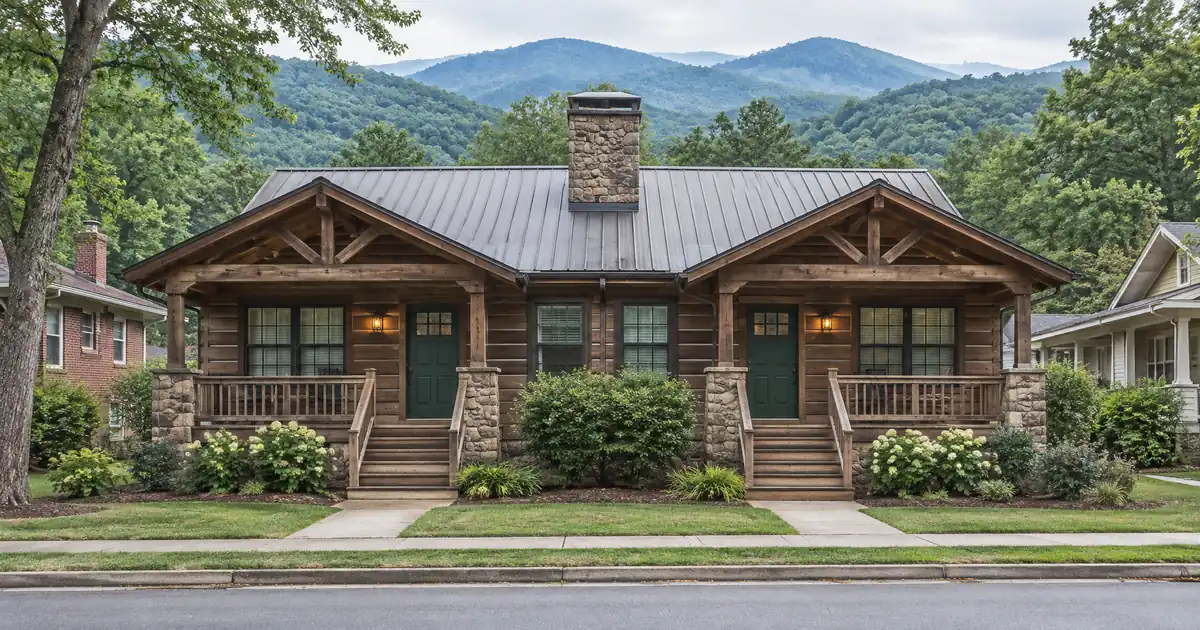
One property-type warning matters in the mountains. Manufactured homes, log homes, and barndominiums are not offered in the network’s DSCR programs. A cabin that is a true log home therefore falls outside them. A conventionally framed cabin with log-style siding is a different property, and that is a question to settle before you order an appraisal.
Special Situations Worth Knowing
You bought the cabin with cash. Conventional lending has a delayed-financing exception for this. Fannie Mae’s Selling Guide places it inside the cash-out rules, with all other requirements still applying. Bankrate explains that it removes the usual six-month wait for conventional loans. That is conventional background only, and DSCR seasoning of about six months from title recording may still apply. Whether a DSCR program offers a version of the exception is a program question, so ask your broker rather than assuming. Even where one exists, the exception waives only the waiting period. You still need the appraisal to support the leverage and the rent to cover the payment.
You are refinancing out of a hard-money loan. Paying off short-term rehab debt with little or no cash back is usually treated as a rate-and-term refinance, not a cash-out. That distinction matters because cash-out carries the stricter 75% cap and the seasoning expectation. If the new loan returns meaningful cash, it is a cash-out.
The unit is vacant or mid-rehab. An appraiser’s rent estimate can stand in for a lease. Expect the lender to size the loan on that estimate.
You hold title in an LLC. Many investors do, subject to lender program eligibility. Lenders usually also want a personal guarantee.
You need to cash out before six months. Some programs make seasoning exceptions, such as inheritance or a divorce award. Treat these as program-specific and ask upfront.
Your coverage is under 1.00. A separate select-lender path takes coverage below 1.00, with leverage and terms adjusted. Expect lower leverage and different terms than a file that clears 1.00 comfortably.
Reserves vary by lender, leverage, and loan size. Conservative rate-and-term files at modest leverage under $1,500,000 can see reserves waived, but a cash-out file should plan on holding them.
Clearing 1.00 Is Not the Same as Positive Cash Flow
DSCR compares rent to PITIA only. Repairs, vacancy, management fees, utilities, and capital expenses sit outside the calculation. A file can clear the coverage test while your real monthly margin is thin.
This matters most on a cabin. Nightly-rental income swings with the season, and Blue Ridge occupancy figures vary widely depending on which tracker you read. A bigger loan means a bigger payment against that uneven income.
Say you hold a cabin with decent equity. Pulling out the maximum feels attractive, but maximum leverage leaves little room for a softer rent month or an insurance increase. A smaller cash-out that still clears coverage with room to spare is often the sturdier choice. Still, the choice between maximum and smaller proceeds is a genuine toss-up for some investors, depending on what the proceeds will earn elsewhere.
The strongest files pass both tests: enough equity and enough rental coverage. A larger down payment on a purchase or a lower balance on a refinance lowers the payment and can lift the ratio. It never erases leverage caps, credit floors, reserve rules, or property eligibility.
For the complete picture of how these loans work, see Lendmire’s complete DSCR loans guide.
How the Process Works, Step by Step
1. Check seasoning. Confirm roughly six months have passed since title recorded.
2. Pin down the property type. Decide long-term or short-term rental, and confirm the construction is eligible.
3. Gather the rent evidence. That means a lease, hosting history, or a rent estimate from the appraiser.
4. Request a quote. Your broker compares programs across the network based on score, leverage, and coverage.
5. Order the appraisal. Value drives the leverage cap, so this is the number everything else rests on.
6. Review the final loan amount. Subtract your payoff and closing costs to see the proceeds.
Credit is reviewed alongside all of this. A 700+ score unlocks the strongest leverage tiers. A score in the low 600s narrows the options.
When a Cash-Out Is the Wrong Move
Skip it when the new payment would push coverage barely above the minimum on seasonal income. Skip it when the proceeds have no clear job. Skip it when the existing loan carries a prepayment penalty that would cost more than the cash is worth. Prepayment penalties on DSCR loans commonly apply in the first few years, so check the terms on the loan you hold.
Common uses of proceeds include a down payment on the next rental, a renovation that may support a higher appraised value, depending on comps and underwriter review, or paying off short-term debt. Tax treatment varies; consult a qualified professional.
If your rent barely covers the payment, read Lendmire’s piece Will a DSCR Cash-Out Refinance Work If Your Rental Barely Covers Its Payment?.
Frequently Asked Questions
Can a DSCR loan really do a cash-out on a rental?
Yes. Cash-out is a standard feature across the network’s DSCR programs. Once the property is seasoned, lenders size the loan on appraised value and rental coverage rather than on what you originally paid. The coverage ratio is often the thing that caps the proceeds, not the value.
How long do I have to own the cabin before I can cash out?
About six months from title recording is the common expectation. Some programs allow exceptions, such as an inheritance. A cash purchase may be treated differently, but that depends on the specific program, so ask before you plan around it.
Does a short-term rental get the same leverage as a long-term one?
No. A cash-out on short-term-rental collateral generally caps at 70% LTV, while a standard investment rental caps around 75%. Expect a score of about 640 or higher and roughly 12 months of hosting history. Some select programs relax the history requirement.
Can I cash out if the rent barely covers the payment?
Possibly, with adjustments. 1.00 is where many select programs start. A lower loan amount can also bring the ratio back up.
Does the cash-out count as taxable income?
Tax treatment depends on your situation and how the funds are used. Consult a qualified professional before relying on any assumption.
If you are buying or refinancing a rental property and want to see how the numbers work, Lendmire can help you compare DSCR loan options based on the property income, credit profile, leverage, and investor goals. As a mortgage broker arranging financing through select lenders across 41 markets, including Washington, D.C., Lendmire can walk you through what your cabin’s file would look like. Call 828-256-2183 or request a quote.
For the mechanics of pulling equity out of a rental property, see Lendmire’s guide to cash-out refinance on an investment property.
About Lendmire
Lendmire (NMLS# 2371349) is a mortgage brokerage focused on DSCR investor financing, helping arrange programs through wholesale and investor-lending channels in 41 markets, including Washington, D.C. DSCR loans are evaluated by the lender on property cash flow rather than personal income, subject to lender guidelines, supporting LLC closings and accommodating investors with four or more financed properties. Scotsman Guide Top Mortgage Workplace in both 2025 and 2026.
Get Started
Ready to find the right loan for you?
See your offer in seconds. No credit pull, no obligation.
Informational only. Not a Loan Estimate, approval, or commitment to lend. Program availability and eligibility are subject to lender guidelines, credit approval, property review, and underwriting.
References
1. Fannie Mae Selling Guide: Cash-Out Refinance Transactions
2. Bankrate: Delayed Financing
This article is part of Lendmire’s investment property cash-out refinance program — full qualification details, guidelines, and scenarios live on the program page.
Related reading: DSCR Cash-Out Refinance Checklist When Choosing Between DSCR and Conventional on a Rental · When a DSCR Cash-Out Refinance Makes Sense If FHA Is Not an Option for a Rental · Can You Get a DSCR Cash-Out Refinance on a Rental You Already Own?
Guides: Investment Property Cash-Out Refinance in Blue Ridge, GA · Investment Property Cash-Out Refinance in Georgia
Brandon Miller
Founder & CEO, Mortgage Loan Originator, Lendmire LLC
- Mortgage Loan Originator · NMLS# 1129696 · Verify on NMLS Consumer Access
- North Carolina Real Estate Broker · License# 343312 · Verify on NCREC
- North Carolina Insurance Producer · License# 19053198 · Property, Casualty, Life, Health · Verify on NAIC SBS
- Lendmire LLC · Firm NMLS# 2371349 · Verify firm licensure
Legal disclosures. Lendmire (NMLS# 2371349) is a state-licensed mortgage brokerage that arranges financing through wholesale lender relationships. Lendmire is not a direct lender, depository institution, or registered financial advisor. The discussion above is general informational content about real estate financing — it is not financial, legal, or tax advice, and readers should consult licensed professionals for guidance on their individual circumstances. Loan inquiries are subject to lender underwriting; this article does not represent a commitment to lend. Loan terms, rates, and qualification standards vary by borrower, property, and state, and are subject to change at any time. Equal Housing Opportunity. NMLS Consumer Access: nmlsconsumeraccess.org.