
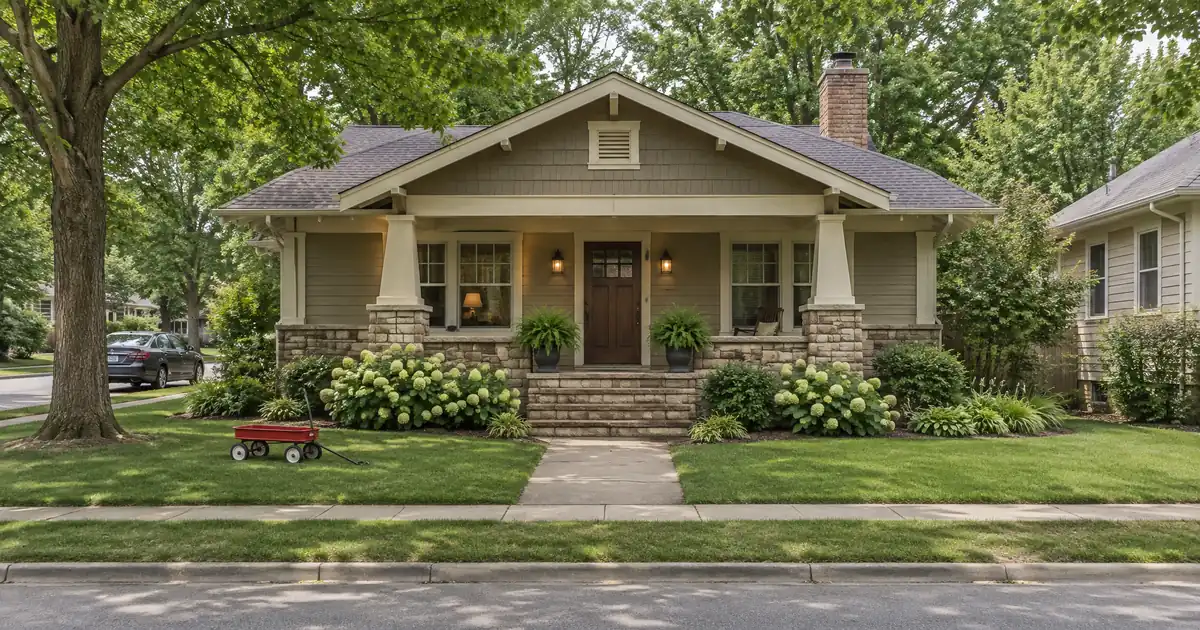
The Quick Read: An inherited rental gets the same underwriting as any other investment property, and two separate clocks decide when a line can close: the time it takes to put the heir on recorded title, and the lender’s six-month seasoning rules. The line qualifies primarily on property-level rental income covering the payment, subject to lender guidelines.
- The heir must be on recorded title with authority to sign a lien. An open probate means the estate still owns the house.
- A lease must be in place, so a vacant or unfinished house usually needs another path first.
- Second-lien leverage tops out at 70% CLTV at a 720 score or better; a first lien on a rental with no mortgage reaches 75% LTV at 740 or better.
- Seasoning is a lender overlay, so confirm how it counts for an heir before building the file.
The first question is not how long the DSCR HELOC takes. The better question is who holds title today and what date the lender counts from. This article walks through both, step by step, and shows where the general rule breaks.
What Is a DSCR HELOC, and What Changes for an Heir?
A DSCR HELOC is a revolving line of credit on a non-owner-occupied one-to-four-unit rental, qualified on the property’s rent instead of the owner’s personal income. “DSCR HELOC” is a market label, not a standardized product, so the structure matters more than the name.
Through select programs in Lendmire’s wholesale network, the line is written one of two ways:
- A standalone second lien behind a first mortgage the owner keeps.
- A standalone first lien on a rental with no mortgage.
It is never a third lien, never closed together with a purchase, and never a line on the owner’s own home. The LLC can stay on title on investment property, with the members signing as guarantors, subject to program terms. For the broader product picture, Lendmire’s complete DSCR loans guide covers how property-rent-based lender review works across programs.
What inheritance adds is a title question that has to be settled before underwriting starts. The heir is a borrower like any other, with the same credit, rent, valuation and seasoning review.
Key Terms Defined
Probate: The court process that validates a will, settles an estate and moves title to the heirs.
Letters testamentary: The court document that gives an executor authority to act for the estate.
Seasoning: The minimum time a lender requires since a purchase, a refinance or a title transfer before it will lend.
CLTV (combined loan-to-value): The first-mortgage balance plus the new line, divided by the property’s value.
Successor in interest: A person who takes ownership of a property from a borrower, such as an heir.
Vesting: The way title is held, for example in an individual’s name, a trust or an LLC.
The Two Clocks: Title and Seasoning
The program requires 6 months since the rental’s last note date and 6 months on title (settlement date to note date).
Two separate clocks run on an inherited rental. The title clock decides when the heir can sign a lien. The seasoning clock decides whether the lender will lend once the heir can. They run on their own timelines, so the second cannot be skipped because the first has finished.
Clock one: getting the heir onto recorded title
A lender needs an owner who can sign. Iowa State’s Center for Agricultural Law and Taxation says probate ensures that the beneficiaries can receive assets free of clouds on the title. It also notes that without probate proceedings, heirs may possess the property but lack the clear title necessary to prove their ownership status. A market source gives one state’s illustration: a sole owner of real property generally needs probate so heirs will have clear title to the property. State law varies, so treat that as an example, not a rule.
Here is who can sign at each stage.
| Stage | Who holds title | Who can sign a lien |
|---|---|---|
| Death, no letters issued | The estate | No one yet |
| Letters issued, probate open | The estate | Executor, for the estate only |
| Deed to heir recorded | The heir | The heir |
| Funded trust | The trustee | Trustee, per trust terms |
An executor is not the heir. While probate is open, the estate generally still owns the house, and an executor has no standing to give an heir’s title. A will does not avoid probate either. A will is what probate validates.
Some routes skip probate. The same Iowa State source lists payable-on-death or transfer-on-death designations, joint tenancy with right of survivorship, and assets titled into a trust. Even then the title company decides whether title passed cleanly, and it will usually want the death certificate, the recorded deed and any trust documents.
Clock two: the lender’s seasoning rule
On this program, one sentence covers both seasoning clocks: a rental bought or refinanced inside the last 6 months is not eligible (that clock runs from the last note date to the new note date), and the owner must have held title for 6 months (settlement date to note date).
The open question is how an inherited house counts against those clocks. There is no national rule. Ask the lender whether the count starts at the date of death, the court order, the executor’s deed or the recording of the deed. Get the answer in writing before the file is built around an assumption. Across a wholesale network, those start points differ by program, which is why one lender’s answer cannot be carried to another.
“After probate” also needs a plain definition. It means after the deed to the heir records, not after the court closes the file.
Does Inheritance Waive the Waiting Period?
Not automatically. Inherited property is not exempt from a seasoning rule just because it was inherited. Some agency programs carry a specific inheritance exception, but those rules do not govern DSCR files, and DSCR lenders set their own overlays. Some promotional pages claim no seasoning for heirs. Treat that as a lender- and product-specific statement, not a general fact.
On this line, plan on both six-month clocks unless a lender confirms otherwise in writing.
Questions to put to any lender before ordering anything:
1. Which date starts the title-seasoning count: death, court order, executor’s deed or recorded deed?
2. Does a transfer from the estate or a trust to the heir restart either clock?
3. Does an estate refinance before the owner’s death count as the last note date?
4. Is the house vesting in the heir’s name, a trust or an LLC, and is that allowed on this program?
5. Will the title company issue the policy or report this lien type needs?
Rules That Don’t Change Because You Inherited
Rent and lease
The line is reviewed on the rental, so a lease must be in place. Rent is the lesser of the appraisal’s market rent and the lease, unless three months of receipts support a lease above market. The minimum DSCR is 1.10x, measured against a stress payment on the entire credit limit. That payment is principal and interest only. Taxes and insurance are not part of it. A two-to-four-unit property may have at most one vacant unit. Final terms depend on the lender’s guidelines, the property type, and the borrower’s complete credit picture.
Tenants who came with the house are a plus if their leases are written and current. A vacant or unfinished house usually needs another path first, such as renting it, then coming back to the line.
How the first-mortgage payment enters the coverage calculation on a second lien is not something to assume. Confirm on the file how the lender treats it; the lender’s own calculation governs.
Credit and eligibility
The credit minimum is 720 on a second lien and 700 on a first lien. The mortgage history rule is no 30-day late in the last 12 months, and 48 months since a bankruptcy, foreclosure, short sale or deed-in-lieu. Reserves and cash to close are not required. Exposure is capped at five loans or $2,500,000 per borrower with the program. US citizens, permanent residents and non-permanent residents with a Social Security number are eligible. Foreign nationals and ITIN borrowers are not.
Leverage, line size and draws
| Lien | Credit | Maximum leverage | Line size |
|---|---|---|---|
| Second lien | 720 or better | 70% CLTV | $50,000 to $500,000 |
| First lien, no mortgage | 740 or better | 75% LTV | Up to $500,000 |
| First lien, no mortgage | 700 to 739 | 70% LTV | Up to $500,000 |
| First lien, larger line | 720 or better | 65% LTV | Above $500,000 to $1,000,000 |
Every figure is a ceiling subject to underwriting, not an offer. A declining-market flag lowers the ceiling five points.
Counting every lien matters on an inherited house. If the heir keeps an inherited first mortgage, its balance goes into CLTV together with the new line. A second lien is often a strong option for an heir who keeps that mortgage, and it needs a 720 score. A first lien exists only on a rental with no mortgage.
The line has a 5-year interest-only draw period on the drawn balance, then a 25-year repayment period, with a 30-year maturity and a variable rate. At least 80% of the line is drawn at closing, and later draws are at least $5,000. Interest starts on that drawn balance, so plan the carry before choosing the line size.
Valuation
Lines to $400,000 use an automated valuation with a property inspection report, or a full interior appraisal. Larger lines take a full interior appraisal. Appraisal waivers are not accepted. Title work also scales: a full title policy applies on a first lien and on second liens above $400,000, with a lighter owner-and-encumbrance report on smaller second liens.
Lenders value the house at appraised value. The tax basis the heir inherits is a separate tax matter and does not change loan-to-value.
Property types that fall outside
Rural-designated property, condotels, row homes and leaseholds are outside this program. So are land trusts, mixed-use, modular and log homes, and a property listed for sale in the prior two months. An inherited house the heir lives in is an owner-occupied situation, which is a different product and not this line.
When the Rule Breaks: Named Edge Cases
Multiple heirs
One heir cannot encumber shared title alone. Every owner signs, and every borrower’s credit is reviewed. A title holder who is not a borrower signs a non-borrowing owner acknowledgment and the security instrument. A dispute among heirs can freeze the file. In practice, title usually has to vest in the heir who keeps the property, which means a buyout or a partition first.
Heirs’ property
Where no probate was ever opened, the problem compounds. Iowa State’s center notes that if there is no probate process, the possibility of additional heirs continues to cloud the title. A title company will not insure over that. Clear it with an estate attorney first.
The inherited mortgage
This is where heirs most often get confused. Federal law restricts enforcement of due-on-sale clauses on certain transfers, including some transfers to a relative on a borrower’s death. The scope is generally described as limited to residential property with fewer than five units, so confirm how it applies to your property with counsel. It limits a lender calling the existing loan due. It does not grant the heir credit or waive underwriting.
The servicing side has its own rule. Under Regulation X, a confirmed successor in interest is a successor whose identity and ownership interest the servicer has confirmed. A confirmed successor is treated as a borrower for servicing purposes, but the heir is liable for the debt only by assuming the loan, according to the CFPB’s servicing compliance guide. Servicing rights are not a right to a new line.
The practical point for a DSCR HELOC: an heir who has not formally taken over the old loan can still apply, and the new second lien leaves the old loan alone. A non-relative heir may not have the same due-on-sale protection.
An LLC or trust already on title
A property already deeded to an LLC or held in an ineligible trust type needs a vesting change, or a different loan, before this line works. Vesting rules differ by program, and irrevocable, blind and land trusts are a common stopping point. Reconcile the vesting plan with the lender before anything is drafted. Where an LLC is allowed, it is subject to program terms.
Blanket loans
An inherited rental can join a pooled loan only after title is recorded and insurable.
Line or Cash-Out? A Short Contrast
A DSCR cash-out refinance retires the inherited loan, which sidesteps taking over the old note, but it brings its own seasoning and title review. A line preserves the old first mortgage’s terms. The choice usually turns on one question: is the existing first mortgage worth keeping?
| Heir situation | Usual path |
|---|---|
| Probate open | Wait; prepare documents |
| Deed recorded, lease in place, keeping the old first mortgage | Second-lien line |
| Deed recorded, no mortgage | First-lien line |
| Vacant or unfinished house | Rent it first, then revisit |
| Multiple heirs, no buyout | Resolve title first |
| Old mortgage not worth keeping | Cash-out refinance |
For the investor weighing both, Lendmire’s piece on investment property HELOC rules on an inherited rental with tenants in place goes deeper on the tenant side.
What to Do During the Wait
The open-probate period is preparation time, not dead time.
1. Gather every lease, rent receipt and tenant contact.
2. Keep hazard insurance in force on the rental. Hazard coverage must cover both liens, with flood coverage where required.
3. Collect the death certificate, the will or probate order, and trust documents if a trust is involved.
4. Ask the estate attorney which route puts a deed in the heir’s name, and when it will record.
5. Ask the title company what it will want for the lien type.
6. Decide how the title will be held before the deed is drawn, since the vesting is hard to change afterward.
Tax treatment can depend on how the funds are used and how the property is held; borrowers should keep clear records and speak with a qualified tax professional before relying on any deduction.
Common Misconceptions
“The executor can take a line out right away.” The estate is not the heir, and an executor cannot give an heir’s title.
“Being named in the will means I own it.” Title vests only after court action or a valid non-probate transfer.
“Probate closed means ready.” The deed has to record.
“Garn-St Germain lets me borrow against it.” It restricts due-on-sale enforcement. It does not grant credit.
“Inheritance exempts me from seasoning.” That depends on the lender’s overlay.
“DSCR HELOCs are one standard product.” The label is used loosely, and programs differ on vesting, leverage and seasoning.
Frequently Asked Questions
Can I get a DSCR HELOC while probate is still open?
Usually not. While probate is open, the estate generally still owns the house, and a lien needs recorded title and signing authority. Use the time to gather leases, insurance and title documents.
What are the seasoning rules on a DSCR HELOC for an inherited rental?
Two six-month clocks apply: the line is not available on a rental bought or refinanced in the last 6 months (last note date to new note date), and title must have been held for 6 months (settlement date to note date). How an inherited house counts is a lender decision, so ask which event starts the count.
Do all heirs have to sign?
Yes, every owner on title signs. Borrowers’ credit is reviewed, and a non-borrowing title holder signs an acknowledgment and the security instrument. Title typically has to vest in the heir who keeps the property.
Does a vacant inherited house qualify?
Generally no. A lease must be in place, and a two-to-four-unit property may have at most one vacant unit. A vacant or unfinished house usually needs to be rented first.
Can the house be in an LLC or trust?
An LLC can hold title on investment property, with the members signing as guarantors, subject to lender program eligibility. Irrevocable, blind and land trusts are common sticking points, so confirm vesting before drafting.
Does the step-up in tax basis change my loan-to-value?
No. Inherited property generally takes a basis equal to fair market value, per IRS Publication 551, but that is a tax matter. Lenders use appraised value for CLTV.
If you are considering a home equity line on an inherited rental and want to see how the numbers work, Lendmire can help you compare DSCR HELOC options based on the property, the rent, the equity available, credit profile, combined leverage, and your goals. Every file is underwritten individually, and nothing here is a commitment to lend.
About Lendmire
Lendmire — NMLS# 2371349 — is a mortgage broker that arranges DSCR home equity lines of credit on rental property in 15 of its 16 licensed states (every licensed state except Tennessee) through wholesale lenders. The line is qualified on the rental’s rent rather than the owner’s personal income, and every line is subject to the lender’s guidelines and full underwriting. Scotsman Guide named Lendmire a Top Mortgage Workplace in both 2025 and 2026.
Get Started
Ready to find the right loan for you?
See your offer in seconds. No credit pull, no obligation.
Informational only. Not a Loan Estimate, approval, or commitment to lend. Program availability and eligibility are subject to lender guidelines, credit approval, property review, and underwriting.
References
1. Iowa State CALT — Overview of the Probate Process
2. Iowa State CALT — The Problem with Heirs’ Property
3. Cornell LII — 12 U.S.C. 1701j-3
5. CFPB Mortgage Servicing Compliance Guide
This article is part of Lendmire’s DSCR HELOC program — full qualification details, guidelines, and scenarios live on the program page.
Related reading: Where to Get a DSCR HELOC With a High Combined Loan-to-Value on a Rental · Where to Get a DSCR HELOC on a Short-Term Vacation Rental · Where to Get a DSCR HELOC When the Rental Property Sits Vacant
Brandon Miller
Founder & CEO, Mortgage Loan Originator, Lendmire LLC
- Mortgage Loan Originator · NMLS# 1129696 · Verify on NMLS Consumer Access
- North Carolina Real Estate Broker · License# 343312 · Verify on NCREC
- North Carolina Insurance Producer · License# 19053198 · Property, Casualty, Life, Health · Verify on NAIC SBS
- Lendmire LLC · Firm NMLS# 2371349 · Verify firm licensure
Compliance and disclosures. Lendmire (NMLS# 2371349) is a licensed mortgage broker and is not a direct lender, depository institution, financial advisor, or tax professional. Content in this article is general market analysis and educational information — not financial, legal, or tax advice for any specific situation. Lendmire does not guarantee loan approval; every transaction is subject to underwriting by the funding lender. Mortgage pricing and loan program guidelines are subject to change at any time without notice and vary by borrower characteristics, property type, and state regulations. Lendmire complies with Equal Housing Opportunity. Licensure verification: NMLS Consumer Access.