
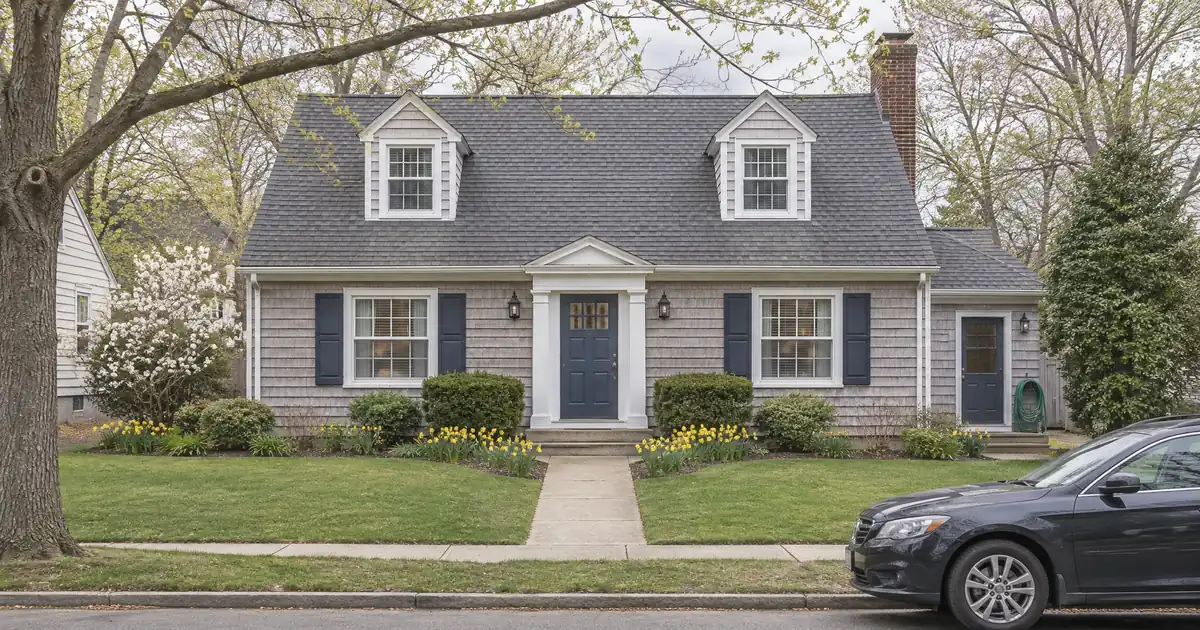
The Quick Read: No single program is best for every build. A portfolio cash-out sizes the loan on what your rentals are worth today, not on what an addition or ADU will be worth after construction, so the right structure depends on your equity, your pooled rental coverage, and whether the new space is legal and leased. The loan can fund the work from existing equity, or it can serve as the permanent refinance after the work is done.
- Cash-out on a portfolio loan never exceeds 75% of pooled value, even where a structure allows higher leverage on a purchase or rate-and-term refinance.
- The lender measures value as it stands today. Rent from an unbuilt unit does not count.
- Coverage is tested on the whole pool, so stronger rentals can offset weaker ones.
- Cash-out proceeds do not count toward reserves.
- Clearing the coverage test does not mean the property cash flows.
Key Terms Defined
DSCR (debt service coverage ratio): the property’s rent used for lender review divided by its full monthly housing obligation. Lenders use it instead of your personal income.
PITIA: principal, interest, taxes, insurance, and any association dues. This is the full payment the rent has to cover.
Cash-out refinance: a new loan that pays off the old one and hands you the leftover equity as cash.
Portfolio DSCR loan: one note secured by several rentals. This article treats “blanket loan” and “cross-collateralized loan” as the same thing. A bank’s “portfolio loan” is a different idea: a loan the bank keeps on its own books.
Seasoning: the time you must own a property before a lender will count its value for cash-out. Most programs we place files with expect about six months from title recording.
Net proceeds: the cash left after the payoff, closing costs, and any required holdbacks.
Addition vs. ADU: an addition enlarges the existing home. An ADU (accessory dwelling unit) is a separate living space with its own entrance, kitchen, and bath, such as a garage conversion or backyard cottage.
As-is value: what the appraiser says the property is worth in its current condition, before the build.
What Makes One Program Best for a Build?
Across our wholesale network, programs differ on pool size, loan size, leverage, term, and whether the loan can be recourse or non-recourse. A broker that shops several wholesale lenders can match those features to your file. A single lender can only offer what it has.
A good match answers four questions:
1. How many rentals will sit under the loan?
2. How much cash does the build need after payoff and costs?
3. Will the pool still cover its payment at the larger loan size?
4. Is the new unit legal, permitted, and leased, or only planned?
What Can a Portfolio DSCR Cash-Out Actually Fund?
It can fund a build from equity you already have. It cannot borrow against value that does not exist. That is the central point, and it shapes every decision below.
Appraisers value what stands today. A planned ADU adds no appraised value and no countable rent until it is built. An appraisal on a finished addition or ADU can also come in below what you spent, so the build budget needs a cushion. We cannot give you a percentage for that gap, because no national data measures it.
The Terner Center at UC Berkeley frames ADU financing by equity position. It says cash-out refinances let owners tap existing equity, while renovation loans are theoretically suited to owners with little equity. Its survey data comes from California, so treat it as a framework rather than a national benchmark.
A portfolio cash-out works in two ways:
- As the funding source. You pull equity from the pool and use it for construction.
- As the take-out. You build with other money, then refinance once the space is legal, finished, and leased, so the new value and rent are in the file.
How Does Underwriting Treat an Addition or ADU, Step by Step?
Underwriting runs in a fixed order. Each step can limit the next one.
Step 1: As-is value. The appraisal sets the value that leverage is measured against. It also sets market rent for the coverage test. On a cash-out, the loan never exceeds 75% of pooled value on investment properties, and never exceeds the structure’s own ceiling.
Step 2: Seasoning and cost basis. Inside the first six months of ownership, the cash-out amount is capped by the seasoning rule, and the loan is also capped at 90% of total cost (purchase price plus documented improvements). From six to twelve months, the cap is 100% of total cost. The leverage ceiling still applies, so the loan is the lower of the two. After twelve months, appraised value alone is the basis. A rate-and-term refinance is not subject to the cost-basis cap.
Step 3: Rent documentation. Every property in the pool needs a signed lease or an appraiser-supported market rent. The lender uses the lower of the two.
Step 4: Pooled coverage. The lender divides the pool’s combined rent by its combined payment at the new, larger loan amount. The old payment does not count.
Step 5: Reserves. Cash-out proceeds never count toward reserves. The rental portfolio term loan also holds reserves for taxes, insurance, and capital expenditures.
Step 6: Funding. The old loan is paid off, the new loan funds, and the cash-out is disbursed in one lump sum. Construction spends that money over many months, so interest builds on the full balance while later phases wait. That mismatch is one reason some owners build with separate construction or bridge money and refinance afterward.
DSCR programs borrow appraisal form names from the agency world but do not follow agency rules. Fannie Mae’s Selling Guide lists Form 1025 for 2–4 unit properties and Form 1007 for one-unit rent schedules. The official forms list confirms both titles. A house with an ADU can be treated as one unit with an accessory unit or as a two-unit property, and that choice changes which report is ordered.
Addition vs. ADU, Side by Side
The loan treats an addition and an ADU differently, even though both are construction.
| Factor | Addition | ADU |
|---|---|---|
| What it adds | Bedrooms or square feet | A separate unit |
| New rent | Possibly higher market rent | A second rent stream |
| Unit count | Unchanged | May change |
| Appraisal | Value lift depends on comps | Depends on legal status |
| Key paperwork | Permit, final sign-off | Permit, certificate of occupancy, lease |
An addition raises rent only to the extent the market pays more for the larger home. It does not create a second lease. An ADU can add real income, but only after it is legal and occupied. An unpermitted unit is generally left out of both rent and value.
An improvement may support a higher appraised value, depending on comps and underwriter review. Plan the budget as if the appraisal might not credit all of it.
Which Portfolio Structure Fits?
We place two portfolio structures with lenders in the network. A loan on a single rental is shown for contrast. All figures are program ceilings or floors, not quotes, and sit subject to lender guidelines.
| Factor | 30-year portfolio DSCR loan | Rental portfolio term loan | Single-rental DSCR loan |
|---|---|---|---|
| Properties | 2 to 20 | 5 or more | 1 |
| Loan size | $300K to $5M | $500K to $50M | Up to $3M |
| Leverage | Up to 80% on purchase and rate-and-term | Up to 75% | Cash-out to 75% |
| Term | 30-year, interest-only available | 3, 5, 7, 10-year, balloon | 30-year spine |
| Coverage test | 1.00 on the pool | Measured on the pool | Per property |
| Recourse | Standard | Recourse or non-recourse | Standard |
On every structure, cash-out stays at or below 75% of pooled value. The 80% figure belongs to purchases and rate-and-term refinances on the 30-year structure. It does not apply to cash-out.
Eligible property types: the 30-year structure takes single-family, 2–4 unit, condo, and townhome properties. The term loan adds small multifamily of five or more units, and only the term loan does. Manufactured and mobile homes are not reviewable on any of these programs.
Qualifying the pool: the credit floor is 640 on these programs, and some structures ask for 680 or 720. Some structures also require a special-purpose entity, typically an LLC, subject to program terms. Recourse loans carry a personal guarantee. Non-recourse loans look to the real estate, with recourse limited to carve-outs such as fraud and bankruptcy.
The term loan’s exit costs: it carries yield-maintenance prepayment, which is a long-dated charge for paying off early (54 months on the 5-year note, 114 months on the 10-year note). A one-time purchaser assumption exists above $5,000,000, subject to underwriting and an assumption fee. Below that size it is an exception.
If you plan to sell one property out of the pool later, ask about release terms before you sign. Partial releases, substitutions, and the sale of one property follow the loan documents and the lender’s release terms. The remaining pool must still cover its payment.
A Worked Example in Units and Ratios
These numbers are modeled assumptions, not market data. Say your pool of rentals appraises at 100 units of value and carries an existing payoff of 55 units. A 75% cash-out ceiling caps the new loan at 75 units. Before closing costs, that leaves about 20 units of cash. Terms depend on the lender’s guidelines, the property type, the leverage, and a full review of the credit profile.
Now say your build budget is 30 units, with a cushion on top. The cash-out leaves a gap. You could lower the scope, add cash, or build in phases.
Coverage moves too. Say the pool runs near 1.30x before the loan. The larger loan raises the payment, so coverage might fall toward 1.10x even though rents did not change. Once the ADU is legal and leased, its rent returns to the numerator and coverage might climb back toward 1.25x.
That is why we test coverage twice: at the new loan size without the ADU rent, then again with it. If the pool clears the floor only with the unit counted, the plan depends on timing.
A rental that sits below 1.00 on its own can still be part of a pool that clears the floor, because coverage is measured on pooled rent against pooled debt service, so stronger properties offset weaker ones. That does not mean any single weak property is fine. Every property still needs a lease or supported market rent.
DSCR compares rent to PITIA only. Repairs, vacancy, management, utilities, and capital spending sit outside it, so a pool can clear 1.00 and still lose money each month.
Which Funding Sequence Works?
Sequencing decides whether the new rent shows up in the file when the lender needs it.
| Path | How it works | Best fit |
|---|---|---|
| Cash-out first | Pull equity now, then build | Ample equity, defined budget |
| Build first, refinance after | Separate build money, then DSCR take-out | Thin equity, unit to be leased |
| Cash-funded, then refinance | Pay in cash, refinance when leased | Strong liquidity |
Cash-out first is simple. The full amount arrives at closing, so you pay interest on money you have not spent. The lender counts none of the new rent.
Build first, refinance after puts the rent and value into the file. You need a clear take-out into long-term financing and enough liquidity to carry the project until then. If the building sits empty during construction, that carry matters.
Cash-funded uses your own liquidity during the build. Your reserves still need to be sufficient afterward.
Where the General Rule Breaks
Several edge cases change the answer.
- Owner-occupied homes. Owner-occupied property is ineligible in the pool. DSCR loans are business-purpose loans on non-owner-occupied investments, so a home you live in with an ADU out back needs a different product.
- Short-term rental ADUs. Refinance income generally needs a hosting history, and short-term rental rules can vary by city, county, HOA, and property type. Confirm local rules before relying on projected rental income. The standard rent-schedule form was not designed for nightly rates.
- Unpermitted or unfinished units. Rent is generally excluded, and so is the value.
- Mixed-use and commercial space. Mixed-use and commercial property are ineligible, and only residential units count toward rent.
- Title and entity mismatches. A mismatch among the entity on title, the lease, and the insurance can stall a file. Cash-out is also the usual route when a rental is already deeded to an LLC.
- Barndominiums and log homes. These fall outside the programs, as do manufactured homes.
- Low equity. Little equity makes a cash-out a thin tool. Renovation products that use after-renovation value exist, but they are less common.
What Lenders Look For: A Qualification Checklist
Prepare these before you ask for a structure:
1. Lease or rent support for every property in the pool.
2. Entity paperwork if the loan requires a special-purpose entity.
3. Permit and final sign-off for the addition or ADU, if it already exists.
4. A construction budget with contingency.
5. Reserves held separately from cash-out proceeds.
6. A credit profile at or above the program’s floor.
7. A clear plan for how the pool covers its payment before and after the build.
Common Mistakes, and When This Is the Wrong Tool
- Counting rent that does not exist yet. Planned ADU rent does not help.
- Budgeting to the dollar. The appraisal may come in below build cost, so keep a cushion.
- Treating 1.00 as profit. Coverage is not cash flow.
- Assuming proceeds count as reserves. They do not.
- Over-leveraging one property to fund a build. A larger loan can pull pooled coverage under the floor.
- Assuming 1.25 is the benchmark. That figure is a commercial real estate habit. Residential programs publish their own floors, so use the program’s number.
A DSCR cash-out is the wrong tool when you have little equity or when the unit is for family use rather than rent. It is also wrong when you need construction draws released in stages. In those cases, separate construction financing and a later DSCR take-out usually fit better.
Frequently Asked Questions
Can a DSCR cash-out refinance pay for an addition or ADU?
Yes, if you already have the equity. The loan sizes off today’s value and pays out in one lump sum. It does not count rent from a unit that is not built, and it does not release money in construction draws.
Does the lender count ADU rent in the coverage test?
Only when the unit is legal, permitted, finished, and leased or supported by an appraiser’s market rent. Planned rent does not help. An unpermitted unit is generally left out.
Is a portfolio loan better than a loan on one rental for this?
It depends on your file. A portfolio loan lets stronger properties offset weaker ones in the coverage test, and it consolidates several rentals under one note. A single-rental loan keeps each property separate. Release terms, recourse, and prepayment differ, so compare the full structure.
What credit score do I need for a portfolio DSCR loan?
The credit floor on these programs is 640, and some structures ask for 680 or 720. Stronger scores generally open better leverage and terms, subject to lender guidelines.
Can I build an ADU on my own home and use this loan?
Not if you live there. Owner-occupied property is ineligible in a portfolio pool, and DSCR loans are business-purpose loans. A home you rent out entirely may qualify.
Next Steps
If you are buying or refinancing a rental property and want to see how the numbers work, Lendmire can help you compare DSCR loan options based on the property income, credit profile, leverage, and investor goals. Lendmire is a mortgage broker arranging financing through select lenders in its wholesale network across 41 markets, including Washington, D.C. Programs change and every file is underwritten individually. Read our complete DSCR loans guide, or compare a cash-out refinance with other DSCR loan options and see how the DSCR cash-out refinance on an investment property works.
The best build plan is the one where the loan, the legal status of the new space, and the pool’s coverage all line up before construction starts.
For current guidelines and terms, see Lendmire’s DSCR loan programs page.
About Lendmire
Lendmire (NMLS# 2371349) is a mortgage brokerage built around DSCR investor lending, with programs available in 41 markets, including Washington, D.C. DSCR lenders commonly evaluate rental-income coverage instead of personal income paperwork — a practical fit for LLC-owned and multi-property investors. Terms vary by lender, property, leverage, and program. Scotsman Guide named Lendmire a Top Mortgage Workplace in both 2025 and 2026.
Get Started
Ready to find the right loan for you?
See your offer in seconds. No credit pull, no obligation.
Informational only. Not a Loan Estimate, approval, or commitment to lend. Program availability and eligibility are subject to lender guidelines, credit approval, property review, and underwriting.
References
1. Terner Center, Reaching California’s ADU Potential
3. Fannie Mae Selling & Servicing Guide Forms
This article is part of Lendmire’s investment property cash-out refinance program — full qualification details, guidelines, and scenarios live on the program page.
Related reading: Best DSCR Cash-Out Refinance Program When Closing in an LLC on a Rental Property · Best DSCR Cash-Out Refinance Program on a Rental With Maximum Loan-to-Value Limits · Best Super Jumbo DSCR Cash-Out Refinance Program on Several Investment Rentals at Once
Brandon Miller
Founder & CEO, Mortgage Loan Originator, Lendmire LLC
- Mortgage Loan Originator · NMLS# 1129696 · Verify on NMLS Consumer Access
- North Carolina Real Estate Broker · License# 343312 · Verify on NCREC
- North Carolina Insurance Producer · License# 19053198 · Property, Casualty, Life, Health · Verify on NAIC SBS
- Lendmire LLC · Firm NMLS# 2371349 · Verify firm licensure
Disclosure information. Lendmire is a state-licensed mortgage brokerage under NMLS# 2371349. Lendmire is not a depository institution, direct lender, or financial advisor — all loans referenced are placed through wholesale lender partners and are subject to each lender's underwriting standards. This article is provided for general informational purposes and is not a commitment to lend, nor does it constitute financial, legal, or tax advice. Loan programs, terms, rates, and qualification standards change without notice and depend on borrower profile, property type, and the state in which the subject property is located. Equal Housing Opportunity provider. NMLS Consumer Access: nmlsconsumeraccess.org.