
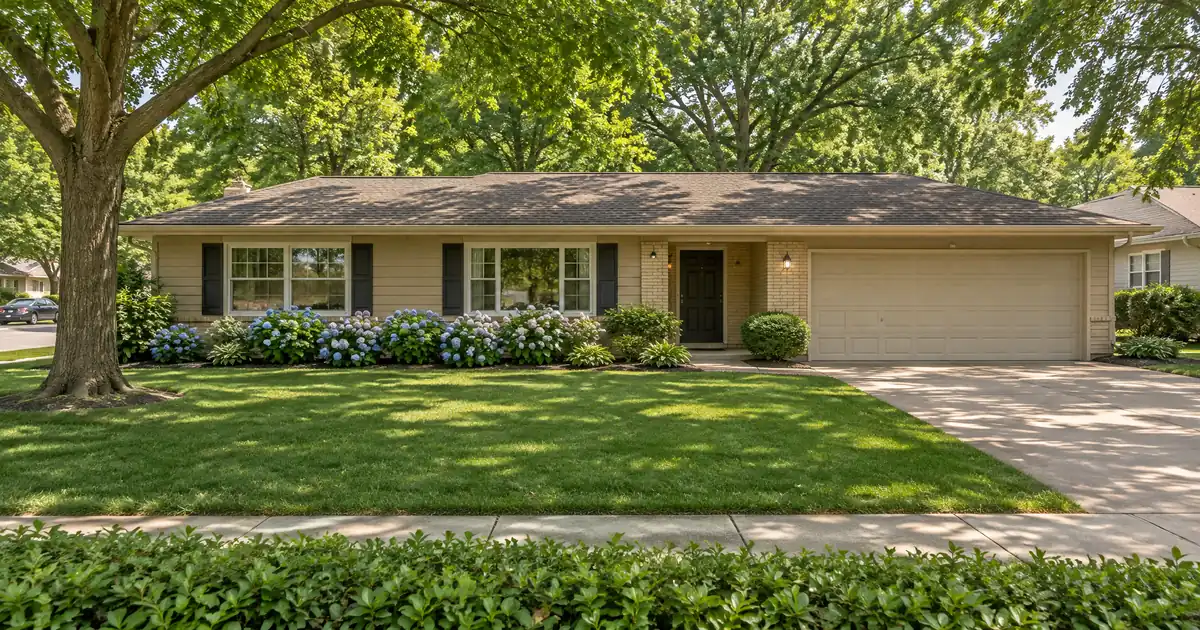
- Cash-out refinances on standard rentals top out around 75% LTV across most of the network.
- About 6 months of ownership, measured from title recording, is the common seasoning expectation.
- Coverage of 1.00 is where select programs start. It compares rent to PITIA only, so it is not the same as positive cash flow.
- The loan is one lump sum, not a draw schedule. Properties that are not rent-ready usually need bridge or rehab money first.
- Reserves commonly run around 6 months of PITIA, subject to lender guidelines.
A rental that needs a roof, a furnace, or a unit turn does not need a clever product. It needs the right sequence. The sections below walk through what that decision looks like in practice. For the broader product, see Lendmire’s complete DSCR loans guide.
What Is a DSCR Cash-Out Refinance?
A DSCR cash-out refinance replaces your existing mortgage with a larger one and hands you the difference as cash at closing. The new loan pays off the old lien first. What is left after payoff and closing costs is yours. The federal consumer-finance regulator’s research blog draws the same line: a cash-out refinance replaces the first lien and returns cash, while a rate-and-term refinance does not.
DSCR Cash-Out Calculator
Run the cash-out numbers in your market
Rate source: Freddie Mac 30-yr average via FRED® — Federal Reserve Bank of St. Louis · effective Nov 5, 2026
Prefilled with starting assumptions — enter your property’s value, balance, taxes, and insurance for a more accurate picture.
Program parameters update from Lendmire’s centralized guideline source. Taxes and insurance are editable estimates.
As of Nov 5, 2026 · General Freddie Mac market benchmark, not a Lendmire loan offer. Property value, balance, taxes, and insurance are editable estimates. Maximum loan-to-value varies by lender, program, property type, and seasoning. Not a Loan Estimate, approval, or commitment to lend. Program availability and eligibility are subject to lender guidelines, credit approval, property review, and underwriting.
What makes it a DSCR loan is how the property is qualified. The loan is reviewed primarily on property-level rental income covering the payment, subject to lender guidelines, rather than on personal income. DSCR loans are designed for non-owner-occupied investment properties. Because they are business-purpose investor loans, they are reviewed differently from a standard owner-occupied mortgage.
The ratio itself is simple. Monthly rent divided by the full monthly obligation (principal, interest, taxes, insurance, and any HOA dues) gives the coverage number. A ratio of 1.00 means rent equals the payment, and coverage above it leaves a margin. One caution on formulas: the classic commercial version divides net operating income by debt service. DSCR mortgages on one-to-four-unit rentals generally divide the gross rent the lender uses for review by PITIA. Know which one a file is using.
How Does Underwriting Treat a Repair-Funding Cash-Out?
Underwriting treats it like any other cash-out. The lender does not ask what the money is for and then size the loan around the repair budget. It looks at value, leverage, seasoning, rent coverage, and property condition. Here is the sequence, step by step.
1. Classification. If the refinance returns cash beyond the payoff and closing costs, it is a cash-out. That puts it under the cash-out leverage ceiling, around 75% LTV on standard rentals across most of the network, and under the seasoning expectation. Exact terms depend on the lender’s guidelines, property type, leverage, and a full review of the borrower’s file.
2. Seasoning and value basis. Most programs want about 6 months of ownership, measured from title recording. Programs differ on whether a recent purchase is sized on the new appraisal or on cost. Some lenders cap a very recent purchase at the documented purchase investment. That is the same idea behind the delayed financing exception in the Fannie Mae Selling Guide, which also describes six-month title seasoning in the agency world. Fannie Mae rules do not govern DSCR loans. The point is only that the cost-versus-value question is a familiar one. In DSCR programs the answer is program-dependent, so confirm it before you plan around after-repair value.
3. Appraisal. The appraiser sets value and market rent, usually with a 1007 rent schedule. Your own estimate of after-repair value is not an underwriting input. If repairs are finished, give the appraiser the scope of work, receipts, and photos of the before condition. A repair may support a higher appraised value, depending on comps and underwriter review. Nothing is automatic.
4. Rent coverage. The new, larger loan raises the payment, and that lowers the ratio. This limits itself. The more cash you pull, the harder coverage gets. On a seasoned property with equity, the coverage test is often the binding constraint, not the LTV cap.
5. Documents. Expect a lease or rent schedule, proof of deposits if the unit is leased, entity documents for an LLC borrower (subject to lender program eligibility), title and insurance, and proof of reserves. Repair receipts help if the work is done.
6. Reserves. Reserves vary by lender, leverage, loan size, and transaction type. Around 6 months of PITIA is common, and loans above $1,500,000 typically step up to about 9 months. Whether cash-out proceeds can count toward reserves is lender-specific. Ask early.
7. Closing math. Cash to you equals the new loan, minus the payoff, minus closing costs, minus any prepayment charge on the old loan. A low appraisal can shrink that number.
Why the Property Has to Be Rentable First
DSCR collateral generally has to be in rentable condition at closing. This is the edge case that catches the most repair plans. The cash arrives after the refinance closes. If the repairs are what stand between the property and a clean appraisal, the sequence is backwards.
Appraisers rate condition on a C1 to C6 scale, set out in the Fannie Mae condition rating definitions. Properties rated at the bottom of that scale generally need repairs and a re-inspection before a lender will move forward. Smaller items can also stall a file. Missing smoke detectors or a soft floor can be written up as subject-to conditions, which means the work has to be done and confirmed with a completion report before closing. Most DSCR programs also do not allow a repair holdback, where part of the loan is held in escrow until the work is complete. Treat that as typical, not universal.
So the real question is how big the repair is. The table below maps repair scale to the usual route.
| Repair scale | Typical route | Timing risk |
|---|---|---|
| Cosmetic or turn work | Pay from reserves, then cash-out | Low |
| Mid-scale (flooring, kitchen) | Finish, lease, season, then cash-out | Moderate |
| Systems or storm damage | Repair first, re-inspect, then refinance | High |
| Gut rehab | Bridge or rehab loan, then DSCR refinance | High |
If the property is in decent shape, a cash-out can fund the next round of repairs on the same property or another one. If it is not, the cash-out is the exit from the repair loan, not the source of the repair money.
The Structures That Exist
Several variations sit under the same label, and the choice matters more than the brand name.
Standard cash-out on a seasoned rental. The most common route. Standard rentals go to about 75% LTV on a cash-out, with a 1.00 coverage floor on select programs and stronger ratios opening better pricing and leverage. Credit tiers start at 620 in parts of the network, most programs want around 660, and 700 or higher opens the strongest leverage tiers. Loan sizes run up to $3,000,000 on standard programs.
Cost-basis refinance on a recent purchase. If you bought recently and have not hit the seasoning period, a few programs will refinance up to your documented cost. Those costs may include purchase price plus documented rehab. You get your money back out, but you do not get paid for the value you added. It is the right tool for a cash buyer who wants capital back, and the wrong one for someone counting on after-repair value.
Short-term rental cash-out. Short-term rental collateral is treated differently. Cash-out on short-term rental collateral tops out at 70% LTV, with a 640 or higher score expected and about 12 months of hosting history. Lenders scrutinize that income more closely because it varies. Short-term rental rules can vary by city, county, HOA, and property type, so investors should confirm local rules before relying on projected rental income. Lendmire has written separately on short-term rental cash-out refinances that pay off debt or fund renovations. Every figure here varies by lender and program: guidelines, property type, leverage, and credit profile all apply.
Longer terms and interest-only. The spine is the 30-year fixed. Extended terms such as 40-year and interest-only periods are available through select lenders in the network, and ARM structures exist too. Those can help a tight ratio, but each one adjusts leverage and terms.
Coverage below 1.00. A separate select-lender path takes coverage below 1.00, with leverage and terms adjusted. This is not the same program with a lower floor. It is a different path with its own limits. No-ratio structures are available only through select lenders, generally for borrowers who already own a primary residence.
Where the Plan Breaks
A few patterns break a repair-funding plan before the appraiser ever arrives.
Counting on the wrong value. An investor plans to cash out on a projected after-repair value, then learns the program sizes on cost, or that the appraisal came in light. The cash-out shrinks, and so does the repair budget.
Coverage after the cash-out. Pulling more equity means a bigger payment on the same rent. A property that clears 1.00 before can land below it after. Each cash-out also tightens the next one, so repeated pulls across a portfolio compound the problem.
A passing ratio is not positive cash flow. DSCR compares rent to PITIA only. Repairs, vacancy, management, utilities, and capital expenses sit outside the calculation. A property can clear 1.00 and still lose money in a year with a major repair. Budget the proceeds as unrestricted funds, because nothing in the loan makes you spend them on the repair.
Hard-money payoff gaps. A hard-money loan can usually be refinanced right away, but extra cash on top of the payoff has to wait for seasoning. Heavy rehabs can leave a gap between the payoff and the new loan, and the investor brings cash to close.
Entity mismatches. If purchase funds or title sit in a different account or entity than the borrower on the new loan, the file can stall on documentation. This happens most with cash purchases that move into an LLC (subject to program terms).
Ineligible properties. Manufactured homes (single- and double-wide), log homes, and barndominiums are not offered through the network’s DSCR programs, so a repair plan on one of those needs a different financing path.
What Does Best Mean? A Selection Scorecard
No single program wins for every file. These are the criteria that separate one program from another.
| Question | Why it matters |
|---|---|
| Sized on cost or on new value? | Decides how much cash you can pull |
| How long is the seasoning wait? | Sets your timeline for the project |
| What is the leverage cap? | Limits equity available |
| Do proceeds count toward reserves? | Changes cash you must hold |
| What if the appraisal comes in low? | Sets how much cash you bring to close |
A broker that shops several wholesale lenders can match those answers to the file. Lendmire is a mortgage broker, not a lender. It arranges DSCR loans through select lenders in its wholesale network across 40 states plus Washington, D.C. Which lenders fit depends on the property, the credit profile, the leverage you need, and your documentation. A larger down payment lowers the payment and can lift the ratio, but it never removes credit floors, reserve rules, or property eligibility. The strongest files have enough equity and enough rental coverage.
A Worked Example in Ratios
Run the numbers on a seasoned duplex with a clean appraisal and a modest balance on the old loan. Before the refinance, rent covers the payment at roughly 1.4x. The owner wants repair cash, so the new loan goes to the 75% LTV ceiling on a cash-out. The bigger balance pushes the payment up, and coverage falls toward 1.1x. It still clears 1.00, but the margin is thin. Final terms depend on lender guidelines, property type, leverage, and the borrower’s complete credit picture.
Now take a property with less equity. The cash-out clears the LTV cap, but the larger payment pulls coverage under 1.00. A lender would then look at structures that may apply. A select-lender path below 1.00 adjusts leverage and terms. An interest-only period or a smaller cash-out can bring the ratio back up. Each is an option a lender would review, and none is a promise.
The takeaway for repair budgeting: the right cash-out amount is often lower than the maximum. Size it to the repair, not to the cap. Testing a few loan sizes against the rent before you apply shows how leverage and coverage interact.
DSCR vs. conventional financing
There are two common ways to finance an investment property, and they qualify you differently — here’s how investors weigh them.
Why investors choose it
- Qualifies on the property’s rental income — no personal tax returns, W-2s, or pay stubs needed to document income.
- No personal debt-to-income ceiling to clear, so existing mortgages and obligations don’t cap your borrowing the same way.
- Can be closed in an LLC, keeping the property inside a business entity.
- Built for scaling — not held to the limit on number of financed properties that conventional financing applies.
- Underwriting centers on the deal: generally qualifies when the rent covers the payment, a 1.00x coverage ratio being a common baseline (confirmed in underwriting).
- Designed specifically for investment property, including long-term and, where the program allows, short-term rentals.
Where it’s strong
- Often the lowest ongoing financing cost for a buyer who fully qualifies on personal income — a fit for a first property or a cost-first purchase.
Trade-offs for investors
- Requires full personal income documentation and must fit within a debt-to-income limit — salary, existing debts, and other mortgages all count.
- Typically held in your personal name rather than a business entity.
- Caps how many financed properties you can carry, which can become a ceiling as a portfolio grows.
- Evaluates you as a borrower as much as the property, which usually means more paperwork.
How investors usually choose: a first or single property often optimizes for the lowest financing cost; portfolio builders often optimize for leverage, vesting in an LLC, and scaling past conventional caps. The right answer depends on your goals, the property, and current guidelines — both paths run through select lenders in Lendmire’s wholesale network, with eligibility and terms confirmed in underwriting.
Sequencing: Repair, Lease, Season, Refinance
The order matters more than the product. A practical sequence for a property in decent condition looks like this.
1. Fund small repairs from reserves or existing cash, and keep receipts.
2. Re-lease the unit so there is a rent history, or plan for an appraiser’s market rent.
3. Let seasoning pass, about 6 months from title recording on most files.
4. Order the appraisal with a scope of work and before-and-after photos.
5. Refinance, and use the proceeds for the next property’s repairs or to rebuild reserves.
For a property that is not rentable, replace step one with a bridge or rehab loan and treat the DSCR cash-out as the takeout.
Key Terms Defined
DSCR: Debt service coverage ratio, which compares a property’s rent used for lender review to its full monthly payment.
PITIA: Principal, interest, taxes, insurance, and association dues, the full monthly obligation used in the ratio.
Seasoning: The minimum time you must own a property, measured from title recording, before cash-out is available.
Cash-out refinance: A new, larger loan that pays off the old lien and returns the difference as cash at closing.
Rent-ready: A property in condition to be leased as is, with no major repairs or safety items outstanding.
1007 rent schedule: The appraiser’s estimate of market rent, which can feed the coverage ratio when a lease is not in place.
Tax treatment can depend on how the funds are used and how the property is held. Investors should keep clear records and speak with a qualified tax professional before relying on any deduction.
Frequently Asked Questions
Can a DSCR cash-out refinance fund rental repairs?
Yes, if the property is already in rentable condition and has met the seasoning expectation. The proceeds are unrestricted cash, so nothing in the loan requires them to go to repairs. If the property needs major work first, bridge or rehab financing usually comes before the DSCR refinance.
How much can I borrow on a cash-out?
Standard rentals go up to about 75% LTV on a cash-out refinance across most of the network, subject to lender guidelines. The real limit is often coverage, because the larger payment lowers the ratio. Short-term rental collateral caps at 70% LTV on a cash-out.
Do I need a tenant in place?
Not necessarily. The appraiser’s market rent estimate can feed the ratio on many programs, though a lease and deposit records help where they exist.
Does clearing 1.00 mean the property makes money?
No. The ratio compares rent to the payment only. Repairs, vacancy, management, utilities, and capital reserves sit outside it, so a passing ratio can still sit alongside negative cash flow in a heavy repair year.
What credit score do I need?
Credit tiers run from a 620 floor in parts of the network, with most programs wanting around 660. Scores of 700 or higher unlock the strongest leverage tiers. Programs change and every file is underwritten individually.
If you are buying or refinancing a rental property and want to see how the numbers work, Lendmire can help you compare DSCR loan options based on the property income, credit profile, leverage, and investor goals. Reach the team at 828-256-2183 or request a quote through the mortgage quote page.
Repair money works best when it follows a rentable property and a coverage number with room to spare, not when it is expected to rescue a unit that is not ready to lease.
About Lendmire
Lendmire, NMLS# 2371349, is a mortgage brokerage focused on investor financing, arranging DSCR loans in 40 states plus Washington, D.C. — 41 markets total. Qualification is based on the property’s income rather than personal income documentation, subject to lender guidelines, making it a fit for LLC-held rentals and scaling portfolios. Scotsman Guide named Lendmire a Top Mortgage Workplace in both 2025 and 2026.
Investors weighing their equity options can start with Lendmire’s guide to cash-out refinance on an investment property.
Get Started
Ready to find the right loan for you?
See your offer in seconds. No credit pull, no obligation.
Informational only. Not a Loan Estimate, approval, or commitment to lend. Program availability and eligibility are subject to lender guidelines, credit approval, property review, and underwriting.
References
1. CFPB Office of Research Blog: A Look at Cash-Out Refinance Mortgages and Their Borrowers
2. Fannie Mae Selling Guide B2-1.3-03: Cash Out Refinance Transactions
This article is part of Lendmire’s investment property cash-out refinance program — full qualification details, guidelines, and scenarios live on the program page.
Related reading: Best Portfolio DSCR Cash-Out Refinance Program to Pay for Rental Property Repairs · Top DSCR Cash-Out Refinance Providers to Pay for Rental Repairs · Best DSCR Cash-Out Refinance Program for Repairs Without a Contractor · Best Short-Term Rental Cash-Out Refinance Program for Repairs Without a Contractor · Best DSCR Cash-Out Refinance Program to Pay for Rental Property Renovations
Brandon Miller
Founder & CEO, Mortgage Loan Originator, Lendmire LLC
- Mortgage Loan Originator · NMLS# 1129696 · Verify on NMLS Consumer Access
- North Carolina Real Estate Broker · License# 343312 · Verify on NCREC
- North Carolina Insurance Producer · License# 19053198 · Property, Casualty, Life, Health · Verify on NAIC SBS
- Lendmire LLC · Firm NMLS# 2371349 · Verify firm licensure
Disclosures. The information presented in this article is general market commentary, not financial, legal, or tax advice. Lendmire is a mortgage brokerage (NMLS# 2371349) — not a direct lender or depository institution — and loan placement is subject to lender underwriting. Nothing in this content represents a commitment to lend. Loan terms, pricing, and program availability vary based on borrower qualifications, property characteristics, and state of subject property, and are subject to change at any time. Lendmire complies with Equal Housing Opportunity requirements. Consumer access: nmlsconsumeraccess.org.