
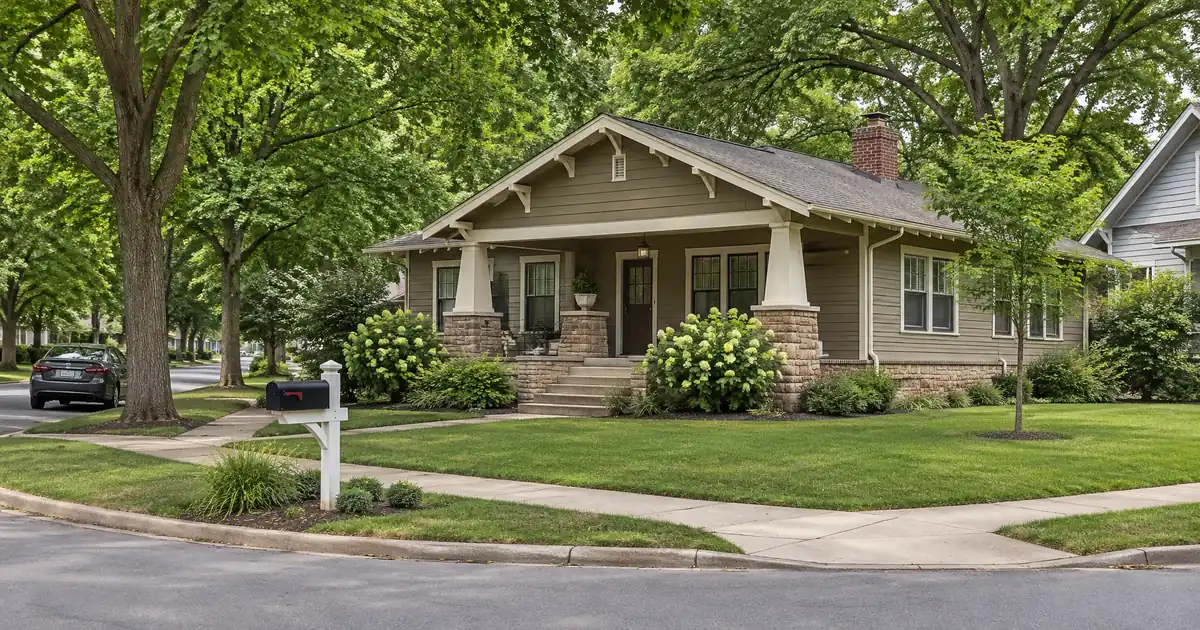
The Quick Read: Lenders that offer bank statement HELOCs on a vacation home qualify the borrower on 12 to 24 months of deposits and debt-to-income, not on tax returns or the property’s rent. The home’s occupancy classification (second home versus investment) sets the leverage ceiling, the credit floor, and the draw structure. Which lender fits depends on the property, the credit profile, the combined leverage needed, and how the title is held.
- Second-home lines on this network reach 90% CLTV only at a 720+ credit profile, up to $500,000.
- Investment-property lines cap at 70% CLTV, with a 700 credit minimum and a 5-year draw only.
- A bank statement HELOC is judged on deposits and DTI. Rental coverage (DSCR) is not part of it.
- An LLC cannot hold title on these lines. A property already in an LLC needs a vesting change or a DSCR cash-out refinance.
- Only some lenders write bank statement second liens on vacation homes, which is why a broker that shops several wholesale lenders matters.
Self-employed owners often find that tax returns show write-offs, not cash flow, so a conventional equity line looks thin. A vacation home adds a second problem: many lenders treat it as a riskier collateral type and some skip it. This piece walks through what the product is, how underwriting handles it, the structures that exist, and where the general rule breaks.
How large a line the equity supports.
An equity line is sized by combined loan-to-value, occupancy, and credit — not by rental coverage. Switch the occupancy or the credit band and the ceiling moves with it.
Investment-property lines require a 700 minimum credit score; second-home lines start at a 640 minimum and primary-residence lines at 600, and the combined-LTV ceiling steps down as the credit band drops on primary-residence and second-home lines and holds on investment-property lines; the line cap steps down on primary-residence lines and holds at every tier on investment-property and second-home lines.
A debt-to-income ratio above 45% requires 680+ credit. Profiles under 640 are limited to single-family homes. At least 75% of the approved line is drawn at closing. Ceilings, floors, and caps update from Lendmire’s centralized guideline source.
Line estimate
Illustrative estimate only — not a quote, Loan Estimate, approval, or commitment to lend. The rate is an editable assumption; equity-line pricing is variable through both the draw and repayment periods and never converts to fixed. Occupancy and credit drive the ceiling together: an investment property tops out at 70% combined LTV (minimum credit 700, line cap $500,000); a second home tops out at 90% combined LTV (minimum credit 640, line cap $500,000), with the ceiling stepping down as the credit band drops (the cap holds at every tier); a primary residence tops out at 90% combined LTV (minimum credit 600), and its $750,000 maximum line is available only at 75% combined LTV or below with a 700-or-better credit profile (720 on the longer-runway program) and a full appraisal. Lines above $500,000 require a full appraisal. Credit, debt-to-income, property type, and full underwriting review all affect the final line.
What Is a Bank Statement HELOC on a Vacation Home?
It is an open-end line of credit secured by a second home, qualified on deposit history instead of tax-return income. The CFPB describes a HELOC as a line you can borrow against repeatedly, limited by available equity, with a draw period (10 years, for example) followed by repayment. When a first mortgage exists, the line sits behind it as a second mortgage.
The bank statement part changes only how income is documented. HousingWire’s non-QM guide lists the bank statement HELOC as a revolving second lien for self-employed homeowners, qualified on 12 to 24 months of personal or business statements. Credit, CLTV, valuation, title, and DTI all still apply.
On Lendmire’s network, the line is a standalone product, and it is described here as a second lien behind an existing first mortgage. Lendmire is a broker. It places the file with a wholesale lender, and the lender reviews and approves.
Key Terms Defined
CLTV: Combined loan-to-value, which is the first mortgage balance plus the new line limit, divided by the home’s value.
Second home: A property the borrower uses personally, not as a rental.
Investment property: A home used for rental income, which gets tighter terms.
Draw period: The stretch when you can borrow from the line and pay interest only.
Repayment period: The stretch after the draw ends, when the balance amortizes.
DTI: Debt-to-income ratio, which compares monthly debts to qualifying monthly income.
How Does Underwriting Treat a Vacation Home Line, Step by Step?
Underwriting runs six checks, and the first one decides the rest.
1. Occupancy classification. The lender decides whether the home is a second home or an investment property. Rental income on a tax return, regular short-term bookings, or a management agreement controlling who stays can flip the file to investment. That changes the leverage ceiling, the credit floor, and the draw structure.
2. Documentation path. The borrower supplies 12 or 24 months of personal or business statements. Underwriters total qualifying deposits, may apply an expense factor on business accounts, and generally strip out non-business deposits such as transfers between accounts.
3. Credit and DTI. The line is judged on deposits and DTI. The first mortgage payment counts, along with every other lien. DTI can run to 50%, but a ratio above 45% requires a 680 credit minimum, and profiles from 600 to 679 are held to 45%. The qualifying payment is the interest-only payment on the maximum draw, so a large line weighs on DTI even if you plan to draw little.
4. Equity check. Take the first mortgage balance plus the line limit and divide by value. Lines at or below $500,000 ordinarily run automated valuation. A full appraisal is required above $500,000 and a borrower may request one at any size.
5. Title and property type. Title must sit with the individual borrower or a revocable living trust. Condos, including non-warrantable ones, are eligible, but expect a building review covering HOA finances, owner-occupancy mix, dues delinquencies, and litigation.
6. Closing and draw. At least 75% of the line is drawn at closing. Subsequent draws start at a $1,000 minimum on the longer-runway structure described below.
What Leverage and Credit Does the Network Allow?
Second-home lines run from 75% to 90% CLTV depending on credit, with a 640 minimum and a $500,000 maximum line. Investment lines cap at 70% CLTV. The 90% tier exists only at a 720-or-better profile.
| Credit profile | Second-home max CLTV | Max line |
|---|---|---|
| 720+ | 90% | $500,000 |
| 680+ | 85% | $500,000 |
| 660+ | 80% | $500,000 |
| 640+ | 75% | $500,000 |
Investment-property lines are different on every axis: 70% CLTV, a 700 credit minimum, and the 5-year interest-only draw with 25-year repayment as the only structure. Subject to lender guidelines and full file review, these are the ceilings the wholesale partners work to, and they are the figures that apply to files placed through Lendmire.
What Draw Structures Exist?
Two structures exist on primary residences and second homes. One is a 3-year interest-only draw followed by 17 years of amortizing repayment. The other is a 5-year draw followed by 25 years. Investment lines use the 5-year draw with 25-year repayment only. Pricing floats across both the draw and repayment period and does not convert to fixed.
The two wholesale programs behind these structures differ in other ways, so each figure applies only within its own program. The longer-runway program is the 5-year draw structure. It asks for two tradelines seasoned 12 months or one seasoned 24, and it accepts modular homes. The higher-leverage program is the 3-year draw structure, which reaches the top CLTV tiers and allows higher combined exposure. Which structure suits a file depends on credit, leverage, and how long the borrower wants interest-only flexibility.
Where Does the Occupancy Rule Break?
Occupancy is the main variable. Investors on BiggerPockets report that some lenders would write a HELOC on a rental only if it was classified as a second home. That is dated, anecdotal evidence, not a rule. A separate thread notes that some lenders decline the HELOC label on investment property but write a similar structure under another name.
The practical edge cases:
- Short-term rental vacation homes. Regular bookings push the file toward investment terms: 70% CLTV, 700 credit, 5-year draw.
- LLC-owned vacation homes. LLCs, corporations, partnerships, and irrevocable, blind, or land trusts cannot hold title. This is the sharpest difference from a DSCR loan. Fix the vesting or use a DSCR cash-out refinance, which can be arranged for an LLC-titled property subject to program eligibility.
- Listed properties. A home listed for sale, or listed within the past 60 days, is ineligible in NC, PA, TN, TX, and WA.
- Ineligible property types. Manufactured homes, co-ops, condotels, log homes, commercial, mixed-use, and agricultural-zoned properties are not offered.
- Portfolio size. A borrower is limited to three lines, and an owner with more than 15 financed properties is not eligible.
Does the Right to Cancel Apply on a Vacation Home?
Usually not. The FTC says the three-business-day cancellation right applies when the main residence is the collateral, and does not apply to a vacation or second home. Bankrate lists loans secured by vacation, rental, or investment property as outside the right as well.
That cuts both ways. There is no cooling-off period if the line turns out to be the wrong fit, so the decision should be made before signing.
Risks That Sit Outside the Approval
Three risks show up after the line opens.
First, the payment floats. The line is a variable-rate revolving obligation, and the balance adds to DTI for the next loan. Second, the lender can act on the line under the terms of the agreement, so the borrower should know what those terms permit before signing. Third, the exit plan matters. Selling the home generally means paying the line off right away, and the agreement may prohibit renting the home out. Read the agreement before listing the property on a booking platform.
Bank Statement HELOC, DSCR Cash-Out, or Something Else?
The right tool depends on what the borrower is trying to do. The comparison below separates the structures.
| Factor | Bank statement HELOC | DSCR cash-out refinance |
|---|---|---|
| Income read | Deposits and DTI | Property rent versus payment |
| First mortgage | Left in place | Replaced |
| Title | Individual or revocable trust | LLC possible, subject to program terms |
| Cash-out leverage | Up to 90% CLTV second home, 720+ | Around 75% LTV across most of the network |
| Property use | Second home or investment | Investment rental |
A DSCR loan compares rent to PITIA and nothing else. Clearing 1.00 is not the same as positive cash flow, since repairs, vacancy, management, and capex sit outside the calculation. Where the vacation home is a true rental, the complete DSCR loans guide explains how the rent-based path works.
The two products often work together. A HELOC can fund a down payment elsewhere, and the purchase lender will ask where the funds came from. A later cash-out refinance can pay the line off once the new property builds equity. Both moves add a payment to DTI, so the sequence matters. Lendmire’s article Top Bank Statement HELOC Providers to Pay for Home Repairs and a Vacation covers the use-of-funds side.
How Do You Find a Lender Without Shopping Blind?
Few lenders write bank statement second liens on vacation homes, and each sets its own overlays. A broker that places files with several wholesale lenders can match the file to the program instead of the borrower guessing which direct lender might say yes. Which lender fits depends on the property type, credit profile, how much leverage is needed, how the title is held, and the state.
Availability is also limited by geography. Lendmire’s HELOC placement runs in 16 states: AL, CA, CO, FL, GA, IN, MI, MT, NM, NC, OH, PA, TN, TX, VA, and WA. That is narrower than Lendmire’s 41-market DSCR footprint, which covers 40 states plus Washington, D.C.
Before applying, gather:
- 12 or 24 months of personal or business bank statements
- Current mortgage statement and property tax and insurance records
- Title or vesting documents showing who owns the home
- A clear statement of whether the home is rented, and how often
- HOA information if the property is a condo
Texas has its own rules. Waiting periods and the one-lien rule bind primary residences only, and Texas second homes and investment properties are eligible as non-homestead transactions, limited to 10 acres.
Frequently Asked Questions
Can I get a bank statement HELOC on a vacation home that I also rent out?
Possibly, but the rental use changes the terms. Regular bookings or rental income on a tax return can move the file to investment-property terms: 70% CLTV, a 700 credit minimum, and the 5-year draw structure. Occupancy classification is a lender decision made on the full file.
Does rental income from the vacation home help me qualify?
No. The line is judged on bank deposits and DTI, not on the property’s rent coverage. If the home’s rent is the strength of the file, a DSCR cash-out refinance reads that income directly, subject to lender guidelines.
Can an LLC or trust hold title?
A revocable living trust can. An LLC cannot, nor can corporations, partnerships, or irrevocable, blind, or land trusts. A home already deeded to an LLC needs a vesting change, or a DSCR cash-out refinance instead.
How much can I borrow against a second home?
Second-home lines run $25,000 to $500,000, with CLTV from 75% to 90% depending on credit. The 90% tier requires a 720+ profile. Lines above $500,000 are available on primary residences only.
Does the three-day right to cancel apply?
Generally not on a vacation or second home, according to the FTC. Treat signing as final.
If you are considering a home equity line and want to see how the numbers work, Lendmire can help you compare HELOC options based on the property, the equity available, credit profile, combined leverage, and your goals. Reach the team at 828-256-2183 or request a quote. Program details change and every file is underwritten individually; this is not a commitment to lend.
About Lendmire
Lendmire (NMLS# 2371349) is a mortgage broker. Home equity lines of credit — on a primary residence, a second home or an investment property — are arranged through wholesale lenders in Lendmire’s 16 full-service states, and every line is underwritten by the lender under its program guidelines. Scotsman Guide named Lendmire a Top Mortgage Workplace in both 2025 and 2026.
Get Started
Ready to find the right loan for you?
See your offer in seconds. No credit pull, no obligation.
Informational only. Not a Loan Estimate, approval, or commitment to lend. Program availability and eligibility are subject to lender guidelines, credit approval, property review, and underwriting.
References
2. HousingWire – Non-QM Loans Guide
4. BiggerPockets – Heloc for Investment Property
5. FTC – Home Equity Loans and HELOCs
6. Bankrate – Right of Rescission
This article is part of Lendmire’s bank statement HELOC program — full qualification details, guidelines, and scenarios live on the program page.
Related reading: Best Bank Statement HELOC Program on a Vacation Home · Top Bank Statement HELOC Providers on a Vacation Home · Banks That Offer a Bank Statement HELOC on a Vacation Home · Bank Statement HELOC Requirements for a Vacation Home Down Payment · How Much Can You Borrow on a Bank Statement HELOC for a Vacation and Home Repairs?
Brandon Miller
Founder & CEO, Mortgage Loan Originator, Lendmire LLC
- Mortgage Loan Originator · NMLS# 1129696 · Verify on NMLS Consumer Access
- North Carolina Real Estate Broker · License# 343312 · Verify on NCREC
- North Carolina Insurance Producer · License# 19053198 · Property, Casualty, Life, Health · Verify on NAIC SBS
- Lendmire LLC · Firm NMLS# 2371349 · Verify firm licensure
Compliance and disclosures. Lendmire (NMLS# 2371349) is a licensed mortgage broker and is not a direct lender, depository institution, financial advisor, or tax professional. Content in this article is general market analysis and educational information — not financial, legal, or tax advice for any specific situation. Lendmire does not guarantee loan approval; every transaction is subject to underwriting by the funding lender. Mortgage pricing and loan program guidelines are subject to change at any time without notice and vary by borrower characteristics, property type, and state regulations. Lendmire complies with Equal Housing Opportunity. Licensure verification: NMLS Consumer Access.